
Nachhaltige Klebstoffe gewinnen zunehmend an Bedeutung, vor allem dort, wo bisher petrochemische Harze mit problematischen Inhaltsstoffen wie Formaldehyd dominieren. Unsere neueste Studie zeigt nun, dass sich Chitosan-basierte Holzklebstoffe als vielversprechende biobasierte Alternative eignen. Chitosan wird aus Chitin gewonnen, einem natürlichen Polymer, das unter anderem in den Schalen von Krustentieren vorkommt und in großen Mengen als Nebenprodukt der Lebensmittelindustrie anfällt.
Untersucht wurden zwei vollständig biobasierte Klebstoffsysteme: Chitosan-Itaconat und Chitosan-Maleat. Beide basieren auf nachwachsenden Rohstoffen und wurden speziell für die Verklebung von Holz entwickelt. Besonders interessant ist dabei, dass die verwendeten Säuren nicht nur das Chitosan in Lösung bringen, sondern zugleich das Aushärten in ein stabiles Netzwerk ermöglichen. Beide Säuren sind biofermentativ zugänglich und der Klebstoff somit vollständig biobasiert.
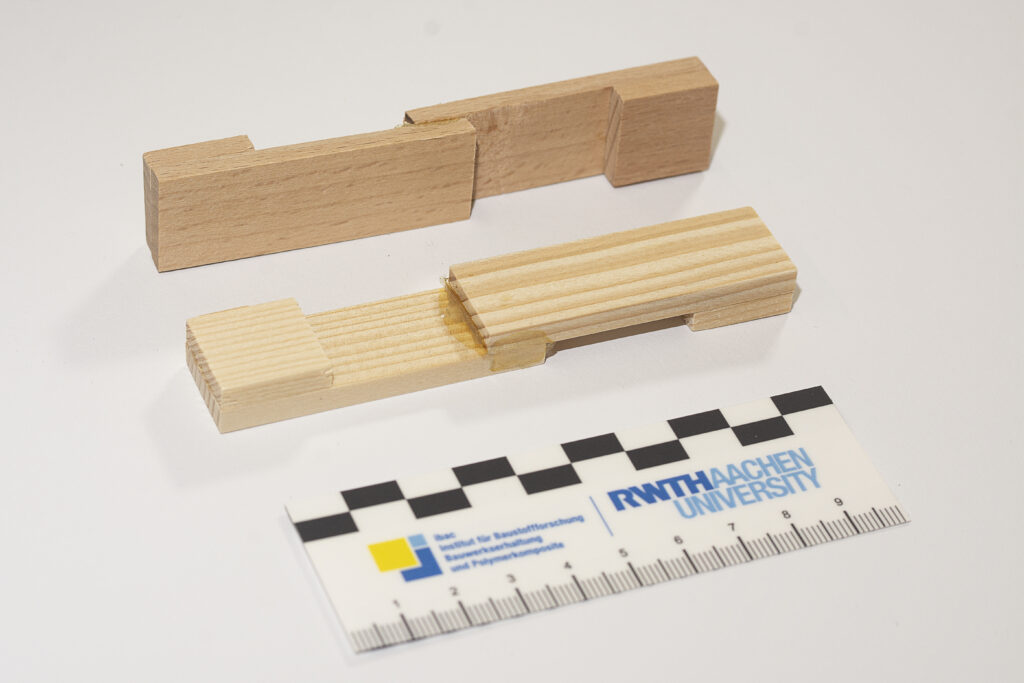
Die Ergebnisse sind bemerkenswert: Beide Klebstoffe erreichten im Trockenzustand die Anforderungen der DIN EN 12765 Klasse C1 und zeigten eine sogenannte kohäsive Holzbruchfestigkeit. Das bedeutet, dass im Belastungstest nicht die Klebefuge versagte, sondern das Holz selbst. Vor allem Chitosan-Itaconat überzeugte zusätzlich unter feuchten Bedingungen: Nach einer Behandlung in kochendem Wasser blieb die Haftfestigkeit mit 2,7 N/mm² nahe an der anspruchsvollen C4-Klasse.
Chitosan-Itaconat ist ein aussichtsreicher Kandidat für moderat feuchtigkeitsbeständige Holzverklebungen, etwa im Innenausbau oder in semi-exponierten Anwendungen. Chitosan-Maleat zeigte zwar ebenfalls gute Trockenhaftung, verlor jedoch bei Wasserkontakt deutlich an Stabilität.
Das Fazit: Biobasierte Holzklebstoffe aus Chitosan sind mehr als nur ein Nischenkonzept. Vor allem Chitosan-Itaconat verbindet erneuerbare Rohstoffe mit überzeugender Klebeleistung und könnte ein wichtiger Schritt hin zu umweltfreundlicheren Materialien in der Holzindustrie sein.
N. Münstermann, O. Weichold
Chitosan-itaconate and chitosan-maleate as fully bio-based sustainable wood adhesives
International Journal of Adhesion and Adhesives, 2026, 149, 104327 https://doi.org/10.1016/j.ijadhadh.2026.104327


Schreibe einen Kommentar