New publication: Moisture absorption in cationic hydrogels
We are delighted to present another study by our working group in the specialist journal Polymers. In their latest publication, Tim Mrohs and Oliver Weichold show how the water absorption behaviour of diallylammonium-based hydrogels can be specifically controlled by cross-linking density and ionic interactions. The results provide design rules for moisture control, demonstrate endothermic sorption processes and shed light on how reversible ionic crosslinks can improve water absorption.
Mrohs, T.; Weichold, O.
Dynamic water vapour sorption behaviour of crosslinked polycationic diallylammonium-based hydrogels
Polymers 2025, 10.1016/j.polymer.2025.129219
PhD Completed with Distinction: Dr. Nils Münstermann
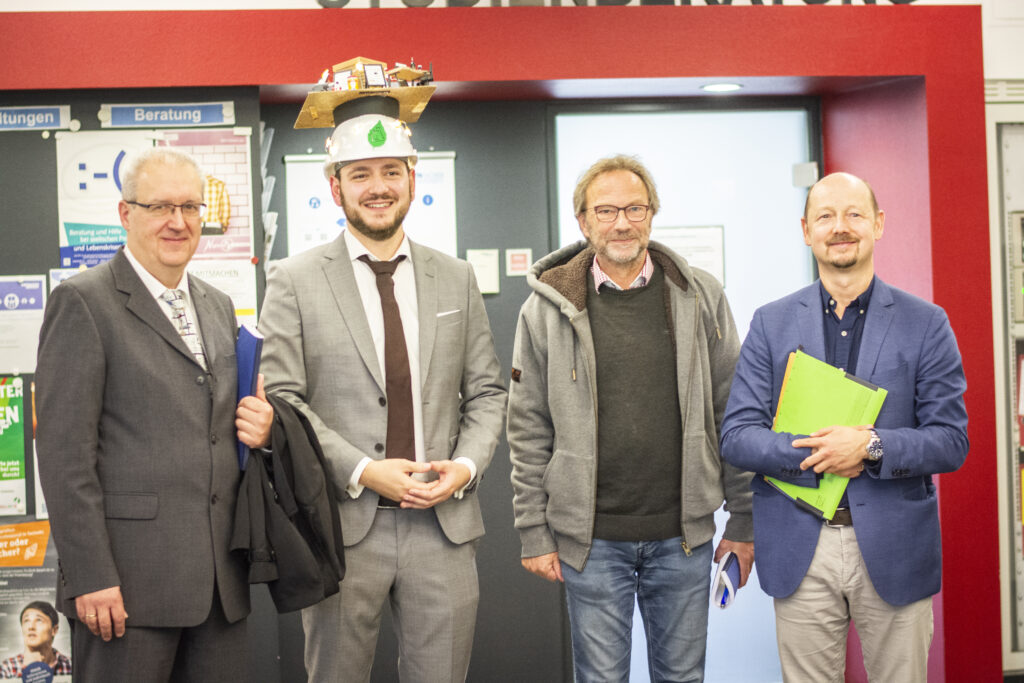
We congratulate Dr. Nils Münstermann on the successful completion of his PhD, which he passed with distinction (summa cum laude).
In his dissertation entitled “Bio-Based Chitosan Interpolyelectrolyte Complexes for the Coating and Bonding of Wood-Based Materials”, he investigated chitosan itaconate as a fully bio-based and multifunctional material system. The developed coating and adhesive systems open up new possibilities for improving the water resistance, UV protection and fire performance of wood-based materials and combine the use of renewable raw materials with application-oriented solutions for the construction and wood industries.
We are delighted that Dr. Nils Münstermann will remain at the institute as a research group leader and wish him every success in his future scientific work.
Our group at the K-Messe 2025 in Düsseldorf
On 9 October, our entire working group visited the K-Messe in Düsseldorf, the world’s leading trade fair for plastics and rubber. We learned about the latest developments in sustainable materials and innovative processing technologies. The exchange with industry partners and research institutions provided valuable inspiration for our own work and future projects.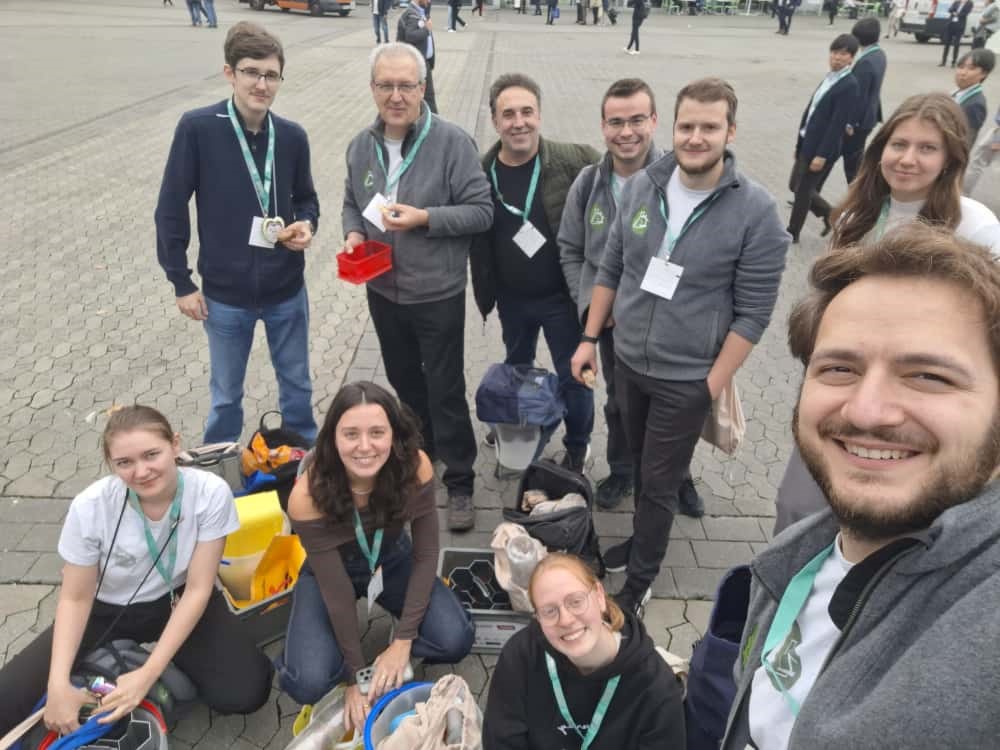
Lecture Award for Prof. Weichold at the Coatings Conference 2025
At this year’s Coatings Conference 2025 in Aachen, Prof. Weichold received the lecture award. He presented the talk “Wood on the Rise – Sustainable Protection for a Building Material with a Future.”
EPNOE 2025
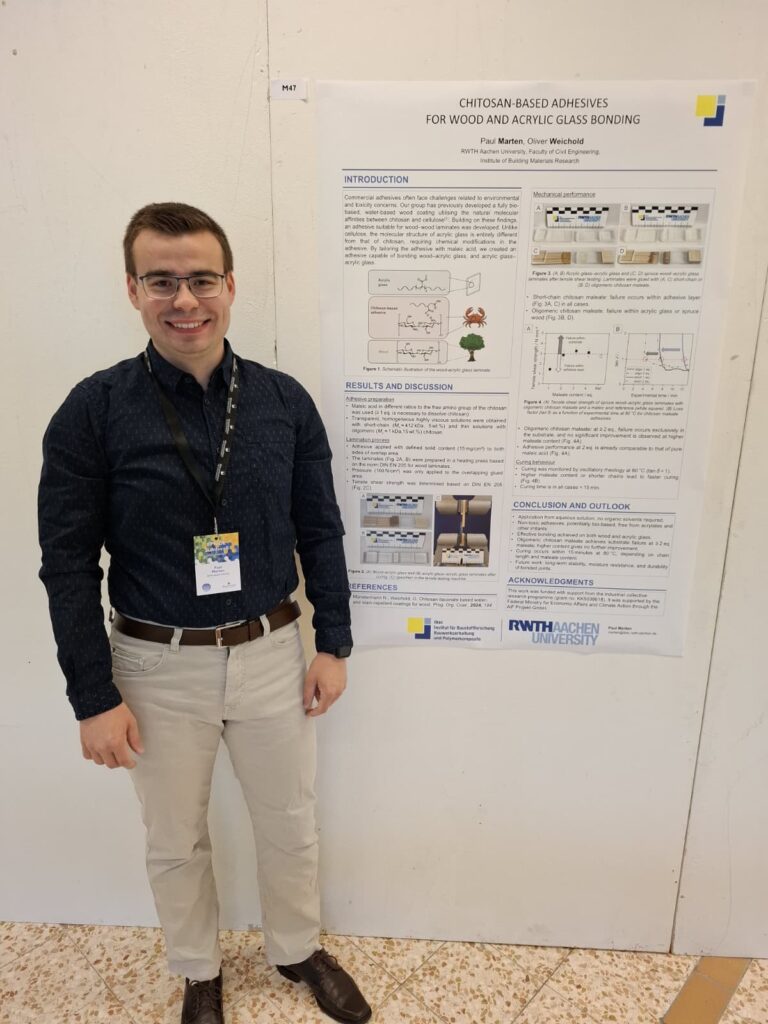
Nils Münstermann and Paul Marten attended EPNOE 2025 in Sundsvall, Sweden, last week.
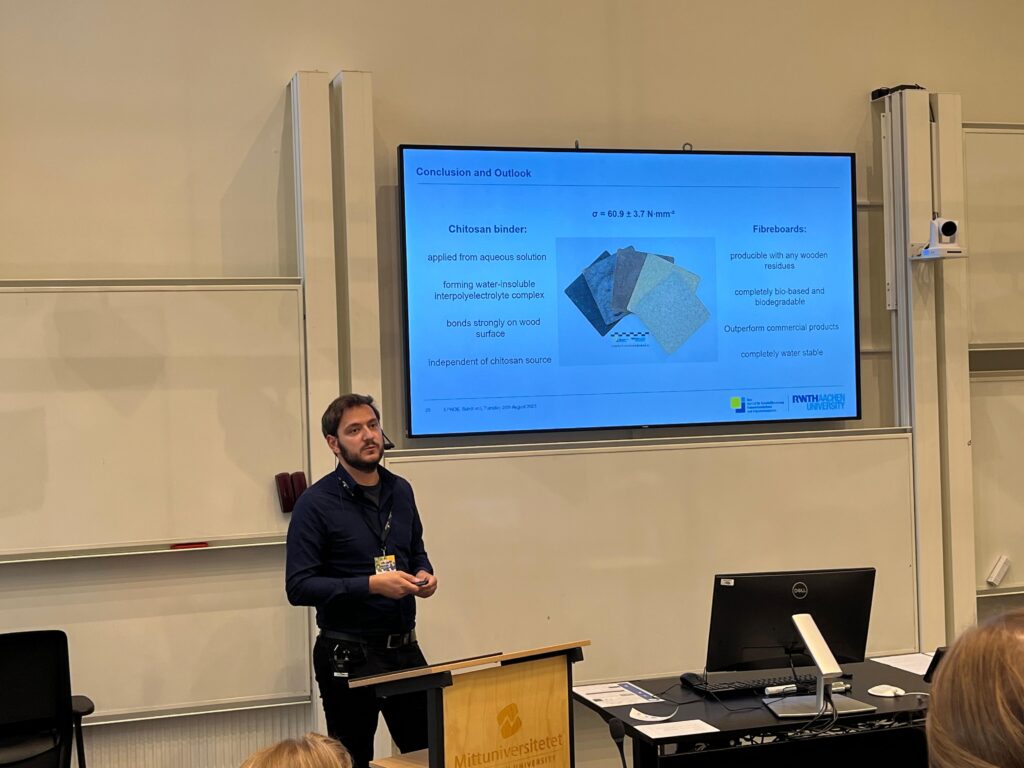
Nils Münstermann gave a presentation on ‘Chitosan-itaconate as binder for high-strength fibreboards’.
Paul Marten presented a poster on ‘Chitosan-based adhesives for wood and acrylic glass bonding’.
Hot-Line: Trident Measures Movement
New in the lab: Trident. Three testing methods in one device: bulk, film, or melt, we can now measure thermal conductivity precisely and make our research even more flexible.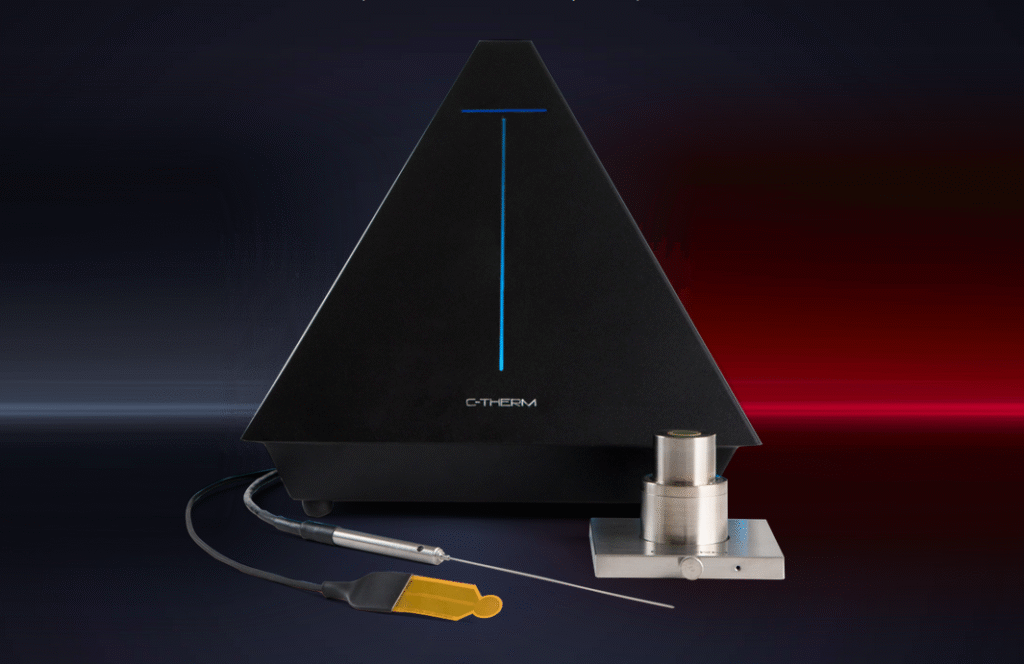
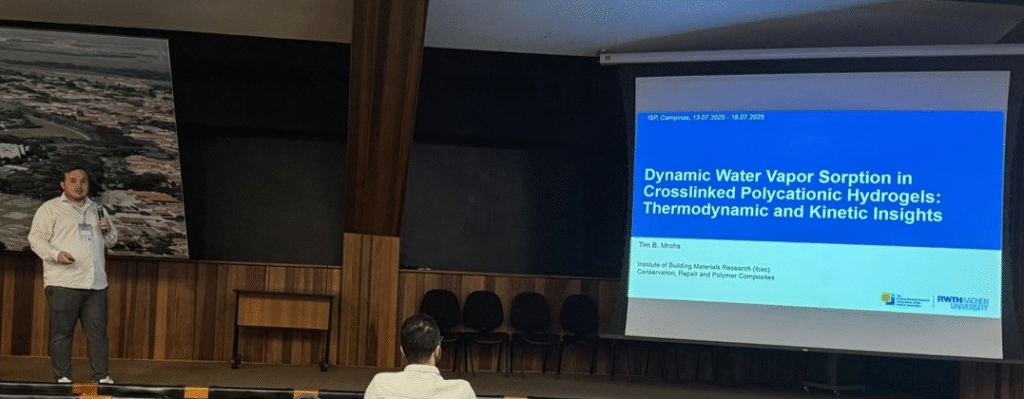
Tim Mrohs at ISP2025 in Brasil: Hydrogels and Water Vapor Insights
From July 13 to 18, 2025, the 14th International Symposium on Polyelectrolytes (ISP2025) took place in Campinas, Brazil. This year, the conference celebrates its 30th anniversary. Tim Mrohs presented his latest research findings with the lecture “Dynamic Water Vapor Sorption in Crosslinked Polycationic Hydrogels: Thermodynamic and Kinetic Insights.”
In it, he presented that polycationic hydrogels based on diallylammonium derivatives exhibit a specifically adjustable water vapor sorption behavior that is influenced by crosslink density, counterions, and monomer structure. Using a systematic DVS analysis of five formulations, he provided thermodynamic and kinetic insights that underscore the potential of these materials for moisture regulation, barrier coatings, and water harvesting.
Visit from Maejo University
Last month, we welcomed Prof. Panwad Sillapawattana from Maejo University in Thailand. As part of a joint research project, she conducted initial experiments in our laboratory and engaged in intensive discussions with our team. The visit was not only scientifically enriching, but also a wonderful cultural and personal exchange. We look forward to continuing our collaboration.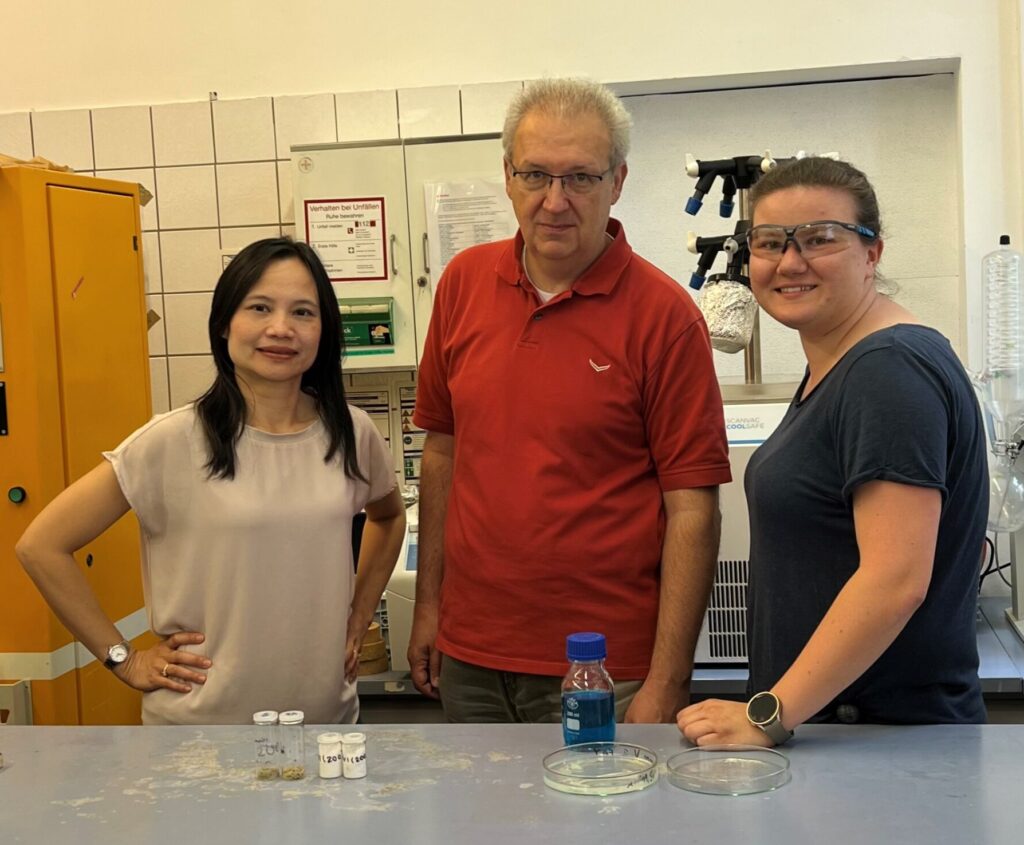
New employee
Ranko Pavlovic joined our research group in the field of structural polymer composites on July 1. He actively supports us in the implementation of our research work.
We are delighted to welcome him and wish him a successful start and much pleasure in his work.
Award for our research into biobased polyester foams
The most recent publication by Fabian Weitenhagen and Oliver Weichold in the journal Polymers (MDPI) was honoured as a feature paper. This special recognition by the editors for outstanding and pioneering contributions. The article entitled ‘Preparation, Reaction Kinetics, and Properties of Polyester Foams Using Water Produced by the Reaction as a Foaming Agent’ was published in the May issue.
The work centres on the development of sustainable, bio-based foams using reaction water as a foaming agent. The results show not only a high degree of control over the foam structure and material properties, but also impressive thermal stability and improved fire protection properties compared to conventional foams.
We are particularly pleased about the award, as of the nine previous publications by ibac in Polymers, this honour has only been bestowed once before.
F. Weitenhagen, O. Weichold
Preparation, Reaction Kinetics, and Properties of Polyester Foams Using Water Produced by the Reaction as a Foaming Agent
Polymers 2025, 17(9):1266, DOI: 10.3390/polym17091266


