
Since August, Dr. Pyae Pyae Phyo has been conducting research at the Institute for Automation of Complex Power Systems at RWTH Aachen University. As a Humboldt Research Fellow, she tackles one of the key challenges of the energy transition: the fluctuating output of renewable energy sources.
“Most power grids were designed for fossil-based generation, which provides constant and predictable energy. Renewables are different – their output depends on the weather,” she explains.
Dr. Phyo applies AI-based prediction models to make these variations more manageable and to strengthen grid stability and efficiency. Her goal is to develop and refine algorithms that can accurately forecast how much energy wind or solar plants will deliver over a given period.
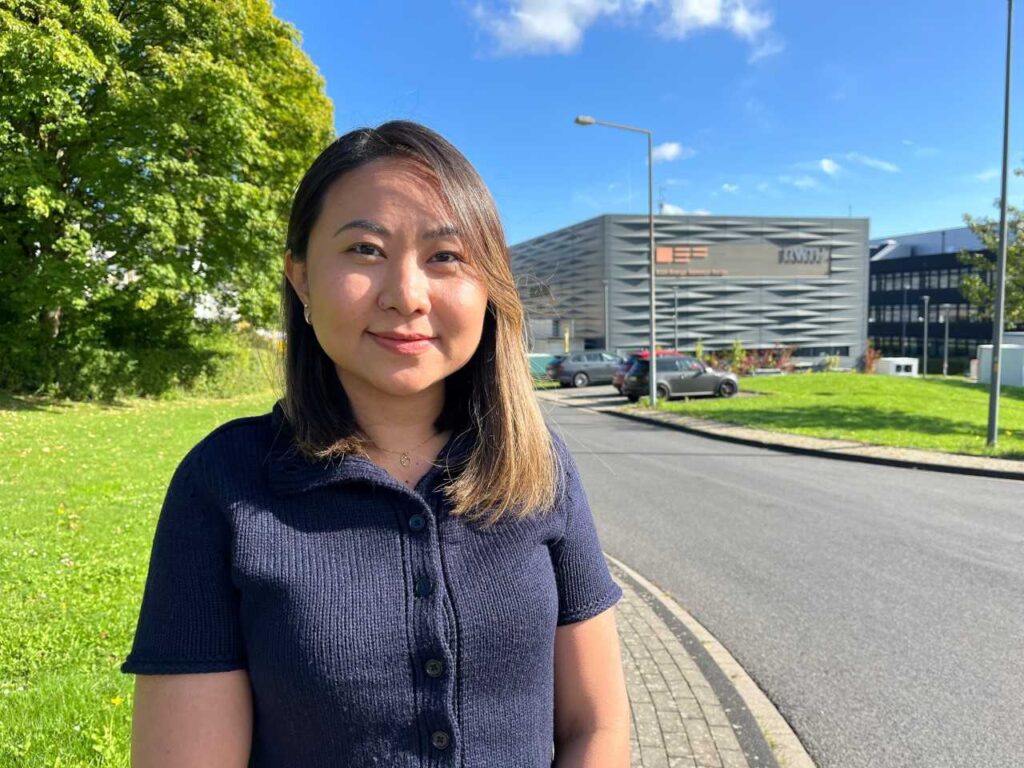
Foto: Judith Peschges
Her path to RWTH was made possible by Professor Antonello Monti, who supported her through the Henriette Herz Scouting Program of the Humboldt Foundation.
“The excellent reputation of Professor Monti and RWTH in my research community was decisive for my choice,” she says.
Holding degrees from TU Mandalay and Thammasat University, Dr. Phyo has also worked in South Korea, Canada, Switzerland, and most recently at Eindhoven University of Technology as a postdoctoral researcher.
Her work builds a crucial bridge between artificial intelligence and sustainable energy systems—contributing to a more secure and efficient power grid for the future.


Die Verbreitung von Speicherkapazität in haushalten in PV Anlagen und E-Autos nimmt zu. Dynamische Stromtarife könnten in Verbindung mit Intelligenter Steuerung dafür sorgen, dass diese Kapazität auch zur Glättung der Abnahme genutzt wird. Denn der Haushalts Verbrauch würde damit automatisch in die schwachen Nutzungszeiten verlagert.
Stimmt, mit smarten Speichern lässt sich der Verbrauch viel besser anpassen.