Kategorie: ‘Information, Kommunikation und Elektronik’
Student Uni During Your Holiday
Once again this year, the faculty’s institutes and chairs opened their doors, providing insights into studies, campus life, and research.
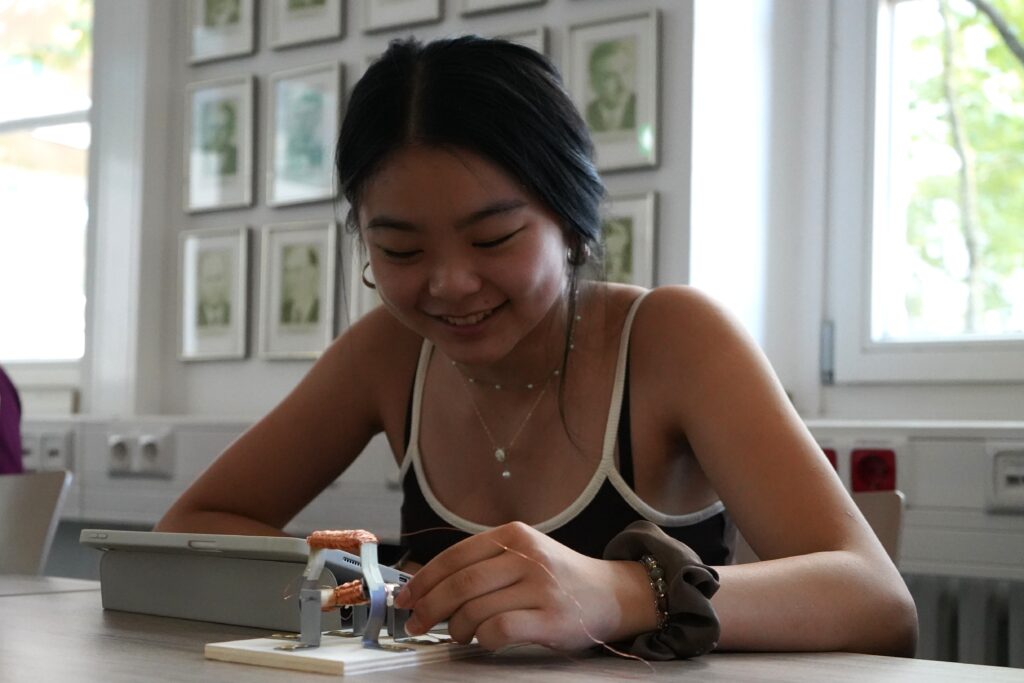
“The lecturers were highly motivated to explain things to us. You could really tell how passionate they are about what they do. This was also noticeable in the projects, where we had to solder or build an electric motor, for example. I found that very varied.” —Sarah
Can we supply ourselves with energy without emitting CO2? Why are cars becoming electric, but not airplanes? How do computers communicate, and what role does artificial intelligence play in microelectronics? Participants received answers to these and many other questions in trial lectures and workshops, as well as during joint lunch breaks with the teaching staff and on excursions with our students.
“I would say that the personal experiences shared during the lunch breaks were especially informative. For example, we learned what the lecturers’ career paths look like and what they did to get where they are now. That is a goal one could also pursue in one’s own future. This personal exchange and the feeling of truly being accepted made me very happy.” —Maximilian
The Student University thrives on the commitment of many: A heartfelt thank you to the IAEW and to all participating institutes and chairs who introduced the students to the diversity of electrical engineering and information technology through exciting experiments and insights. Perhaps this week has already laid the foundation for the future academic or career paths of some participants.
“You could simply see how broad this field is. For instance, you can build an electric motor that is relatively large. In other areas, you have micro- and nanoelectronics that are extremely small.” —Sarah
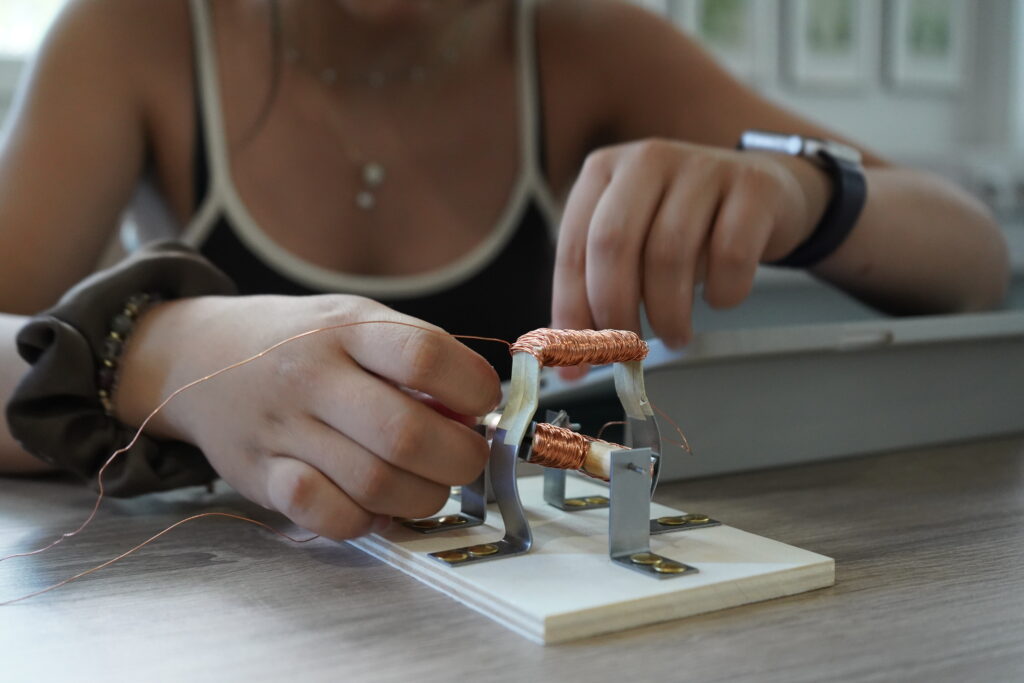
The program included lectures and workshops at the Institute for Power Electronics and Electrical Drives, the Chair of Distributed Signal Processing, the Institute of Electrical Machines, the Chair of Communication Systems, and the IAEW. The week was complemented by insights into micro- and nanoelectronics at AMO GmbH, soldering exercises, a campus tour, and discussions about university studies.
The next generation of computer chips is ‘Made in Aachen’

Black Simiconduktor, f.l.t.r.: Sebastian Schall, Dr.Daniel Schall
The 2026 Aachen Engineering Prize has been awarded to Black Semiconductor founders Dr Daniel Schall and Sebastian Schall – a milestone for the region’s microelectronics sector.
The next generation of computer chips is being shaped to a significant extent in Aachen. We are delighted that this year’s Aachen Engineering Prize is being awarded to two visionaries whose careers are closely linked to the excellent research carried out at our Faculty of Electrical Engineering and Information Technology: Dr Daniel Schall and Sebastian Schall, founders of the start-up Black Semiconductor.
The technological foundation for this success is a groundbreaking innovation in graphene photonics. Whilst conventional semiconductor architectures are increasingly reaching their limits due to heat generation and limited bandwidths in data transmission, the Schalls are pursuing a new approach: instead of sending data exclusively via electrical conductors, they enable direct conversion into optical signals on the chip. By integrating graphene, a material with outstanding physical properties, they have succeeded in combining electrical and optical functions directly on a single wafer.
“This innovative approach addresses key performance and efficiency limitations of existing semiconductor architectures and makes a decisive contribution to the next generation of high-performance and AI systems,” emphasises the Advisory Board of the Aachen Engineering Prize in its statement.
For our faculty, this development is an outstanding example of how fundamental scientific research is translated into industrial leadership. Dr Daniel Schall, himself a micro-systems engineer with a PhD and strong links to Aachen’s research community, laid the foundations for this technology during his time at the AMO GmbH research institute. The successful transfer from research to a company that now employs over 130 people impressively demonstrates the added value of the close integration between RWTH teaching and applied research.
Black Semiconductor is now building a 15,000-square-metre production facility, ‘FabONE’, in the Rothe Erde district of Aachen to manufacture graphene chips on an industrially relevant scale. This project not only strengthens the European semiconductor industry in competition with global players, but also underlines Aachen’s role as an innovation hub for future technologies. In doing so, the founders are consistently focusing on CMOS compatibility, enabling their innovation to be seamlessly integrated into existing industrial manufacturing processes.
“Black Semiconductor is making a lasting contribution to strengthening Europe’s position as a centre for the semiconductor industry through its close collaboration with the research sector and its industrial focus. The company thus embodies innovation-driven engineering excellence in a unique way,” explains Rector Professor Ulrich Rüdiger. The City of Aachen, represented by Lord Mayor Dr Michael Ziemons, also emphasises the strategic importance of this development: “We are proud that this forward-looking company has chosen to base itself in Aachen.”
The award ceremony for the Aachen Engineering Prize will take place on 5 September 2026 at 7 pm in the Coronation Hall of the Town Hall. The prize, established by the Association of German Engineers (VDI), is awarded annually to individuals who have made a significant contribution to the advancement of engineering.

Modular cleanroom facility inside the new FabONE production hall.
Theory in Practice: IAEW Field Trip to HVDC Infrastructure
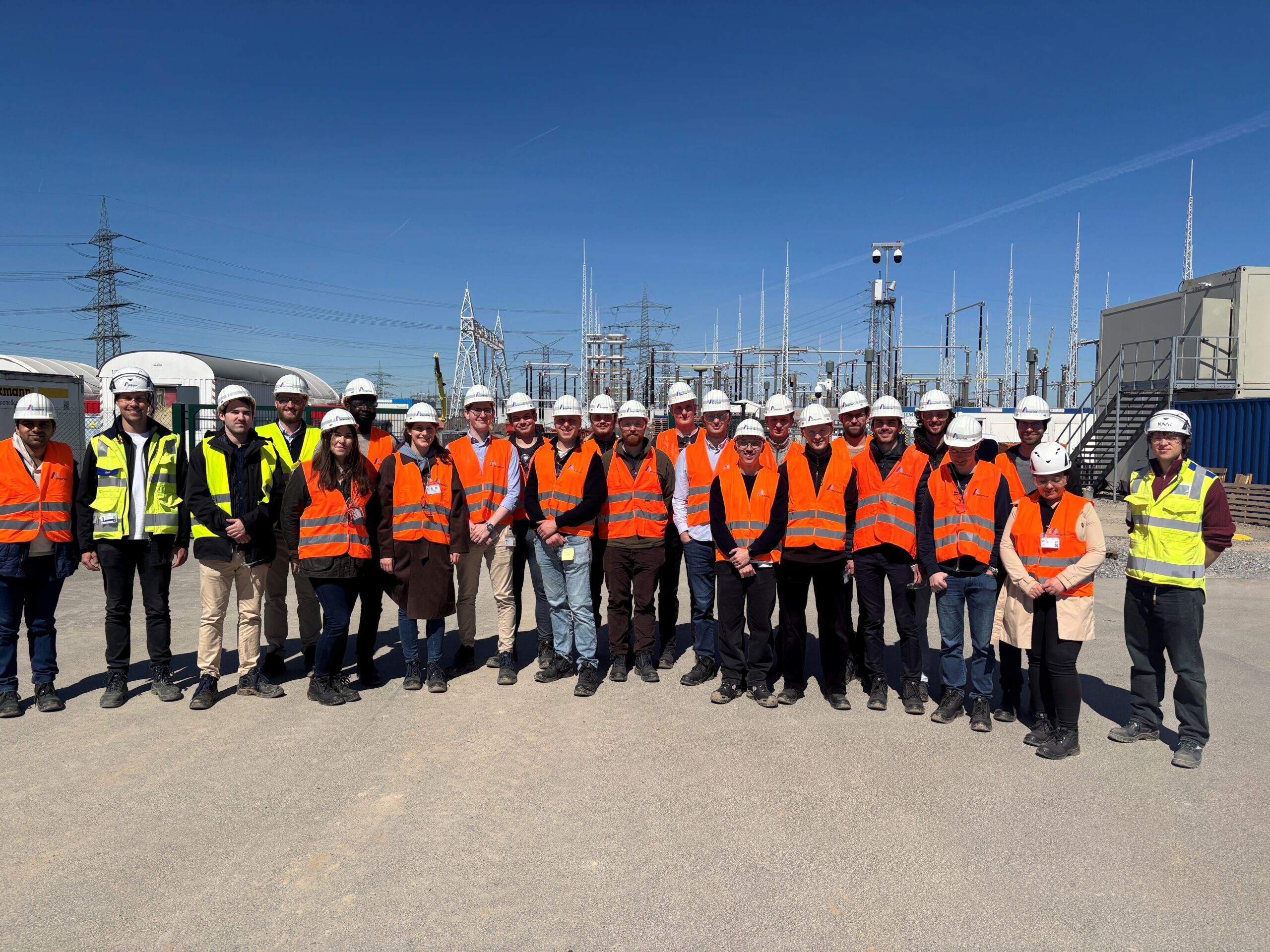
In hard hats and safety vests: 20 IAEW students in front of the impressive converter station backdrop.
20 IAEW students deepened their knowledge of HVDC technology during a site visit to the Ultranet converter station in Meerbusch-Osterath.
As part of the “High-Voltage Direct Current” (HVDC) seminar, 20 IAEW students were given the opportunity to gain firsthand insights into the practical expansion of HVDC infrastructure. The visit focused on the station in Meerbusch-Osterath, a key component of the Ultranet project and Germany’s first multi-terminal HVDC link. A significant technical feature of this site is the first-ever joint transmission of direct and alternating current on a single pylon in Germany. As part of a planned bipole system, the converter station will facilitate the conversion between AC and DC, with a DC cable connection extending toward Emden. This field trip allowed students to apply and consolidate the theoretical knowledge they had acquired in January within a real-world construction environment.
We would like to sincerely thank Amprion GmbH for the insightful tour and the fascinating look at this pioneering project.
The future of hearing: Public lecture series at the “NeuroSensEar” workshop
What will the hearing aid of the future look like? And how can the human brain help us build more efficient computers? From March 3 to 5, 2026, as part of the workshop “NeuroSensEar – Neuromorphic Acoustic Sensors for Tomorrow’s High-Performance Hearing Aids”, the Institute of Communications Engineering at RWTH Aachen University invites you to three high-profile public lectures in Lecture Hall FT (Melatener Str. 23, 52074 Aachen).
The “NeuroSensEar” project is dedicated to one of the most exciting challenges in current technology: the development of neuromorphic acoustic sensor technology. The goal is to create powerful hearing aids that not only amplify sound better, but also act intelligently and energy-efficiently, just like our brains.
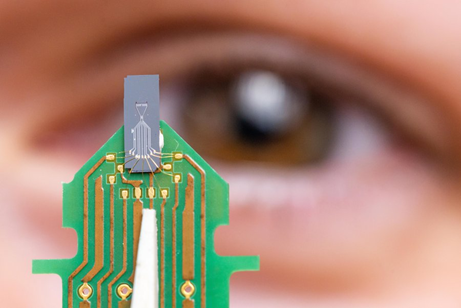
IENT
Accompanying the workshop, three renowned professors from our faculty will provide exclusive insights into their research.
Neuromorphic Computing: Energy Efficiency Through Biologically Inspired Hardware – Tuesday, March 3, 2026 | 5:00 p.m.
Prof. (ret.) Dr.-Ing. Dr. h.c. Rainer Waser
Information technology is facing a paradigm shift: classic, algorithmic data processing is increasingly being replaced by AI-based approaches. This is accompanied by a massive increase in energy consumption. To reduce this, institutes in Faculty 6 are researching neuromorphic systems that work much more efficiently than conventional architectures.
In the upcoming lecture, Prof. Waser will present the physical fundamentals of redox-based memristive components. The focus is on an interdisciplinary approach between materials science, electrical engineering, and computer science that uses the functioning of the human brain as a technical model.
In addition to hardware development, specific AI applications and their social opportunities and risks will be discussed. The lecture will conclude with a reflection on the question of whether future AI systems could develop consciousness.
Real hearing in the laboratory: Hearing research in interactive VR environments – Wednesday, March 4, 2026 | 2:00 p.m.
Prof. Janina Fels
Until now, research into auditory perception and cognitive processes has often relied on controlled but unrealistically simplified laboratory scenarios. The Institute of Hearing Technology and Acoustics (IHTA) at RWTH Aachen University is now using modern audiovisual virtual reality (VR) to simulate complex everyday situations in a realistic and interactive way.
This technology allows test subjects to interact with acoustic scenes in real time. This enables the precise investigation of hearing and attention in acoustically challenging environments such as open-plan offices or busy outdoor areas. A current research focus of the IHTA is the analysis of noise pollution, attention, and listening effort in elementary school classrooms.
The presentation highlights how VR methods bridge the gap between classical hearing psychology and real-life environments. It also discusses how interdisciplinary approaches from audiology and virtual reality are shaping the future of hearing research.
Glasses for the ears: Intelligent communication systems of the future – Thursday, March 5, 2026 | 9:00 a.m.
Prof. Dr.-Ing. Peter Jax
Smart hearables are increasingly evolving from simple headphones to intelligent microcomputers with integrated AI. As “glasses for the ears,” these systems act as personal assistants in the areas of consumer audio, health, and professional communication.
One key potential of this technology lies in 3D telephony. Spatial audio reproduction enables intuitive differentiation between speakers, which greatly enhances immersion and the sense of presence in digital meetings. The goal is communication that achieves the naturalness of a face-to-face conversation despite physical distance.
The presentation highlights current developments in research and industry and discusses the acoustic and technical challenges that must be overcome in the design of such innovative platforms.
Coffee, pizza and the elixir of the undead
A packed auditorium and lots of curious students: the first MINT Science Slam at RWTH Aachen University was a resounding success. Over 30 schools from the region brought their upper school classes to the MINT Science Slam to gain an entertaining insight into the diversity of MINT degree programmes.
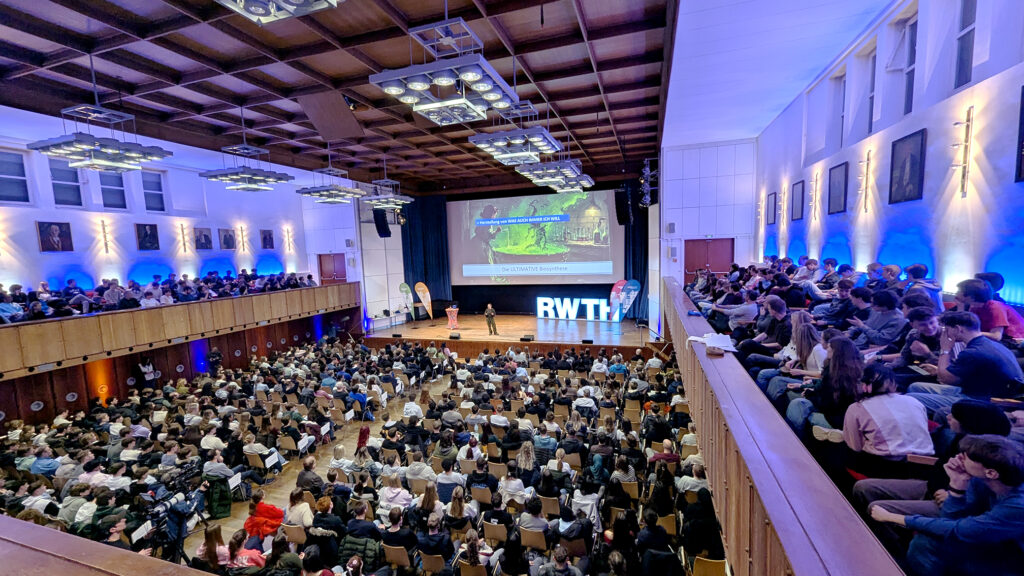
Daphne Heil und Melih Dal
The concept behind Science Slam is simple and effective: young scientists present their research topics in a clear, creative and enthusiastic manner in a maximum of ten minutes. The school pupils then evaluate the presentations themselves. This provides a lively insight into the diversity of STEM subjects, from mechanical engineering and biotechnology to medicine and electrical engineering.
Felix Walger was also there. In his slam, ‘Tailor-made medicine (technology) for everyone’, he impressively demonstrated how engineering research enables concrete social and medical applications. His presentation highlighted the central role that electrical engineering plays in the development of modern, personalised medical technology, a topic that met with great interest among the school pupils.
Alongside Walger, other young researchers took to the stage, including Rosario Othen, who won the slam with his presentation on coffee, paper and science, as well as contributions on topics such as cancer research, biotechnology, mathematics and sustainable energy. Knowledge transfer met entertainment.
The MINT Science Slam was first held as a joint project between the RWTH Knowledge Hub and the Central Student Advisory Service at RWTH Aachen University. In his welcoming speech, Professor Joost-Pieter Katoen, Vice-Rector for Teaching at RWTH, emphasised the importance of STEM subjects as key technologies for understanding our world. The slam was entertainingly moderated by Elena and Martin Lichtenthaler, supported by the Campus Dance Crew, who added to the excitement.
The STEM Science Slam impressively demonstrated how important low-threshold, inspiring formats are for study orientation and how diverse, relevant and exciting STEM research at RWTH is. For the Faculty of Electrical Engineering and Information Technology, Felix Walger’s participation was a successful example of how research, teaching and the promotion of young talent can be effectively combined.
Beyond 5G: Bringing 6G to the Factory Floor
Starting in January 2026, the project “6GEM+: Value-oriented 6G Communication Systems for the Networked Digital Industry” has officially launched. Led by Professor Haris Gačanin, who holds the Chair for Distributed Signal Processing at our faculty, this initiative marks the transition from pure research to practical industrial transfer.
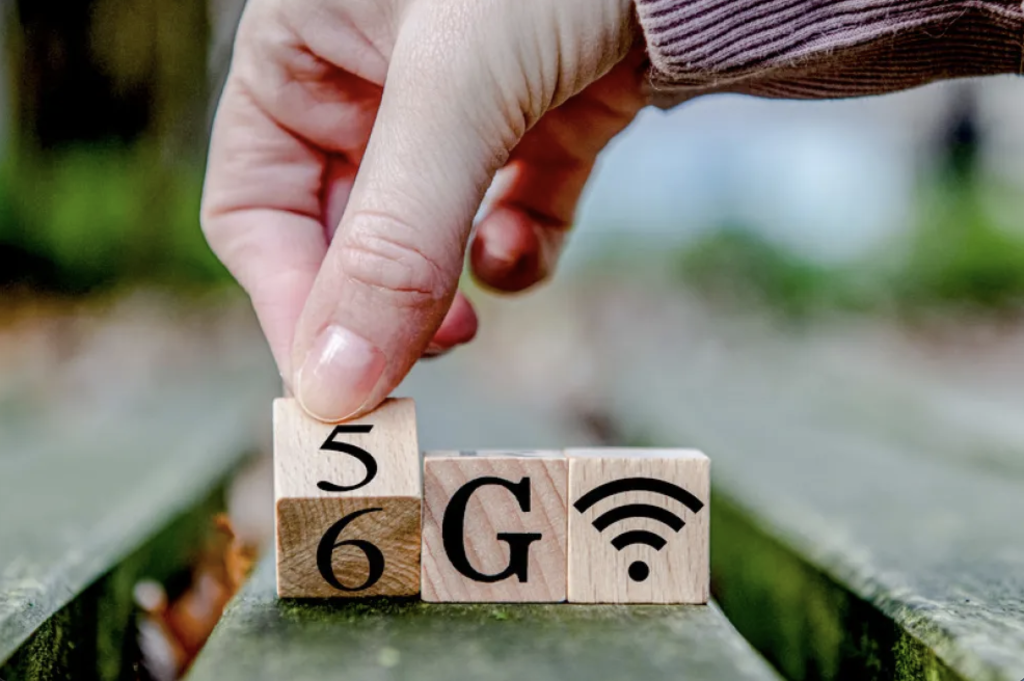
RUB, Marquard
While 5G laid the groundwork for mobile connectivity, it faces limitations in demanding industrial environments. Current systems often struggle with integrated AI computing, real-time data transmission, and the ultra-low latency required for advanced robotics. The 6GEM+ Transfer Hub is designed to overcome these barriers, ensuring that the next generation of networks can support fully autonomous logistics and AI-driven production.
Supported by 25 million euros in funding from the Federal Ministry of Research, Technology, and Space (BMFTR), the project will run for four years. It brings together a powerful consortium including TU Dortmund, Ruhr-Universität Bochum, and the Fraunhofer Institutes for Production Technology (IPT) and Material Flow and Logistics (IML). A key element of this project is the involvement of industrial “use-case mentors” who provide real-world insights to ensure that the developed technologies are not just innovative, but ready for the factory floor.
Prof. Max Lemme as co-author in Nature Photonics
The Faculty of Electrical Engineering and Information Technology congratulates Prof. Max Lemme on a special scientific achievement: as co-author, he contributed to a consensus statement publication in the renowned journal Nature Photonics. The publication is entitled ‘Guidelines for accurate evaluation of photodetectors based on emerging semiconductor technologies’ and provides important impetus for the international research community.
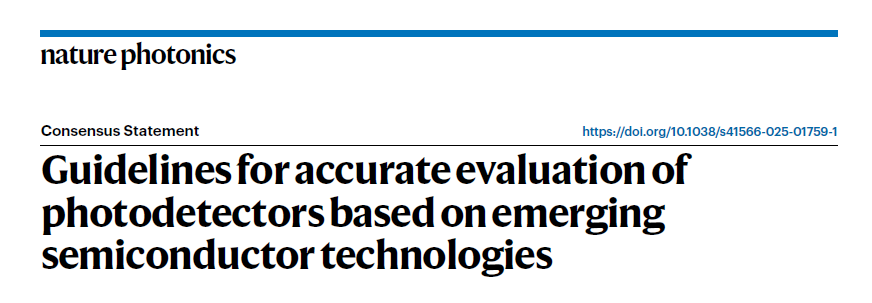
A consensus statement publication summarises the current state of knowledge in a specialist field and formulates recommendations, standards or procedures that promote reliable and uniform scientific practice. In this article, leading experts from research and industry have developed for the first time a comprehensive framework for the precise characterisation, documentation and comparability of photodetectors based on novel semiconductor materials.
There is a great need for such guidelines: photodetectors made from innovative material classes such as organic semiconductors, perovskites, quantum dots, two-dimensional materials, metal oxides and carbon nanotubes have made enormous progress in recent years. At the same time, inconsistent measurement methods and reporting standards have so far made it difficult to compare different studies and thus hindered scientific development in this field.
The recommendations that have now been published create a common foundation for the community and support transparent, reproducible and comparable research practices. This benefits not only academic working groups, but also industrial development processes and the emergence of future photonic technologies.
Prof. Max Lemme is not only the holder of the Chair of Electronic Components at our faculty, but also the managing director of AMO GmbH, whose research focuses are closely linked to the topics covered in the publication. The development and integration of novel materials for optoelectronic components is one of the company’s core activities. Participation in this international consensus paper underscores the great scientific and technological relevance of this work.
AMO GmbH has also highlighted the publication in its own article. Further information can be found on the website and on LinkedIn.
Four RWTH researchers admitted to the German Academy of Engineering Sciences
The German Academy of Science and Engineering, acatech for short, has accepted four scientists from RWTH Aachen University as new members: Fabian Kießling, Max Lemme, Constantin Häfner and Walter Leitner.
acatech is the central voice of technical sciences in Germany and is funded by the federal and state governments as a national academy. It advises politicians and society independently, factually and in the public interest on issues relating to shaping the future of technology. Its members come from the fields of engineering and natural sciences, medicine, and the humanities and social sciences. The patron of the academy is the Federal President.
With the admission of the four new members, a total of 35 scientists from RWTH Aachen University are now part of acatech. In addition to Professor Max Lemme, Professor Rainer Waser, Professor Dirk Uwe Sauer, Professor Jürgen Roßmann, Professor Rik W. de Doncker and Professor Steffen Leonhardt from the Faculty of Electrical Engineering and Information Technology are also members of the academy.
Max Lemme: Research into the electronics of the future
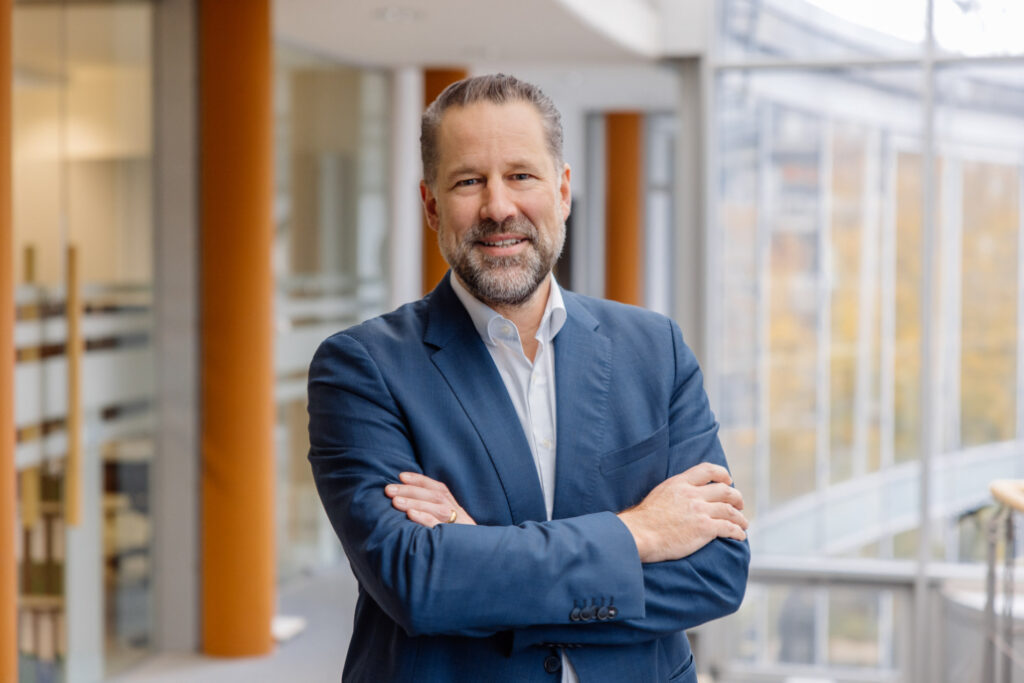
© Martin Braun
Professor Max Lemme holds the Chair of Electronic Components at RWTH Aachen University and is managing director of AMO GmbH. His research focuses on novel electronic and optoelectronic components based on two-dimensional materials such as graphene. The aim is to integrate these materials into future micro- and nanoelectronics, sensor technology and neuromorphic computing systems. Lemme is also spokesperson for the NeuroSys future cluster.
In addition to him, three other outstanding researchers from RWTH Aachen University were accepted into acatech: Professor Fabian Kießling, Director of the Helmholtz Institute for Biomedical Engineering and pioneer of molecular imaging, Professor Constantin Häfner, Director of Research and Transfer at the Fraunhofer Society and expert in high-power lasers, and Professor Walter Leitner, Chair of Technical Chemistry and Petrochemistry and Director at the Max Planck Institute for Chemical Energy Conversion.
Their admission recognises their scientific achievements and their contribution to the further development of technical sciences in Germany.
The Science of Sound and Well-Being – Inside RWTH’s MOSAIC Project
Traffic noise, birdsong, or the hum of a computer – sounds are part of everyday life. But when do they start to affect our well-being?
That’s the question behind MOSAIC (Acoustic Well-Being in a Multi-Domain and Contextual Spatial Approach), a new graduate research group coordinated by RWTH Aachen University.
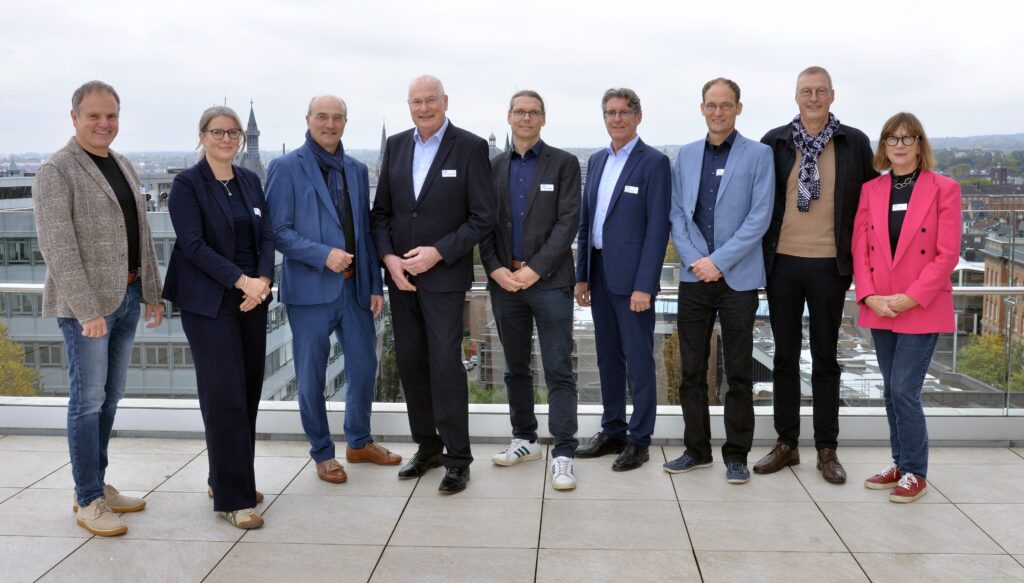
Foto: Andreas Schmitter
A key partner is the Institute of Hearing Technology and Acoustics (IHTA), led by Prof. Janina Fels, where engineers explore how sound and human perception interact.
Together with Prof. Marcel Schweiker from the Chair of Healthy Living Spaces, she investigates how acoustic comfort can be measured and improved.
As Prof. Schweiker notes: “Construction noise is usually perceived as more disturbing than birdsong – but at a certain level, even birdsong becomes tiring.”
Beyond volume, the team looks at how light, temperature, and room geometry influence how we experience sound – using methods and instruments deeply rooted in electrical engineering.
At the Kick-off Meeting on October 15, researchers and representatives of the HEAD Genuit Foundation gathered to launch the four-year program.
Foundation founder Prof. Klaus Genuit, a graduate of RWTH’s electrical engineering program and an honorary professor at the university, emphasized the importance of supporting young researchers in acoustic science.
“In a football stadium, I expect a certain level of noise – I’d be surprised if it were quiet,” Schweiker added.
MOSAIC aims to capture exactly this context dependency through modern sensing and signal-analysis techniques – many of which stem from ETIT’s research tradition.
The future of battery technology: Revolution using AI
Prof. Weihan Li . © Peter Winandy
Innovative Battery Research at RWTH Aachen
Junior Professor Weihan Li is revolutionizing battery research at RWTH Aachen by developing AI-powered testing methods that enable precise predictions about the future performance and lifespan of battery cells already during the production phase.
Utilizing advanced technologies such as digital twins, data-driven models, and automated diagnostic procedures, his approach transforms traditional battery management into a proactive system—moving from mere observation to anticipatory strategies.
Shortened Development Processes and Sustainable Innovation
At the core of his research is the goal of significantly shortening development cycles, reducing production costs, and simultaneously enhancing sustainability throughout the entire battery lifecycle. Prof. Li succinctly states:
“Ultimately, we want to accelerate the development of high-quality, affordable batteries and make the entire battery life cycle more sustainable.”
The Synergy of Artificial Intelligence and Electrochemistry
Early on, Li recognized that the combination of artificial intelligence and electrochemistry is the key to the future of the battery industry. This insight drives him to push forward innovative solutions:
“That’s when I realized: this is the future,” he recalls. “Since then, I’ve been working on integrating AI and electrochemistry.”
RWTH Aachen as an Innovation Engine
For Prof. Li, RWTH Aachen is more than just a research location—it provides an inspiring environment that nurtures young talent through strong networks and a pronounced spirit of innovation. The close collaboration with industry not only underscores the demand for modern battery solutions but also secures a significant share of funding.
Data-Driven Modeling as a Key Component
The extensive data base provided by the RWTH infrastructure is a central pillar in precise AI modeling. This essential resource not only guarantees research success but also forms the foundation for highly advanced analytical methods:
“This massive dataset is essential for building our AI models.”
Proactive Battery Management
Finally, Li’s approach aims not only to monitor the aging process of battery cells but to intervene proactively—well before they reach their maximum performance limits. In his own words:
“We don’t just want to understand how batteries age – we want to intervene before aging even begins.”
The advanced, AI-enabled methods of Prof. Li at RWTH Aachen pave the way for faster, cost-effective, and sustainable battery solutions. This groundbreaking work sets a new standard in battery development and reinforces Europe’s leading role in the energy transition.


