Kategorie: ‘Information, Kommunikation und Elektronik’
Klee Prize 2025: Controllable exoskeletons – Support instead of replacement
Dr.-Ing. Lukas Bergmann impresses with his award-winning doctoral thesis, in which he developed an active exoskeleton and a cooperative controller to support movement intentions in real time.
Dr.-Ing. Lukas Bergmann won second place in the Klee Prize 2025 with his doctoral thesis. He received the award for the development of an active exoskeleton that uses innovative control technology to record and support movement intentions.

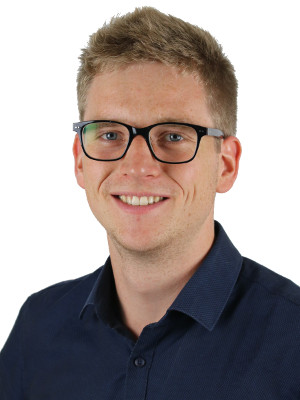
Dr.-Ing. Lukas Bergmann | @mediT
Worldwide, strokes result in mobility problems, and traditional treatments are frequently resource-intensive. Robotic rehabilitation systems can provide support when patients initiate movements independently. Dr. Lukas Bergmann explains:
„In the long term, research into exoskeletons can make a significant contribution to supporting people with musculoskeletal disorders. The exciting thing for me is that control technology has a very practical application here.“
It describes an active exoskeleton that enables safe coupling between humans and devices, as well as a cooperative controller that supports joint torques in real time.
It is also worth mentioning that Dr.-Ing. Sonja Ehreiser (mediTEC, RWTH Aachen University) won first place in the Klee Prize 2025 for her dissertation on improving the care of patients with knee prostheses.
The VDE, a leading technology organization in Europe, has been promoting innovation and technological progress for over 130 years. With the Klee Prize 2025, the VDE honors outstanding research work that offers great benefits for patients and shapes the future of medical technology.
The VDE (VDE Association for Electrical, Electronic & Information Technologies) is based in Frankfurt am Main. More information at VDE Website
Source: VDE Press Release
Internship opportunities in Singapore

The Chair for Distributed Signal Processing at RWTH Aachen University, in cooperation with its partner in Singapore, enables funded stays abroad as part of its 6G research programme on future communication technologies.
The public Institute for Infocomm Research (A*STAR I²R) in Singapore is dedicated to developing innovation in digital technologies. The Institute’s research agenda is focused on meeting concrete societal challenges and takes a systems-oriented, multidisciplinary and transformative scientific approach. In this context, the institute cooperates with the Chair of Distributed Signal Processing (DSP). Together they pursue the 6G research programme on future communication technologies. This programme covers key areas of 6G networks and beyond. These include, for example, integrated communication and sensing, AI-native communication and networks, novel modulation schemes as well as networks and physical systems of digital twins.
To apply for a financially supported research stay within the framework of the following programmes, interested students are advised to obtain a recommendation from the DSP:
Singapore International Pre-Graduate Award (SIPGA) – Bachelor or Master students apply for a stay of two to six months. The current application cycle closes on 31 March 2025 at 23:59 GMT +8 (Singapore time). This year, students are expected to start their stay between September and December 2025.
A*STAR Research Attachment Programme (ARAP) – PhD students spend a minimum of one and a maximum of two years at A*STAR research institutes under the joint supervision of A*STAR researchers and faculty members from their home university.
The scholarships are offered by the Agency for Science, Technology and Research (A*STAR), Singapore’s leading public research and development agency. As a science and technology organisation, A*STAR aims to bridge the gap between academia and industry, and plays a key role in nurturing scientific talent and leadership for the wider research community and industry.
For further information, please contact Professor Haris Gacanin from the DSP at the following e-mail address: harisg@dsp.rwth-aachen.de
Funded internship in Tokyo

The Chair of Distributed Signal Processing at RWTH Aachen University, in cooperation with its Japanese partner, is offering a fully funded internship for students demonstrating exceptional potential in the area of networking and wireless communications. The programme is aimed at both Bachelor and Master of Science students.
As Japan’s only national research institute specialising in the field of information and communication technology, NICT maintains the Beyond 5G R&D Promotion Unit, which collaborates with the Chair of Distributed Signal Processing on joint research projects. The aim of the scientific work is to design and evaluate next-generation wireless networks, taking into account cutting-edge information and communication technology and other technology areas.
An internship at the National Institute of Information and Communications Technology (NICT) involves the study of Beyond 5G use cases, with the verification of relevant communication functions and interfaces being a key element of this. One use case that proves relevant in this context is, for example, the integration of radio resource management and optimised energy management. In addition to this, contributions to the development of Beyond 5G Proof-of-Concept are to be expected, based on the defined use cases. This will be developed in cooperation with the testbed facilities of the Chair of Distributed Signal Processing. Interns will participate in regular meetings and discussions with the NICT team during their internship work, where they will receive guidance. At the end of the internship period, students are required to summarise the results and prepare a report.
The internship is based on the Beyond 5G/6G White Paper and aims to establish a long-term international research cooperation between NICT and the Chair of Distributed Signal Processing. The interns will spend four to six months in Tokyo. The financial costs associated with the stay, including travel, accommodation, overseas travel insurance and a daily allowance, are covered by the offer.
In order to participate, it is necessary to have a general knowledge of programming with pseudo-code, as well as excellent written and oral English skills and an excellent knowledge of fundamental principles in communications. Furthermore, the following Bachelor of Science or Master of Science courses must have been completed with a grade of at least 2.0:
For Bachelor of Science students: Fundamentals of Computer Science 4 – Introduction to Machine Learning Methods.
For Master of Science students: Signal Processing for Mobile Communications, Signal Processing in Multi-Antenna (MIMO) Communication System, Estimation and Detection Theory.
Applications must be submitted three months before the planned start of the internship. They can be sent throughout the year to Professor Haris Gacanin at the following e-mail address: harisg@dsp.rwth-aachen.de. Further information can also be requested at the above e-mail address.
Neuromorphic Hardware: Kick-off event in January
The NeuroSys future cluster at RWTH enters its second phase
At the beginning of this year, the Cluster4Future NeuroSys (Neuromorphic Hardware for Autonomous Artificial Intelligence Systems) is entering its second phase.
The Clusters4Future initiative is part of the German government’s High-Tech Strategy 2025 and is funded by the Federal Ministry of Education and Research.
At the kick-off event at the end of January, more than 90 participants discussed their ideas and technologies for the development of neuromorphic hardware in the Super C at RWTH Aachen University.
Neuromorphic systems are modelled on the basic building blocks of the brain, neurons and synapses. Neuromorphic hardware is a resource-saving but powerful basis for energy-intensive artificial intelligence research operations. The aim is to create a technology basis for neuromorphic components and alogrithms, building on the basic research carried out at RWTH Aachen University and the Jülich Research Centre. The coordinator of the future cluster is Professor Max Lemme, Head of the Chair of Electronic Components at RWTH Aachen University.
Learning neuromorphic AI chips could soon enable energy-efficient on-site data processing and thus offer promising prospects for future working methods, smart city concepts and the Internet of Things. Various contributions from autonomous driving to learning systems and personalised medicine will also be delivered.
The second phase of the project is planned for three years and will see RWTH collaborating with a wide range of experts from research and industry.
Further information on the project can be found here
Degree programme survey 2025
Every six years, the Faculty of Electrical Engineering and Information Technology organises a student survey, which is of particular importance for the quality assurance of academic teaching.
The aim of the degree programme survey is to improve the quality of studies based on feedback from students enrolled in the following subjects
o Electrical Engineering and Information Technology
o Electrical Engineering with orientation semester
o Computer Engineering
And since everything is interconnected, the students of Business Administration and Engineering: Electrical Power Engineering are being consulted as well.
The survey enables students to reflect on their personal study experience and to evaluate the study conditions. In order to ensure a valid database for the quality assurance of studies and teaching, every single piece of feedback is valuable. In this way, today’s students contribute to the advancement of academic teaching and enable future generations of students to build on their experiences.
‘Our students are absolute insiders when it comes to our courses. So who better to advise us on the direction in which we need to develop our teaching,’ says Martina Dahm, Managing Director of the Faculty of Electrical Engineering and Information Technology.
In recognition of their efforts, a prize draw will be held for all participating students. The prizes consist of ten vouchers per 100 participants, each worth €50, which can be redeemed as a gift voucher for Schenk Lokal. Contact details are kept in a separate record for this purpose, independent of survey content. So responses are processed without reference to individuals, ensuring anonymity.
The online survey can be accessed via a personalised link sent to students by email, which allows them to complete the survey on mobile devices or on the desktop. It is also possible to access the questionnaire via the dashboard of the RWTHmoodle accounts. There the questionnaire is easiest to complete on the desktop.
Team AixSense successful in the SensUs competition 2024
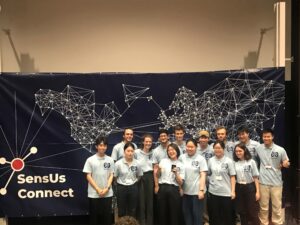
This years AixSense team at the SensUs competition 2024 ©RWTH
The RWTH team impresses with its biosensor for monitoring kidney failure
For the seventh time already, the 15 students of the AixSense team successfully took part in the SensUs competition, organised by Eindhoven University of Technology. This year, 18 teams competed against each other in the international competition with their point-of-care (PoC) biosensor solutions for the real-time detection of creatinine for monitoring acute kidney failure. The AixSense team also included 3 students from the Japanese partner university Tokyo Institute of Technology.
This year, AixSense won three out of five categories with its PoC and also took second place in the technological innovation and technical feasibility categories. Particularly noteworthy is the performance in the area of public relations and scientific communication: the team from Aachen received the Vlog Award for their video diary and AixSense also won the public voting for the Public Inspirations Award.
The Institute for Materials in Electrical Engineering 1 at RWTH Aachen University has been involved in the competition since 2018. Every year, Professor Sven Ingebrandt and Dr. Vivek Pachauri put together a team from various degree programmes. The team is supported by various structures and profile areas at RWTH, such as the Lab center for micro and nanotechnology (ZMNT), which advises the team on technical issues.
The annual competition encourages international and interdisciplinary collaboration in fields such as electrical engineering and micro-nanotechnology, transformative materials, biology, engineering and medical sciences, among others.
Interested parties can apply for the SensUs 2025 competition at pachauri@iwe1.rwth-aachen.de until November 2024.
Visit from Professor Mohamend-Ali Belabbas
Pr ofessor Mohamed-Ali Belabbas, this year’s winner of the ‘Friedrich Wilhelm Bessel Research Award’ from the Alexander von Humboldt Foundation, is visiting the Chair of Intelligent Control Systems during August.
The Chair of Intelligent Control Systems will be the host during the funding period.
We congratulate the award winner and wish him a pleasant stay.
Further information on the sponsorship can be found on the website of the Alexander von Humbold Foundation.
ITAR team from the Chair of Distributed Signal Processing presented research project at the Hannover Expo
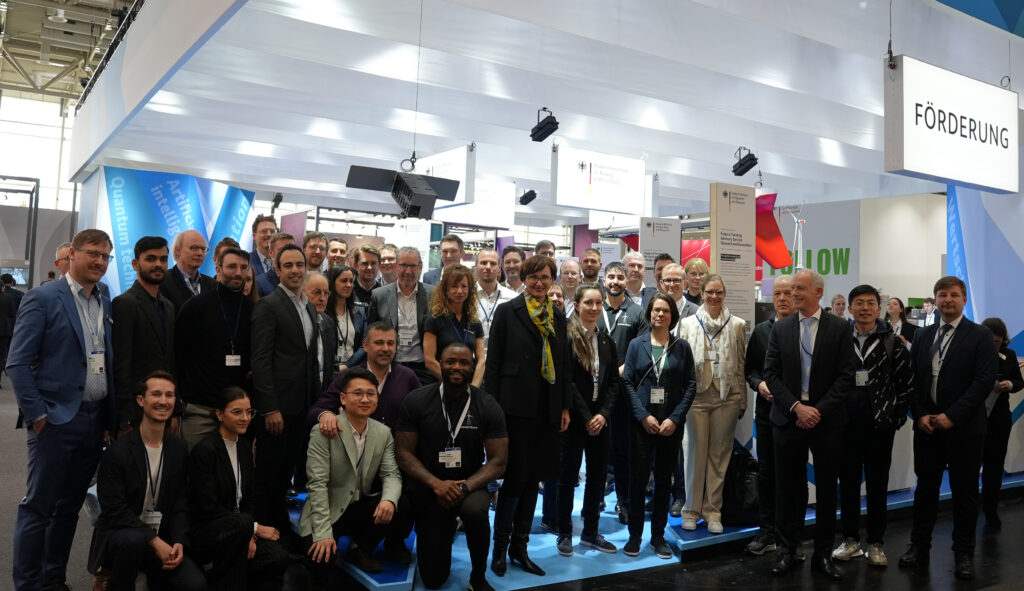
© Chair of Distributed Signal Processing
One of our chairs was also represented at the Hannover Messe this year. The ITAR team (Innovative Test Methods for Radio Systems Based on Augmented Reality Technologies) presented the cutting-edge research of the start-up from the Chair of Distributed Signal Processing at the stand of the Federal Ministry of Education and Research (BMBF) at the Hannover Expo in April.
ITAR, a branch of the 6G Research Hub, is funded by the Federal Ministry of Education and Research as part of the Startup.Connect programme. The team welcomed Minister Bettina Stark-Watzinger from the BMBF and State Secretary Prof Dr Sabine Döring as guests. Students, engineers and managing directors took the opportunity to see the team’s innovative solutions and share them with leading industry representatives. This prepared the way for future collaborations. We would like to thank the BMBF, familie redlich A.G. and the team at the Karlsruhe project management organisation for their support.
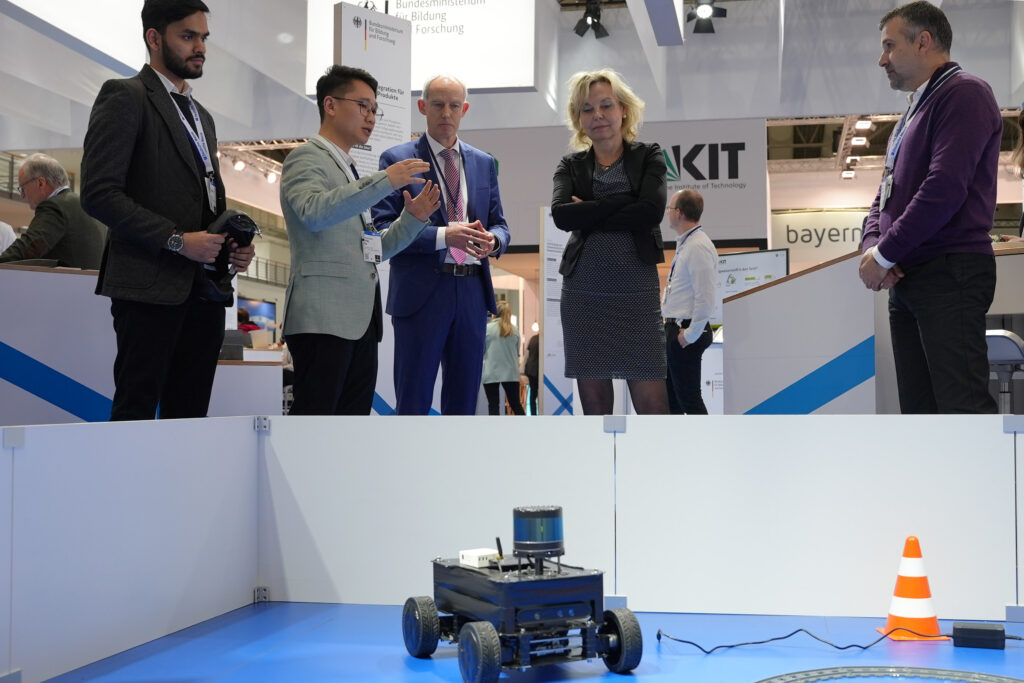
© Chair of Distributed Signal Processing
Further information on ITAR can be found on the chair’s website.
Dr Jan Moritz Joseph admitted to the “Junges Kolleg”
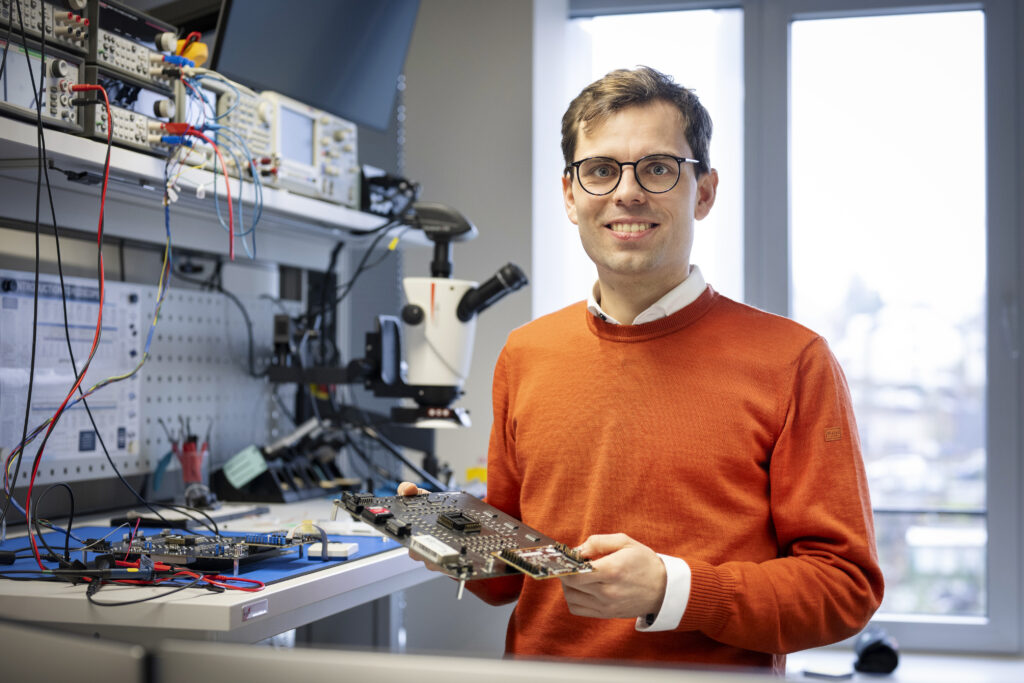
© Nordrhein-Westfälische Akademie der Wissenschaften und der Künste | Bettina Engel-Albustin 2022 (NRW AWK| Engel-Albustin)
The dedicated researcher Dr Jan Moritz Joseph from the Institute for Communication Technologies and Embedded Systems at RWTH Aachen University has secured a coveted place in the prestigious “Junges Kolleg” of the North Rhine-Westphalian Academy of Sciences, Humanities and the Arts. This admission is considered one of the highest academic honours that can be achieved in North Rhine-Westphalia (NRW). Congratulations!
In addition to Dr Jan Moritz Joseph, Junior Professor Lisa Spantig, Dr Maike Dohrn and Dr Julia Exarchos – all from RWTH Aachen University – were also accepted into the Young Academy of the North Rhine-Westphalian Academy of Sciences, Humanities and the Arts. The Academy has accepted a total of 19 new scholarship holders into its Young Academy. The RWTH has the most new members. Admission to the “Junges Kolleg” is one of the most important honours for young academics in North Rhine-Westphalia. They receive an annual grant of 10,000 euros and take part in academy events.
Dr Jan Moritz Joseph from the Institute for Communication Technologies and Embedded Systems (ICE) at RWTH Aachen University is researching energy-efficient methods for the design and use of AI in embedded systems. The focus is on neuromorphic hardware. Traditionally, AI is executed on systems in which computing and memory units are separate, which limits performance. Neuromorphic systems combine both units in a new component and are therefore more energy-efficient. Dr Jan Moritz Joseph and his team are designing an integrated system in which hardware and software are developed together. He and his team received the RWTH’s Innovation Award 2022 for the best transfer project for their hardware and software development systems. He studied computer science and medical technology and received his doctorate in electrical engineering and information technology in 2019.
The academy has been supporting young talent in NRW with the “Junges Kolleg” since 2006 and now has around 170 active, associated and former scholarship holders. In addition to a doctorate, membership requires outstanding academic achievements at a university or research institution in North Rhine-Westphalia. Members must not be older than 36 at the time of admission. RWTH Aachen University currently has seven researchers in the “Junges Kolleg”.
We at the Faculty of Electrical Engineering and Information Technology would like to congratulate Dr Jan Moritz Joseph on joining the Academy.
ITG Conference on Speech Communication
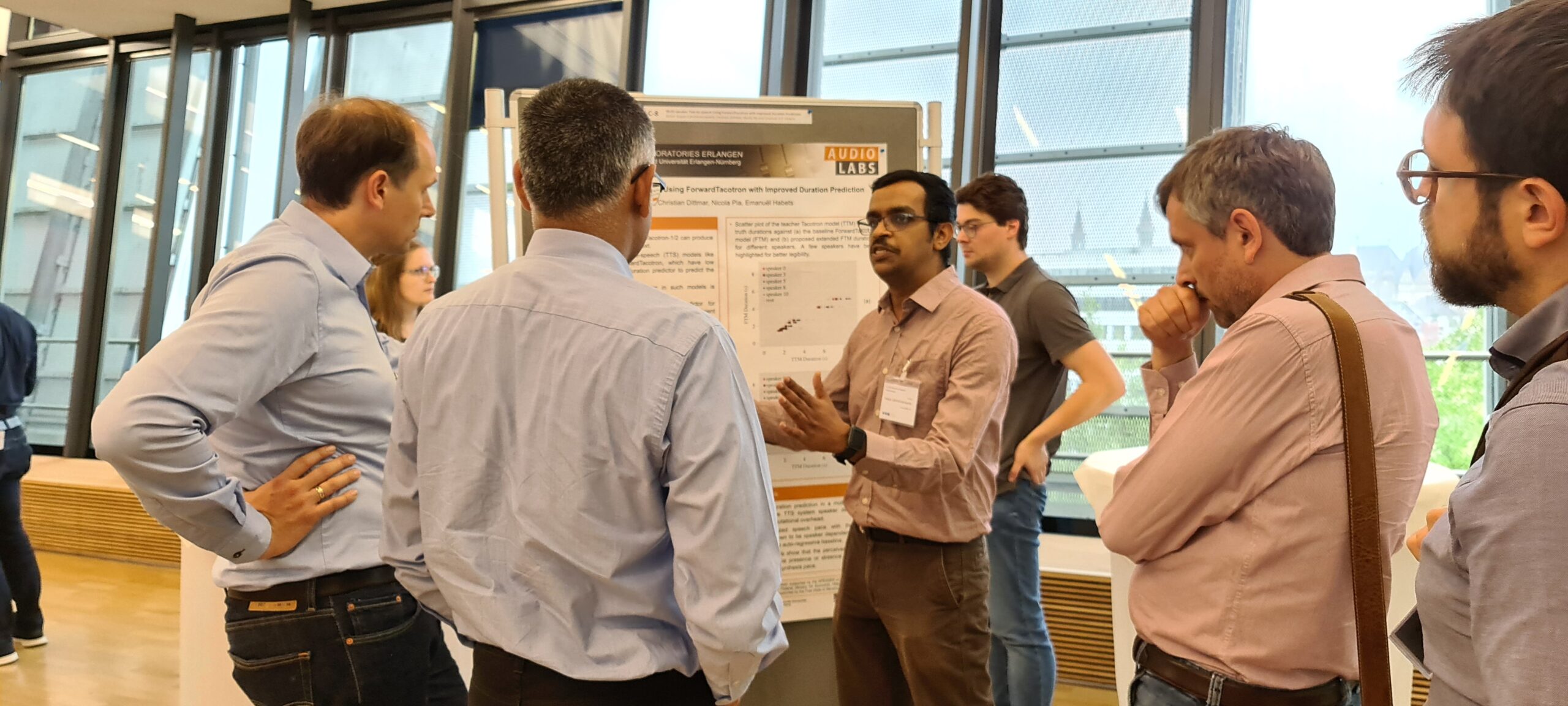
© Katharina Uhlig
The fifteenth symposium in a successful series of events on the topics of speech processing, audio and spoken language processing took place from September 20 to 22, 2023 in the SuperC building of RWTH Aachen University.
Central and in the heart of university life, a lively scientific exchange took place with a focus on theory, algorithms, and application relevance of the topic composition. Conference participants exchanged ideas in workshops and benefited from both professional and personal networking. Alternating blocks of lectures and poster presentations, as well as a show & tell session formed elements of the three-day conference.
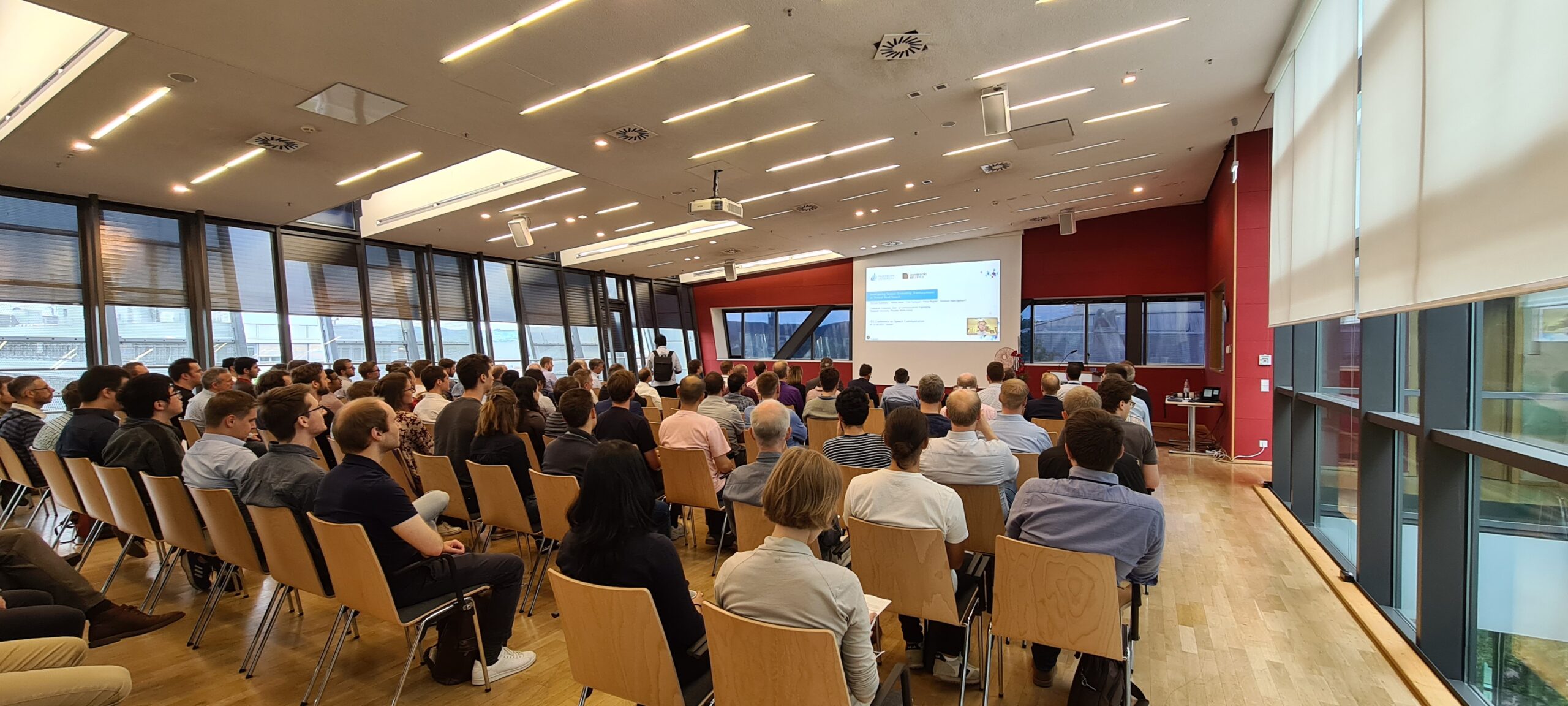
© Katharina Uhlig
Other highlights included three keynote presentations from renowned individuals with expertise:
For Team Viewer, Dr. Hendrik Witt presented real-life use cases for augmented reality solutions for process optimization in the working world and explained the extent to which wearables and sensors are driving the industrial metaverse. The goal, he said, is digitization far from desks, for example in logistics, manufacturing or field service. Team Viewer sees the metaverse as an interface between the real world, the Internet and technology. Its AR platform Frontline offers augemnted reality, mixed reality and artificial intelligence on smart glasses, smartphones, tablets and other wearables. Empowered so-called frontline workers through this could usher in the next industrial revolution.
Professor Nilesh Madhu of Ghent University vividly explored the evolution of communication technology in his talk; from the use of tedious, hand-made, stochastic models to a plethora of impressive state-of-the-art data-driven approaches. His remarks also allowed a glimpse into the future and opened the discussion on whether the knowledge and experiences of the past are suitable to pave the way there.
Focusing on practical experience and the application of research results, Professor Frank Kurth from the Frauenhofer Institute for Communication, Information Processing and Ergonomics presented concrete safety application scenarios that use various approaches, including Deep Learning, for information extraction. Especially with respect to voice communication, the extraction of information from sensor signals is a significant aspect of safety-critical applications. This requires reliable methods, while complying with applicable law. The challenge here is often the poor quality of audio signals combined with the need to process large amounts of data in real time.
In addition to the exciting scientific content shared at the conference, a rich cultural offer was also opened to the participants. The city of Charlemagne showed its best side during the various guided tours and allows many insights into its historical heritage.
The conference was organized by the Informationstechnische Gesellschaft (ITG) in VDE, in cooperation with the Technical Committee Speech Communication AT3, as well as the Technical Program Committee and the Institute for Communication Systems at RWTH Aachen University.
Extensive information can be found on the homepage of the ITG conference.


