Observing 2D Memristors with Operando TEM: Another Step Toward Neuromorphic Computing
Understanding of conductive filament dynamics in memristive devices based on two-dimensional (2D) materials has been substantially advanced by a research team from AMO GmbH, RWTH Aachen University (Chair of Electronic Components), and Forschungszentrum Jülich.
The researchers used a transmission electron microscope (TEM), which instead of light uses a beam of electrons to make images, thus achieving imaging down to the scale of atoms through the short wavelengths of electrons. The operando state for TEM was used to observe the 2D components as they are operating, and not in before or after states. Which allows the nanoscale phenomena to be observed in real time.
Memristors are a key part of neuromorphic computing, which allows computation and memory in the same physical location so that the use of energy is radically minimized.
For this research, 2D sheets of molybdenum disulfide (MoS₂) were used. It is a compelling candidate for memristive devices owing to its atomically thin, layered two-dimensional structure, which features interlayer van der Waals gaps, which are nanoscale spacings maintained by weak van der Waals interactions that provide efficient transport pathways for ions and metal atoms. These pathways facilitate the controlled formation and dissolution of conductive filaments, thereby enabling the resistive switching behavior required for device operation.
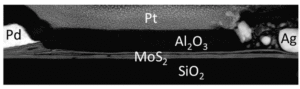
Image 1 – Sheets of 2D Memristor and Pd-Ag Poles to create potential difference – nature.com
Silver ions were directly observed by the researchers as they moved through the MoS₂ medium along surface routes, within interlayer van der Waals gaps, and between bundles under applied voltage. There, they gather into metallic conductive filaments that bridge the electrodes and change the device into a low-resistance state; reversing the polarity dissolves these filaments and returns the device to a high-resistance state. In order to directly evaluate switching reliability as well as the causes of anomalous events and cycle-to-cycle variability, the operando TEM imaging is synced with current-voltage measurements. This allows them to track the nucleation, growth, motion, and rupture of individual filaments in real time and correlate these physical events to electrical signatures. They deduced the factors that influence switching performance from these observations, offering specific recommendations for the construction and functioning of devices.

Image 2 – Silver filament formation and deformation under TEM

Image 3 – Silver contrast under TEM
These results give us specific ways to make memristive synapses more reliable for neuromorphic computing. By figuring out where silver filaments form (on MoS₂ surfaces, in interlayer van der Waals gaps, and between bundles) and measuring their sizes, the study makes it possible to better control how filaments grow and nucleate. By customizing the MoS₂ morphology and device geometry, engineers can adjust the SET/RESET voltages, limit the filament thickness, and thus improve the switching current and energy use. All of these physics-based ideas support device design and operation plans that are based on mechanisms and make memristive hardware for neuromorphic systems more stable, efficient, and scalable.
Looking ahead, as filament dynamics become programmatically controllable and device variability is tamed, neuromorphic systems could progress from lab prototypes to wafer-scale accelerators that learn on-device, operate at microwatt power levels, and approach brain-like energy efficiency. Hybrid 2D-material crossbars integrated atop CMOS may enable dense, 3D-stacked synaptic fabrics for lifelong on-chip learning, powering adaptive robotics and privacy-preserving cognition in everyday devices. With native plasticity at the device level, future machines could continuously adapt to their environments, compress and interpret sensory streams in real time, and deliver robust intelligence in battery-powered wearables and autonomous agents, bringing us measurably closer to brain-inspired computing platforms that transcend the limits of conventional digital architectures.
Source: nature.com
The illustrations were taken from the above-mentioned source. They are not in their original sizes and have been adjusted to aid in the explanation.
Software-defined vehicles and automated driving – last call in Europe for new alliances and architectures

Professor Lutz Eckstein © IKA
Lecture by Professor Lutz Eckstein, Head of the Institute for Automotive Engineering at RWTH Aachen University and President of the VDI, on Wednesday, 22 October 2025, from 5:00 p.m. to 6:30 p.m. Admission is free. The lecture/discussion will take place via Zoom and will be available as a video recording afterwards.
The automotive industry is facing major challenges. As well as electrification and automated driving, these mainly relate to the underlying hardware and software architecture that defines the functionality of modern motor vehicles. As with smartphones, it is now possible to update the infotainment system with apps and updates. However, established vehicle manufacturers are reluctant to implement a service-oriented software architecture and provide frequent updates and upgrades for safety-related functions.
Emerging competition in the field of automated driving, however, makes this necessary. From both a social and customer perspective, it would be unacceptable to respond to critical situations or even accidents only after months with a software update. While new vehicle manufacturers with an IT background are already addressing this capability with suitable architectures, established manufacturers have so far attempted to develop expensive proprietary solutions with mixed results. Consequently, there is a growing willingness within the European automotive industry to collaborate on the development and use of open-source software, beginning with the S-CORE middleware. In his presentation, Professor Eckstein will highlight the challenges involved and the further cooperation required to achieve this.
The lecture series is being held in cooperation with the RWTH Computer Science Department, Forschungszentrum Jülich, the Regional Group of the German Informatics Society (RIA), the Regional Industry Club for Computer Science Aachen (Regina) and the Aachen Group of the German University Association.
European Research Council Funds Two Groundbreaking RWTH Projects
The RWTH Aachen celebrates a major success: Two researchers have been awarded the prestigious ERC Starting Grant, each receiving €1.5 million in funding over five years.
Prof. Dr. Daniel Truhn, senior physician at University Hospital RWTH Aachen and lecturer at the Chair of Image Processing at our Faculty of Electrical Engineering and Information Technology, where he teaches the lecture “Biomedical Engineering”, is launching SAGMA (Semantic-Aware Generative Medical AI), a project that rethinks AI in radiology by connecting specialized AI modules into an expert team that supports doctors with complex diagnoses.
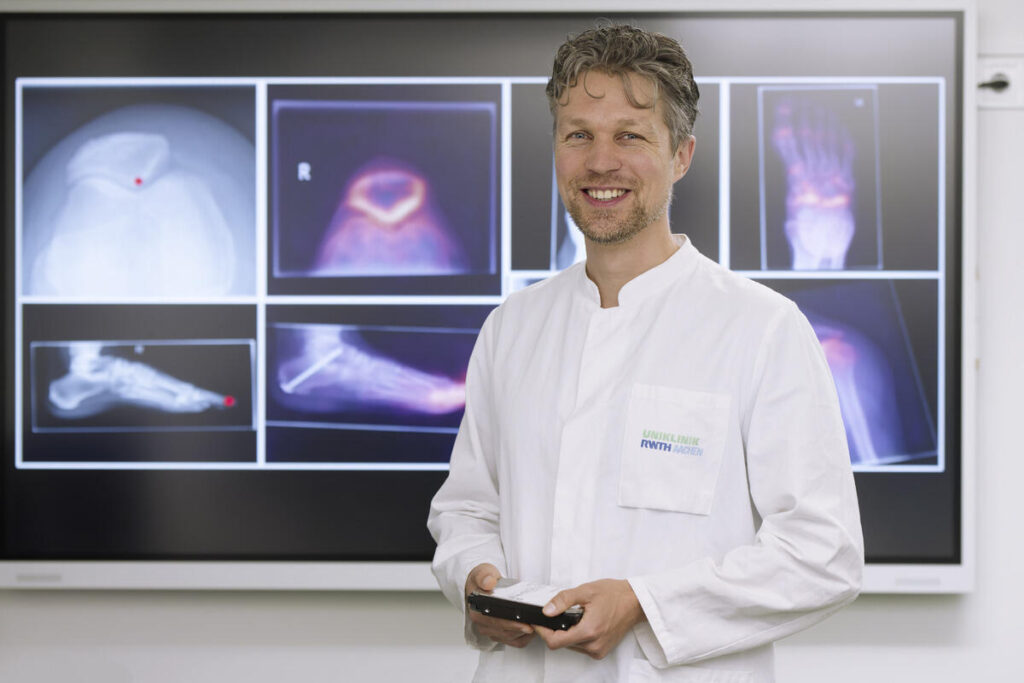
© Peter Winandy / RWTH Aachen University
A second grant goes to, Dr. Khiêm Vu Ngoc, at the Chair of Continuum Mechanics, is developing PolyFun (Polymer Mechanics through Function Spaces), a novel approach that combines physics and machine learning. His models are designed to be not only precise but also reliable and transparent – with wide-ranging applications in materials science, medicine, and robotics.
These grants highlight RWTH’s international recognition and the strong role of our Faculty in advancing AI and medical technology.
Talk: Digital Agriculture – More Advanced Than You Think
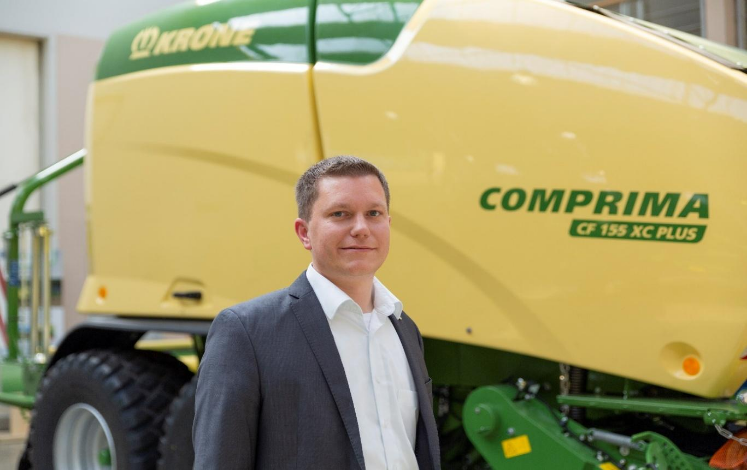
© KRONE Group / Jan Horstmann
Digital agriculture – more advanced than you think
Modern agricultural machinery is a high-tech marvel: equipped with powerful sensors, satellite navigation, and AI-based driver assistance systems, it significantly improves precision and efficiency in farming. Jan Horstmann, Managing Director Construction & Development of KRONE Group, provides a comprehensive overview of these technologies and practical examples in his lecture. Join the discussion and learn how digitalization is transforming agricultural technology sustainably.
The event takes place online via Zoom on September 11, 2025, from 5:00 to 6:30 PM (CET).
The video of the event will be published afterwards.
The future of battery technology: Revolution using AI
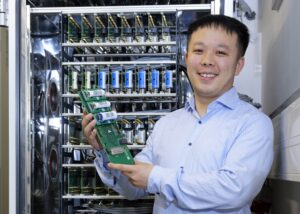
Prof. Weihan Li . © Peter Winandy
Innovative Battery Research at RWTH Aachen
Junior Professor Weihan Li is revolutionizing battery research at RWTH Aachen by developing AI-powered testing methods that enable precise predictions about the future performance and lifespan of battery cells already during the production phase.
Utilizing advanced technologies such as digital twins, data-driven models, and automated diagnostic procedures, his approach transforms traditional battery management into a proactive system—moving from mere observation to anticipatory strategies.
Shortened Development Processes and Sustainable Innovation
At the core of his research is the goal of significantly shortening development cycles, reducing production costs, and simultaneously enhancing sustainability throughout the entire battery lifecycle. Prof. Li succinctly states:
“Ultimately, we want to accelerate the development of high-quality, affordable batteries and make the entire battery life cycle more sustainable.”
The Synergy of Artificial Intelligence and Electrochemistry
Early on, Li recognized that the combination of artificial intelligence and electrochemistry is the key to the future of the battery industry. This insight drives him to push forward innovative solutions:
“That’s when I realized: this is the future,” he recalls. “Since then, I’ve been working on integrating AI and electrochemistry.”
RWTH Aachen as an Innovation Engine
For Prof. Li, RWTH Aachen is more than just a research location—it provides an inspiring environment that nurtures young talent through strong networks and a pronounced spirit of innovation. The close collaboration with industry not only underscores the demand for modern battery solutions but also secures a significant share of funding.
Data-Driven Modeling as a Key Component
The extensive data base provided by the RWTH infrastructure is a central pillar in precise AI modeling. This essential resource not only guarantees research success but also forms the foundation for highly advanced analytical methods:
“This massive dataset is essential for building our AI models.”
Proactive Battery Management
Finally, Li’s approach aims not only to monitor the aging process of battery cells but to intervene proactively—well before they reach their maximum performance limits. In his own words:
“We don’t just want to understand how batteries age – we want to intervene before aging even begins.”
The advanced, AI-enabled methods of Prof. Li at RWTH Aachen pave the way for faster, cost-effective, and sustainable battery solutions. This groundbreaking work sets a new standard in battery development and reinforces Europe’s leading role in the energy transition.
Klee Prize 2025: Controllable exoskeletons – Support instead of replacement
Dr.-Ing. Lukas Bergmann impresses with his award-winning doctoral thesis, in which he developed an active exoskeleton and a cooperative controller to support movement intentions in real time.
Dr.-Ing. Lukas Bergmann won second place in the Klee Prize 2025 with his doctoral thesis. He received the award for the development of an active exoskeleton that uses innovative control technology to record and support movement intentions.

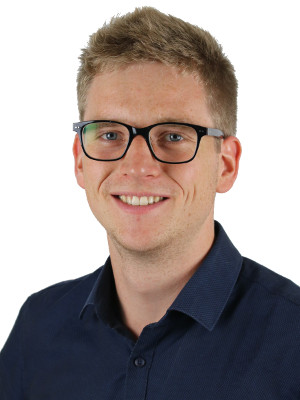
Dr.-Ing. Lukas Bergmann | @mediT
Worldwide, strokes result in mobility problems, and traditional treatments are frequently resource-intensive. Robotic rehabilitation systems can provide support when patients initiate movements independently. Dr. Lukas Bergmann explains:
„In the long term, research into exoskeletons can make a significant contribution to supporting people with musculoskeletal disorders. The exciting thing for me is that control technology has a very practical application here.“
It describes an active exoskeleton that enables safe coupling between humans and devices, as well as a cooperative controller that supports joint torques in real time.
It is also worth mentioning that Dr.-Ing. Sonja Ehreiser (mediTEC, RWTH Aachen University) won first place in the Klee Prize 2025 for her dissertation on improving the care of patients with knee prostheses.
The VDE, a leading technology organization in Europe, has been promoting innovation and technological progress for over 130 years. With the Klee Prize 2025, the VDE honors outstanding research work that offers great benefits for patients and shapes the future of medical technology.
The VDE (VDE Association for Electrical, Electronic & Information Technologies) is based in Frankfurt am Main. More information at VDE Website
Source: VDE Press Release
Humboldt Fellow at the E.ON Energy Research Centre

Dr Ameze Big-Alabo, of the University of Port Harcourt in Nigeria, is carrying out research at the Automation of Complex Power Systems Chair at RWTH Aachen University. © Judith Peschges
Ameze Big-Alabo, an electrical engineer specialising in microgrids, joined Professor Antonello Monti’s international research team in April 2025 as part of a Humboldt Fellowship.
As part of the Humboldt Foundation’s Henriette Herz Scouting Programme, Professor Antonello Monti — Head of the Institute and holder of the Chair of Automation of Complex Power Systems (ACS) — successfully recruited the scientist for the E.ON Energy Research Center. Ameze Big-Alabo, an experienced researcher with an international background, then moved from the University of Port Harcourt in Nigeria to RWTH Aachen University.
She specialises in wind turbines and solar panels, as well as their integration into local energy grids. Her aim is to make microgrids more efficient, robust and sustainable. Microgrids are small, local energy networks that can operate separately from, or be connected to, the general power grid. Further development of these systems requires complex designs and mathematical modelling to represent real microgrids. This includes optimisation, energy management and fault detection.
‘My field of research fits in perfectly with the Institute’s focus areas in Aachen. I’m making good progress, and everything is going according to plan so far,’ the scientist made her initial assessment.
Computer-aided simulations play a vital role in her work. She analyses how different energy sources can be combined most effectively. When modelling solar panels, for example, she considers factors such as solar intensity, outdoor temperature, geographical location and panel size. These simulations are then followed by experimental tests. As well as the intensive computer-based work, she values personal dialogue within the research team.
‘I really like the international community that exists here. There are many people from different backgrounds working at the institute and I get on well with all of them,’ says the researcher.
Ameze Big-Alabo has extensive international experience. She obtained her Bachelor’s and Master’s degrees in Electrical Engineering in Nigeria, after which she was awarded a scholarship to study for a Master’s degree in Advanced Control Systems Engineering at the University of Manchester. She won the Neil Munro Prize for the best Master’s thesis in her field there. This was followed by a scholarship to undertake a PhD at the University of Glasgow in Scotland.
The scientist hopes to continue collaborating with RWTH after her research stay ends in April 2026. Upon her return, she intends to resume her teaching activities in Nigeria. Her long-term goal is to help improve the energy supply in her home country.
‘Energy generation is one of the biggest challenges that we face. I want to use the knowledge that I acquire during my research visits to help with sustainable development,’ Ameze Big-Alabo explains.
The Humboldt Research Fellowship is aimed at highly qualified postdoctoral researchers from all disciplines and all over the world. It enables researchers at various stages of their academic careers to conduct personal research projects in collaboration with a host research institution in Germany. The monthly stipend amounts to €3,200 plus fringe benefits. The fellowship can be applied for in periods of between six and 18 months, and can be divided into up to three stays within a three-year period.
The Henriette Herz Scouting Programme enables renowned and well-connected researchers to expand their team with excellent Humboldt Research Fellows. When nominating fellows, individual life and educational paths are taken into account, particularly with regard to equal opportunities and accessibility.
Further information on the Humboldt Research Fellowship and the Henriette Herz Scouting Programme can be found via the links provided.
Cheerfully building bridges from neuroscience to computer technology to AI

On 18 June 2025, as part of the RIA lectures, Senior Professor Rainer Waser will present research on interfaces in the fields of neuroscience, computer technology and AI.
In his online lecture, which will be followed by a panel discussion, Professor Rainer Waser from the Institute of Materials of Electrical Engineering 2 at RWTH Aachen University and the Electronic Materials division of the Peter Grünberg Institute 7 at Forschungszentrum Jülich, will discuss the current concepts, solutions, consequences and perspectives of research collaboration between different faculties. This free, one-and-a-half-hour event can be attended via Zoom and starts at 5 pm.
Professor Rainer Waser was awarded the prestigious Leibniz Prize in 2014 in recognition of his exceptional contributions to research in the field. The researcher’s interdisciplinary approach proved to be a pivotal element in this endeavour. At the beginning of 2025, he was awarded an honorary senior professorship at RWTH Aachen University. He continues to dedicate himself to researching memristive phenomena, neuromorphic computing and the relationship between functional oxides and their defect chemistry.
‘Not just immersing myself in one discipline, but building bridges – that’s what has driven me my whole life,’ says the researcher, talking about what motivates him.
The Regional Informatics Group Aachen (RIA) is part of Gesellschaft für Informatik, the German professional organisation for computer scientists. Members of the group work together to facilitate the exchange of information, discuss relevant topics, and represent common interests in computer science and IT in the region. RIA works closely with REGINA e.V., the Regional Computer Science Industry Club of RWTH Aachen University and Aachen University of Applied Sciences.
The Gesellschaft für Informatik is a local and international organisation that opens doors to the professional and scientific worlds. It enables computer scientists to engage in continuous dialogue with the scientific community. The Gesellschaft für Informatik acts as an intermediary body, bringing together scientists, industry professionals, and administrators, and representing their interests in politics.
You can participate in the event via this Zoom link. A video of the lecture and discussion will be made available on the YouTube channel of the Chair of Software Engineering shortly after the event ends.
If you would like to receive information about future RIA lectures, please e-mail vortrag@i3.informatik.rwth-aachen.de.
New dimensions for microelectronics: RWTH and TU Dresden launch major joint project

Artistic visualization of a stacked chip resembling a skyscraper. © TU Dresden / cfaed
Professor Max Lemme is the co-spokesperson for the new DFG Collaborative Research Centre, ‘Active-3D’. The project aims to enhance the performance of microchips by utilising the previously unused space above the chip surface.
The Deutsche Forschungsgemeinschaft (DFG, German Research Foundation) is establishing a new Collaborative Research Centres/Transregios (CRC/TRR-404), namly Next Generation Electronics with Active Devices in Three Dimensions (Active-3D). This pioneering research project aims to take the miniaturisation of microelectronics to the next phase. With Professor Max Lemme, holder of the Chair of Electronic Devices at RWTH Aachen University, a renowned scientist from the Faculty of Electrical Engineering and Information Technology is involved in a central role as co-spokesperson. Together with Professor Thomas Mikolajick from TU Dresden, he is coordinating the joint project, in which several universities and non-university research institutions are involved.
The aim of the Collaborative Research Centre is to make the third dimension electronically usable. While conventional chips have mainly been optimised in terms of surface area, the volume above this – i.e. the area of the so-called metallisation level (back-end of line, BEOL) – is now also to be developed for active components that enable logic and memory functions as well as switchable connections. Based on new materials, innovative components are being developed and integrated into circuits and systems that offer enhanced performance, processing speed and surface area. As part of the technology-design-system co-development approach, materials, technology and circuits are being developed simultaneously. This makes it possible to distribute functionalities across the volume previously reserved for passive wiring, thus utilising the entire volume of the chip. The result could be completely new 3D electronic systems that are not only more powerful, but also more energy-efficient and compact.
‘The TRR Next Generation Electronics With Active Devices in Three Dimensions (Active-3D) will strengthen Germany’s and Europe’s position in basic microelectronics research,’ explains Professor Mikolajick. ‘The researchers involved at the various locations are ideally placed to investigate the use of the entire volume of a chip for active components.’
This major project has already resulted in the formation of a powerful network at the forefront of international electronics research. Partners include Forschungszentrum Jülich, AMO GmbH, NaMLab gGmbH, the Max Planck Institute of Microstructure Physics in Halle, and Ruhr University Bochum. The Collaborative Research Centre/Transregio format enables close, cross-location cooperation. RWTH Aachen University and TU Dresden share scientific responsibility, each contributing complementary focal points. In addition, young scientists from other universities and non-university research institutions are involved. Around 15 doctoral and postdoctoral positions have already been filled, with one further position yet to be advertised. Further vacancies will follow during the course of the project.
Vacancies will be posted on the homepage of the Max Planck Institute of Microstructure Physics.
That’s the way to study – the rating in the CHE Ranking 2025.

The degree programs at the Faculty of Electrical Engineering and Information Technology received top feedback in Germany’s largest university ranking.
The current CHE ranking confirms that the Bachelor’s degree programmes in Electrical Engineering and Information Technology (with and without an orientation semester) and Computer Engineering are of an excellent standard. Support at the start of studies is rated particularly highly, achieving an impressive result of 15 out of 16 points. According to student feedback, they find the facilities and organisation of their studies excellent. The ranking results show that students preparing to study abroad have very positive experiences with support. The Faculty of Electrical Engineering and Information Technology received positive ratings in the fact check with regard to doctorates per professor and third-party funding per researcher. This indicates a clear focus on science. Students also express above-average satisfaction with the introduction to scientific work.
Once the field of study has been chosen, the question of which university to attend may arise. In addition to the professors’ assessment and the fact-check, this ranking includes first-hand assessments from students for prospective students.
Some of the questions that were rated on a scale of one to five stars were: ‘How broad is the content of the degree programme?’, ‘Can compulsory courses be attended without overlapping?’, and ‘Are the PCs up to date or old-fashioned?’
The CHE ranking is the most comprehensive university ranking in the German-speaking world. More than 300 universities were analysed, and over 120,000 students took part in a survey. Individual universities are compared with each other based on various criteria for each subject, and are then categorised into top, middle or bottom groups. RWTH was ranked in the top group a total of 97 times.
Each subject is analysed every three years. The results for the individual subjects are available at the website CHE Ranking 2025: The Big University Ranking.


