
Schlagwort: ‘Energiewende’
Designing the Internet of Energy
Our electricity grids are essentially 19th-century technology. For over a hundred years, they’ve operated as a single, massive synchronized block. But today, that rigidity is a liability. Volatile wind and solar sources don’t provide the physical stability we used to get from traditional power plants, and recent events—like the 2026 cyberattack in Berlin—showed just how easily a local failure can threaten the entire system.
Martin Braun
To fix this, a research team from our faculty and Aalborg University just published a new approach in Nature Reviews Electrical Engineering. The work is led by Professor Antonello Monti, who heads the Institute for Automation of Complex Power Systems (ACS) at our faculty. The idea is simple: treat the grid like the internet. Instead of one giant, fragile unit, Monti’s team proposes breaking the grid into smaller, autonomous “sub-nets”. Because these parts are connected asynchronously, a fault or an attack in one area stays isolated. The rest of the network just keeps running.
This is the core of the SAFEr Grid project, an ERC Synergy Grant initiative coordinated by RWTH. We aren’t talking about a massive, overnight construction project. It’s a long-term evolution to build a grid that handles renewables by design and is tough enough to stop a local glitch from becoming a regional disaster.
Visibility for cutting-edge research: Professor Weihan Li once again among the most cited researchers
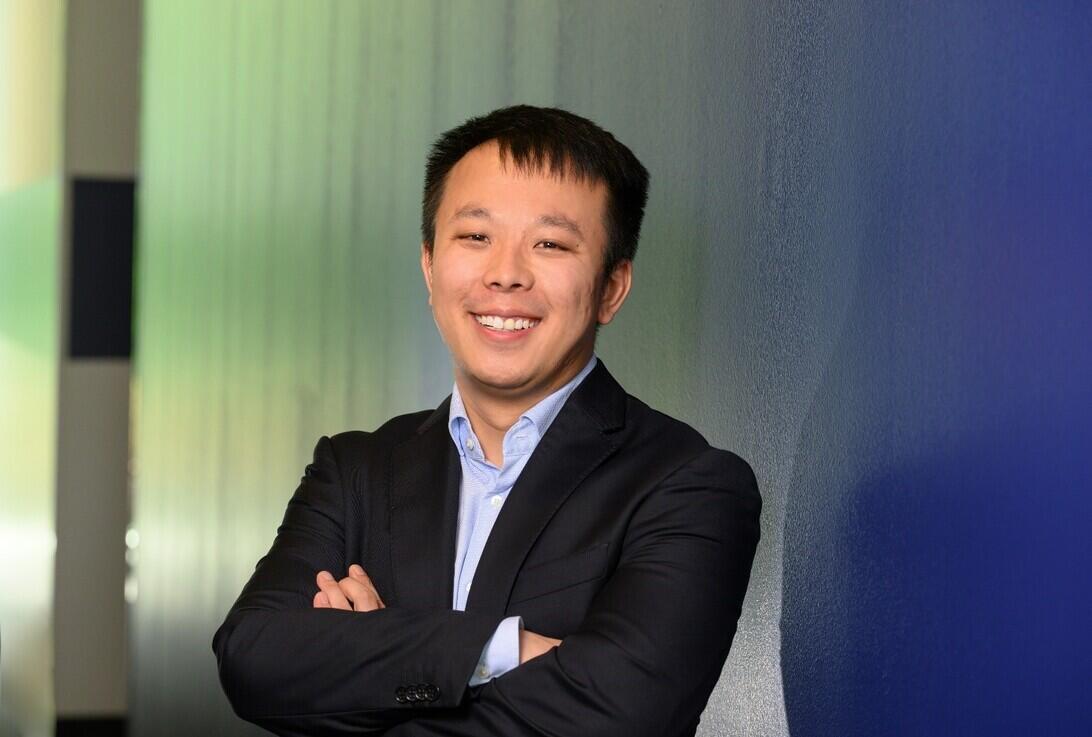
Professor Weihan Li, holder of the Junior Professorship in ‘Artificial Intelligence and Digitalisation for Batteries’ © David Ausserhofer
Professor Li, from the Institute for Power Electronics and Electrical Drives (ISEA) at RWTH Aachen University, has once again been included in the list of the world’s most cited scientists, known as ‘Highly Cited Researchers’. This recognition is a testament to the influence of his work in the field of AI-supported battery research.
The list of ‘Highly Cited Researchers’ is published annually by Clarivate Analytics. Based on the citation index of the Web of Science Core Collection, it identifies scientists whose publications are among the top one per cent most cited in their field and publication year. In scientific contexts, citations serve as an indicator of a publication’s relevance and are considered a measure of its quality. The more frequently a text is cited, the greater its visibility and the greater the global perception of the author. The current list includes 7,131 researchers who, according to the database, are among the most influential 0.1 per cent of the international research community.
Batteries are a key technology in the energy transition. Their performance largely determines the range, safety, service life and cost of their technical applications. Professor Li is investigating how accurately the condition and performance of battery cells can be predicted during production. He has held the Junior Professorship for ‘Artificial Intelligence and Digitalisation for Batteries’ at RWTH Aachen University since March 2025. At the Centre for Ageing, Reliability and Lifetime Prediction of Electrochemical and Power Electronic Systems (CARL), his junior research group develops data-based models, digital twins and automated diagnostic procedures.
The aim is to make the battery digitally communicative, characterised by precision and real-time capability – Weihan Li is working on this future.
His project, ‘SPEED: Fast Performance Characterization of Lithium-ion Batteries from Production Lines with Machine Learning’, has been awarded a grant of €1.85 million by the Federal Ministry of Research, Technology and Space as part of the ‘BattFutur – Junior Research Group Battery Research‘ competition.
Professor Li was born in China and completed his studies in automotive engineering at Tongji University. In 2014, he came to RWTH Aachen University to undertake a Master’s degree in Electrical Engineering and Information Technology, subsequently completing his PhD at the Institute for Power Electronics and Electrical Drives. His research has also taken him to Imperial College London, the University of Oxford and the Massachusetts Institute of Technology (MIT). He completed his doctorate with distinction in 2021 and founded the junior research group ‘Artificial Intelligence for Batteries’ the following year. With support from industry collaborations (accounting for around 40% of third-party funding) and CARL’s infrastructure, which comprises over 6,000 test circuits and provides a reliable database for AI modelling, he has grown the group to include 13 doctoral students.
The scientist can now look back on receiving a number of awards and prizes, including the highly prestigious German Study Prize from the Körber Foundation, one of the most highly endowed prizes for young scientists in Germany. He has published 53 scientific articles, two monographs, three patents and has supervised over 40 theses.
Further information on Professor Weihan Li’s research and career can also be found on the RWTH Aachen University website.
Rethinking Energy – A Conversation with Prof. Dirk Uwe Sauer
As part of RWTH’s interview series “Big Questions,” Prof. Dirk Uwe Sauer, head of the Institute for Electrochemical Energy Conversion and Storage Systems (ISEA) at the Faculty of Electrical Engineering and Information Technology, talks about the energy transition, technical solutions, and the responsibility of science and politics. Prof. Sauer has been researching battery system technology, energy storage, and the integration of renewable energies for many years—key topics for a climate-neutral future.
The complete conversation is reproduced below in its original sequence.
An accompanying video on the occasion of the presentation of the NRW Innovation Award also offers insights into his work and motivation:
🎥 Watch on YouTube
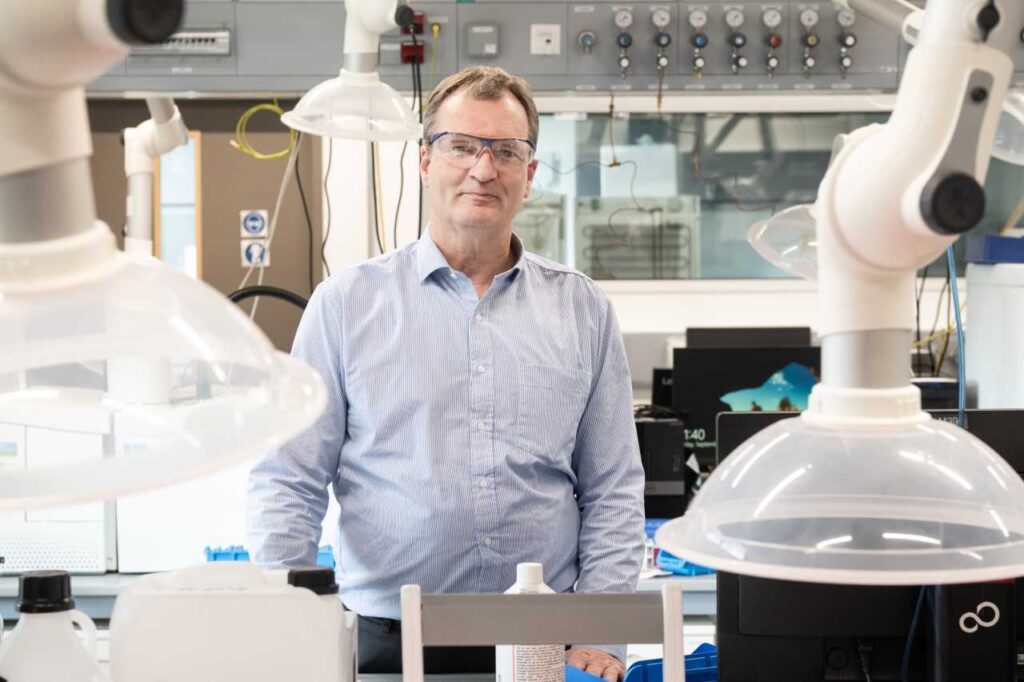
Foto: Heike Lachmann / RWTH Aachen University
Energy transition – what does that mean?
Professor Dirk Uwe Sauer: It means that we have to stop using fossil energy sources. These are used not only for electricity and heating but also heavily in the chemical industry. By using these carbon-containing substances that have been stored for millions of years, we increase the CO2 content in the atmosphere, which leads to global warming. We are not undertaking the energy transition for fun or because fossil energy sources will soon be exhausted—as the Club of Rome still assumed around 1970. Rather, we must leave them in the ground to keep the climate manageable. This requires a fundamental transformation of our entire society. Affected are power generation, mobility, industry, and all private households with their heating systems. Global trade flows will also change, particularly due to shifting dependencies in the procurement of energy sources. For many countries whose economies are based on the extraction and export of fossil energy sources, this poses a dramatic challenge.
Now it’s about acting quickly…
Sauer: Exactly, we are late. The consequences of climate change are already visible and are occurring more quickly and more severely than the average of climate models predicted. We are moving within worst-case scenarios. The dangers are enormous: In addition to more frequent extreme weather events, there are already major impacts on biodiversity. A weakening of the Gulf Stream is also possible, which would have irreversible, dramatic consequences for our climate. Sea levels are rising due to the melting of glaciers and ice sheets, for example in Greenland and Antarctica, but also due to the expansion of water as it warms. Meanwhile, temperature increases of up to 3 degrees compared to pre-industrial times by 2050 are already considered possible. Central Europe will initially warm more than the global average. Therefore, we must not lose time on the most important measure against climate change: ending the use of fossil carbon-containing energy sources as quickly as possible. The positive thing is that thanks to 30 to 40 years of research and development, we have solutions. Now it’s about implementing them with the necessary speed.
What do you personally contribute to the energy transition?
Sauer: I studied physics 35 years ago with the clear goal of working in the field of sustainable energy. For me, this is not just a profession but a vocation. Since 1992 I have been continuously active in the field of energy transition and energy system transformation, with a focus on energy storage, especially batteries. For about 13 years I have been involved in policy advice through the national academies of science. We try to advise politicians scientifically in an interdisciplinary way. Unfortunately, our proposals are often only partially adopted, which can be frustrating—especially when predicted problems later actually occur.
Who opposes your forecasts and why?
Sauer: If only we knew that precisely… Industry today hardly opposes anymore. In the past, there was still clear resistance—for example, in the early 2000s, when grid operators warned of the collapse of power grids at more than 2 to 3 gigawatts of wind energy—today we have 50 gigawatts with the highest grid stability. Automobile manufacturers also know where the development is heading, even if, as listed companies, they want to maintain their previous business model for as long as possible. The frustrating part comes more from politics: Despite clear targets, also at EU level, there are counter-campaigns for political reasons—for example against heat pumps or electromobility. This uncertainty harms economic development. The economy needs clear, equal targets for everyone—including importers. For example, for clean battery production, recycling, or CO2-free steel production. Particularly conservative political forces often prevent existing opportunities from being fully utilized. That sets us back economically. Although we would have the best conditions to develop the new energy world, other countries are overtaking us, above all China.
What are you working on at your institute?
Sauer: We are working on the electrification of various mobility sectors—from cars to trucks and buses to construction and mining machinery, aircraft, and ships. In parallel, the integration of renewable energies through stationary storage is important. More than two million people already have a photovoltaic system with battery storage at home. We have been operating a large battery storage system for eight years, which we trade on the electricity exchange to better integrate the fluctuating electricity generation from wind and photovoltaic systems into the system. The future of energy supply will be primarily determined by wind and photovoltaic systems. This is a fundamental system change: Previously, power plants were controlled according to demand, but wind and solar plants cannot be ramped up arbitrarily. Therefore, we need intelligent solutions such as battery storage and load management.
What would such intelligent solutions look like?
Sauer: An important example is the management of electric vehicles: Especially in summer, they should ideally be charged during the day with photovoltaic power. The battery capacities of EVs are considerable—60 to 100 kilowatt-hours—while an average household consumes only about 10 kilowatt-hours per day. Since cars travel only 37 kilometers a day on average, the surplus battery capacity could be used for grid stabilization—an economically interesting option, since the batteries are already paid for by the vehicle.
That means there would have to be discharge stations for cars?
Sauer: Exactly—we call these bidirectional charging points with the ability to feed electricity back into the grid. In some countries this technology is already more widespread. In Germany, implementation often still fails due to regulatory hurdles. In particular, with smart metering systems we have been lagging behind EU requirements and many other European countries for more than ten years. Despite these various obstacles, technical implementation is definitely possible.
Where does Germany stand in general by comparison?
Sauer: Germans’ self-assessment that we are pioneers in climate protection and that we are thereby endangering our industry is unfortunately wrong in many places. For example: In several European countries last year, 100 percent of new city buses were battery-electric; in Germany, the share of battery and fuel-cell drives together was under one third. We have achieved a lot in wind and photovoltaic power generation, but the current government seems to want to slow things down again. China has the highest expansion rates. There, the annual additional electricity demand grows by about three quarters of total German electricity consumption—every year. China manages to cover this additional demand entirely with CO2-free technologies, 80 to 90 percent of it from wind and photovoltaics, plus small shares from hydropower and nuclear.
Do the Chinese have a free hand and push everything through?
Sauer: Yes, exactly—primarily for economic reasons. They know that by expanding these technologies they can improve their production and quality and thus increasingly dominate the world market. Electricity from wind and sun is simply the cheapest way for China to meet its huge electricity demand. More or less as a side effect, they also achieve their self-imposed targets for limiting CO2 emissions several years earlier than planned. That’s good for the climate, but the main drivers for China are low-cost electricity and leadership in technology and production. Photovoltaic modules today almost all come from there. Wind turbines are still more diverse, but if we cannot maintain a corresponding sales market in Germany and Europe, it will be difficult to keep domestic companies.
In what way?
Sauer: Forces of inertia are partly understandable: For established car manufacturers with 200,000 employees, the transformation is more difficult than for Tesla as a new entrant. If 5,000 engineers are working on combustion engines, it is purely humanly difficult for a CEO to say that this is not the future. The transformation takes time, but clear targets are important. Due to political “hemming and hawing,” China has overtaken us in electromobility. Batteries come almost 100 percent from Asia. There are some European factories, but they then belong to the Asians. Only Volkswagen and Stellantis (including Peugeot, Opel, Fiat), together with Mercedes and Saft, are still trying to achieve their own technological sovereignty in Europe by building battery cell production plants. Because of waiting too long, we have fallen far behind.
What is the situation here in North Rhine-Westphalia?
Sauer: North Rhine-Westphalia shows how transformation can succeed—the state has steadily changed over 50 years and is therefore more optimistic than southern federal states with a strong automotive industry. People are more open to technology; new transmission grids are easier to build. Even lignite open-pit mining with village relocations met with relatively little protest because it is clear that prosperity must also be generated. The current state government wants to build 1,000 new wind turbines, which was initially ridiculed. But through correct and clever regulatory and legislative measures, the expansion is going well, with around 100 new turbines in just the first half of 2025.
Are there other leading examples internationally?
Sauer: Norway will reach almost 100 percent fully electric vehicles in new car sales this year. Many believe that electric cars are problematic in cold or mountainous regions, but in Norway—where it is colder and more mountainous than here—it works well. Countries that have converted public transport to 100 percent also show that it is possible. In Scandinavia, heat pumps have long been used despite lower temperatures. Spain is strong in expanding renewable energies, especially wind and photovoltaics. It’s difficult to say that any one country implements everything perfectly. However, the examples show that many prejudices—often fueled by political or media interest groups—are not true. Positive examples reach the public only with difficulty, while negative arguments spread much faster. That is a major problem for the introduction of new technologies.
What could generally have been done better?
Sauer: In all projects where streets in cities are opened up for cables, water pipes, and sewers, we should long ago have laid stronger power cables at the same time. Ninety percent of urban grid costs are construction work; only ten percent are the technical components. Then we would not have today’s problems integrating photovoltaic systems, EV charging stations, or heat pumps. But for 20 years we preferred to debate whether electromobility was the right path and photovoltaics too expensive, or whether heating systems should be supplied better with hydrogen than with heat pumps. In doing so, we expanded the power grids far too little. We now have to make up for all this in a short time; it’s expensive because we have to open up the streets again specifically for it. The high costs of the energy transition are not an inherent property of it, but the result of failing earlier to automatically replace what was coming and to upgrade for the future. It is certainly not due to a lack of knowledge.
Is it risky today to invest in a new oil or gas heating system?
Sauer: Anyone installing such a system today will probably have to replace it before the end of its service life, because these energies will become far too expensive in operation due to CO2 trading. Anyone who allows themselves to be tempted by deliberately spread disinformation to install old technologies again will pay dearly for it. Many will then call for government assistance because they will have to remove their systems prematurely. This economic loss was foreseeable. Again: If we had started earlier, the transition would have been easier. No one is demanding that functioning heating systems or cars be scrapped. But new ones must be emissions-free. The high costs could have been avoided if action had been taken in good time.
Wind and sun do not supply energy constantly—how can security of supply be ensured even with a high share of renewables?
Sauer: At present we have about 60 percent renewable energy, and security of supply is ensured. For further assurance, several components are important. The expansion of the electricity grids is essential to transport energy over greater distances within Germany—for example, from the windy north to the sunny south—but also across borders to all our nearby and distant neighbors and partners in Europe.
For energy storage we distinguish two main classes: first, battery storage for day-to-day balancing, which stores solar power during the day and releases it at night; and second, long-term storage for periods of up to three weeks with little wind and sun. These work via hydrogen gas or hydrogen derivatives, which can be stored and later converted back into electricity in power plants or fuel cells. The future energy system thus consists of power generators, power grids for spatial energy exchange—including with neighboring countries—and storage for temporal balancing. Since storage does not itself generate electricity, its quantity should be kept as small as possible. Electric vehicles can make an important contribution. Industry can also adjust its electricity consumption according to the exchange price. Heating systems with enlarged water tanks enable a temporal decoupling of heat generation and consumption and thus also play a major role as a flexibility technology.
In what way?
Sauer: In the early morning hours, we have high demand in heating systems because people need hot water for the bathroom and because the heating systems ramp up again after the nighttime setback. At that time there is no solar power generation yet. One solution is to run the heat pump the day before at midday when there is plenty of sun and store the heat in the thermal storage tank. This can then be used 12 or 18 hours later to supply the house. A water-based thermal storage tank is very inexpensive—cheaper than battery storage. For electric vehicles, it’s about intelligent charging solutions. Although a single car can be charged quickly in an hour or even a quarter of an hour on the highway, the statistical average is relevant for Germany’s 48 million cars. Since vehicles are parked 23 hours a day on average, there is a lot of temporal flexibility in charging. This can be used to charge when it is energetically sensible.
So a whole energy system is needed?
Sauer: Correct. In the past, the transport, electricity, heat, and industrial sectors were separate. Today we speak of sector-coupled systems. Power generation is coupled with heat and gases. Fuels are also produced via electricity. For planes and ships, we need hydrogen. Worldwide, 500 million tons of oil are used for plastic production. These must be replaced in the long term by electricity-based, chemically identical oil substitutes. Even if only 200 million tons remain, the electricity demand for this is a multiple of Germany’s consumption. New supply chains are emerging. We will continue to exchange electricity with neighbors and import hydrogen or products made from it, such as ammonia.
Could you elaborate on that?
Sauer: One example is the planned import of ammonia from Saudi Arabia, where large photovoltaic plants with electrolyzers (devices that split water into hydrogen and oxygen by electrolysis) from thyssenkrupp nucera are being installed. Ammonia—produced from atmospheric nitrogen and hydrogen—is a feedstock for fertilizer and consumes almost half of today’s hydrogen. Up to now, ammonia has been produced from natural gas, which is why food prices also rose after the Russian invasion.
One advantage of future energy supply is independence from the few countries with fossil reserves. Wind and sun are available in many countries. Over the long term, Germany spends around 80 billion euros on energy imports, often from countries that are not very close to us politically. Renewable energies will lead globally to greater equality of prosperity because they are available in many places. This new energy world holds opportunities, but many people are still too afraid of change.
How can we alleviate the public’s fears?
Sauer: Unfortunately, science usually reaches only a smaller part of the population and is then perceived there as a weighty voice. I also see it as my task to reach out to the public. I am a civil servant of this country; I am paid by people’s taxes, so I am also responsible for providing them with information. Although science communication is not considered a core academic task, I consider it important. We work closely with the press and give lectures. However, the skeptical part of the population, such as Aachen residents with reservations about heat pumps, remains difficult to reach. Together with politicians and journalists, we look for suitable formats to reach these people. Populist methods are out of the question for me—I can only try to disseminate good information through the press.
You briefly mentioned nuclear power earlier—will it play a role in the future or not?
Sauer: Nuclear power is a very complicated topic, and we have to distinguish two things. On the one hand, there is nuclear fission in classic nuclear power plants; on the other, there is nuclear fusion, which we have been discussing intensively for about 50 years. Fusion is about fusing light atoms—as happens in the sun, where hydrogen is fused into helium. This process is to be replicated on Earth. Very large amounts of energy can be released, and there is currently a certain global hype about it, which is also being picked up politically. There are indeed some lines of development that give new hope, but our academies project—after discussions with colleagues from companies, startups, and academia—has shown: Before 2050 there will be no commercial fusion power plants, at least not to an extent that could make a significant contribution to global power generation. That is problematic because by then we must already be CO2-free. And since it is still completely unclear whether such power plants will exist that are also economically competitive, we must plan the transformation of the energy system without fusion. I still believe that society can and must afford to continue research in that direction.
What about nuclear fission?
Sauer: In nuclear fission, all the nuclear power plants built in Europe in recent years have become two to five times more expensive than originally planned and were completed with delays of five to fifteen years. There are no economically viable new nuclear builds in Europe. In France, new plants are being planned, but it is completely unclear who will pay for them. The French Court of Audit recommends a moratorium on expansion plans until reliable financing plans are available that are also sustainable in the market. The safety risks are often underestimated—of 700 nuclear reactor blocks, five have gone into core meltdown. Nuclear power plants are not insured; the risk is borne by society as a whole. Another problem is the proliferation of nuclear technology: As long as there is civilian nuclear power, the spread of nuclear weapons can hardly be prevented. The path from civilian use of nuclear power to an atomic bomb is very short.
How can individuals contribute to the energy transition?
Sauer: The switch to electromobility and heat pumps should be designed in an ecologically and temporally sensible way. Openness to new technologies is important without overwhelming people. For areas such as green fuels, CO2-neutral steel, or sustainable plastics, political requirements are needed because end customers have little influence here. Rejecting wind power without alternatives while clinging to one’s previous lifestyle is not consistent. The press should ask more about solutions rather than just criticizing problems. Those who want less wind power or fewer power lines must accept higher electricity prices. Protest is legitimate, since the new system also requires raw materials and land, but those who reject technologies must propose realistic alternatives that do not merely shift the problems. Our standard of living should be maintained and be attainable for billions of people worldwide. Science should present alternatives and quantify their consequences, while politics and society should choose from them.
Why are you hopeful that a far-reaching abandonment of fossil fuels is possible?
Sauer: The 1.5-degree target has already been exceeded; even the 2-degree target can no longer be met. But the more we convert now, the more likely we are to achieve a better, fairer world. We reduce our dependencies through energy imports and can build an energy system that is more resilient to disruptions. After the current cost peak of the transformation, energy supply will become cheaper again. The new technologies prevail primarily for economic reasons—even under Trump, no new coal-fired power plants were built because they were uneconomical. China, African countries, and India are increasingly relying on renewable energies because prices have fallen sharply over the past 20 years. Cities with electric vehicles will become quieter and the air will become cleaner; oil and gas extraction—with its severe environmental impacts in producing countries—will decrease or disappear. Countries with currently low living standards will have a realistic chance of sustainable development, which will also reduce migration pressure. A world without fossil energy sources will be a better one.
But it is also clear that the transformation will bring major changes locally and for individuals. Industrial sites may shift, some products will no longer be needed, and some professions will no longer exist in the future. What is positive in total does not have to be positive from an individual’s perspective. Managing this process well and offering all people new perspectives—that is the real challenge.
Your forecast: What will the German energy system look like in 2045?
Sauer: Power supply will be completely CO2-free by 2045, with the aim of reaching this as early as 2035. The electricity sector is relatively easy to convert. There will be no new registrations of internal combustion engines for fossil fuels, even if some will still be on the road. Vehicle manufacturers will offer combustion engines only for niche products. The majority of trucks will be battery-electric.
For heating systems there will be a mix, with district heating and especially local heat pumps. The district heating systems will hopefully be partially supplied by deep geothermal energy. The main foundation for everything will be wind and photovoltaic systems, supplemented by smaller shares of geothermal, wave, and tidal energy. You will not be able to fly across the Atlantic on batteries in my lifetime—that is physically excluded. We will need a fuel for that—hydrogen or an e-fuel—which we will then have to produce. Therefore, a large part of the electricity will be used to produce hydrogen-based energy carriers and for the basic materials industry. In large open-space photovoltaic plants, habitats for fauna and flora will be provided between the module rows, where more biodiversity can develop again—with more wild plants, flowers, more insects, and ground-dwelling birds and small mammals.
What role will hydrogen still play in the future?
Sauer: Hydrogen will play a central role in industry—for steel production and as a feedstock for chemicals, pharmaceuticals, and plastics. In the transport sector, long-haul aviation and shipping will use hydrogen-based fuels, and perhaps, for example, agricultural machinery as well. Hydrogen is the storage medium for stockpiling during “Dunkelflauten” (periods with little wind and sun) in the power supply system. Access to hydrogen and hydrogen derivatives must be made as easy for industry as access to natural gas is today.
You specialize in batteries…
Sauer: Enormous progress has been made in this area. Twenty years ago, no one would have thought that so much money would flow into battery research. In 1994 there were only four or five people in Germany working on battery systems. I was lucky to be steered in the right direction by visionary minds. The development is gigantic, even if it could have gone faster.
Sustainability and circular economy are becoming increasingly important. The EU is introducing a digital battery passport that contains information on origin and recycling. Quotas for recycling are being stipulated because lithium is not yet recycled today; it is cheaper to mine it anew. We are researching materials that are less scarce. In the past, lithium-ion batteries required a lot of cobalt and nickel; today, stationary batteries can do without these materials. We are also working on sodium batteries—sodium from table salt is almost unlimited. As a university, we are working on more environmentally friendly materials with higher efficiency and longer service life. The greatest environmental effect is achieved when a battery lasts 20 instead of 10 years—that means half the energy input and raw materials.
What makes RWTH so special for energy research?
Sauer: RWTH is an exceptional location, together with Forschungszentrum Jülich, with which we are closely linked. Nowhere else in Germany are there as many energy researchers as here; for all questions and topics there are highly specialized chairs and institutes with several thousand people working on these issues. That’s exactly why it’s good to be here. With our CARL research center, for three years we have had—at least in Europe—the most modern university research center for battery system technology, and that opens up completely new scientific opportunities for us, always with a focus on bringing things into applications as quickly as possible.
The interview was conducted by Nicola König.
Harnessing AI for a Smarter Energy Transition
Since August, Dr. Pyae Pyae Phyo has been conducting research at the Institute for Automation of Complex Power Systems at RWTH Aachen University. As a Humboldt Research Fellow, she tackles one of the key challenges of the energy transition: the fluctuating output of renewable energy sources.
“Most power grids were designed for fossil-based generation, which provides constant and predictable energy. Renewables are different – their output depends on the weather,” she explains.
Dr. Phyo applies AI-based prediction models to make these variations more manageable and to strengthen grid stability and efficiency. Her goal is to develop and refine algorithms that can accurately forecast how much energy wind or solar plants will deliver over a given period.
Foto: Judith Peschges
Her path to RWTH was made possible by Professor Antonello Monti, who supported her through the Henriette Herz Scouting Program of the Humboldt Foundation.
“The excellent reputation of Professor Monti and RWTH in my research community was decisive for my choice,” she says.
Holding degrees from TU Mandalay and Thammasat University, Dr. Phyo has also worked in South Korea, Canada, Switzerland, and most recently at Eindhoven University of Technology as a postdoctoral researcher.
Her work builds a crucial bridge between artificial intelligence and sustainable energy systems—contributing to a more secure and efficient power grid for the future.
Invitation to the 31st Energy Technology Evening
© Nikolai Wolff
In cooperation with the VDE Aachen University Group, VDE Regio Aachen e.V. is organising the 31st Energy Technology Evening on Tuesday, 21 January 2025.
This evening’s guest speaker, Dr Christoph Schneiders, who occupies the position of Head of Grid Management and System Control at Amprion GmbH and who is a former student of Electrical Engineering and Information Technology at RWTH Aachen University, will deliver a presentation on the current challenges, opportunities and news from the areas of grid expansion, grid stability and the energy transition.
„This is certainly a highly topical social issue in view of the forthcoming general election“, comments Can Özmaden, training officer at VDE Regio Aachen e. V..
The presentation will be followed by a get-together where the technical discussions can be continued in a more relaxed atmosphere. Participation in the event is free of charge, drinks and snacks will be provided free of charge.
The event will take place at 18:30 in the EA lecture hall, Schinkelstraße 6, 52062 Aachen. Informal registration is requested by e-mail to: info@vde-aachen.de
School’s out! – What next?
© Martin Braun
Which study programme is right for me? And what will my working life look like?
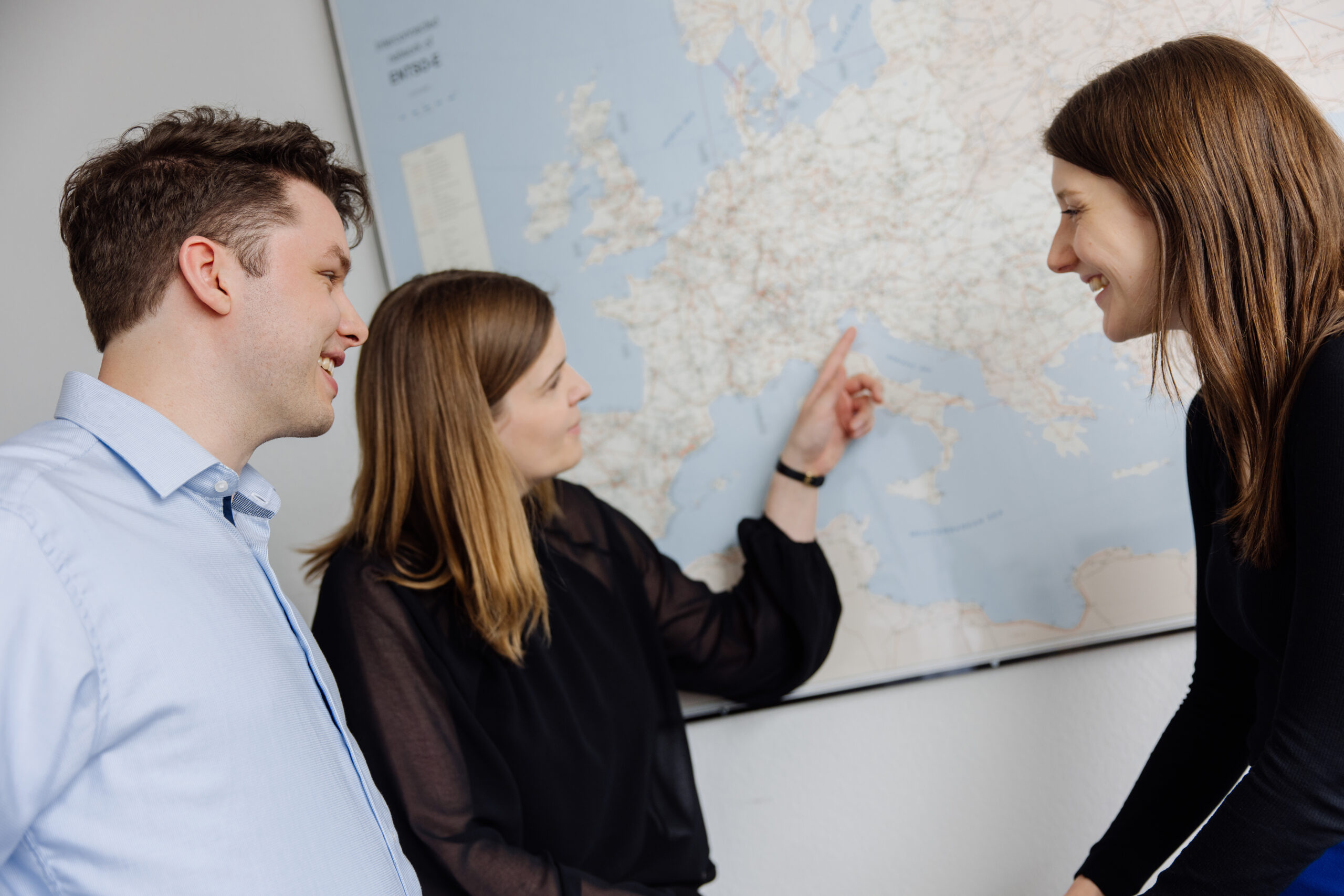
During the orientation phase, we develop a first picture of our future professional life. This image is shaped by various influences, usually from our immediate environment: What are my parents’ professions? What did my teacher advise me to study? But as individual as we are, the possibilities are just as varied – and the more often we take the opportunity to gain an insight into different professions, the wider our field of vision becomes and the clearer our personal path appears.
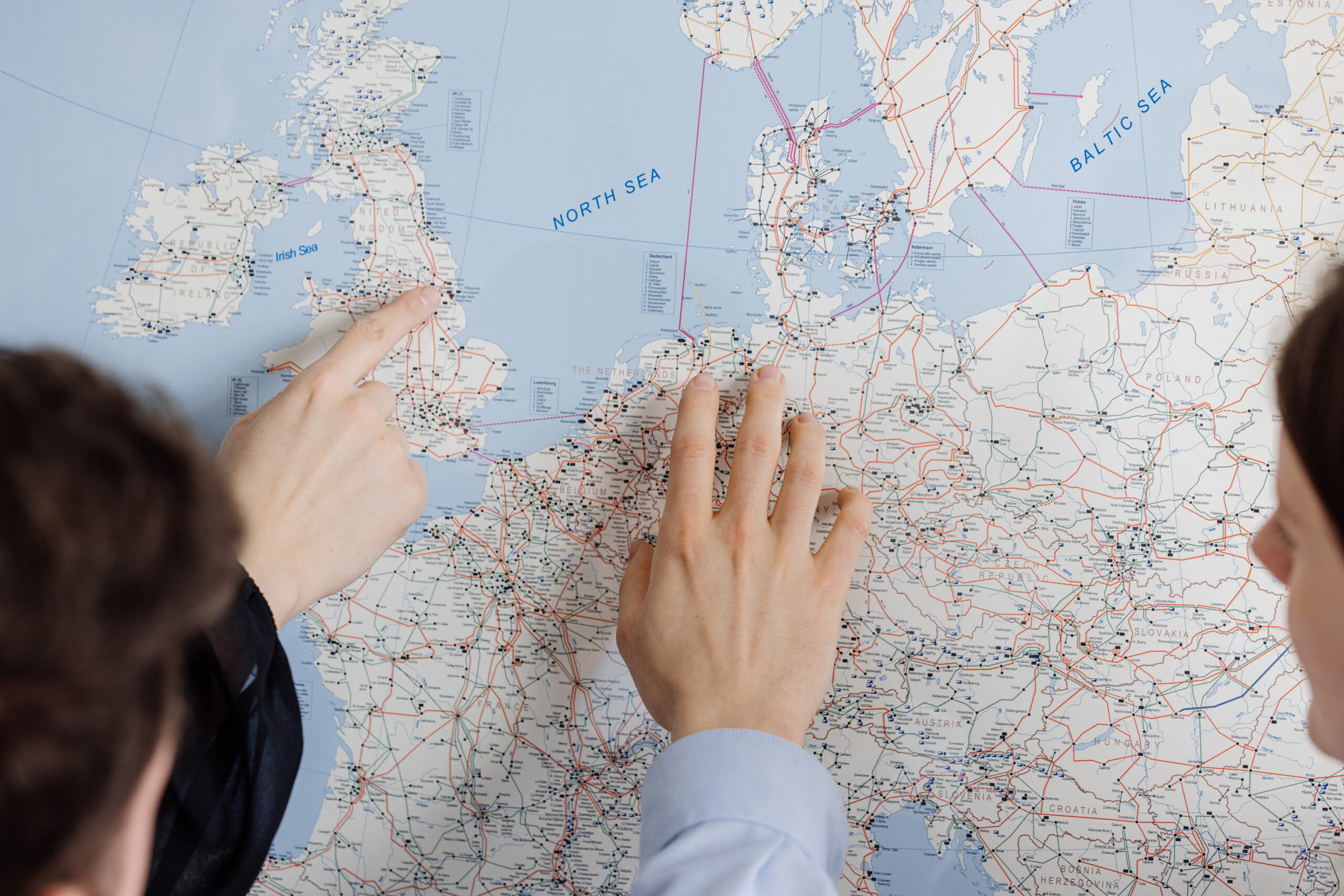
The researchers at the Institute for High Voltage Equipment and Grids, Digitalization and Energy Economics (IAEW) at RWTH Aachen University share their professional and personal experiences in three articles. The scientists, each team work in one of the institute’s three chairs, have different research focuses. However, they all have one goal in common: to integrate their ideas into people’s lives and thus advance our society.
Among other things, they address the following questions:
- How can large amounts of energy from photovoltaic and wind power plants be integrated into our electricity system in the future?
- What challenges will arise from the increasing share of renewable energies and flexible consumers such as heat pumps and electric cars?
- What is necessary to ensure a reliable energy supply and to avoid blackouts?
What else will the scientists share with you:
- How do typical researchers think? Do they work alone on their own research projects?
- What are the career prospects after a PhD? Do science and business exclude each other?
- When did the desire to become an electrical engineer arise, what is a typical working day like and what role does work-life balance play?
© Martin Braun
Be inspired and find your own way!
On our website we inform you about our study programmes.
Excellent researchers on an interdisciplinary stage: lecture by Professor Monti
© Peter Winandy
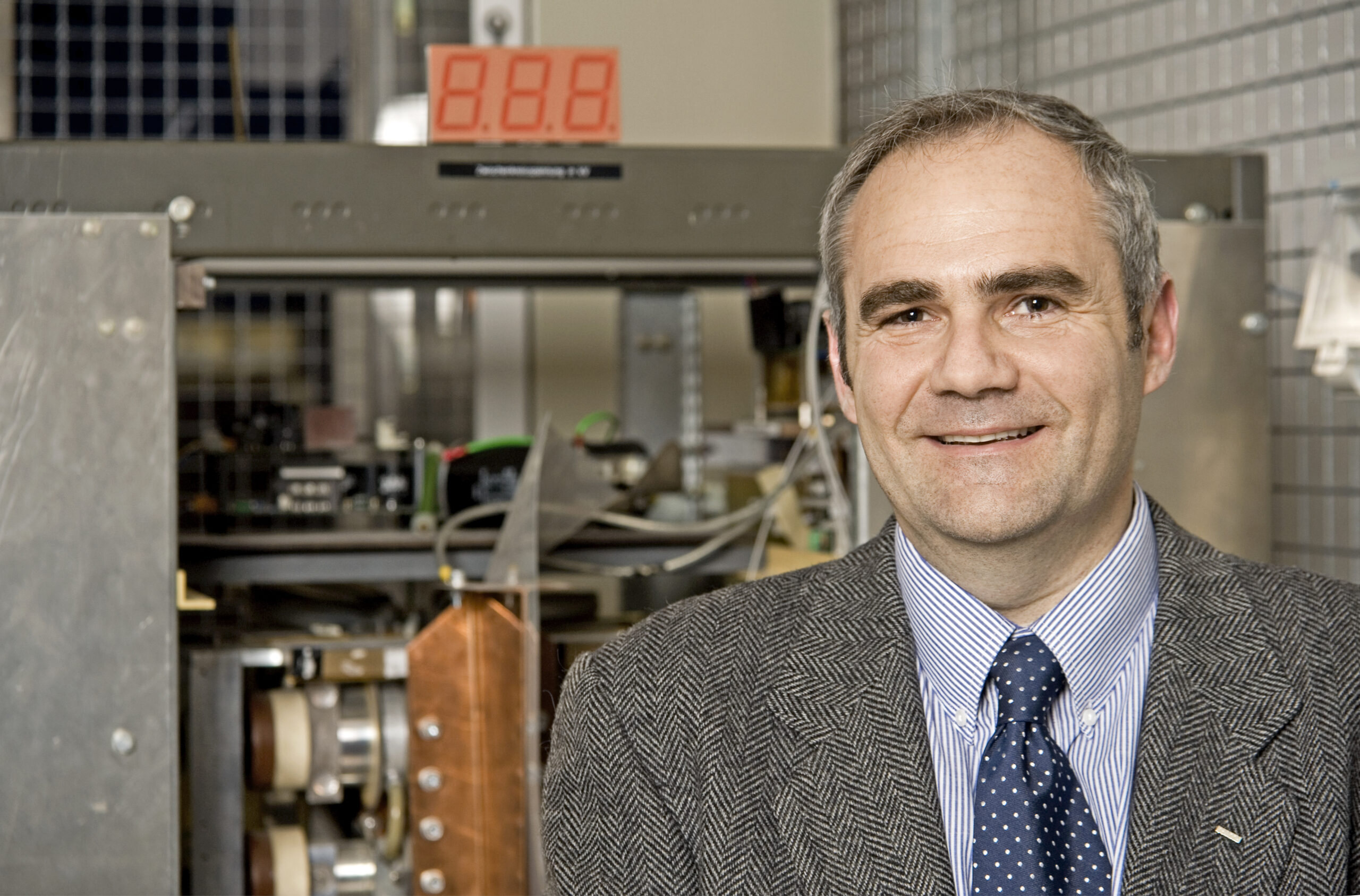
On 17 April, Professor Antonello Monti of RWTH Aachen University will speak at the scientific meeting of the engineering and economics class of the “Nordrhein-Westfälische Akademie der Wissenschaften und der Künste” about the development goals of his discipline in terms of solving major societal challenges.
Against the background of the international situation, the energy transition process is more important than ever.The necessary technological transformation of the energy system must be approached from two angles: On the one hand, a new major player in energy supply has emerged: renewable energy. On the other hand, there are new consumers such as electromobility and heat pumps. Digitalisation is proving to be a key enabler in this process. You could even say that digitalisation is not an option, but a necessity. The power system is consequently becoming a large, programmable cyber physical infrastructure with a high level of complexity. In his presentation “The Digitalisation of the Energy Systems: from the electrons to the cloud”, Professor Monti addresses this complexity by analysing the solutions currently being developed for the different levels of the infrastructure.
” Rethinking the whole architecture means reconsider the basic principles of operation of the new power system but also the corresponding IT systems”,
announced Professor Monti, Director of the Institute for Automation of Complex Power Systems (ACS).
So what does it mean to run a digital grid? And will we be able to build a digital grid that is as reliable as the current infrastructure?
The solutions he proposes in his presentation are the result of concrete experience from large European research projects. Professor Monti leads a research group with about 50 full time scientists working intensively on the the border between energy and information and communication technologies. He is responsible for coordinating some of the most relevant European projects in this field, such as OneNet, TwinEU und int:net. His research work has received several awards, including the prestigious “IEEE Field Medal Award for Innovation in Public Infrastructure” and the “NRW Innovation Award”.
In another presentation – “Sustainable metals: contributions from basic research” – Professor Dierk Raabe from the Max Planck Institute for Sustainable Materials will address the question of whether we can succeed in decarbonising a key industry with “green steel”.
Further information on the Nordrhein-Westfälische Akademie der Wissenschaften und der Künste can be found on the organisation’s homepage.
CO2For-IT: A data room for the timber industry with a focus on climate protection
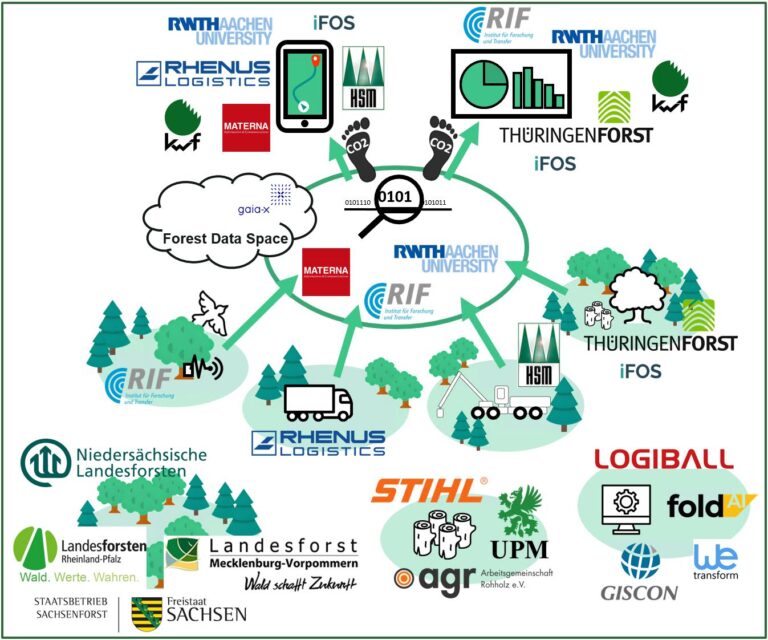
Project partners in CO2For-IT. © Institute for Man-Machine Interaction RWTH Aachen University
A new initiative to promote a climate-friendly timber industry was launched in July 2023. The CO2For-IT project, supported by the Federal Ministry of Economics and Climate Protection, aims to create a “Forest Data Space” to enable the sustainable use of wood from forests.
The Forest Data Space will provide data on the carbon footprint of the entire timber value chain and therefore support the development of data-based solutions for climate protection. The project is led by Materna Information & Communications SE and coordinated by the Dortmund Institute for Research and Transfer (RIF e.V.). Other partners include RWTH Aachen University, Rhenus Forest Logistics GmbH & Co. KG, HSM Hohenloher Spezial Maschinenbau GmbH & Co. KG, Forstliches Forschungs- und Kompetenzzentrum Gotha (ThüringenForst – AöR) and Kuratorium für Waldarbeit und Forsttechnik e. V. (KWF). In addition, foldAI and iFOS GmbH are collaborating with the project.
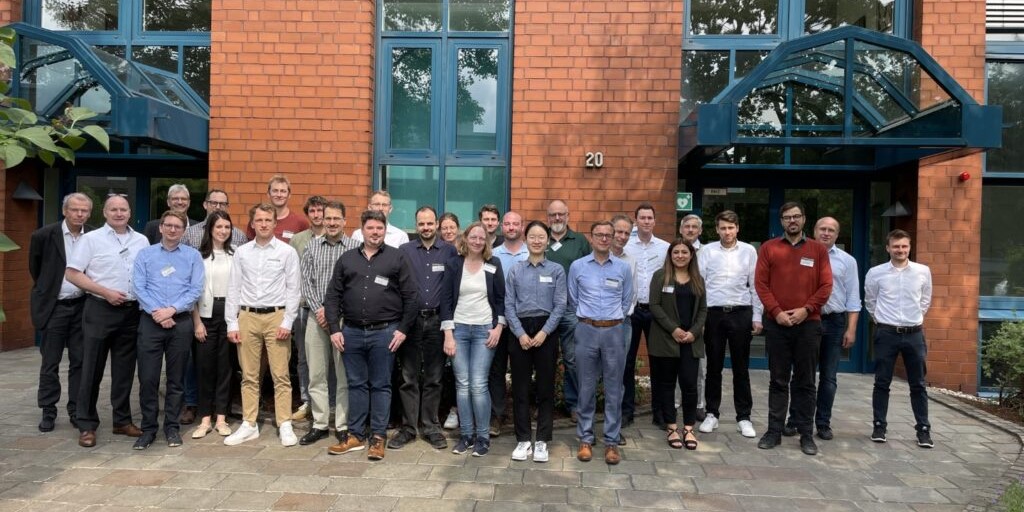
© Institute for Man-Machine Interaction RWTH Aachen University
For more information visit: KWH 4.0 | CO2For-IT (kwh40.de) (only in german)
Energy Park Herzogenrath: Chair of Electrochemical Energy Conversion and Storage Systems is involved in research
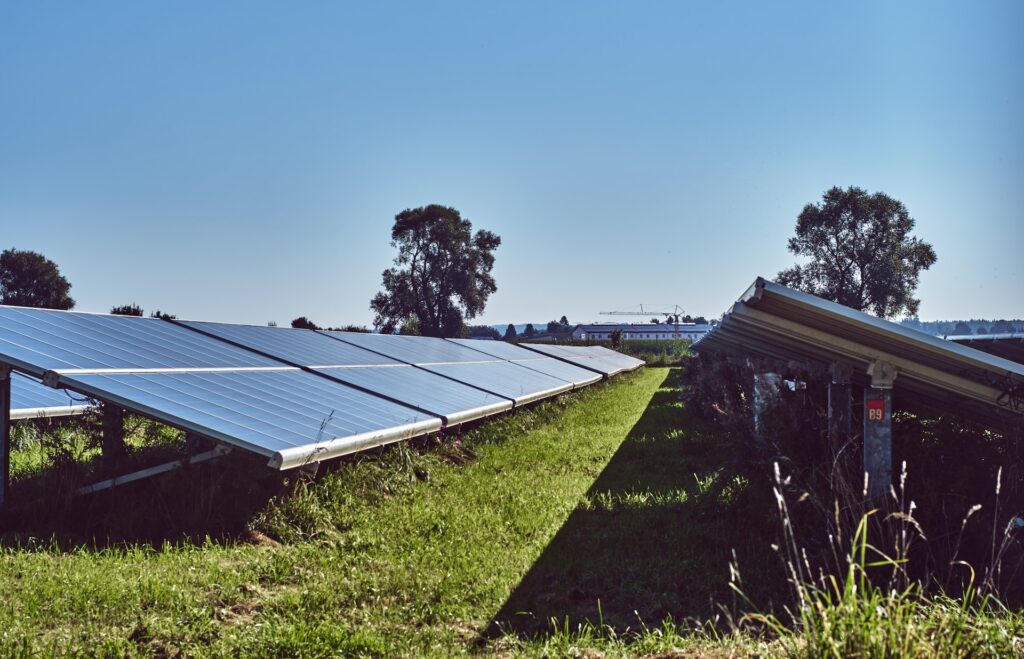
© Michael Förtsch by Unsplash
The project for CO2-neutral energy supply in Herzogenrath, the first city in NRW to strive for this goal, is accompanied by a consortium of four chairs and institutes, including the Chair of Electrochemical Energy Conversion and Storage Systems Technology.
Herzogenrath wants to achieve CO2-neutral energy supply by 2030. A consortium of Siemens Energy, RWTH Aachen University, Aachen University of Applied Sciences and the Niederrhein University of Applied Sciences is conducting research on the project “Energy Park Herzogenrath Research & Development”, which is funded by the Federal Ministry of Economics and Climate Protection with 2.7 million euros. The project is also closely interlinked with other ongoing research and funding projects: at the local flat glass manufacturer Saint Gobain, CO2-free production is being researched, in which the Chair of Electrochemical Energy Conversion and Storage Systems Technology at the E.ON Energy Research Center (ERC) of RWTH Aachen University is involved. The aim is to recycle the heat generated during glass production in Herzogenrath and Kerkrade in the Netherlands as green heating energy.
The project uses a digital twin that virtually maps and simulates the energy supply. In this way, different scenarios can be tested and optimised. The project looks at generation, consumption and marketing options across sectors. RWTH is receiving around 918,000 euros in funding for this.
More information on the project can be found at Energiepark Herzogenrath – Strukturwandel Rheinisches Revier (revier-gestalten.nrw) and at CO2-neutral bis 2030: Forschungsprojekt Energiepark Herzogenrath mit rund 2,7 Millionen Euro gefördert | Wirtschaft NRW.
Climate protection through electrical engineering – Professor Dirk Uwe Sauer’s lecture at the Children’s University
Kinder im Hörsaal. ©RWTH Aachen University
Whether drought, floods or forest fires – the consequences of global warming are dramatic for nature and people. The countries of the global south are being hit particularly hard, but the effects are also being felt here. We experienced this at the latest with the devastating floods in July 2021. That is why we urgently need to address the issue of climate change.
This is also what Dirk Uwe Sauer, Professor of Electrochemical Energy Conversion and Storage Systems Technology at RWTH Aachen University, is doing. He has been researching new energy systems for over 30 years and advises politicians on the energy transition.
„We see in all places that climate change is happening – with many negative consequences. And we urgently need a radical change in the way we have supplied ourselves with energy so far.“
This does not only affect us adults, but especially the children and young people of today. They will have to live with the limitations that climate change will bring. “I don’t think we should underestimate what children know and what they are capable of,” says Professor Sauer.
It is not too late to make a difference
In his lecture, the physicist not only explained the dangers of climate change, but also made the necessary changes understandable. He used various materials such as videos, slides and interactive presentations to show the physical basics and the possibilities through timely action: “I also want to spread optimism and show that things can also get better than they currently are. Because if we still grab the wheel in time, then we still have the possibility to avoid worse things.” For this to happen, however, society must overcome its fear of new technologies. The professor said that there is too much talk about the risks instead of seeing the opportunities. “And we simply can’t afford that now either.” A ruling by the Federal Constitutional Court in 2021 has obliged politicians, and thus the population, to act more quickly. The slower progress is made, the more the living conditions of the next generations are restricted. That is why the previous federal government tightened the climate protection targets and the Climate Protection Act. “We have the opportunity to achieve these goals. We have the necessary technologies to supply all eight billion people in the world properly with renewable energy,” Sauer said.
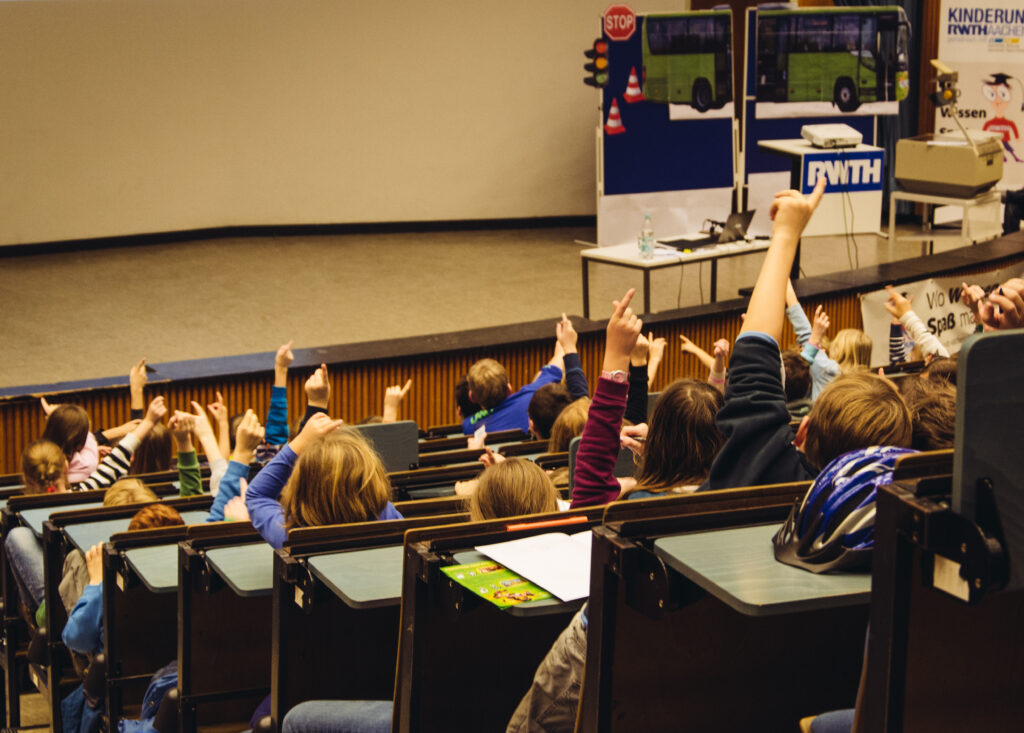
Climate change is an important issue that concerns us all. But what does it actually mean and how can we work against it? Professor Sauer explained this to the children in his lecture at the Children’s University on 16 June 2023. He showed them how the earth is warming up and what consequences this has for nature and people. He also presented solutions on how we can protect the climate with renewable energies and new technologies. For example, with solar cells that generate electricity from sunlight, or with electric cars that emit no exhaust gases. Professor Sauer showed the children not only the problems of climate change, but also the opportunities that arise from it. He showed them that we can not only influence the climate with our energy supply, but also promote biodiversity.
„I would like to show the children that, for example, large photovoltaic systems on open fields not only generate electricity, but also create space for extensive agriculture, for insects that can live and flourish in these areas again.“
Climate change is a major challenge that we can only overcome together. For this, we need an awareness of the connections between energy and the environment that starts with children. Another goal of the Children’s University event was to get the children excited about scientific topics. “Physics has the great advantage that it can illustrate things very vividly and also show connections,” said Sauer. Using simple means, Professor Sauer showed where research starts and what possibilities can arise through technical progress.
Source: Aachener Zeitung, 16 June 2023


