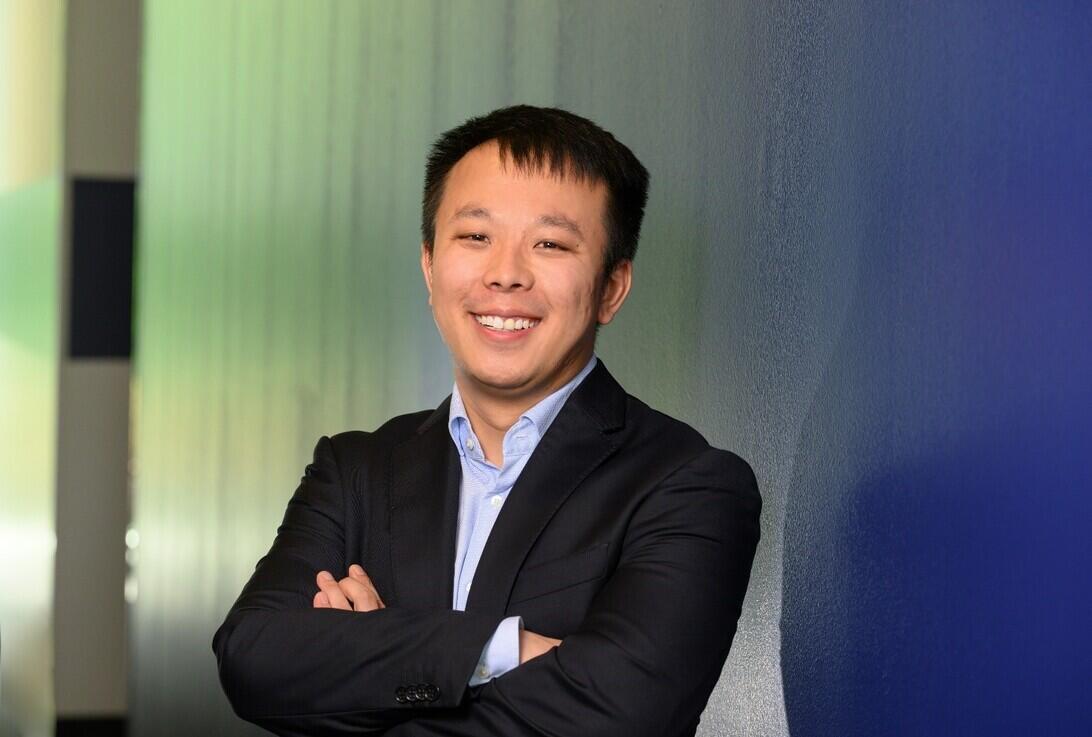
Professor Weihan Li, holder of the Junior Professorship in ‘Artificial Intelligence and Digitalisation for Batteries’ © David Ausserhofer
Professor Li, from the Institute for Power Electronics and Electrical Drives (ISEA) at RWTH Aachen University, has once again been included in the list of the world’s most cited scientists, known as ‘Highly Cited Researchers’. This recognition is a testament to the influence of his work in the field of AI-supported battery research.
The list of ‘Highly Cited Researchers’ is published annually by Clarivate Analytics. Based on the citation index of the Web of Science Core Collection, it identifies scientists whose publications are among the top one per cent most cited in their field and publication year. In scientific contexts, citations serve as an indicator of a publication’s relevance and are considered a measure of its quality. The more frequently a text is cited, the greater its visibility and the greater the global perception of the author. The current list includes 7,131 researchers who, according to the database, are among the most influential 0.1 per cent of the international research community.
Batteries are a key technology in the energy transition. Their performance largely determines the range, safety, service life and cost of their technical applications. Professor Li is investigating how accurately the condition and performance of battery cells can be predicted during production. He has held the Junior Professorship for ‘Artificial Intelligence and Digitalisation for Batteries’ at RWTH Aachen University since March 2025. At the Centre for Ageing, Reliability and Lifetime Prediction of Electrochemical and Power Electronic Systems (CARL), his junior research group develops data-based models, digital twins and automated diagnostic procedures.
The aim is to make the battery digitally communicative, characterised by precision and real-time capability – Weihan Li is working on this future.
His project, ‘SPEED: Fast Performance Characterization of Lithium-ion Batteries from Production Lines with Machine Learning’, has been awarded a grant of €1.85 million by the Federal Ministry of Research, Technology and Space as part of the ‘BattFutur – Junior Research Group Battery Research‘ competition.
Professor Li was born in China and completed his studies in automotive engineering at Tongji University. In 2014, he came to RWTH Aachen University to undertake a Master’s degree in Electrical Engineering and Information Technology, subsequently completing his PhD at the Institute for Power Electronics and Electrical Drives. His research has also taken him to Imperial College London, the University of Oxford and the Massachusetts Institute of Technology (MIT). He completed his doctorate with distinction in 2021 and founded the junior research group ‘Artificial Intelligence for Batteries’ the following year. With support from industry collaborations (accounting for around 40% of third-party funding) and CARL’s infrastructure, which comprises over 6,000 test circuits and provides a reliable database for AI modelling, he has grown the group to include 13 doctoral students.
The scientist can now look back on receiving a number of awards and prizes, including the highly prestigious German Study Prize from the Körber Foundation, one of the most highly endowed prizes for young scientists in Germany. He has published 53 scientific articles, two monographs, three patents and has supervised over 40 theses.
Further information on Professor Weihan Li’s research and career can also be found on the RWTH Aachen University website.


Leave a Reply