Kategorie: ‘Allgemein’
Mobilfunkexpertise in Nordrhein-Westfalen – BMBF wählt 6G-Forschungs-Hubs aus
Das Bundesministerium für Bildung und Forschung (BMBF) hatte im Rahmen des Konjunkturpakets „Corona-Folgen bekämpfen, Wohlstand sichern, Zukunftsfähigkeit stärken“ die Förderung von Hubs ausgeschrieben. Diese sollen mit der Forschung und Entwicklung von zukünftigen Kommunikationstechnologien einen Beitrag dazu leisten, dass Deutschland als Technologieanbieter eine führende Rolle einnimmt. Ausgewählt wurden vier Hubs. Die RWTH Aachen koordiniert in diesem Rahmen den Forschungs-Hub 6GEM und ist an zwei weiteren Hubs als Projektpartner beteiligt.
Um Datensicherheit zu gewährleisten und Weltmarktchancen in der Digitalisierung diverser Branchen zu eröffnen, ist die digitale Souveränität von drahtlosen Kommunikationstechnologien unerlässlich, was sich bereits in aktuellen Diskussionen zum Mobilfunk der 5. Generation herausstellt.
Das Konjunkturpaket des BMBF verfolgt vor diesem Hintergrund das Ziel, nationale Forschungsaktivitäten zu bündeln, um die technologischen Grundlagen für zukünftige Mobilfunkgenerationen zu legen. Die Forschungen der vier Hubs, an denen ingesamt rund 50 Forschungspartner aus Wissenschaft und Wirtschaft beteiligt sind, legen den Grundstein für die 6G-Forschungsinitiative in Deutschland und werden die Zukunft von 6G auch inernational entscheidend mitgestalten.
6GEM – 6G-Forschungs-Hub für offene, effiziente und sichere Mobilfunksysteme
Ab dem 01.08.2021 arbeitet die RWTH Aachen University gemeinsam mit der Ruhr-Universität Bochum, der Technischen Universität Dortmund, der Universität Duisburg-Essen und vier außeruniversitären Forschungseinrichtungen an zukünftigen Kommunikationstechnologien in der 6G-Mobilfunktechnik. Mitantragstellende waren das Fraunhofer-Institut für Materialfluss und Logistik, das Fraunhofer-Institut für Mikroelektronische Schaltungen und Systeme, das Fraunhofer-Institut für Hochfrequenzphysik und Radartechnik sowie das Max-Planck-Institut für Sicherheit und Privatsphäre.
Forscherinnen und Forscher entwickeln im „6G-Forschungs-Hub für offene, effiziente und sichere Mobilfunksysteme (6GEM)“ ein ganzheitliches 6G-System – von der Hardware bis zur Software -, das eine flexible Netzwerkinfrastruktur bietet. Ziel ist es, einen belastbaren, adaptiven Systembetrieb bei extrem niedriger Latenz und höchster Zuverlässigkeit zu garantieren. Diese neu entwickelten Technologien sollen genutzt werden, um mittels digitaler Zwillinge zukunftsträchtige Anwendungen wie sicheren Straßenverkehr, Hafenlogistik, Intralogistik, Rettungsrobotik und den digitalen Operationssaal zu ermöglichen. Die Ergebnisse der wissenschaftlichen Arbeit sollen in großem Umfang Patente generieren. Der 6GEM-Hub wird von Prof. Dr. Haris Gačanin vom Lehrstuhl für Verteilte Signalverarbeitung koordiniert.
Auf Landesebene vereint das 6GEM-Konsortium wissenschaftliche Exzellenz und Mobilfunkexpertise auf Netzwerk-, Material-, Komponenten-/Mikrochip- und Modulebene. Die vier universitären Partner sind etablierte Mitglieder von Industrienetzwerk-Allianzen und tragen zur technologischen Entwicklung von Standards bei. Doch auch international ist das Konsortium bestens vernetzt. Wichtige Zukunftsthemen wie erschwingliche Infrastruktur, nachhaltiger Zugang zu Energie, Smart Cities/Urbanisierung, Smarte Mobilität, Klimawandel sowie die Sicherheit von Mensch und Umwelt können durch die 6GEM-Forschungsarbeiten weltweit in die wichtigsten 6G Allianzen und Konsortien einfließen.
Unterstützt wird Professor Gačanin von einem interdisziplinären und standortübergreifendem Leitungsteam und Netzwerk, welches zum Teil an der RWTH Aachen angesiedelt ist. Mit dabei sind Prof. Dr. Mähönen vom Lehrstuhl und Institut für Vernetzte Systeme, Prof. Dr. sc. techn. Renato Negra vom Lehrstuhl für Höchstfrequenzelektronik, Prof. Dr. -Ing. Dirk Heberling vom Lehrstuhl und Institut für Hochfrequenztechnik, Prof. Dr. sc. techn. Bastian Leibe vom Lehrstuhl für Informatik 13 – Computer Vision, Prof. Dr. -Ing. Lutz Eckstein vom Institut für Kraftfahrzeuge und Prof. Dr. -Ing. Robert Schmitt vom Werkzeugmaschinenlabor der RWTH Aachen.
Open6GHub – die Anwendungen der vernetzten Gesellschaft von 2030
Zuverlässige und hochperformante Kommunikationsnetzwerke sind ein Innovationsbeschleuniger der digitalen Gesellschaft. Der Open6GHub wird ein ganzheitliches 6G-System designen, welches ressourcenschonend und energieeffizient arbeiten, den Schutz persönlicher Daten gewährleisten und eine hohe Verfügbarkeit der Netze sicherstellen soll. Koordiniert wird das Projektkonsortium, bestehend aus 17 Partnern, vom Deutschen Forschungszentrum für künstliche Intelligenz (DFKI). Die Lehr- und Forschungsgebiete unserer Fakultät „Mobile Communications and Computing“ unter Leitung von Prof. Dr. -Ing. Marina Petrova und „Informationstheorie und Entwurf von Kommunikationssystemen“ unter Leitung von Prof. Dr.-Ing. Anke Schmeink sind zwei der beteiligten Projektpartner.
Das Konsortium betrachtet schwerpunktmäßig Anwendungsfelder mit sehr hohen Anforderungen an Qualität und Sicherheit der Kommunikationstechnik: Hochvernetzte Produktion, zukünftige Mobilitätsszenarien, neue Lernwelten, personalisierte Medizin und vor allem die Interaktion des Menschen mit einer Vielzahl autonomer Fahrzeuge und Geräte sind Beispiele für eine Welt ab dem Jahr 2030, die durch 6G geprägt sein wird.
Im Rahmen des Projekts wird am DFKI ein Living Lab eingerichtet, das gemeinsam mit der TU Kaiserslautern und weiteren Partnern betrieben werden soll. Außerdem steht das DFKI-Living Lab SmartFactory-KL als Testbed zur Verfügung.
6G-RIC – 6G Research and Innovation Cluster
Die Forschungsinitiative „6G Research and Innovation Cluster (6G-RIC)“ verfolgt das Ziel, Mobilfunksysteme der sechsten Generation über alle Technologiegrenzen hinweg zu entwickeln. Neben der eigentlichen Technologieentwicklung steht dabei der Aufbau einer leistungsfähigen Testinfrastruktur im Mittelpunkt. Die Testinfrastruktur soll die Erprobung neuer Technologiekomponenten unter realistischen und offenen Bedingungen ermöglichen, um die direkte Verwertung zu beschleunigen und mittelfristig den Aufbau eines neuen Ökosystems zu unterstützen.
Das 6G-RIC-Konsortium besteht aus einem überregionalen Verbund aus elf Universitäten. Darunter vertreten sind die RWTH Aachen mit dem Lehr- und Forschungsgebiet „Informationstheorie und Entwurf von Kommunikationssystemen (ISEK)“ unter Leitung von Prof. Dr.-Ing. Anke Schmeink, die TU Berlin, TU Braunschweig, TU Chemnitz, TU Darmstadt, Christian-Albrechts-Universität zu Kiel, Universität Passau, Eberhard-Karls-Universität Tübingen, Freie Universität Berlin, Humboldt-Universität Berlin sowie die Friedrich-Alexander-Universität Erlangen-Nürnberg. Ebenso beteiligt sind fünf außeruniversitäre Forschungseinrichtungen, darunter die Max-Planck-Gesellschaft, die Fraunhofer-Gesellschaft, das Deutsche Zentrum für Luft- und Raumfahrt, das Leibniz-Institut für Höchstfrequenztechnik sowie das Leibniz-Institut für innovative Mikroelektronik. Koordiniert wird die Initiative vom Fraunhofer-Institut für Nachrichtentechnik, Heinrich-Hertz-Institut (HHI).
Kompetenzcluster Batterienutzungskonzepte (BattNutzung)

Urheber: ISEA
Mit der weiteren Verbreitung der erneuerbaren Energien und der Elektromobilität gewinnen leistungsfähige und zuverlässige Energiespeicher immer weiter an Bedeutung. Wann ist die Zweitnutzung von Batteriespeichern möglich und für welche Anwendungen ist sie sinnvoll? Dieser Frage gehen die Projektpartner*innen aus Forschung und Industrie des neuen Clusters Batterienutzungskonzepte (BattNutzung) nach, welches mit rund 20 Millionen Euro vom Bundesministerium für Bildung gefördert wird. Koordiniert wird das Cluster von Prof. Sauer vom ISEA. Gemeinsam mit dem Kompetenzcluster greenBatt, welcher die Grundlagen für das nachhaltige Recycling von Batterien und Rohstoffen sowie die Schließung von Stoff- und Materialkreisläufen im Batterielebenszyklus schafft, bildet der Cluster BattNutzung die Querschnittsinitiative „Batterielebenszyklus“ Diese strebt eine ganzheitliche Betrachtung von Zweitnutzungs- und Recyclingkonzepten an, welche durch die Vernetzung der beiden Cluster und einen clusterübergreifenden Austausch ermöglicht werden soll.
RWTH Ausgründung akquiriert – Silexica gehört nun zu Xilinx Inc.
 Die RWTH-Ausgründung Silexia, die 2014 am Institut für Communication Technologies and Embedded Systems gegründet wurde, wurde letzte Woche von Xilinx, Inc., der aktuellen Marktführerin im adaptiven Computing akquiriert. Das von Maximilian Odendahl, Johannes Emigholz, Dr. Weihua Sheng, Prof. Jeronimo Castrillon and Prof. Rainer Leupers innerhalb des UMIC-Exzellenzclusters gegründete Start-up wurde zu Beginn über das EXIST-Programm des BMBF gefördert, zu den frühen industriellen Technologiepaten gehörten Huawei und Samsung. Seitdem hat das Unternehmen insgesamt rund 28 Mio. US$ von internationalen Investor*innen eingeworben und sich zu einem führenden Anbieter von C/C++ Programmier- und Analysewerkzeugen für Multicore- und FPGA System-on-Chip Architekturen entwickelt.
Professor Dirk Uwe Sauer ist neues Mitglied der Berlin-Brandenburgischen Akademie der Wissenschaft
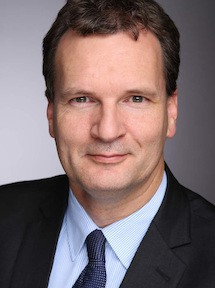
Professor Dirk Uwe Sauer ist neues Mitglied der Fach- und Ländergrenzen überschreitenden Berlin-Brandenburgischen Akademie der Wissenschaft. Seit über 300 Jahren vereint die Akademie herausragende Wissenschaftler*innen, unter denen rückblickend auch 80 Nobelpresträger*innen zu finden waren. Professor Sauers Aufnahme erfolgt in der technikwissenschaftlichen Klasse der Akademie. An unserer Fakultät ist Professor Sauer Inhaber des Lehrstuhls für Elektrochemische Energiewandlung und Speichersystemtechnik. Sein Lehrstuhl ist integraler Bestandteil des Instituts für Stromrichtertechnik und Elektrische Antriebe (ISEA), des Institute for Power Generation and Storage Systems (PGS) sowie des gemeinsamen Helmholtz-Instituts HIMS mit dem Forschungszentrum Jülich und der Universität Münster. Mit seinen Arbeiten treibt Dirk Uwe Sauer das mit einem großen Anwendungsbezug verbundene Themengebiet der Batterieforschung in Deutschland maßgeblich voran. Neben seinen eigentlichen Forschungen hat er auch stets die Gesamtübersicht zukünftiger Energiesysteme im Blick, sodass er alternative Technologien entlang der Zeitachse, wie z. B. Wasserstoff gegenüber Batterietechnologien, sorgsam bewerten kann. Seine Expertise macht ihn ebenfalls zu einem gefragten Berater der Politik: So ist er Mitglied der nationalen Plattform Elektromobilität und Plattform für Mobilität der Bundesregierung und gehört dem Beirat Batterieforschung des BMBF an.
Weiterführende Informationen:
FGE-Vortrag: Digitalisierung im Verteilnetz – Netztransparenz und Big Data Analytics für Netzbetrieb und Netzplanung
Zum Erhalt der Einwahldaten senden Sie eine formlose Email an fge-kolloquien@iaew.rwth-aachen.de.
Am 20.05.2021 findet der Vortrag „Digitalisierung im Verteilnetz-Netztransparenz und Big Data Analytics für Netzbetrieb und Netzplanung“ statt.
Referent ist Univ.-Prof. Dr. sc. Andreas Ulbig, Leiter des Lehrstuhls Aktive Energieverteilnetze am IAEW und Mitbegründer der Adaptricity AG.
Nachfolgende Aspekte werden in der Veranstaltung aufgegriffen:
- Verteilnetze als nächster Flaschenhals der Energiewende?
- Digitalisierung und Datenanalyse als Bausteine für mehr Netztransparenz
- Innovative Praxis-Beispiele für erfolgreiche Digitalisierung in Netzbetrieb und Netzplanung
Zielgruppe: Studierende, wissenschaftliche Mitarbeiterinnen und wissenschaftliche Mitarbeiter, interessierte Öffentlichkeit
Online-Veranstaltung
Beginn: 18.00 Uhr
Den Eintrag im Veranstaltungskalender finden Sie hier
2020 Best Paper Award of the IEEE Open Access Journal of Power and Energy
Univ. Prof. Ferdinanda Ponci, Lehr- und Forschungsgebiet Monitoring und verteilte Kontrolle für Energiesysteme, und Univ. Prof. Antonello Monti, Institutsleiter ACS und Lehrstuhlinhaber Automation of Complex Power Systems, haben den 2020 Best Paper Award of the IEEE Open Access Journal of Power and Energy für Ihre Veröffentlichung „A benchmark system for hardware-in-the-loop testing of distributed energy resources“ erhalten.
IEEE 2020 Best Papers and Outstanding Reviewers
Profilbereich Information & Communication Technology
Der Profilbereich Information and Communication Technologies (ICT) spielt eine wichtige Rolle bei allen globalen Herausforderungen, die das Zukunftskonzept der RWTH Aachen adressiert. Kernthemen von ICT wie Smart Systems, eHealth oder Wireless Communication haben ein immenses Forschungspotential und eine beträchtliche praktische Relevanz.
Audiovisuelle virtuelle Welten made in Aachen
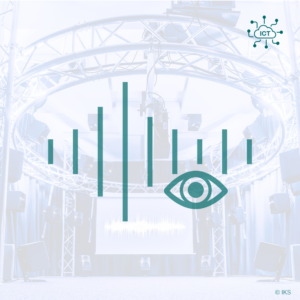
Virtuelle Realität (VR) entwickelt sich immer mehr zu einem leistungsfähigen und realitätsnahen Werkzeug für wissenschaftliche und industrielle Anwendungen. Hiermit lassen sich, „lebendige“ virtuelle Welten erstellen. Nutzer können mit Virtuellen Agenten (VAs) interagieren. Überzeugende und dialogfähige VAs sind nur durch die realistische visuelle und akustische Nachbildung menschlichen Verhaltens denkbar.
Im Profilbereich „Information & Communication Technology“ entwickeln das Institut für Technische Akustik sowie das Lehr- und Forschungsgebiet Virtuelle Realität und Immersive Visualisierung der RWTH Methoden und Algorithmen für eine audiovisuelle Simulation virtueller Welten und speziell VAs. Das Besondere hierbei: die Priorisierung der akustischen Simulation.
Mit dieser Thematik beschäftigt sich ebenfalls das von der RWTH-Professorin Janina Fels koordinierte Schwerpunktprogramm AUDICTIVE, das die Disziplinen der kognitiven Psychologie, der Akustik und der Informatik zusammen bringt.
Energieeffiziente Künstliche Intelligenz
Eine Revolution in der Computerarchitektur – daran arbeiten, unter anderem, WissenschaftlerInnen der RWTH im Profilbereich Information & Communication Technology (ICT).
Für viele Anwendungen der Künstlichen Intelligenz (KI) sind heutige Computer nicht ausreichend leistungsfähig. Sie verbrauchen bei Aufgaben der komplexen Mustererkennung zu viel Energie. Neuartige „neuromorphe“ Rechner versprechen eine deutlich verbesserte Energieeffizienz und Leistungsfähigkeit: sie orientieren sich an der Architektur des hoch effizient arbeitenden menschlichen Gehirns.
Kognitive Anwendungen und Mustererkennung erledigt das Gehirn wesentlich energiesparender als herkömmliche Rechner. Die Mustererkennung erfordert den Umgang mit sehr großen Datenmengen in Echtzeit. Die Analyse dieser Datenmengen (Big Data) ist ein zentraler Baustein kognitiver Funktionen, die alle KI-Anwendungen, wie zum Beispiel autonomes Fahren, das Internet der Dinge oder intelligente Städte, dominieren.
Vom Hardware-Trojaner zum Blackout
Prof. Leupers, Inhaber des Lehrstuhls für Software für Systeme auf Silizium, und Prof. Monti, Inhaber des Lehrstuhls für Automation of Complex Power Systems am E.ON Energy Research Center, forschen an neuen Cyber-Security-Methoden für Energienetze und Mikroprozessoren.
Unter Ausnutzung von Sicherheitslücken im Betriebssystem gelingt es Angreifern unbefugt die Kontrolle des Systems zu übernehmen, Daten auszuspionieren oder das System lahmzulegen. In letzter Zeit gab es sogar Angriffe auf die Hardware der Computersysteme, insbesondere auf den Prozessor. Auch die Energieversorgung gerät zunehmend ins Visier von Angriffen: durch Manipulation der Infrastruktur sowie durch Fälschung der Messergebnisse kann die Regelung des Netzes nachhaltig gestört werden.
Lösen soll dieses Problem eine „Phasor Management Unit“, die der Regelung erneuerbarer Energien im Stromnetz dient und Angriffen standhält. Da sich die technischen Möglichkeiten der Angreifer immer weiter verbessern werden, wird das Thema Hardware-Security weiterhin forschungsrelevant bleiben.
Von schwenkenden Beams und hohen Datenraten
Mobiles Internet: die Möglichkeit, auch unterwegs in hoher Qualität und Geschwindigkeit zu surfen. Dies führt zu einem wachsenden Bedarf nach höheren Datenübertragungsraten. Hierzu bauen die Mobilfunknetzbetreiber ihre Netze aus und führen neue Mobilfunkstandards ein.
Die Einhaltung der Immissionsschutzgrenzwerte für hochfrequente elektromagnetische Felder hat hierbei eine entscheidende Bedeutung. Die WissenschaftlerInnen des Instituts für Hochfrequenztechnik der RWTH forschen zur Erfassung und Abschätzung der Immission durch neue Mobilfunktechnologien. Im Zentrum steht die Verträglichkeit von Immissionen elektromagnetischer Felder mit der Umwelt und insbesondere Menschen.
Eine der neuen technischen Möglichkeiten ist der Einsatz von Massive „Multiple Input Multiple Output“. Hiermit lassen sich Signale stark gebündelt in sogenannten Beams abstrahlen. Auf diese Weise können Nutzer bis zum Rand der Funkzelle mit hohen Signalstärken versorgt und gleichzeitig die Störung anderer Nutzer reduziert werden.
Quelle: ICT Themenheft – Mehr Informationen zu diesen Themen finden Sie dort.
Zukunftscluster NeuroSys – Interview mit Professor Lemme

Die Zukunftscluster-Initiative „Clusters4Future“ des Bundesministerium für Bildung und Forschung fördert Innovationen, die mit den wachsenden Bedürfnissen unserer Gesellschaft einhergehen. Zu den Gewinnern dieses Ideenwettbewerbs gehört ebenfalls, das Cluster „NeuroSys – Neuromorphe Hardware für autonome Systeme der künstlichen Intelligenz“, welches von Prof. Dr. -Ing. Max Christian Lemme vom Lehrstuhl für elektronische Bauelemente koordiniert wird. Der Zukunftscluster „NeuroSys“ erforscht lernfähige und energieeffiziente Hardware, die sich an der Arbeitsweise des Gehirnsorientiert. Das Ziel dahinter ist, eine intelligente und ressourcenschonende Vor-Ort-Datenverarbeitung zu erlauben und damit eine wesentliche Voraussetzung für KI-Anwendungen zu schaffen.
Wie Katalysatoren aktiver werden
Forschende aus Jülich, Aachen, Stanford und Berkeley haben den schichtweisen Aufbau eines Katalysatormaterials untersucht. Dabei haben Sie herausgefunden, dass eine Oberflächenschicht, die so dünn wie ein einiges Atom ist, die Aktivität für die Reaktion der Wasserspaltung verdoppeln kann – ohne dass sich dabei der Energiebedarf erhöht. Damit verdoppelt sich ebenfalls die Menge des produzierten Wasserstoffs.
Die Wissenschaftler hoffen, dass durch dieses erweiterte Verständnis in Zukunft bessere Katalysatoren entwickelt werden können, um grünen Wasserstoff energieeffizienter und damit kostengünstiger herzustellen als bisher. Als grün wird Wasserstoff bezeichnet, wenn es durch die Elektrolyse von Wasser klimaneutral mit Strom aus erneuerbaren Quellen gewonnen wird. Wasserstoff gilt als wesentlicher Baustein der Energiewende, unter anderem, weil er Wind- und Sonnenenergie in Zeiten des Überangebots speichern und später wieder freisetzen kann.
Ein Teil der Forschungsergebnisse kam im Peter-Grünberg-Institut, Bereich Elektronische Materialen, im Electronic Oxide Cluster Labor von Professor Regina Dittmann zustande.
Originalpublikation: ‚Tuning electrochemically driven surface transformation in atomically flat LaNiO3 thin films for enhanced water electrolysis‘
C. Baeumer, J. Li, Q. Lu, A. Liang, L. Jin, H. Martins, T. Duchoň, M. Glöß, S. M. Gericke, M. A. Wohlgemuth, M. Giesen, E. E. Penn, R. Dittmann, F. Gunkel, R. Waser, M. Bajdich, S. Nemšák, J. T. Mefford, W. C. Chueh
Nature Materials, 11 January 2021, DOI: 10.1038/s41563-020-00877-1
Weitere Informationen erhalten Sie auf der Webseite des Forschungszentrums Jülich
Verleihung des Brigitte-Gilles-Preises 2020
Der Brigitte-Gilles-Preis 2020 honoriert Projekte und Initiativen, welche die Bedingungen für Studium, Lehre und Forschung von Frauen an der Hochschule verbessern. Somit tragen sie dazu bei, die Zahl von Wissenschaftlerinnen und Studentinnen in Studiengängen mit geringem Frauenanteil zu erhöhen.
Wir beglückwünschen alle Gewinnerinnen, freuen uns jedoch besonders für die zwei Preisträgerinnen aus unserer Fakultät. Frau Professor Janina Fels und Frau Karin Loh vom Lehrstuhl und Institut für Hörtechnik und Akustik (IHTA) wurden für ihre Initiative „Die interaktive Erlebniswelt der Akustik für große und kleine Kinder“ ausgezeichnet. Hierbei wurden Konzepte entwickelt, die Mädchen zwischen drei und zwölf Jahren das spielerische und interaktive Erkunden und Erlernen des Hörens und der Akustik ermöglichen.
Die Auszeichnung wurde in insgesamt vier Kategorien verliehen und sind mit bis zu 2500 Euro dotiert. Die Auszeichnungen der anderen Kategorien wurden folgende Forscherinnen und Projekte verliehen: Katharina Müller vom Lehrstuhl für Produktionssystematik, Projekt „Hlumani – der Zukunft eine gerechte Chance geben“ vom Lehrstuhl für Landschaftsarchitektur der RWTH, der Universität Stuttgart und der Universität Kapstadt und Dr. Anna Stertz vom Lehrstuhl und Institut für Psychologie.
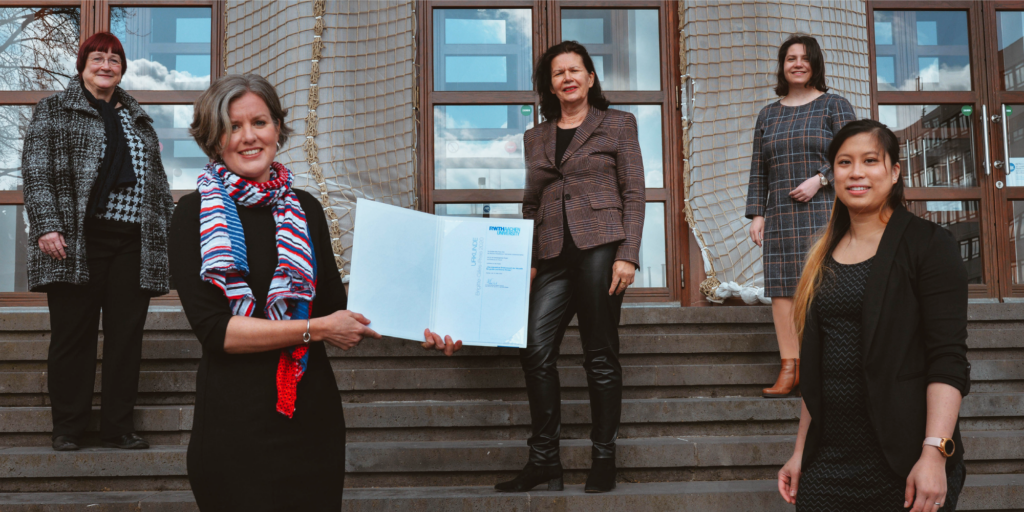
Foto: Andreas Schmitter


