Kategorie: ‘Veranstaltungen’
Worlds of Experimentation: Exploring Electrical Engineering
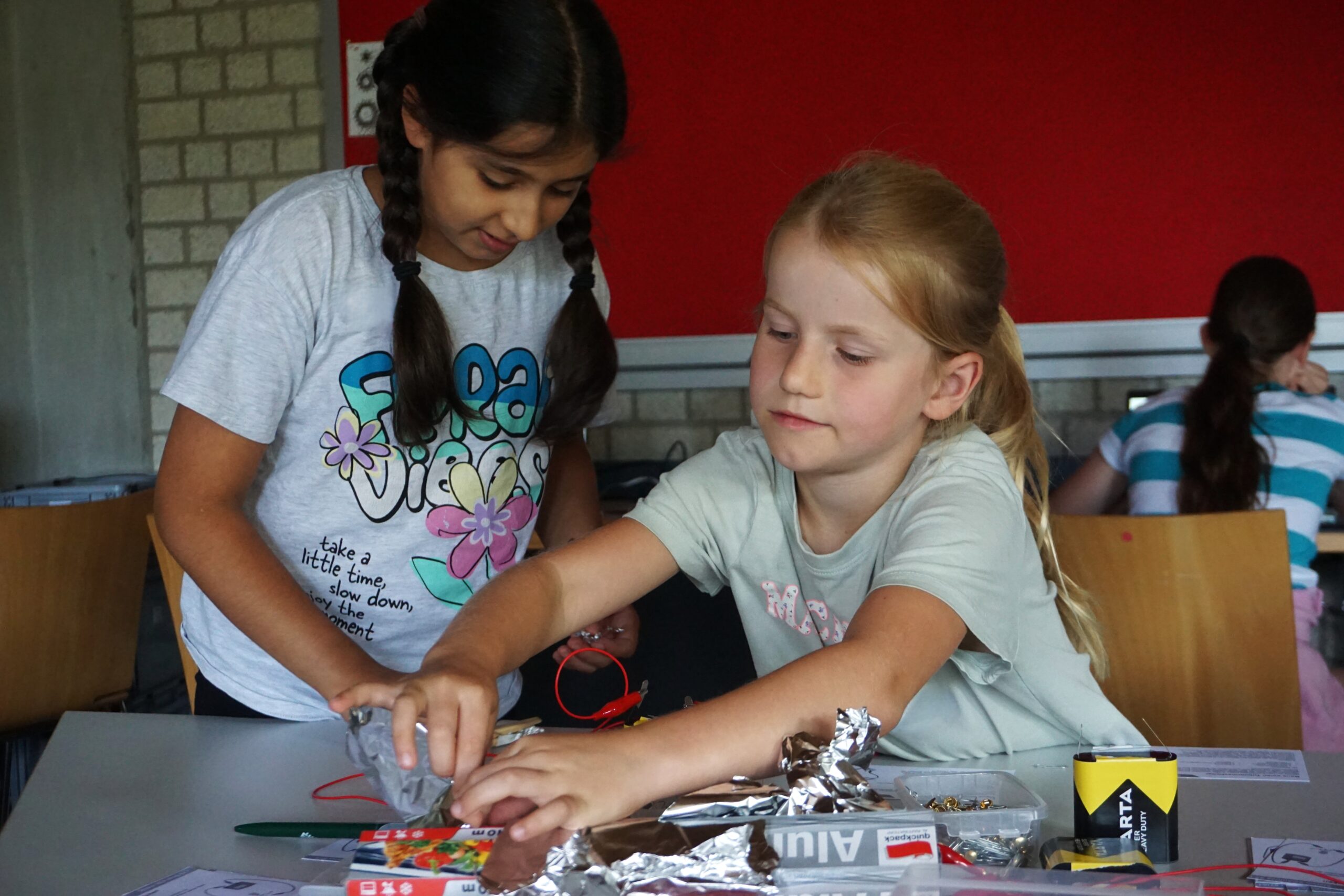
Two young participants are constructing their own slide and dead-man switches for their circuits.
How can you transform cables, a power source, and a small incandescent bulb into a functioning electrical circuit? In the “Experimentierwelten” summer program, children can try their hand at electrical engineering under the guidance of the Heureka Learning Lab.
She scans a row of tables covered with red cables, each of which ends on both sides with alligator clips. She quickly finds a light bulb. A few steps later, it’s securely in the correct socket.
“It really does glow,” says an elementary school student, beaming just as brightly as the light itself.
What we take for granted in everyday life becomes the starting point for a journey of discovery here: How does an electric circuit work? What makes a switch a switch? Why does a simple nail suddenly attract metal staples? And can the force of a magnet be made visible? The focus is on hands-on experimentation: Questions arise from the experiments and are then explored through practical investigation.
This free summer program, aimed at children and teens of various ages, takes place at the Nell-Breuning-Haus, centrally located in Herzogenrath. Depending on the target group and the daily program, participants can try out different STEM activities each year. This summer, the Heureka Learning Lab from the Faculty of Electrical Engineering and Information Technology was once again part of the “Experimentierwelten” program to guide the younger participants.
“What else do you have here?” asks a nine-year-old participant who was already there last year, delighted by the well-stocked experiment kit.
For the faculty, this participation is part of their efforts to support the next generation of researchers. Through the “Experimentierwelten” program, students have the opportunity to become familiar with electrical engineering and information technology at an early age, as well as gain experience with technical concepts. Rather, research here begins with a simple question—and with the courage to seek an answer on their own.
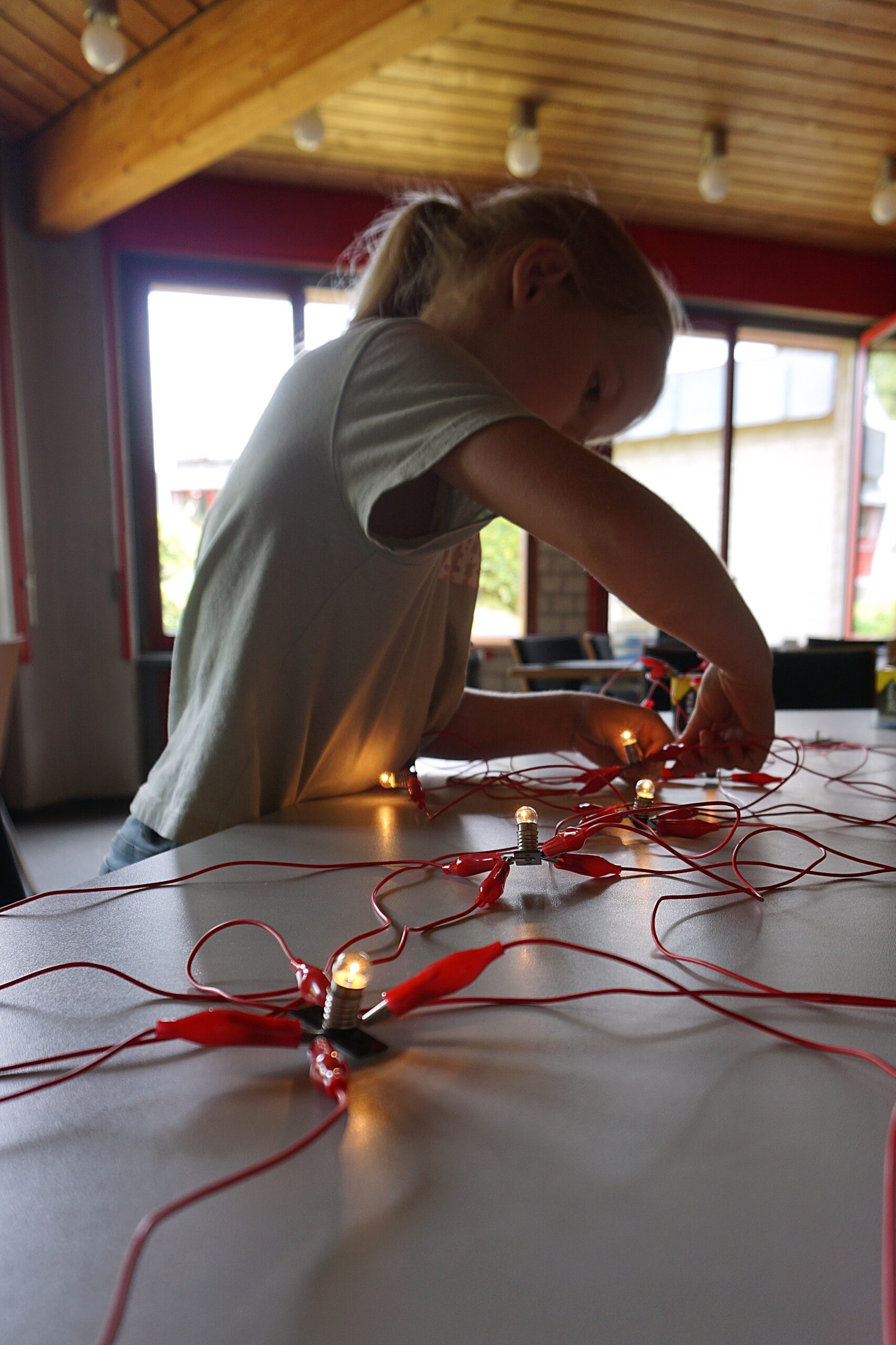
A student is conducting an experiment with several light bulbs connected in parallel.
The varied STEM program, jointly offered by various learning labs of RWTH Aachen University from August 4 to 14, 2026, took the younger children to other stations as well. For example, they programmed the small “Calliope mini” computer, made flower seed balls, and explored the secrets of tomato DNA. Meanwhile, the older students explored modern physics and learned how a scanning tunneling microscope works and makes individual atoms visible.
The fact that age doesn’t necessarily indicate technical skill when it comes to these offerings is noted by Gina Goffart, director of the SCIphyLAB learning lab at RWTH Aachen University:
“We’ve seen that soldering—for example, when building a ‘hot wire’—is generally easier for younger children. They are often more dexterous and quicker than older children. In fact, this year, even the youngest children set the record—they were the fastest to finish building their ‘hot wire’.”
The summer vacation program was made possible through a collaboration between the StädteRegion Aachen, RWTH Aachen University, and the Nell-Breuning-Haus. It was developed as part of the MINTplus project in the StädteRegion Aachen. The Federal Ministry of Education, Family Affairs, Senior Citizens, Women, and Youth supports the project as a funding agency, while the Bürgerstiftung Herzogenrath and HEAD acoustics GmbH provide financial support.
The Heureka Learning Lab also offers opportunities to foster a spirit of inquiry within the academic setting of RWTH Aachen University. Depending on the program, workshops allow students to conduct their own experiments, explore laboratories, and learn about various topics within electrical engineering and information technology. Topics range from STEM to micro- and nanotechnology to energy engineering.
Student Uni During Your Holiday
Once again this year, the faculty’s institutes and chairs opened their doors, providing insights into studies, campus life, and research.
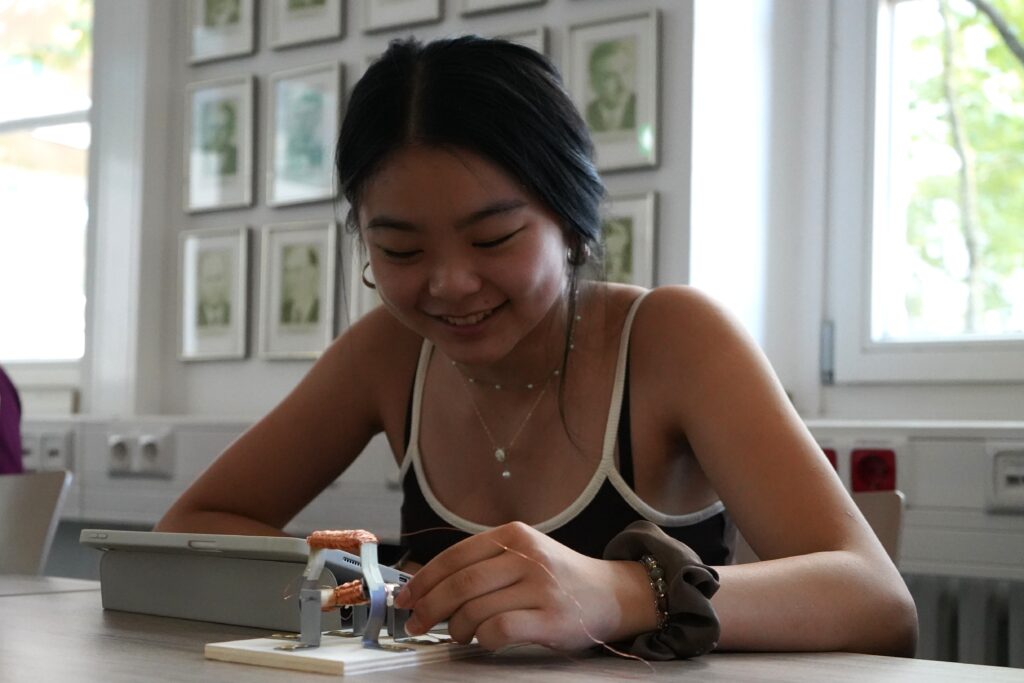
“The lecturers were highly motivated to explain things to us. You could really tell how passionate they are about what they do. This was also noticeable in the projects, where we had to solder or build an electric motor, for example. I found that very varied.” —Sarah
Can we supply ourselves with energy without emitting CO2? Why are cars becoming electric, but not airplanes? How do computers communicate, and what role does artificial intelligence play in microelectronics? Participants received answers to these and many other questions in trial lectures and workshops, as well as during joint lunch breaks with the teaching staff and on excursions with our students.
“I would say that the personal experiences shared during the lunch breaks were especially informative. For example, we learned what the lecturers’ career paths look like and what they did to get where they are now. That is a goal one could also pursue in one’s own future. This personal exchange and the feeling of truly being accepted made me very happy.” —Maximilian
The Student University thrives on the commitment of many: A heartfelt thank you to the IAEW and to all participating institutes and chairs who introduced the students to the diversity of electrical engineering and information technology through exciting experiments and insights. Perhaps this week has already laid the foundation for the future academic or career paths of some participants.
“You could simply see how broad this field is. For instance, you can build an electric motor that is relatively large. In other areas, you have micro- and nanoelectronics that are extremely small.” —Sarah
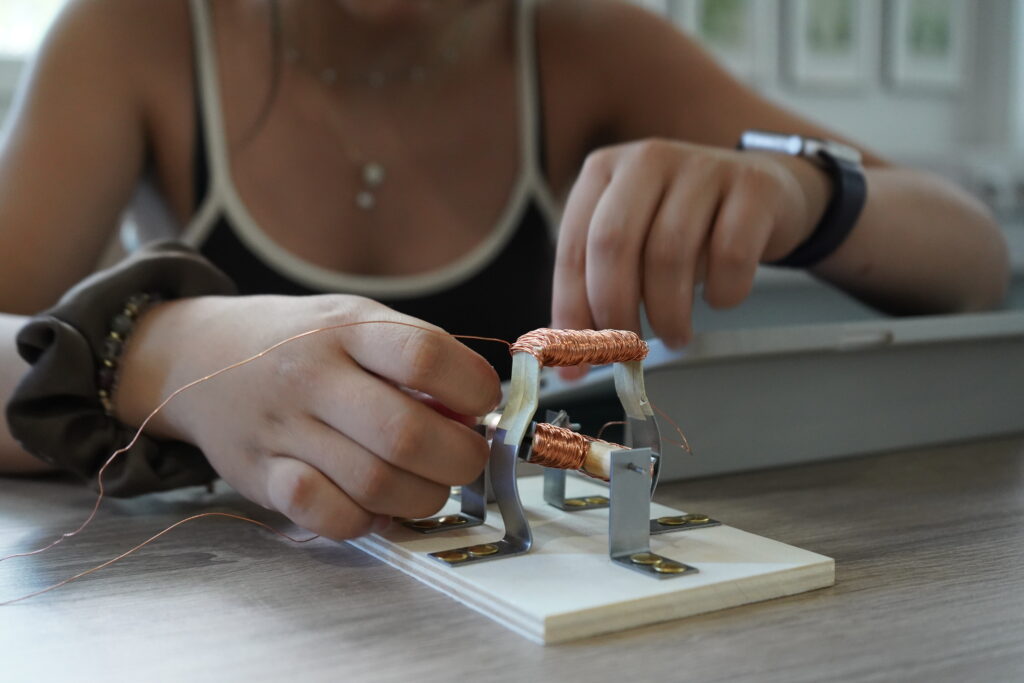
The program included lectures and workshops at the Institute for Power Electronics and Electrical Drives, the Chair of Distributed Signal Processing, the Institute of Electrical Machines, the Chair of Communication Systems, and the IAEW. The week was complemented by insights into micro- and nanoelectronics at AMO GmbH, soldering exercises, a campus tour, and discussions about university studies.
“Labs on Tour” Brings Electrical Engineering to Schools

Fans built using soldering irons and 3D printers were in high demand. © Daphne Heil
At “Labs on Tour,” students had the opportunity to learn about and try out electrical engineering for themselves. For the first time, the Faculty of Electrical Engineering and Information Technology participated with its Heureka learning lab, demonstrating how exciting technology can be when students experiment on their own.
First experiences with a soldering iron, a circuit board they assembled themselves, a hand-soldered LED keychain: For many students, “Labs on Tour” brought electrical engineering to life. This project by RWTH Aachen University brings science and technology topics directly to schools, enabling young people to gain hands-on experience with STEM subjects through extracurricular clubs.
This school year, the Faculty of Electrical Engineering and Information Technology participated in the program for the first time. Heureka Learning Lab staff members organized a soldering workshop focused on hands-on work and firsthand experience.
“I really liked the students’ explanations. I enjoyed how playful the experiments were,” said Carina, a student from Aachen, who particularly remembers the soldering and 3D printing.
The Heureka Learning Lab takes exactly this approach. In workshops held regularly at institutes and academic departments, students gain insights into the diverse fields of electrical engineering and information technology—from micro- and nanotechnology to energy engineering. Through experiments and projects of their own, students learn to understand and connect complex technical concepts to their everyday lives.
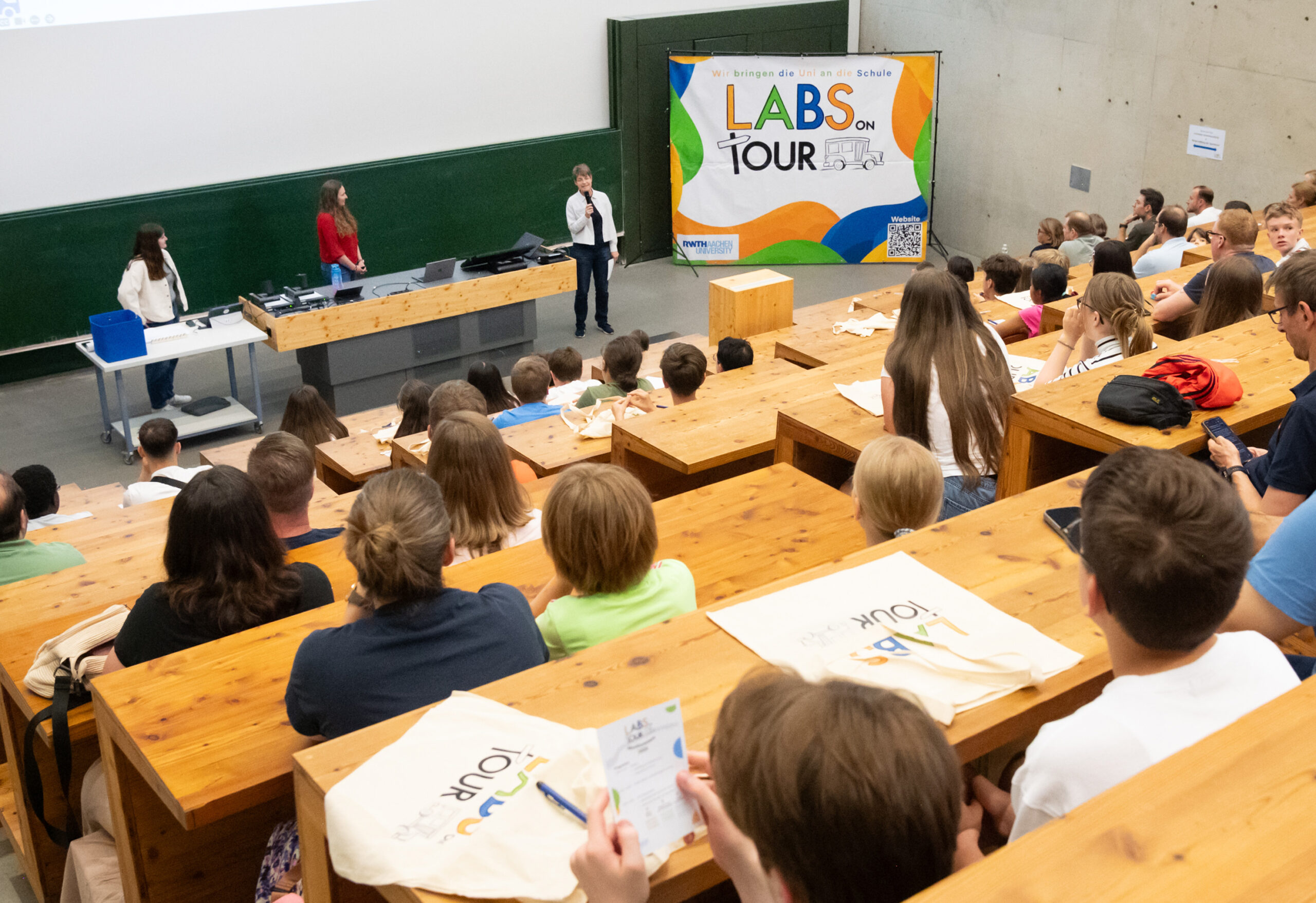
Welcoming the participants at the closing event of “Labs on Tour” at the Physics Center of RWTH Aachen. © Heike Lachmann
At the closing event for this year’s “Labs on Tour,” approximately 150 guests gathered at the Physics Center at RWTH Aachen University. In addition to students and their families, teachers and RWTH staff also attended.
„“The closing event gives the students the opportunity to experience the university up close, reconnect with their mentors, and show their families what they’ve experienced and learned in the club,” says Maria Hinkelmann, a research assistant in the Physics Department at RWTH Aachen University.
“Labs on Tour” is aimed at seventh- and eighth-grade students. RWTH students and staff bring workshops from various departments directly into the schools’ afternoon programs. In addition to electrical engineering and information technology, the extracurricular program includes physics, biology, mathematics, materials science, and mechanical engineering, among other subjects. The goal is to reduce reservations about technical and scientific topics and to foster interest in STEM subjects.
Supporting the next generation is an important part of the Faculty of Electrical Engineering and Information Technology’s work. Programs like “Heureka” show young people the importance of electrical engineering and information technology in everyday life, science, and society from an early age. At the same time, students gain insight into future study opportunities and various career fields.
The faculty staff is looking forward to continuing to guide young people in exploring technical topics as part of “Labs on Tour” next year again.
More information about the Heureka Learning Lab and “Labs on Tour” is available online.
Information Session on Selecting a Specialization for Bachelor’s Students in the ETIT Program
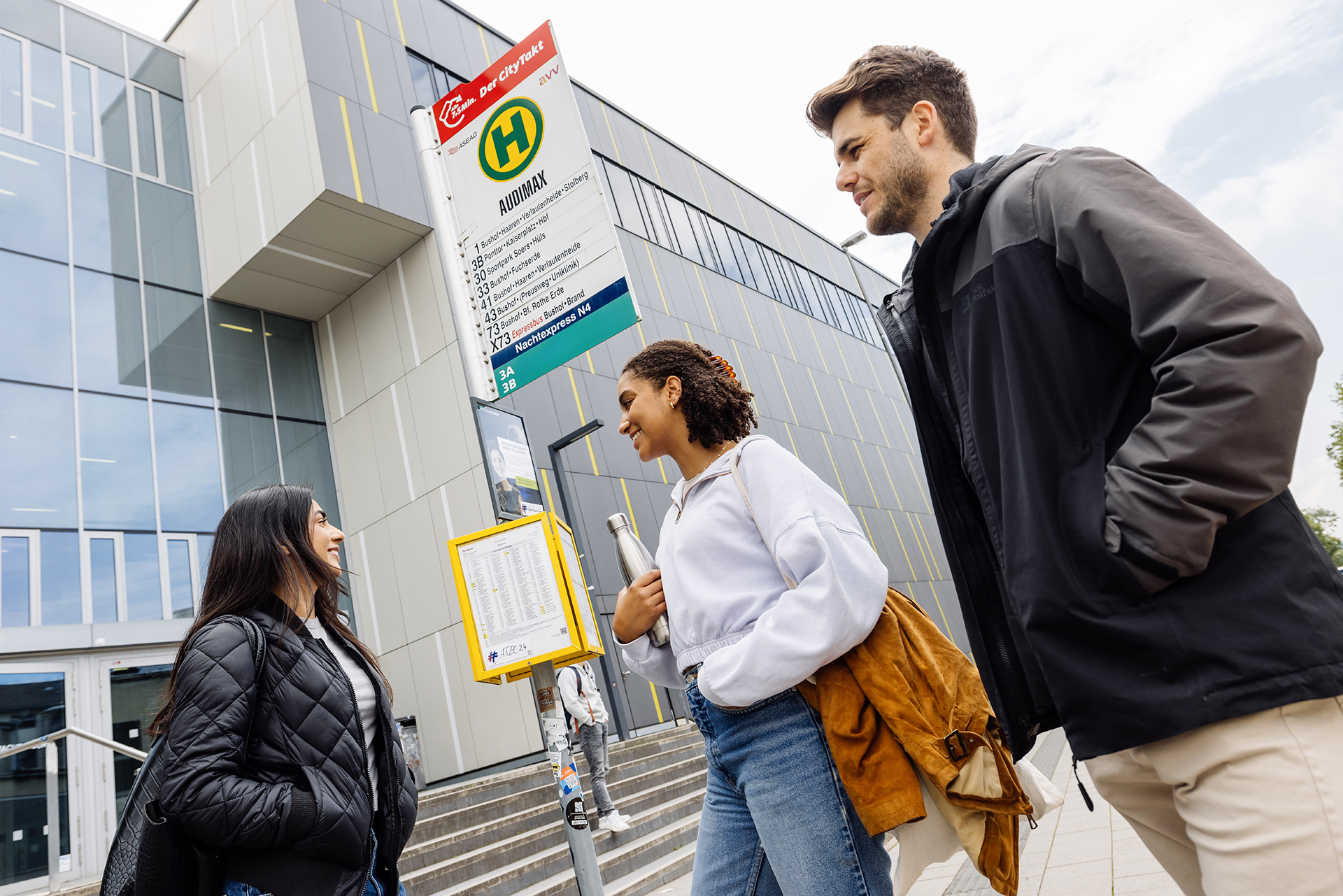 Students in the Bachelor’s degree program in Electrical Engineering and Information Technology are invited to attend an information session on choosing their specialization on Thursday, July 23, 2026.
Date: Thursday, July 23, 2026, 1:00–2:30 p.m.
Location: Lecture Hall H02, C.A.R.L. (1385|102)
Program
Presentation of the specializations
1:00 p.m.: Micro- and Nanoelectronics
Prof. Gemmeke – Chair of Integrated Digital Systems and Circuit Design
1:15 p.m.: Biomedical Engineering
Prof. Fels – Institute for Hearing Technology and Acoustics
1:30 p.m.: Information and Communication Technology
Prof. Heinen – Chair of Integrated Analog Circuits and RF Systems
1:45 p.m.: Electrical Power Engineering
Prof. Steentjes – Institute of Electrical Machines and Chair of Electrical Machines and Drives
General Information
The presentations will be followed by general information about the specialization selection process and the procedure in RWTHonline.
All interested fourth-semester students in the Bachelor’s degree program in Electrical Engineering and Information Technology (ETIT) are welcome to attend.
If you would like to learn more about the specializations before the event, you can find additional information on the faculty website under Research. These fields provide valuable insights into the topics and research areas associated with each specialization.
Theory in Practice: IAEW Field Trip to HVDC Infrastructure
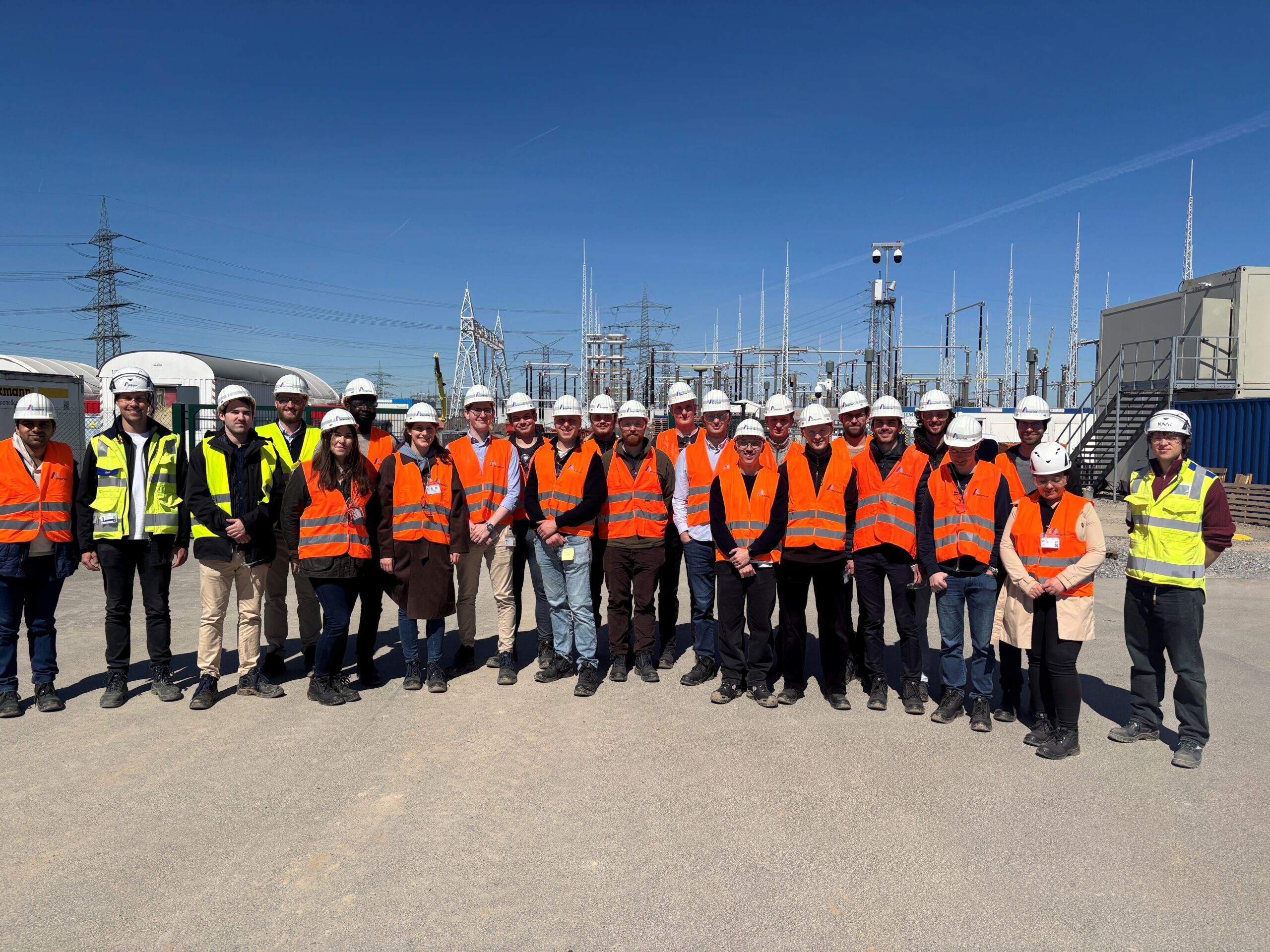
In hard hats and safety vests: 20 IAEW students in front of the impressive converter station backdrop.
20 IAEW students deepened their knowledge of HVDC technology during a site visit to the Ultranet converter station in Meerbusch-Osterath.
As part of the “High-Voltage Direct Current” (HVDC) seminar, 20 IAEW students were given the opportunity to gain firsthand insights into the practical expansion of HVDC infrastructure. The visit focused on the station in Meerbusch-Osterath, a key component of the Ultranet project and Germany’s first multi-terminal HVDC link. A significant technical feature of this site is the first-ever joint transmission of direct and alternating current on a single pylon in Germany. As part of a planned bipole system, the converter station will facilitate the conversion between AC and DC, with a DC cable connection extending toward Emden. This field trip allowed students to apply and consolidate the theoretical knowledge they had acquired in January within a real-world construction environment.
We would like to sincerely thank Amprion GmbH for the insightful tour and the fascinating look at this pioneering project.
Award for “Labs on Tour”
The “Labs on Tour” project run by RWTH Aachen University has been awarded third place in the “Mobile Offerings” category of the “LeLa Award.” The program is aimed at students in grade 7 and above and brings offerings from the RWTH student laboratories directly to schools. The aim is to provide insights into topics in the fields of electrical engineering, mathematics, computer science, natural sciences, and technology.
The prize is awarded by the “Lernort Labor – Bundesverband der Schülerlabore e.V.” (Learning Place Laboratory – Federal Association of Student Laboratories) in four categories and recognizes “outstanding achievements by student laboratories and networks.” At the annual conference in Osnabrück, Maria Hinkelmann, coordinator of “Labs on Tour” at RWTH Aachen University, accepted the award donated by the Dr. Hans Riegel Foundation. The prize is accompanied by prize money of €2,000. “We are delighted to receive this award and the prize money of €2,000. This recognition encourages us to further expand the project and hopefully inspire even more students to take an interest in STEM subjects,” says Maria Hinkelmann. She works in Professor Heidrun Heinke‘s working group in the Physics Department at RWTH Aachen University.
“Labs on Tour” was developed as part of the “MINTplus” joint project funded by the Federal Ministry of Education, Family, Seniors, Women, and Youth. Since 2022, RWTH Aachen University, the Aachen city region, and the United Entrepreneurs’ Associations of Aachen have been working together to make STEM subjects accessible, spark curiosity, and break down potential barriers to science subjects.
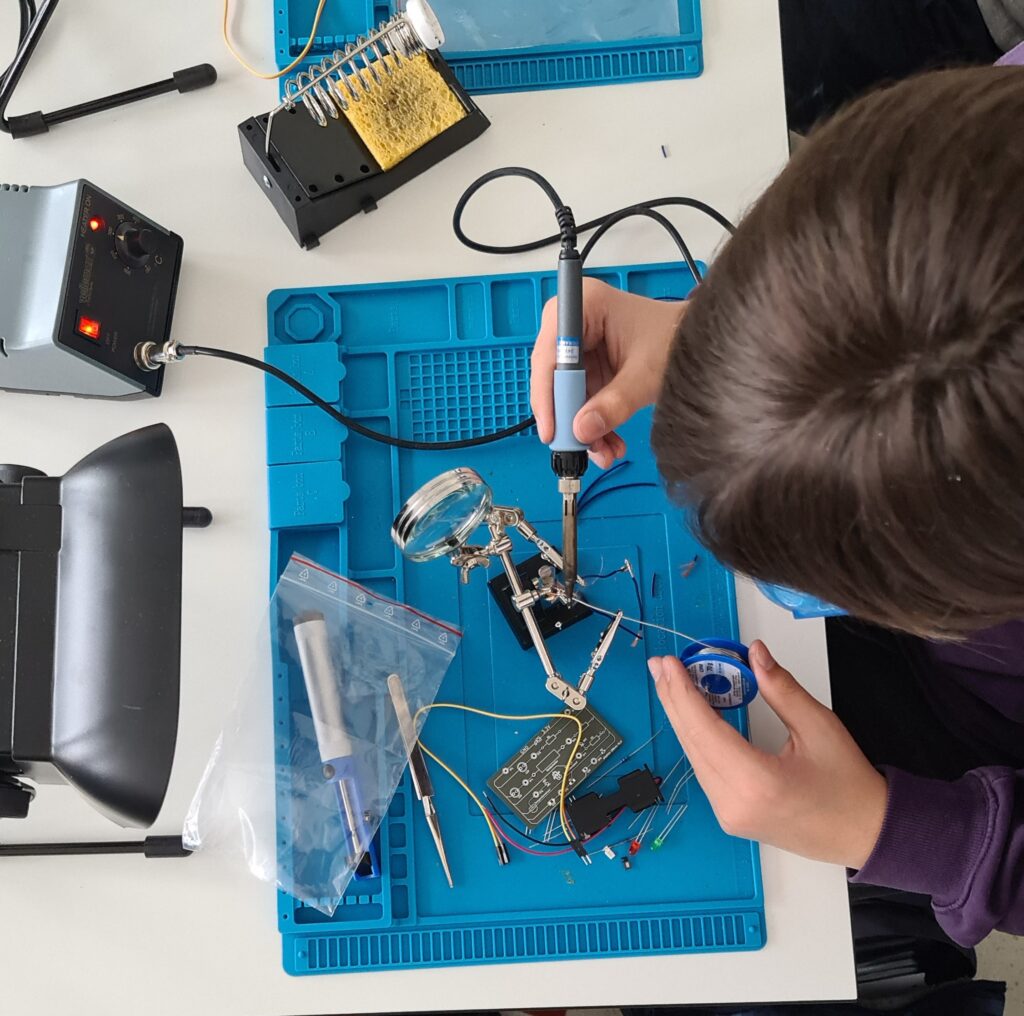
Pupil soldering during Labs on Tour
The unique feature of “Labs on Tour” is its mobile concept. Three learning lab offerings come to schools on four dates for 90 minutes each. There, students participate in their own STEM working groups over an entire school semester.
RWTH Aachen University is currently cooperating with twelve secondary schools in Aachen and the surrounding area. Around 250 students from grade 7 onwards take part each year and spend a total of 18 hours working on various STEM topics. For example, they program robots, make pocket warmers, or solder key rings.
Last year, a closing event for the year group was held at RWTH Aachen University for the first time. Students and their families were invited to the campus
. In addition to the certificate ceremony, they were able to explore various learning labs and participate in hands-on activities. “For many, it was an exciting opportunity to experience the university up close and show their families what they had been working on at Labs on Tour,” says Maria Hinkelmann. The next closing event is planned for July.
Deep learning in particle physics: RIA lecture by Professor Johannes Erdmann on AI at CERN

Professor Johannes Erdmann from the 3rd Physics Institute A at RWTH Aachen University © Johannes Erdmann
How can the crucial signals be found among billions of particle collisions? Professor Johannes Erdmann will answer this question in the next RIA lecture. On Wednesday, 29 April 2026, from 5:00 to 6:30pm, he will explain how deep learning helps researchers at CERN to identify rare physical processes and gain new insights into the building blocks of matter.
At CERN’s Large Hadron Collider (LHC) in Geneva, researchers investigate the properties of elementary particles by studying their behaviour in high-energy collisions. The process generates large amounts of data, which is recorded using detectors such as the CMS (Compact Muon Solenoid) detector. Scientists from RWTH Aachen University are also involved in experiments using this detector. These experiments are on an enormous scale: up to 40 million particle collisions per second and more than 100 million detector channels generate huge amounts of data, the evaluation of which poses a major challenge.
This is where artificial intelligence methods come into play. In recent years, deep learning has become an important tool for analysing complex data sets from particle experiments, providing a more precise understanding of the fundamental building blocks of matter.
A key objective of the analysis is to identify extremely rare physical processes within these vast data sets – the proverbial ‘needle in a haystack’. Artificial neural networks can distinguish particle signatures in the detector more precisely and detect rare events more reliably. This allows for more precise measurements and provides new insights into fundamental physical processes.
Professor Erdmann is head of the ‘Big Data Analysis in Physics’ teaching and research area at RWTH Aachen University. His research focuses on analysing data from the CMS experiment at the LHC, as well as developing deep learning methods for future experiments, such as the planned Einstein Telescope for observing gravitational waves.
The lecture will take place online via Zoom and is free to attend. A video of the lecture and subsequent discussion will be available in the YouTube-Playlist shortly after the event.
This event is organised in collaboration with the Faculty of Computer Science at RWTH Aachen University, Forschungszentrum Jülich, the Regional Group of the German Informatics Society (RIA), the Regional Industry Club for Computer Science Aachen (REGINA), the FH Aachen and the Aachen Group of the German University Association.
Interested parties are welcome to pass on the invitation. Those who would like to receive regular updates about future RIA lectures can email vortrag@i3.informatik.rwth-aachen.de.
The future of hearing: Public lecture series at the “NeuroSensEar” workshop
What will the hearing aid of the future look like? And how can the human brain help us build more efficient computers? From March 3 to 5, 2026, as part of the workshop “NeuroSensEar – Neuromorphic Acoustic Sensors for Tomorrow’s High-Performance Hearing Aids”, the Institute of Communications Engineering at RWTH Aachen University invites you to three high-profile public lectures in Lecture Hall FT (Melatener Str. 23, 52074 Aachen).
The “NeuroSensEar” project is dedicated to one of the most exciting challenges in current technology: the development of neuromorphic acoustic sensor technology. The goal is to create powerful hearing aids that not only amplify sound better, but also act intelligently and energy-efficiently, just like our brains.
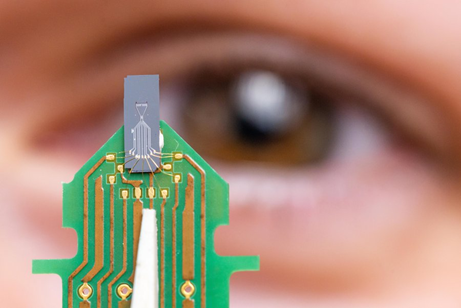
IENT
Accompanying the workshop, three renowned professors from our faculty will provide exclusive insights into their research.
Neuromorphic Computing: Energy Efficiency Through Biologically Inspired Hardware – Tuesday, March 3, 2026 | 5:00 p.m.
Prof. (ret.) Dr.-Ing. Dr. h.c. Rainer Waser
Information technology is facing a paradigm shift: classic, algorithmic data processing is increasingly being replaced by AI-based approaches. This is accompanied by a massive increase in energy consumption. To reduce this, institutes in Faculty 6 are researching neuromorphic systems that work much more efficiently than conventional architectures.
In the upcoming lecture, Prof. Waser will present the physical fundamentals of redox-based memristive components. The focus is on an interdisciplinary approach between materials science, electrical engineering, and computer science that uses the functioning of the human brain as a technical model.
In addition to hardware development, specific AI applications and their social opportunities and risks will be discussed. The lecture will conclude with a reflection on the question of whether future AI systems could develop consciousness.
Real hearing in the laboratory: Hearing research in interactive VR environments – Wednesday, March 4, 2026 | 2:00 p.m.
Prof. Janina Fels
Until now, research into auditory perception and cognitive processes has often relied on controlled but unrealistically simplified laboratory scenarios. The Institute of Hearing Technology and Acoustics (IHTA) at RWTH Aachen University is now using modern audiovisual virtual reality (VR) to simulate complex everyday situations in a realistic and interactive way.
This technology allows test subjects to interact with acoustic scenes in real time. This enables the precise investigation of hearing and attention in acoustically challenging environments such as open-plan offices or busy outdoor areas. A current research focus of the IHTA is the analysis of noise pollution, attention, and listening effort in elementary school classrooms.
The presentation highlights how VR methods bridge the gap between classical hearing psychology and real-life environments. It also discusses how interdisciplinary approaches from audiology and virtual reality are shaping the future of hearing research.
Glasses for the ears: Intelligent communication systems of the future – Thursday, March 5, 2026 | 9:00 a.m.
Prof. Dr.-Ing. Peter Jax
Smart hearables are increasingly evolving from simple headphones to intelligent microcomputers with integrated AI. As “glasses for the ears,” these systems act as personal assistants in the areas of consumer audio, health, and professional communication.
One key potential of this technology lies in 3D telephony. Spatial audio reproduction enables intuitive differentiation between speakers, which greatly enhances immersion and the sense of presence in digital meetings. The goal is communication that achieves the naturalness of a face-to-face conversation despite physical distance.
The presentation highlights current developments in research and industry and discusses the acoustic and technical challenges that must be overcome in the design of such innovative platforms.
At the Interface of Medicine and Engineering: New Technologies for Implantation Biology

© Martin Braun
In an online seminar, Dr Madhuri Salker will discuss her current research, which centres on the study of human implantation and pregnancy loss. To this end, she employs reconstructed assemblages, multimodal single-cell sequencing, and nanosensor development.
Dr Madhuri Salker is investigating the molecular and immunological processes of early pregnancy. The Tübingen University Hospital researcher and University of British Columbia assistant professor was recently awarded a highly endowed project grant in the form of a European Research Council Consolidator Grant. In her project babyRADAR, she intends to use cutting-edge technologies to improve our understanding of the endometrium’s decision-making processes during implantation. The interaction of steroid hormones, immune cells and tissue dynamics will be a particular focus, as these processes can now be quantified in real time using nanoscale sensor systems for the first time.
In her presentation, she will focus on reconstructed endometrial tissue models, multimodal single-cell sequencing, and the development of highly sensitive nanosensors. These approaches enable the precise analysis of communication between maternal tissue and the embryo, and the identification of molecular dysregulations that can lead to implantation failure or miscarriage.
‘Understanding why implantation fails could allow us to develop new diagnostic procedures, improve fertility treatments, and offer hope to affected families,’ explains Madhuri Salker.
Integrated micro-electro-mechanical systems (MEMS) devices play a special role in this context. These miniature, sensor-integrated microsystems enable precise control of microfluidic environments and real-time monitoring of biochemical and mechanical processes at the cellular level. This enables cellular forces, dynamic signals and metabolic processes to be recorded continuously and in high resolution.
There are clear links here to research at the Faculty of Electrical Engineering and Information Technology, specifically the Institute of Materials in Electrical Engineering 1 (IWE1). Headed by Professor Sven Ingebrandt, the institute places a special focus on developing micro- and nanosystems for biotechnology and biomedical diagnostics. The institute’s core competencies include coupling biological systems, such as living cells, membranes, and proteins, with technical systems to create novel sensors, microfluidic systems, and intelligent implants.
This technological expertise is directly relevant to Madhuri Salker’s research. She uses integrated MEMS components in her studies of implant biology. Combining basic research in reproductive medicine with the development of micro- and nanosystem technologies thus opens up new opportunities for interdisciplinary collaboration between medicine and engineering. Against this backdrop, the lecture will explore potential technological collaborations between Professor Sven Ingebrandt and Dr Madhuri Salker. It will focus on how micro- and nanosystem technology developments can support biomedical research.
Participation: On Tuesday, 24 February 2026, the event will take place online via Zoom, starting at 5 p.m. and lasting until 6:30 p.m.
Meeting ID: 644 5259 3117
Access code: 985261
From Aachen to Singapore and back: Perspectives of a computer scientist
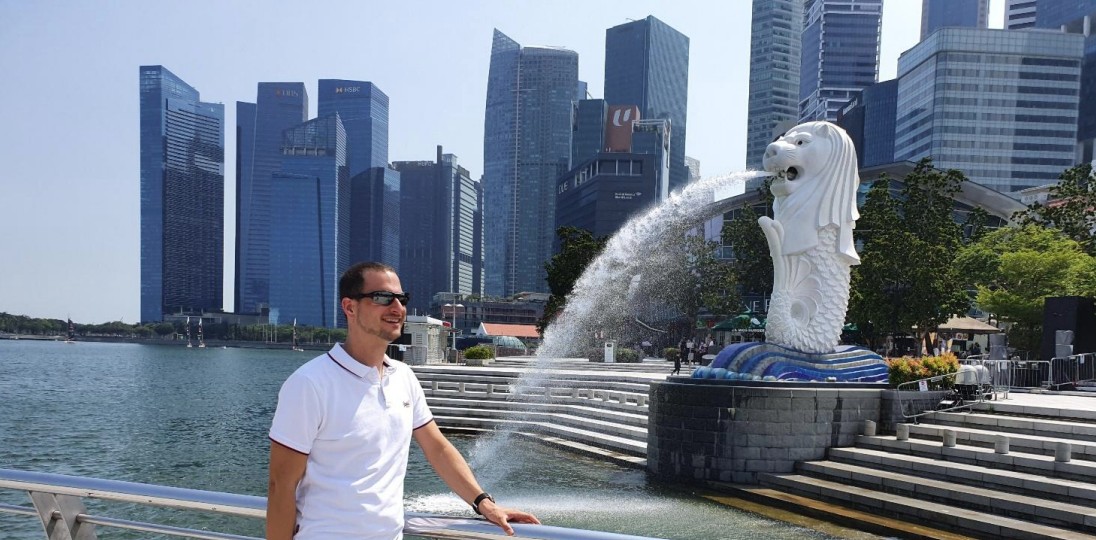
Dr Achim Lindt in front of the Merlion statue in Singapore © Achim Lindt
Dr Achim Lindt will talk about his personal and professional experiences during his five years working in Singapore as part of the RIA lecture series on Wednesday, 4 February 2026, from 5:00 p.m. to 6:30 p.m.
From 2018 to 2023, Dr. Lindt, the Business Development Manager at mgm technology partners GmbH’s Aachen branch, lived in Singapore. Based there, he was responsible for developing the business of a software platform that automates document-based business processes across much of Asia, including India, Thailand, Malaysia, Hong Kong, South Korea, Japan and Australia. During his lecture, Dr Lindt will discuss his encounters with various cultures, value systems and communication styles, and the experiences that have influenced his perspective on social norms, digitalisation and artificial intelligence.
‘Many of our graduates are drawn to the wider world. What are the differences in terms of society, private life and especially the working world? It is only once you are back that you realise many things,’ as stated in the invitation from the Faculty of Computer Science at RWTH.
The lecture will focus particularly on the effects of the pandemic, which Dr Lindt experienced in Singapore, also known as the ‘Red Dot’. Dr Lindt also reflects on his return to Germany and the skills, attitudes and perspectives he has brought back with him from his time in Asia.
The lecture will take place online via Zoom and is free to attend. A video of the lecture and subsequent discussion will be available in the YouTube playlist shortly after the event.
This event is organised in collaboration with the Faculty of Computer Science at RWTH Aachen University, Forschungszentrum Jülich, the Regional Group of the German Informatics Society (RIA), the Regional Industry Club for Computer Science Aachen (REGINA), the FH Aachen and the Aachen Group of the German University Association.
Preview: On Wednesday, 29 April 2026, Professor Johannes Erdmann from the Physics Institute A at RWTH Aachen University will give the next RIA lecture from 5:00 p.m. to 6:30 p.m. The title of the lecture is ‘Good particles, bad particles: Deep Learning as a Tool in Particle Physics’. The lecture will be available via Zoom free of charge, and a video will be made available afterwards.
To receive information about future RIA lectures, please email vortrag@i3.informatik.rwth-aachen.de.


