Kategorie: ‘Auszeichnungen’
How a German Startup Is Shaping the Next Tech Hub
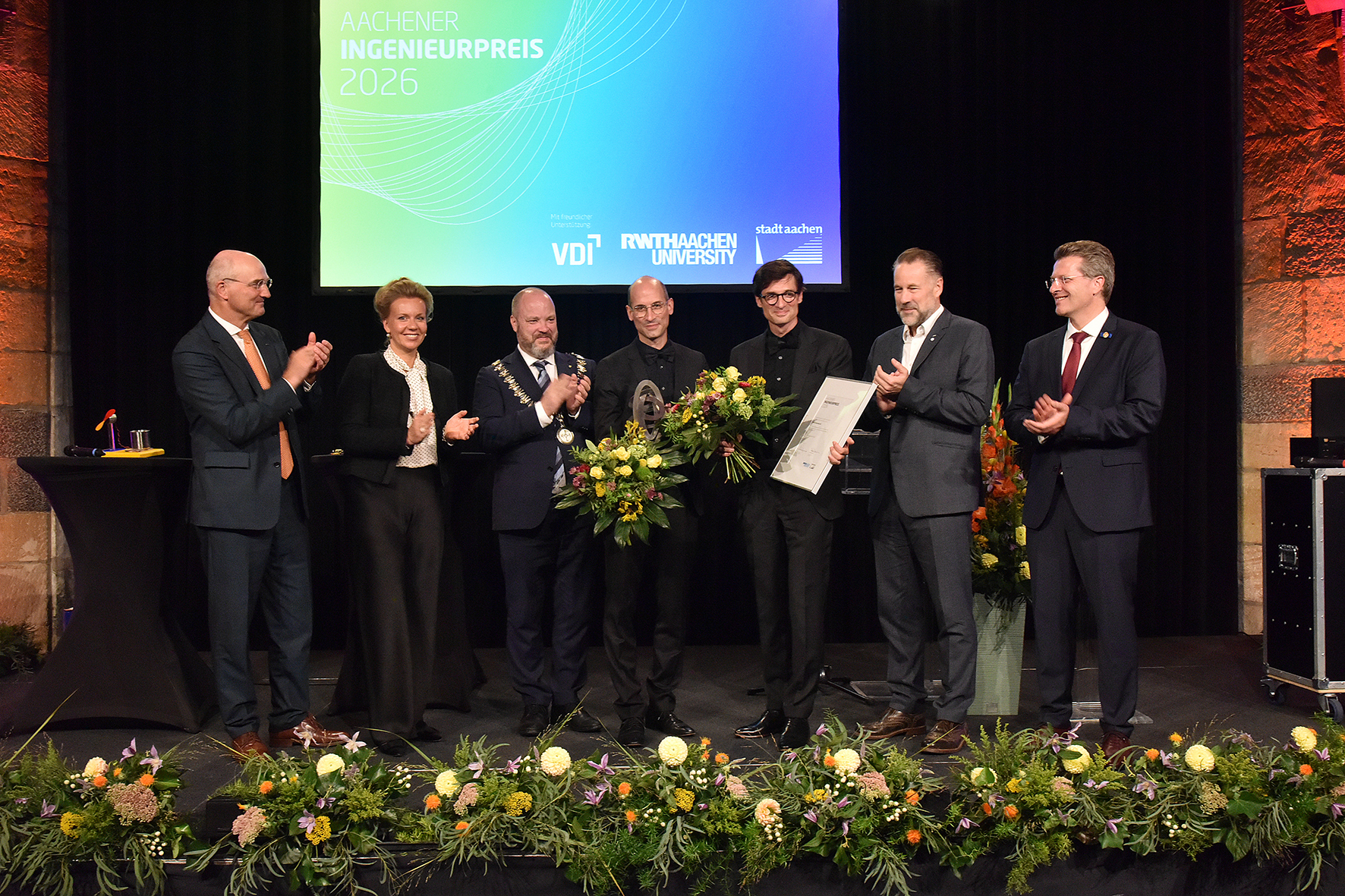
Applause for the award recipients: RWTH President Professor Ulrich Rüdiger, Minister Ina Brandes, Mayor Dr. Michael Ziemons, Sebastian Schall, Dr. Daniel Schall, Professor Max Lemme, and vdi President Professor Lutz Eckstein (from left) © Andreas Herrmann
Daniel and Sebastian Schall were awarded this year’s Aachen Engineering Award for their research on integrated graphene photonics and the founding of their startup, Black Semiconductor. The story of the two brothers illustrates how closely science and entrepreneurship are intertwined in Aachen.
On September 5, 2026, Aachen City Hall’s historic Coronation Hall was transformed into a stage for the future of global microelectronics. The prestigious Aachen Engineering Award was presented for the twelfth time—but with a twist: for the first time ever, the award went to two people. Daniel and Sebastian Schall, the founders of Black Semiconductor, accepted the award together. In doing so, they demonstrated that technological leaps always require two sides of the same coin. While Daniel embodies technological ingenuity as a scientific visionary, Sebastian contributes the drive necessary to transform a complex laboratory idea into a scalable company.
What the award-winning team does not reveal about their areas of responsibility is summed up by the laudatory speaker, Professor Max Lemme, head of the Chair of Electronic Devices at RWTH Aachen University and managing director of AMO GmbH:
“They are fundamentally grounded; they haven’t lost their sense of what truly makes us human.”
Building on this solid foundation, they are looking ahead and developing solutions to problems that conventional systems cannot solve: While the demands placed on systems by data-intensive software architectures and AI models are constantly increasing, the scalability of conventional semiconductor hardware is approaching its physical limits. Guided by the motto “More than Moore,” the Schall brothers are banking on a paradigm shift in the semiconductor industry that seeks to overcome this technological bottleneck: moving away from mere geometric miniaturization toward functional diversification. Instead of forcing performance gains solely through circuit density, new technologies and complementary materials are being integrated directly into the chip.
As a key technology, integrated photonics is already a reality today. The processor performs calculations electrically, as usual. Data transmission, however, takes place via laser through integrated optical waveguides, at the speed of light. This architecture completely eliminates electrical resistance along the communication paths. While, in the current “island solution,” data must travel a few fractions of a millimeter as an electrical current from the main electrical processor to the neighboring photonic chip—where it is converted into light signals—this “bridge” is traversed vertically in a 3D chip architecture: Here, state-of-the-art packaging techniques are used to utilize space in three dimensions, thereby minimizing the path between electrical computing chips and photonic components as much as possible.
Black Semiconductor has now succeeded in achieving direct optical signal conversion at the chip level. Graphene, a two-dimensional carbon lattice, plays a key role in this process. Due to its extreme physical properties, the material is considered a key component for future semiconductor architectures. Because of its single-layer, hexagonal atomic structure, electrons move through it with virtually no resistance, giving graphene extremely high charge carrier mobility. It also offers excellent thermal conductivity and broadband optical absorption. However, in practice, its large-scale application has so far been hindered by a major obstacle: the atomically thin material could not be integrated into industrial manufacturing processes in a defect-free and reproducible manner.
The start-up from Aachen is now bridging this very technological gap, thereby enabling true, monolithic integration of photonics. The graphene structures are deposited directly onto the existing wafer as part of the standard CMOS manufacturing process. By acting as an interface, they enable logical computations and signal conversion on a single physical chip. The startup’s stated goal is to couple thousands of semiconductors so that they function as a single component.
In previous approaches to integrated photonics, data signals must leave the electronic logic layer and travel to the photonic chiplet via physical, metallic interfaces or vertical microcolumns. Although these paths are short, significant losses occur at the metallic interfaces. These error-prone connections, as well as the need for subsequent mechanical assembly steps during manufacturing, will no longer be necessary in the future.
“Their solution is nothing short of a revolution,” said Professor Max Lemme at the Aachen Engineering Award ceremony. “Semiconductors are the brain of AI—a strategic technology, not just a nice-to-have.”
The fact that this development originated in Aachen rather than in Silicon Valley underscores the close link between scientific excellence and application-oriented entrepreneurship within the RWTH Aachen University community. The technological foundation for the spin-off was developed in the laboratories of the research institute AMO GmbH, which is closely integrated with our Faculty of Electrical Engineering and Information Technology and is headed by Professor Max Lemme. While working on his doctoral dissertation, Dr. Daniel Schall found here the specialized cleanroom infrastructure and the scientific freedom he needed to experimentally validate the fundamentals of integrated graphene photonics. The Aachen ecosystem serves as a fertile ground in which excellent basic research and its translation into marketable business structures go hand in hand:
“We always had plans to start the company. Once we knew enough about both physics and technology and could assume that the outstanding challenges in mass production with state-of-the-art equipment could be solved, we simply took the decisive step from the lab to production.”
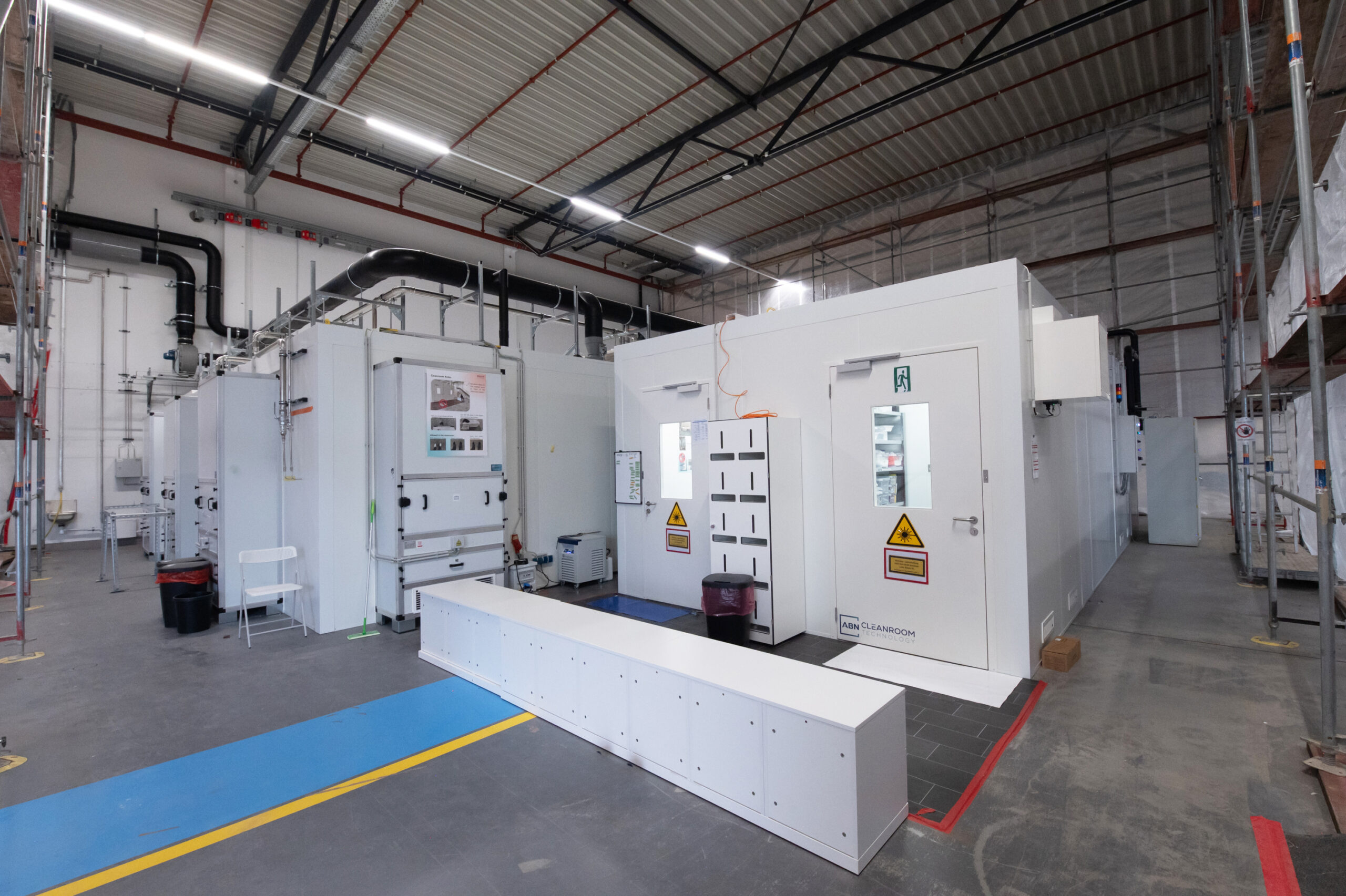
Modular cleanroom facility inside the new FabONE production hall in Aachen-Rothe Erde © Heike Lachmann
This strategic choice of location paves the way for the company’s ambitious growth: With grants and investments totaling over 254 million euros, the startup is driving its expansion forward at a rapid pace. The 15,000-square-meter “FabONE” production facility in Aachen’s Rothe Erde district now employs around 167 international specialists. Their clear goal is to transition innovative graphene chip manufacturing from the laboratory to industrial mass production. Beyond its regional success, this project holds significant geopolitical relevance. At a time when global semiconductor supply chains are subject to technological and political interdependencies, establishing such a key technology in Germany—and thus in the European Union—secures a measure of technological sovereignty.
“Black Semiconductor is sustainably strengthening Europe’s position as a hub for the semiconductor industry, through its close collaboration with research institutions and its industrial focus. The company thus embodies, in a unique way, innovation-driven engineering excellence that is of strategic importance for future technologies,” explains RWTH Rector Professor Ulrich Rüdiger.
It is precisely this combination of pioneering engineering work and strategic significance that forms the basis for the award. The Aachen Engineering Award, which has been presented jointly by RWTH Aachen University and the City of Aachen since 2014, honors individuals who have had a lasting impact on the field of engineering. The award sculpture, “Intersecting Ellipses,” is donated by the Association of German Engineers (VDI) as a key partner of the award. With this win, the Schall brothers join the ranks of renowned award recipients, such as Nobel laureate Emmanuelle Charpentier and technology pioneer Sebastian Thrun, while also sending a clear signal about the innovative strength of Aachen’s electrical engineering community.
The breakthrough in graphene photonics in Aachen is just the beginning of a much larger development: To achieve strategic technological autonomy, the European Union is also investing in graphene and other two-dimensional materials in many other key industries.
The next generation of computer chips is ‘Made in Aachen’

Black Simiconduktor, f.l.t.r.: Sebastian Schall, Dr.Daniel Schall
The 2026 Aachen Engineering Prize has been awarded to Black Semiconductor founders Dr Daniel Schall and Sebastian Schall – a milestone for the region’s microelectronics sector.
The next generation of computer chips is being shaped to a significant extent in Aachen. We are delighted that this year’s Aachen Engineering Prize is being awarded to two visionaries whose careers are closely linked to the excellent research carried out at our Faculty of Electrical Engineering and Information Technology: Dr Daniel Schall and Sebastian Schall, founders of the start-up Black Semiconductor.
The technological foundation for this success is a groundbreaking innovation in graphene photonics. Whilst conventional semiconductor architectures are increasingly reaching their limits due to heat generation and limited bandwidths in data transmission, the Schalls are pursuing a new approach: instead of sending data exclusively via electrical conductors, they enable direct conversion into optical signals on the chip. By integrating graphene, a material with outstanding physical properties, they have succeeded in combining electrical and optical functions directly on a single wafer.
“This innovative approach addresses key performance and efficiency limitations of existing semiconductor architectures and makes a decisive contribution to the next generation of high-performance and AI systems,” emphasises the Advisory Board of the Aachen Engineering Prize in its statement.
For our faculty, this development is an outstanding example of how fundamental scientific research is translated into industrial leadership. Dr Daniel Schall, himself a micro-systems engineer with a PhD and strong links to Aachen’s research community, laid the foundations for this technology during his time at the AMO GmbH research institute. The successful transfer from research to a company that now employs over 130 people impressively demonstrates the added value of the close integration between RWTH teaching and applied research.
Black Semiconductor is now building a 15,000-square-metre production facility, ‘FabONE’, in the Rothe Erde district of Aachen to manufacture graphene chips on an industrially relevant scale. This project not only strengthens the European semiconductor industry in competition with global players, but also underlines Aachen’s role as an innovation hub for future technologies. In doing so, the founders are consistently focusing on CMOS compatibility, enabling their innovation to be seamlessly integrated into existing industrial manufacturing processes.
“Black Semiconductor is making a lasting contribution to strengthening Europe’s position as a centre for the semiconductor industry through its close collaboration with the research sector and its industrial focus. The company thus embodies innovation-driven engineering excellence in a unique way,” explains Rector Professor Ulrich Rüdiger. The City of Aachen, represented by Lord Mayor Dr Michael Ziemons, also emphasises the strategic importance of this development: “We are proud that this forward-looking company has chosen to base itself in Aachen.”
The award ceremony for the Aachen Engineering Prize will take place on 5 September 2026 at 7 pm in the Coronation Hall of the Town Hall. The prize, established by the Association of German Engineers (VDI), is awarded annually to individuals who have made a significant contribution to the advancement of engineering.

Modular cleanroom facility inside the new FabONE production hall.
Award of the Associate Professorship to PD Dr Marian Walter
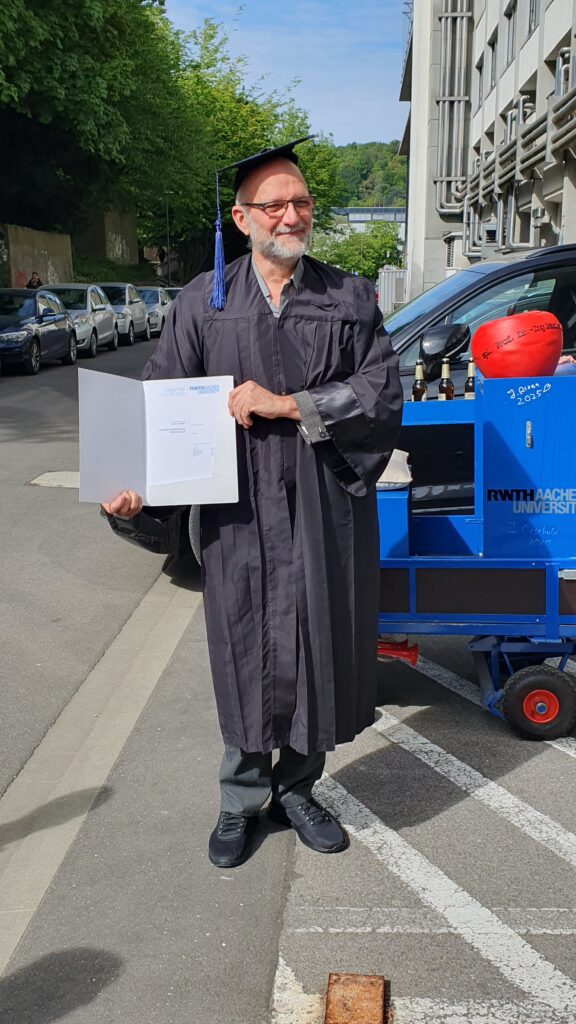
PD Dr.-Ing. Marian Walter was officially presented with the certificate conferring the title of ‘Adjunct Professor’ (apl. Prof.). This appointment by the faculty recognises his long-standing and consistent contributions to academic teaching, as well as his academic profile in medical technology.
The award of an adjunct professorship is subject to strict scientific criteria. A prerequisite is the Habilitation, which already demonstrates teaching competence (Venia Legendi). The title is awarded to academics who, beyond the Habilitation, have achieved outstanding results in research and teaching. Within the academic system, an adjunct professor takes on responsibilities in independently representing their field of expertise, supervising doctoral candidates, and acquiring and managing third-party funded projects.
Dr Marian Walter has been working for many years at the Chair of Medical Information Technology (MedIT) at the Helmholtz Institute for Biomedical Engineering at RWTH Aachen University. Following his PhD in the field of automated lung ventilation, he consolidated his expertise at the interface between electrical engineering and clinical application.
In addition to his research work, Marian Walter plays a key role in the training of students in electrical engineering, information technology and biomedical engineering. His teaching is characterised by the systematic imparting of the fundamentals of systems theory and their application to medical practice. His appointment as an adjunct professor underscores the excellence of the academic staff at the MedIT Chair and ensures the high quality of scientific training at RWTH Aachen University in the field of Medical Information Technology.
The Faculty and the Institute congratulate Prof. Dr.-Ing. Marian Walter on this academic recognition and look forward to continuing their successful collaboration.
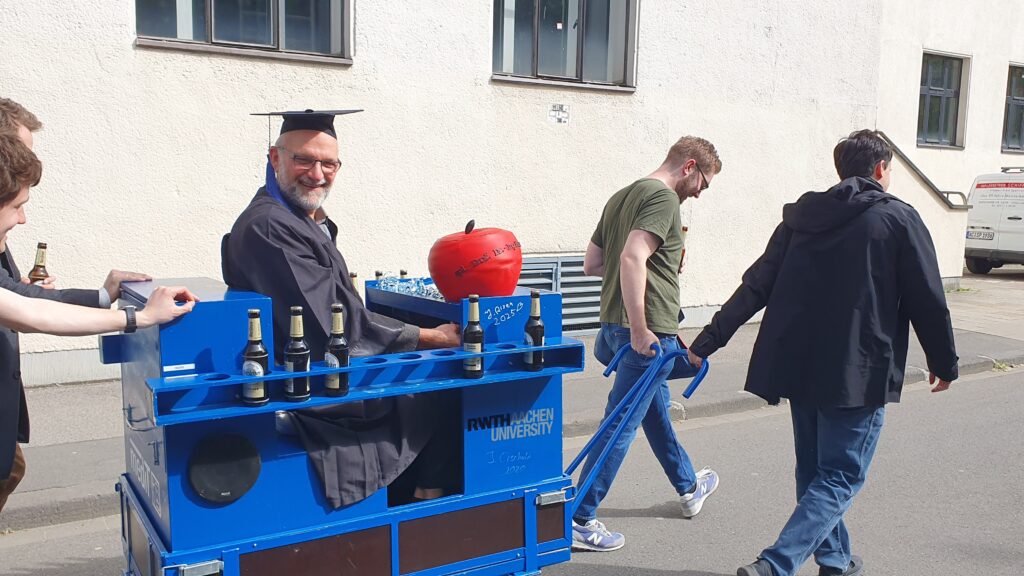
RWTH Makes Significant Gains in the “QS Ranking by Subject”
In the latest “QS Ranking by Subject,” RWTH Aachen has achieved significant improvements in several disciplines central to the university. Particularly noteworthy is the progress in Electrical Engineering, which has risen from 69th to 53rd place, thereby visibly catching up in international comparisons. Chemical Engineering has also reached 53rd place, marking a significant improvement as well.
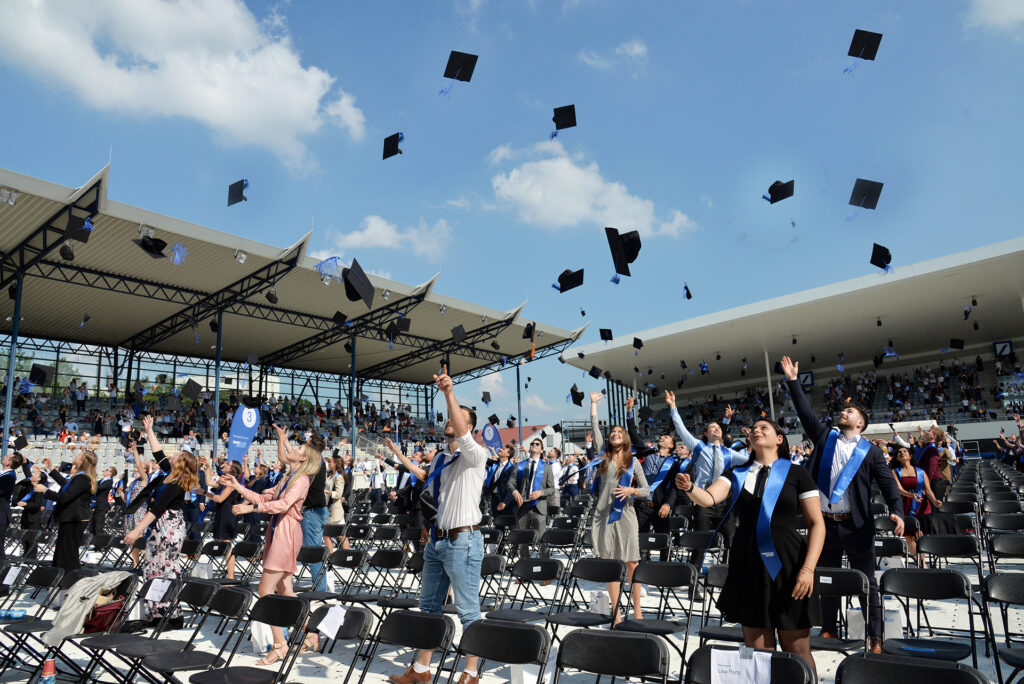
Pic: Andreas Schmitter
In engineering as a whole, RWTH has moved up twelve places and ranks 53rd worldwide. Individual departments have achieved particularly strong results: “Mechanical, Aeronautical and Manufacturing Engineering” ranks 25th, while “Mineral and Mining Engineering” ranks 39th. Civil engineering remains in the top 100.
A positive trend is also evident in the natural sciences. Here, RWTH has improved from 86th to 69th place. Mathematics has made one of the biggest improvements, jumping 32 places to 135th. Materials Science has reached 29th place after climbing 10 spots. In Chemistry and Physics, RWTH is once again among the top 100 universities worldwide.
The “QS Ranking by Subject” is compiled by the British information service provider Quacquarelli Symonds and is one of the most important international university rankings. The evaluation is based, among other things, on reputation among academics and employers as well as on scientific publication output.
Award for “Labs on Tour”
The “Labs on Tour” project run by RWTH Aachen University has been awarded third place in the “Mobile Offerings” category of the “LeLa Award.” The program is aimed at students in grade 7 and above and brings offerings from the RWTH student laboratories directly to schools. The aim is to provide insights into topics in the fields of electrical engineering, mathematics, computer science, natural sciences, and technology.
The prize is awarded by the “Lernort Labor – Bundesverband der Schülerlabore e.V.” (Learning Place Laboratory – Federal Association of Student Laboratories) in four categories and recognizes “outstanding achievements by student laboratories and networks.” At the annual conference in Osnabrück, Maria Hinkelmann, coordinator of “Labs on Tour” at RWTH Aachen University, accepted the award donated by the Dr. Hans Riegel Foundation. The prize is accompanied by prize money of €2,000. “We are delighted to receive this award and the prize money of €2,000. This recognition encourages us to further expand the project and hopefully inspire even more students to take an interest in STEM subjects,” says Maria Hinkelmann. She works in Professor Heidrun Heinke‘s working group in the Physics Department at RWTH Aachen University.
“Labs on Tour” was developed as part of the “MINTplus” joint project funded by the Federal Ministry of Education, Family, Seniors, Women, and Youth. Since 2022, RWTH Aachen University, the Aachen city region, and the United Entrepreneurs’ Associations of Aachen have been working together to make STEM subjects accessible, spark curiosity, and break down potential barriers to science subjects.
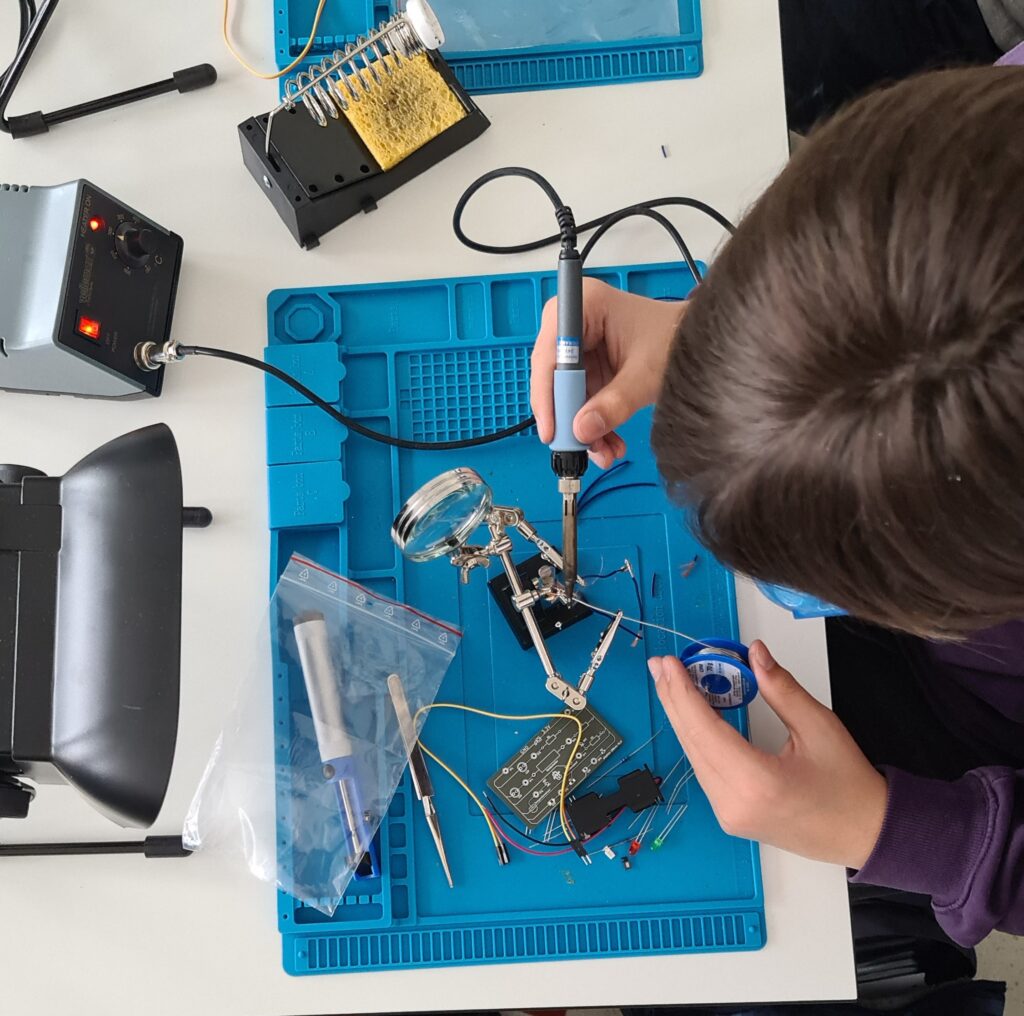
Pupil soldering during Labs on Tour
The unique feature of “Labs on Tour” is its mobile concept. Three learning lab offerings come to schools on four dates for 90 minutes each. There, students participate in their own STEM working groups over an entire school semester.
RWTH Aachen University is currently cooperating with twelve secondary schools in Aachen and the surrounding area. Around 250 students from grade 7 onwards take part each year and spend a total of 18 hours working on various STEM topics. For example, they program robots, make pocket warmers, or solder key rings.
Last year, a closing event for the year group was held at RWTH Aachen University for the first time. Students and their families were invited to the campus
. In addition to the certificate ceremony, they were able to explore various learning labs and participate in hands-on activities. “For many, it was an exciting opportunity to experience the university up close and show their families what they had been working on at Labs on Tour,” says Maria Hinkelmann. The next closing event is planned for July.
Teaching awards at RWTH Aachen University: Recognition for innovative teaching and dedicated lecturers
RWTH Aachen University has awarded this year’s teaching prizes, recognizing outstanding commitment and innovative approaches in university teaching.
Special Teaching Award for the Phyphox app
This year’s RWTH Special Teaching Award goes to the Phyphox app, which allows physical experiments to be carried out directly with a smartphone. The application transforms mobile devices into versatile measuring instruments and makes it possible, among other things, to measure the speed of an elevator or the acceleration of a roller coaster.
Phyphox was developed by a team led by experimental physicists Professor Christoph Stampfer, Dr. Sebastian Staacks, Professor Heidrun Heinke, and Dr. Dominik Dorsel. The app is used in schools and universities as well as in everyday life and relies on the sensors built into smartphones. The collected measurement data can be processed directly and displayed graphically.

Professor Joost-Pieter Katoen (right), Vice Rector for Teaching, presented the certificate to the Phyphox development team, Professor Heidrun Heinke, Dr. Dominik Dorsel, Professor Christoph Stampfer, and Dr. Sebastian Staacks (from left).
The application is available free of charge and without advertising for Android and iOS and has been continuously developed since 2016. Phyphox now has several million installations and supports more than 20,000 smartphone models. A particular focus is on long-term compatibility with older devices. Thanks to volunteer translators, the app is also available in 19 languages.
The Rectorate justified the award of the Special Teaching Prize with the high national reach and the great appeal that Phyphox has for RWTH. The app is considered a sustainable model of success for innovative teaching. With this award, the Rectorate wishes to emphasize the importance of the project for the entire university and support its further development.
Teaching award for Dr. Stefan Lankes
In the teaching category, Dr. Stefan Lankes from the Chair of Automation of Complex Power Systems receives the teaching award. He was nominated by the student council for electrical engineering and information technology, which particularly highlights his ability to convey complex content in a comprehensible, structured, and practical manner.

The student council emphasizes the clear relevance of his courses to professional skills and their consistent focus on learning objectives. Particular mention is also made of his targeted use of digital tools to support students’ independent study. Through interactive tasks, automated tests, and regular feedback, Dr. Lankes promotes independent learning and motivation.
His cooperative style in lectures and exercises creates an appreciative learning atmosphere and enables an exchange on an equal footing. In projects, theses, and interdisciplinary seminars, Dr. Lankes also attaches great importance to practical relevance and the connection to current research. He consciously takes time for student feedback and is open and willing to engage in conversation.
Beyond his own teaching, Dr. Lankes is involved in student initiatives and international cooperation projects, including summer schools and research projects with partner universities. He was involved in the planning of the Computer Engineering program for the 2021/2022 winter semester from the very beginning and advocated for future-oriented development and student-friendliness of the program in the advisory board
RWTH Aachen University among the world’s leading universities

TIME magazine has published its first international university ranking, listing the 500 best universities worldwide. RWTH Aachen University has successfully positioned itself in this global comparison and is now officially one of the leading universities at the international level.
Of the more than 400 universities in Germany, only 44 made it into the ranking. RWTH Aachen University ranks 120th worldwide and an outstanding seventh in the national comparison. This result underscores RWTH’s strong position within the German and international university landscape.
The ranking is based on several indicators that reflect key performance dimensions of universities. These include scientific performance, innovative capacity, influence on the economy, and internationality. These criteria reflect essential aspects that also shape everyday university life in research and teaching.
There is a particular focus on the area of internationalization. This is measured by the number of staff and students who come to the respective university from abroad. In this category, RWTH Aachen University achieved 68.82 points, placing it 89th worldwide. Within Germany, RWTH ranks second in this area.
RWTH’s performance in the TIME magazine ranking confirms the university’s position as a high-performing and internationally oriented research location and at the same time provides a solid foundation for the further development of research, teaching, and academic exchange.
Picture Coding Symposium 2025: Global Video Coding Experts at RWTH Aachen
Aachen became the global hub for image and video coding this December. For the first time, the renowned Picture Coding Symposium (PCS) was held at RWTH Aachen. Led by Professor Mathias Wien and Professor Jörn Ostermann, 162 participants from 19 countries gathered at the SuperC to share cutting-edge research.
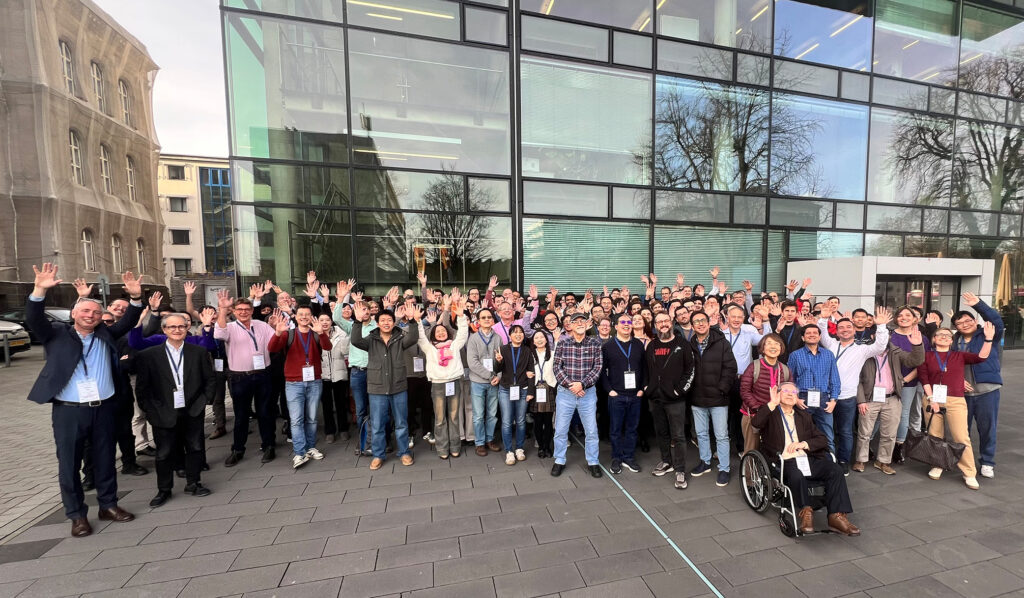
Foto: Mirco Seidler
A Tribute to Professor Jens-Rainer Ohm A major highlight was the honoring of Professor Jens-Rainer Ohm, former head of the Institute for Communications Engineering. His work on global standards like AVC, HEVC, and VVC is the foundation for video transmission on nearly every modern television and mobile phone.
The interactive atmosphere promoted the exchange of knowledge and ideas between international researchers from both academia and industry. The organizers were pleased with the positive feedback and emphasized the importance of such events for scientific progress and international cooperation.
RWTH Electrical Engineering Ranks 8th in Europe
Our Faculty of Electrical Engineering and Information Technology continues to set benchmarks for excellence. In the latest EngiRank 2025, RWTH Aachen secured the 7th position among 239 technical universities in Europe, with our department leading the way:
Top 10 in Europe: Our Electrical Engineering program is officially ranked 8th across the entire continent.
Excellence in Scores: Achieving 91.91 out of 100 possible points, RWTH has shown steady improvement and maintains its position as the #2 technical university in Germany.
Driven by Innovation: The ranking highlights our outstanding performance in research, internationalization, and the number of patents filed.
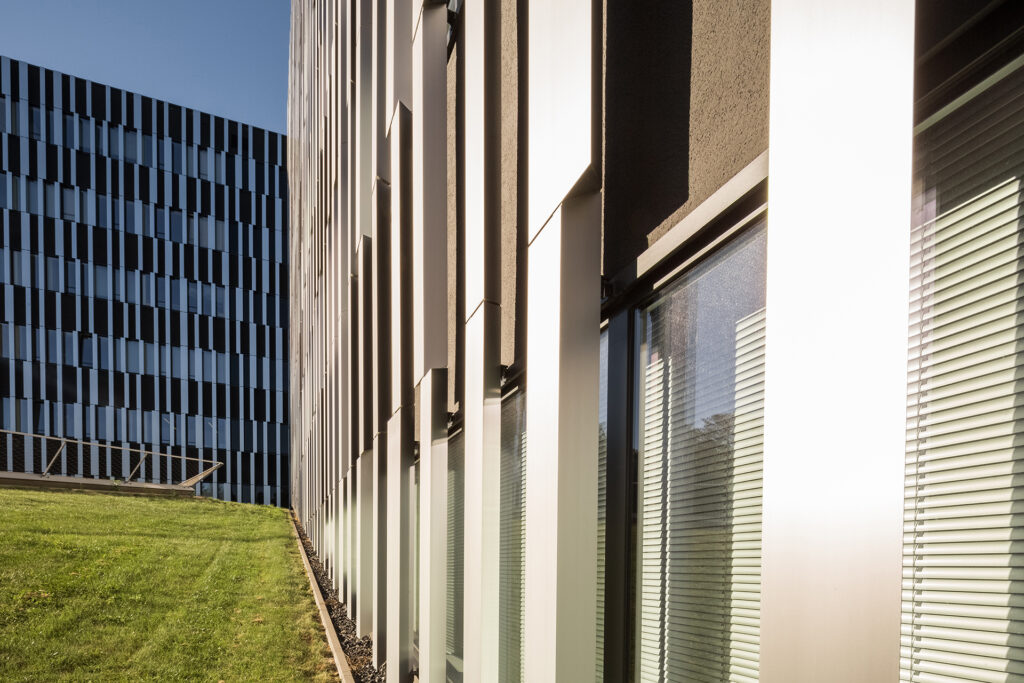
Martin Braun
This ranking reinforces our faculty’s reputation as a global leader in technology and innovation. To our students and staff: thank you for making us one of Europe’s elite engineering institutions!
Three outstanding theses from our faculty awarded the Friedrich Wilhelm Prize 2025
At the Friedrich Wilhelm Prize award ceremony on Friday, a total of 17 students and doctoral candidates from RWTH Aachen University were honoured for their outstanding scientific work. Among them were three award winners from the Faculty of Electrical Engineering and Information Technology.
The award winners from our faculty were Jonas Timon Schroeder, M.Sc., for his master’s thesis (supervised by Prof. Monti), Dr.-Ing. David Wasylowski for his dissertation (supervised by Prof. Sauer) and Dr.-Ing. Felix Jiang for his dissertation (supervised by Prof. Ingebrandt). The prizes were presented by RWTH Rector Ulrich Rüdiger in the auditorium of the main building; with musical accompaniment provided by the RWTH Big Band.
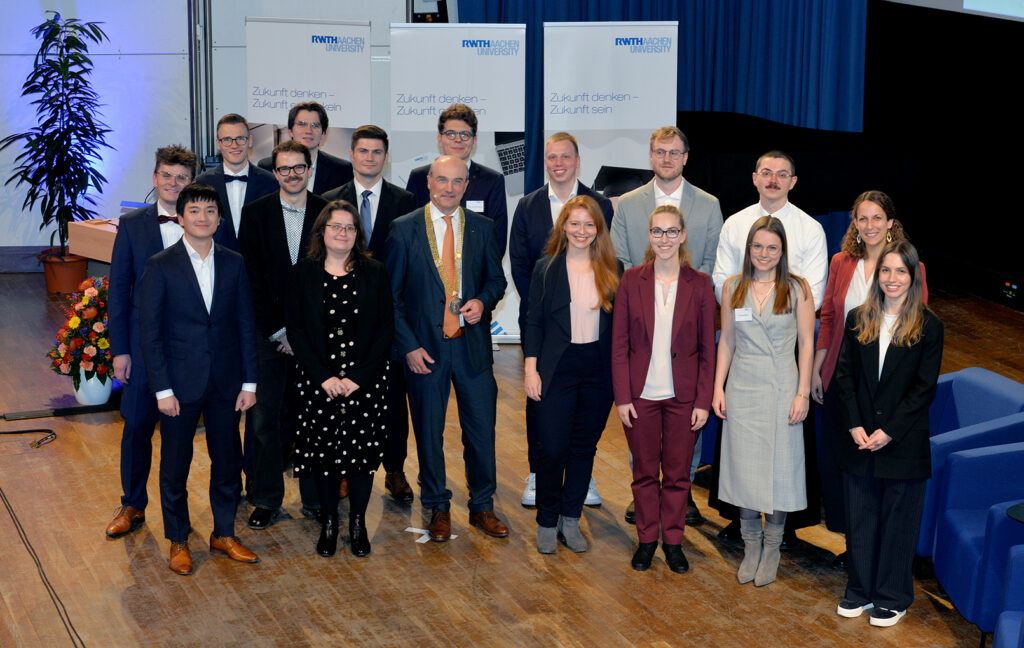
Photo: Andreas Schmitter
The Friedrich Wilhelm Prize is awarded by the Friedrich Wilhelm Foundation, which was established in 1865 by the legal predecessor of today’s Aachener und Münchener Beteiligungsgesellschaft. Its main focus is to promote research and teaching and to support students and scientists at RWTH Aachen University. The foundation is named after Friedrich Wilhelm III, Crown Prince of Prussia and later Emperor. In 1858, he received a donation of 5,000 talers to establish a polytechnic institute in the Rhine Province. This donation formed the basis for the later Friedrich Wilhelm Foundation and thus for the development of RWTH Aachen University.
The award-winning theses impressively demonstrate the scientific breadth and capabilities of our faculty. The award winners represent key areas of modern electrical engineering and contribute to the visibility and strength of our research with their outstanding theses. The faculty warmly congratulates Mr Schroeder, Dr Wasylowski and Dr Jiang on this significant award.


