Schlagwort: ‘Künstliche Intelligenz’
Harnessing AI for a Smarter Energy Transition
Since August, Dr. Pyae Pyae Phyo has been conducting research at the Institute for Automation of Complex Power Systems at RWTH Aachen University. As a Humboldt Research Fellow, she tackles one of the key challenges of the energy transition: the fluctuating output of renewable energy sources.
“Most power grids were designed for fossil-based generation, which provides constant and predictable energy. Renewables are different – their output depends on the weather,” she explains.
Dr. Phyo applies AI-based prediction models to make these variations more manageable and to strengthen grid stability and efficiency. Her goal is to develop and refine algorithms that can accurately forecast how much energy wind or solar plants will deliver over a given period.
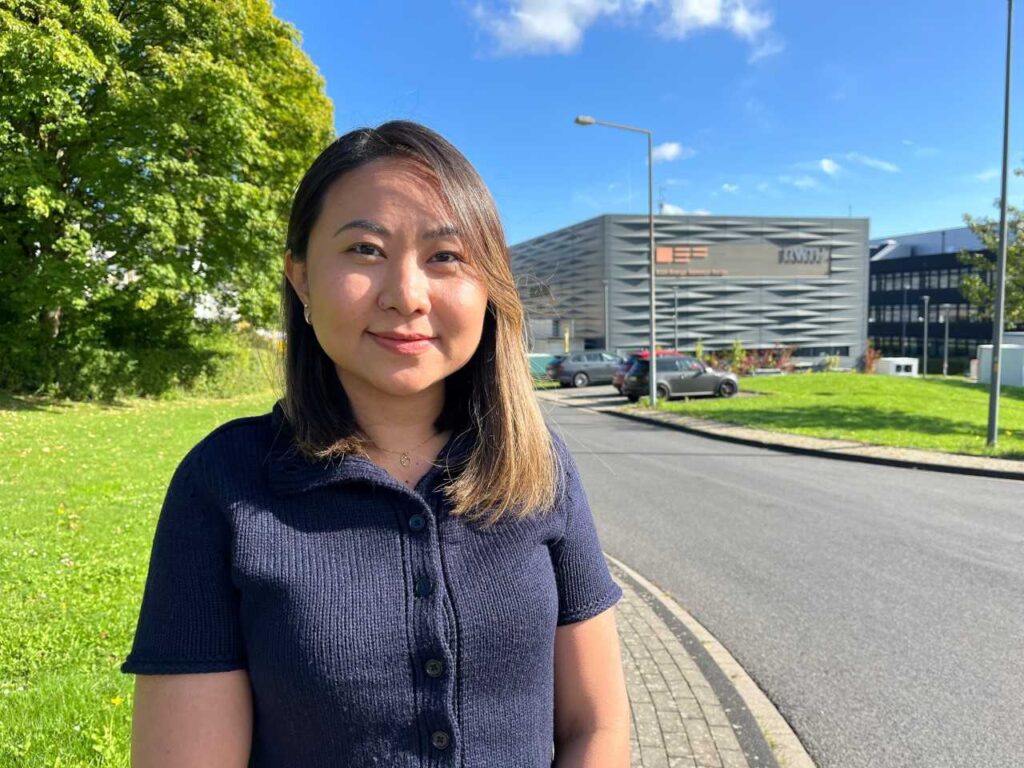
Foto: Judith Peschges
Her path to RWTH was made possible by Professor Antonello Monti, who supported her through the Henriette Herz Scouting Program of the Humboldt Foundation.
“The excellent reputation of Professor Monti and RWTH in my research community was decisive for my choice,” she says.
Holding degrees from TU Mandalay and Thammasat University, Dr. Phyo has also worked in South Korea, Canada, Switzerland, and most recently at Eindhoven University of Technology as a postdoctoral researcher.
Her work builds a crucial bridge between artificial intelligence and sustainable energy systems—contributing to a more secure and efficient power grid for the future.
European Research Council Funds Two Groundbreaking RWTH Projects
The RWTH Aachen celebrates a major success: Two researchers have been awarded the prestigious ERC Starting Grant, each receiving €1.5 million in funding over five years.
Prof. Dr. Daniel Truhn, senior physician at University Hospital RWTH Aachen and lecturer at the Chair of Image Processing at our Faculty of Electrical Engineering and Information Technology, where he teaches the lecture “Biomedical Engineering”, is launching SAGMA (Semantic-Aware Generative Medical AI), a project that rethinks AI in radiology by connecting specialized AI modules into an expert team that supports doctors with complex diagnoses.
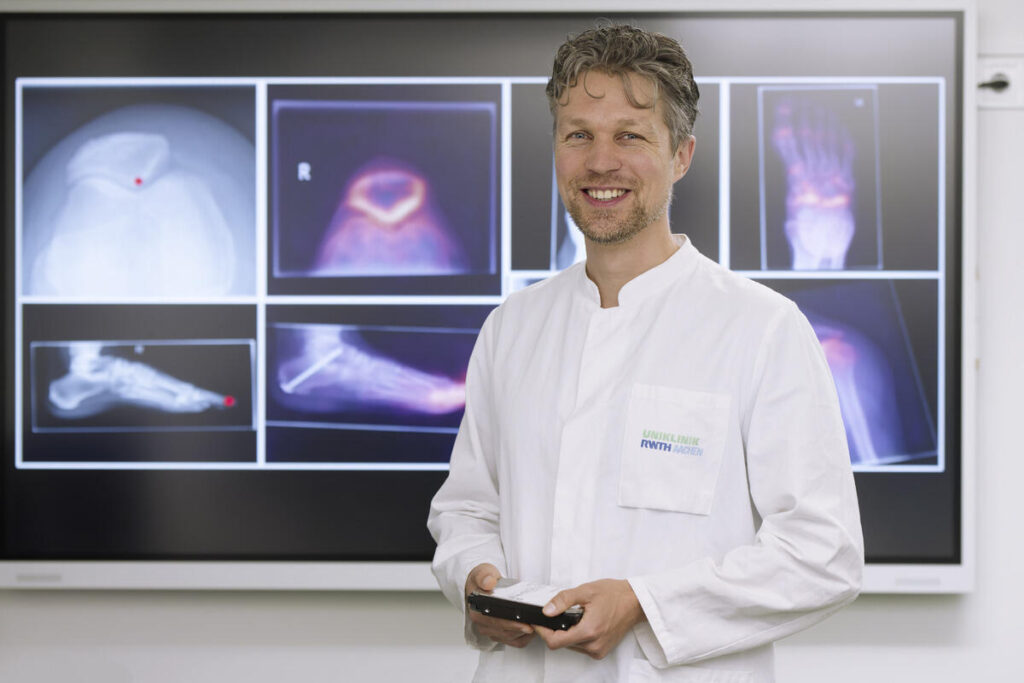
© Peter Winandy / RWTH Aachen University
A second grant goes to, Dr. Khiêm Vu Ngoc, at the Chair of Continuum Mechanics, is developing PolyFun (Polymer Mechanics through Function Spaces), a novel approach that combines physics and machine learning. His models are designed to be not only precise but also reliable and transparent – with wide-ranging applications in materials science, medicine, and robotics.
These grants highlight RWTH’s international recognition and the strong role of our Faculty in advancing AI and medical technology.
The future of battery technology: Revolution using AI
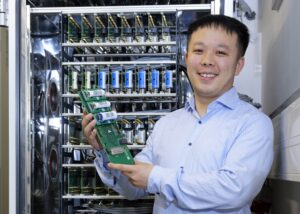
Prof. Weihan Li . © Peter Winandy
Innovative Battery Research at RWTH Aachen
Junior Professor Weihan Li is revolutionizing battery research at RWTH Aachen by developing AI-powered testing methods that enable precise predictions about the future performance and lifespan of battery cells already during the production phase.
Utilizing advanced technologies such as digital twins, data-driven models, and automated diagnostic procedures, his approach transforms traditional battery management into a proactive system—moving from mere observation to anticipatory strategies.
Shortened Development Processes and Sustainable Innovation
At the core of his research is the goal of significantly shortening development cycles, reducing production costs, and simultaneously enhancing sustainability throughout the entire battery lifecycle. Prof. Li succinctly states:
“Ultimately, we want to accelerate the development of high-quality, affordable batteries and make the entire battery life cycle more sustainable.”
The Synergy of Artificial Intelligence and Electrochemistry
Early on, Li recognized that the combination of artificial intelligence and electrochemistry is the key to the future of the battery industry. This insight drives him to push forward innovative solutions:
“That’s when I realized: this is the future,” he recalls. “Since then, I’ve been working on integrating AI and electrochemistry.”
RWTH Aachen as an Innovation Engine
For Prof. Li, RWTH Aachen is more than just a research location—it provides an inspiring environment that nurtures young talent through strong networks and a pronounced spirit of innovation. The close collaboration with industry not only underscores the demand for modern battery solutions but also secures a significant share of funding.
Data-Driven Modeling as a Key Component
The extensive data base provided by the RWTH infrastructure is a central pillar in precise AI modeling. This essential resource not only guarantees research success but also forms the foundation for highly advanced analytical methods:
“This massive dataset is essential for building our AI models.”
Proactive Battery Management
Finally, Li’s approach aims not only to monitor the aging process of battery cells but to intervene proactively—well before they reach their maximum performance limits. In his own words:
“We don’t just want to understand how batteries age – we want to intervene before aging even begins.”
The advanced, AI-enabled methods of Prof. Li at RWTH Aachen pave the way for faster, cost-effective, and sustainable battery solutions. This groundbreaking work sets a new standard in battery development and reinforces Europe’s leading role in the energy transition.


