

Source: Own illustration
What does research data management look like where research data are actually generated? On August 20, 2026, the Institute of Inorganic Chemistry opened its laboratories to the RDM Network and provided insights into research data management in practice. The focus was on Electronic Lab Notebooks (so called ELNs), and how they can be integrated into workflows in chemical research.
Following an introduction to the institute and its research areas, Prof. Dr. Sonja Herres-Pawlis presented the research data management activities of her research group. RDM is integrated into various areas of the group’s work and, in addition to the use of the Chemotion ELN, includes repositories, server infrastructure, data management plans and guidelines. The group is also involved in numerous activities in teaching as well as in the RDM community and NFDI4Chem.
Research Data Management Directly in the Lab
After the introduction, the participants headed straight to the laboratories. Divided into three groups, they visited three different laboratory areas and gained insights into different working environments at the institute. In a typical chemistry lab, they were introduced to laboratory workspaces and experimental setups. Another laboratory provided insights into the use of NMR spectrometers. In the third laboratory, the focus was on connecting analytical instruments to Chemotion and on how research data generated during laboratory work can be transferred directly into digital documentation. The lab tours were led by Dr. Henrika Hüppe, Dr. Christian Conrads and Dr. Jochen Ortmeyer.
The tour demonstrated in particular how closely digital documentation can be integrated with practical laboratory work. Some instruments are directly connected to Chemotion. This means that research data no longer have to be transferred manually from the respective instrument into the documentation but can be transferred to the ELN via the existing interface. One specific example was the IR spectrometer presented during the visit: the data generated by the instrument is first transferred to a server and then automatically made available in the Chemotion Inbox. From there, they can be incorporated into the subsequent documentation.
This allowed the participants not only to learn about the subsequent use of an ELN but also to understand the conditions under which the data to be documented are generated in the laboratory. The connection between laboratory instruments, data infrastructure and the ELN illustrated how research data management can be integrated directly into experimental workflows.
-

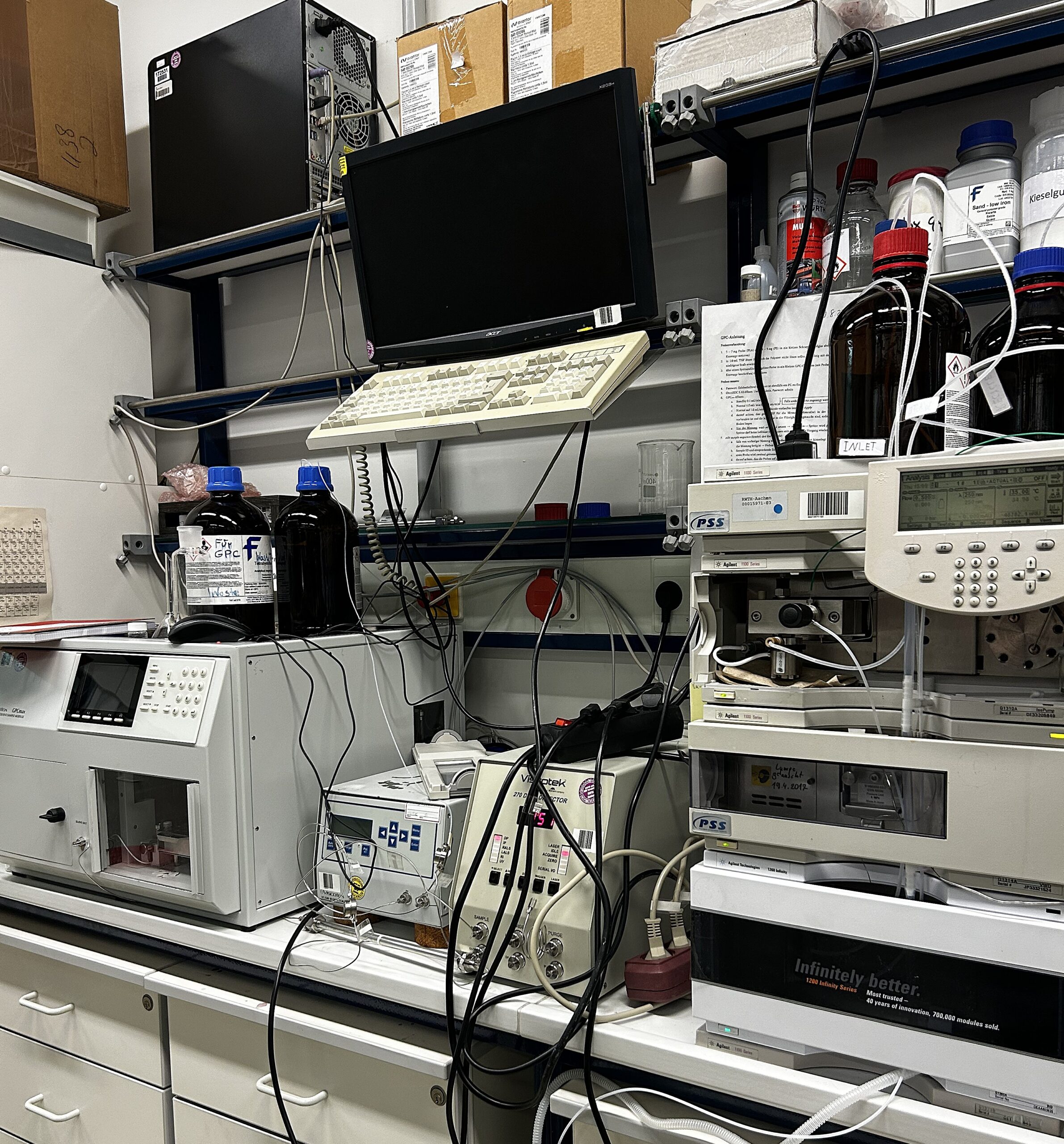
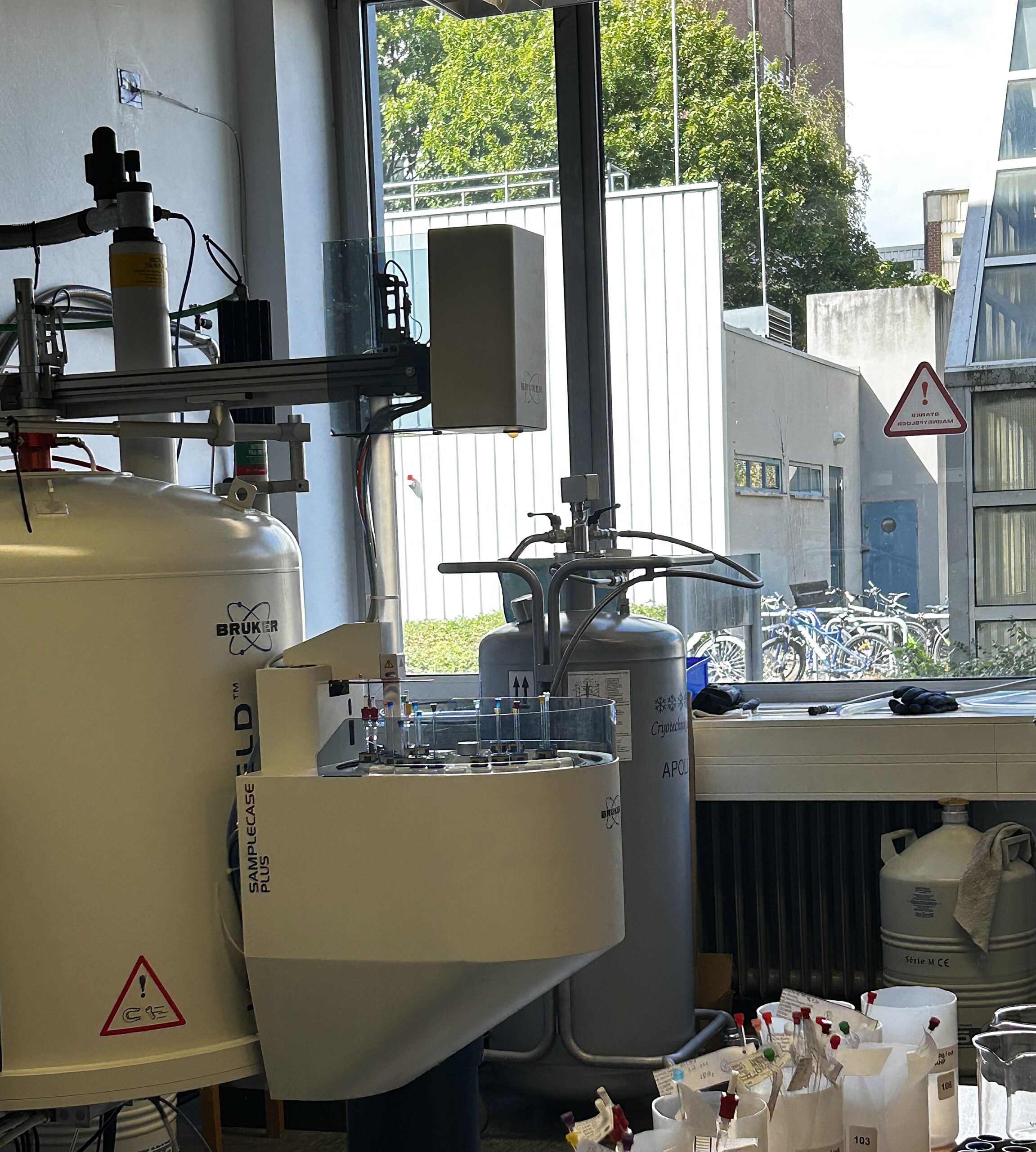
- Laboratory equipment for the instrumental analysis of chemical samples
-

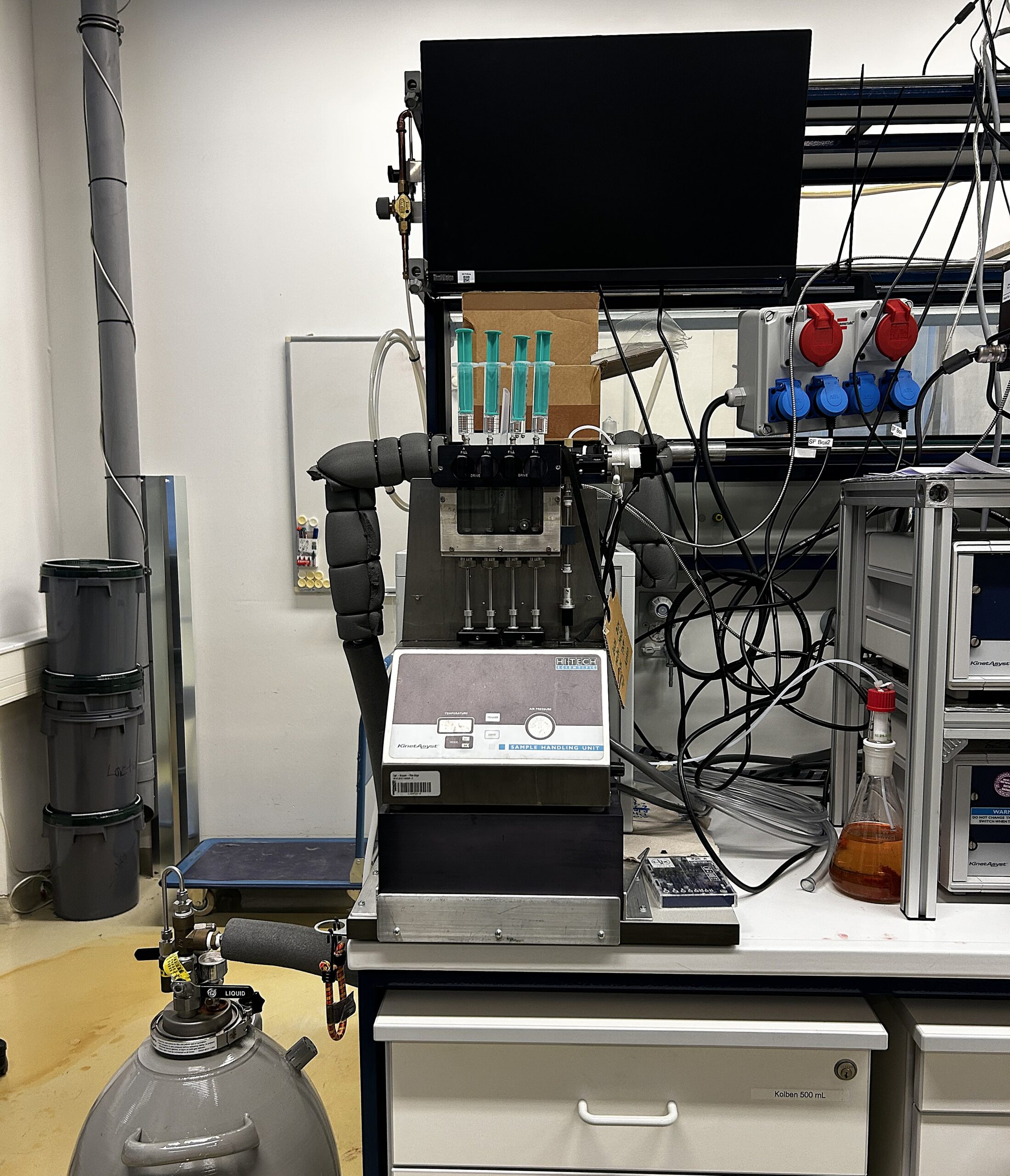
- Measuring device for the study and analysis of chemical reactions
-

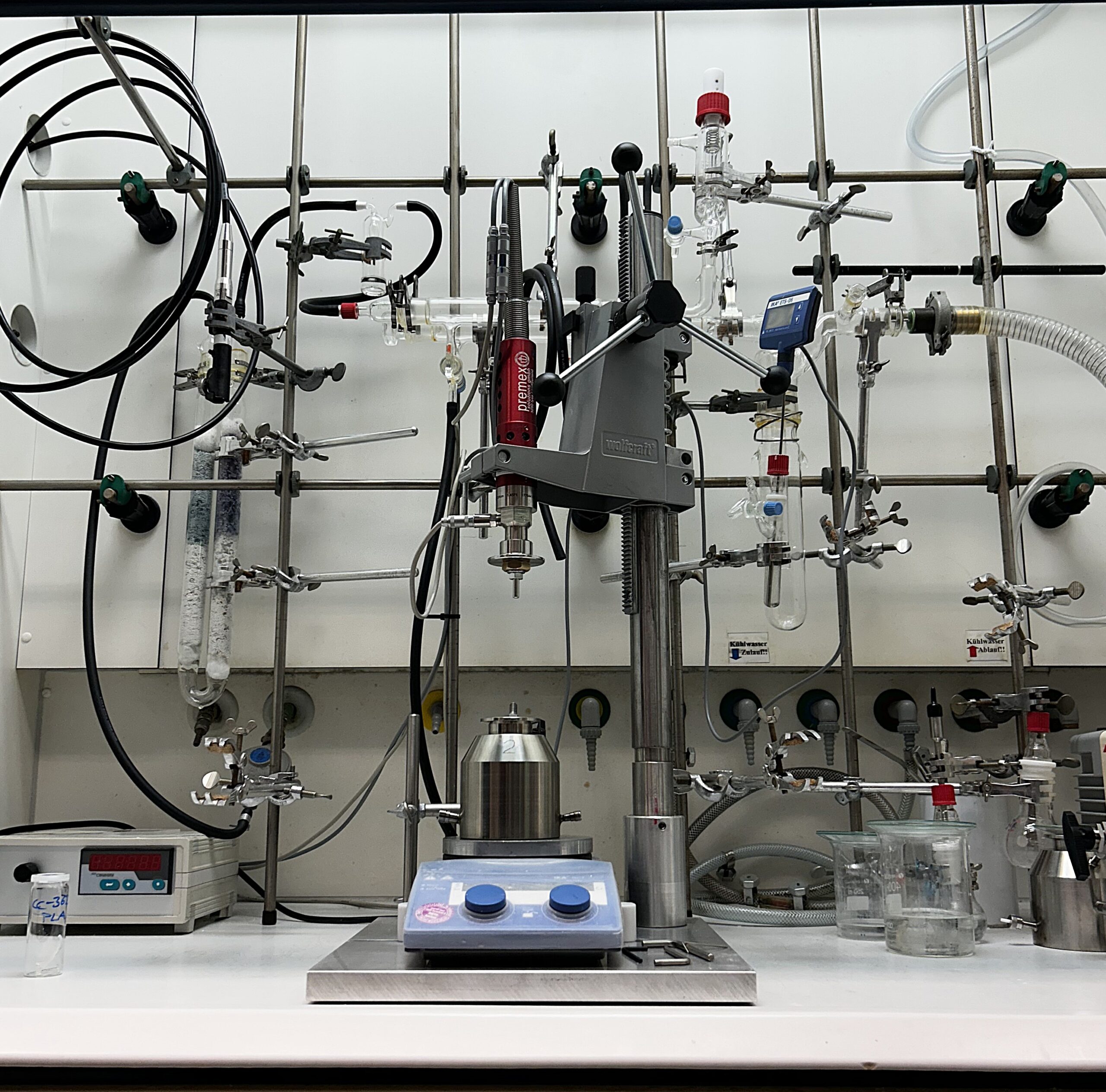
- Experimental Setup for Chemical Experiments in the Laboratory
-

- NMR spectrometers for the analysis of chemical samples
-

-
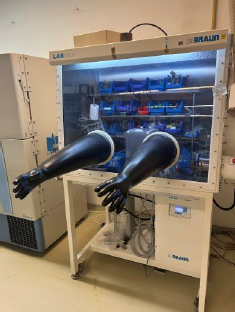
Glovebox for Work in an Inert Gas Atmosphere
Sources: Own illustrations
Chemotion for Inorganic Chemistry
In the second part of the lab visit, the practical use of ELNs moved even more into focus. Using Chemotion as an example, it became clear that the requirements for an ELN can vary considerably depending on the respective field of research.
The core software of Chemotion is developed at the Karlsruhe Institute of Technology and was initially designed primarily for workflows in synthetic organic chemistry. Inorganic chemistry, however, comes with additional requirements. These include the representation and reactions of metal complexes, kinetics, catalytic test series, unstable or reactive intermediates, and complex and consecutive reactions. In the field of sustainable polymerization catalysis pursued by the Herres-Pawlis research group, polymers as well as polymerization and depolymerization processes also need to be represented digitally.
The research group at the Institute of Inorganic Chemistry also contributes these discipline-specific requirements to the further development of Chemotion. This includes, among other things, the development of a module for catalytic applications and work on improving the InChI for inorganic compounds, a digital standard for identifying chemical substances.
Research Data Management from the Very Beginning
ELNs play a role at the institute not only in research but also in teaching. Since the winter semester 2020/2021, Chemotion has been used in a practical laboratory course in the fifth semester of the Bachelor’s degree program in Chemistry. Step-by-step video tutorials in German and English support students in using the ELN. Their experiences with the ELN are also regularly collected and evaluated through surveys. The results of a three-year survey on the use of Chemotion in the practical laboratory course were published in a study.
Digital documentation is also integrated into the workflows for Bachelor’s theses and research internships. ELN entries can be shared with or transferred to doctoral researchers or supervisors, while shared folders on the institute’s server are used to store research data. In this way, research data management is integrated into academic training at an early stage.
Two ELNs, Different Application Scenarios
In addition to Chemotion, eLabFTW was also presented during the lab visit. Nicole Parks and Christopher Pütz provided an overview of the ELN and demonstrated a practical use case. This gave participants the opportunity to learn about two ELN solutions and different ways in which they can be used in chemical research.
The event concluded with an open discussion that provided space for questions, impressions, ideas and feedback. The lab visit demonstrated not only the technical possibilities offered by ELNs, but above all how closely their successful use is linked to specific research processes. The insights provided by the Institute of Inorganic Chemistry illustrated how digital research documentation, laboratory instruments, storage infrastructure and the subsequent publication of research data can work together.
Learn More
If you have any questions about ELNs or RDM in general, please feel free to contact the RDM team. We look forward to hearing from you!
If you would also like to become part of the RWTH RDM Network, subscribe to our DataStewards@RWTH mailing list.
Responsible for the content of this article is Arlinda Ujkani.








Leave a Reply
You must be logged in to post a comment.