

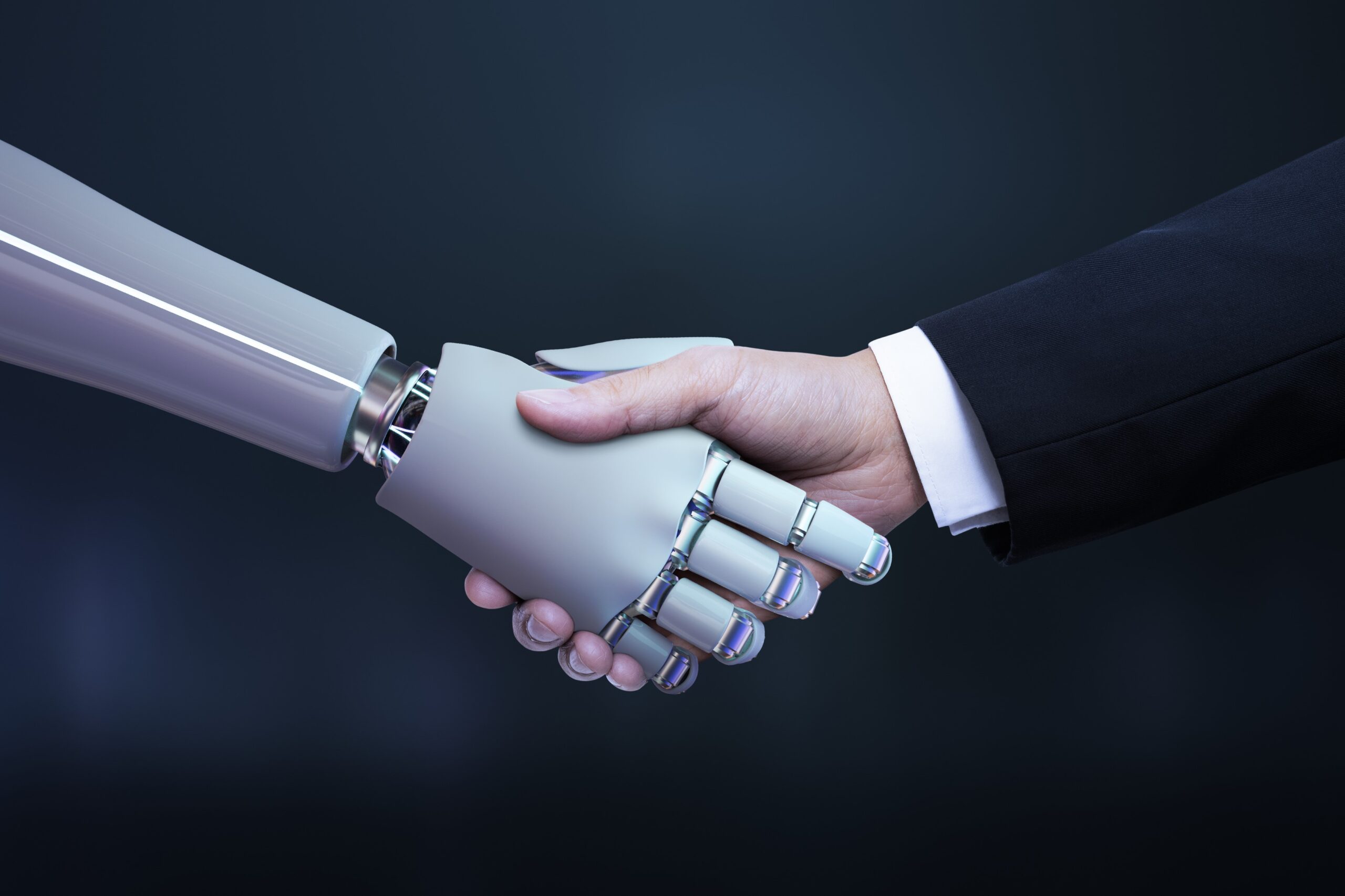
Source: Freepik
AI-supported applications are changing the way we work, learn, and conduct research. Whether it’s text generation, data summarization or automated data analysis, AI-supported applications can simplify many work processes and open up new opportunities. This also applies to research, teaching, and administration.
Not Every Task Needs AI
Nowadays, there is a tendency to automate as many processes as possible by implementing AI. But using an AI system is not always the best or only solution. The human factor is irreplaceable, especially in areas where contextual understanding, moral considerations, or independent thinking are required. AI should therefore not be used “by default,” but only when it offers real added value, whether through increased efficiency, precision, or relief from repetitive tasks. For responsible progress, a conscious balance between technical possibility and human responsibility is crucial.
AI in Teaching: Opportunities and Challenges
Especially in the university context, the use of AI must be well thought out. AI tools can support students and teachers in many ways, for example in the creation of learning materials, text analysis, or individual supervision. At the same time, it is important to uphold the principles of good scientific practice. Independent thinking, critical reflection, and the traceability of results must remain at the heart of scientific work.
As highlighted at the event Talk Lehre 2025 – AI in Teaching and Learning , universities are faced with the task of taking into account the fact that the use of AI tools by students and teachers alike is already part of everyday university life when planning teaching and examinations. In doing so, it is important to ensure that academic standards are maintained. Examination formats must be developed in such a way that individual performance and understanding can be reliably assessed and guaranteed even under these changed conditions.
Building Skills Instead of Imposing Bans
AI cannot and should not be banned, but its responsible use should be specifically promoted. With RWTHgpt, RWTH Aachen University, for example, provides its own AI tool. RWTHgpt was developed specifically for the university context and offers a data protection-compliant alternative for the use of generative AI for students and employees of RWTH. Much more important is how this tool is used. Building AI competence for both students and teachers is crucial. This includes understanding the technical basics and also the ability to critically question results and consider ethical consequences. AI competence therefore means understanding the technology, using it responsibly, and consciously deciding in which situations its use is truly appropriate.
Ethics as a Guideline for Dealing with AI
Ethical behavior in the context of AI means combining technological innovation with social responsibility. Decisions about the use of AI should always be based on transparency, fairness, and the protection of personal rights. As already emphasized in our article on “digital courtesy,” this also involves taking a critical stance: AI can and should be questioned. Only through open, reflective, and responsible use can we ensure that AI supports people and not the other way around.
AI offers enormous opportunities for science, administration, and society. To use it wisely, clear ethical guidelines, technical understanding, and a conscious decision about when AI really adds value are needed. In the university context, this means promoting AI competence, maintaining scientific integrity, and handling data responsibly. In this way, AI can become a tool that enables innovation in line with our values.
Responsible for the content of this article is Malak Mostafa.








Datenanalyse mit KI öffnet viele Türen. Allerdings sollte es Leitplanken für den Umgang geben. Schade, dass es mal wieder ewig dauert, bis seitens der Regierung Inhalt kommt. Viele KMU setzen bereits ihre Datenstrategie und ihre Cloud Architecture auf KI.
Hallo Rowbot,
vielen Dank für den wichtigen Hinweis. Du sprichst einen zentralen Punkt an: Während KI enorme Potenziale bietet, besteht tatsächlich ein Spannungsfeld zwischen Innovationsgeschwindigkeit und regulatorischer Orientierung. Initiativen wie der EU AI Act zeigen erste Schritte, auch wenn die praktische Umsetzung Zeit braucht.
Dein IT Center Blog Team