Kategorie: ‘IT-Security’
A Journey Through IT History III – From the Suitcase Phone to the Smartphone

Source: Own Illustration
Welcome to the third part of our IT journey through time! This time, we’ll trace the rapid evolution of the portable phone—from a suitcase-sized device weighing several kilograms, to the “brick” that fit in your hand, all the way to today’s smartphone, which combines a camera, navigation device, media player, and powerful mini-computer all in one.
A Journey Through IT History II – From Floppy Disks to Cloud Storage
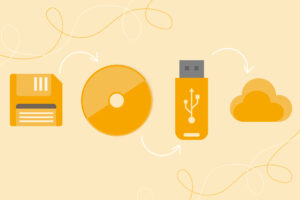
Source: Own Illustration
Welcome to the second part of our journey through IT history! This time, we’ll delve into the world of storage media and trace their evolution from 1.44 megabytes (MB) in a rectangular plastic case to the seemingly unlimited capacities of the cloud.
The Pitfalls of Everyday Life – Information Security in Everyday Life
Source: Own illustration
We all handle sensitive information on a daily basis, whether at the office, at university, or at home. However, we often underestimate how complex the issue of information security has become. Both companies and private individuals have data that needs to be protected, and this data can be stored digitally or, more traditionally, on paper or in our heads. Protecting information assets therefore requires more than just technology: it also means being mindful and responsible in our everyday lives. As attackers continue to develop their methods, we too must regularly train our awareness and knowledge.
A New Generation of Phishing: Why Potentially Harmful Emails Get Past the Spam Filter

Source: Own illustration
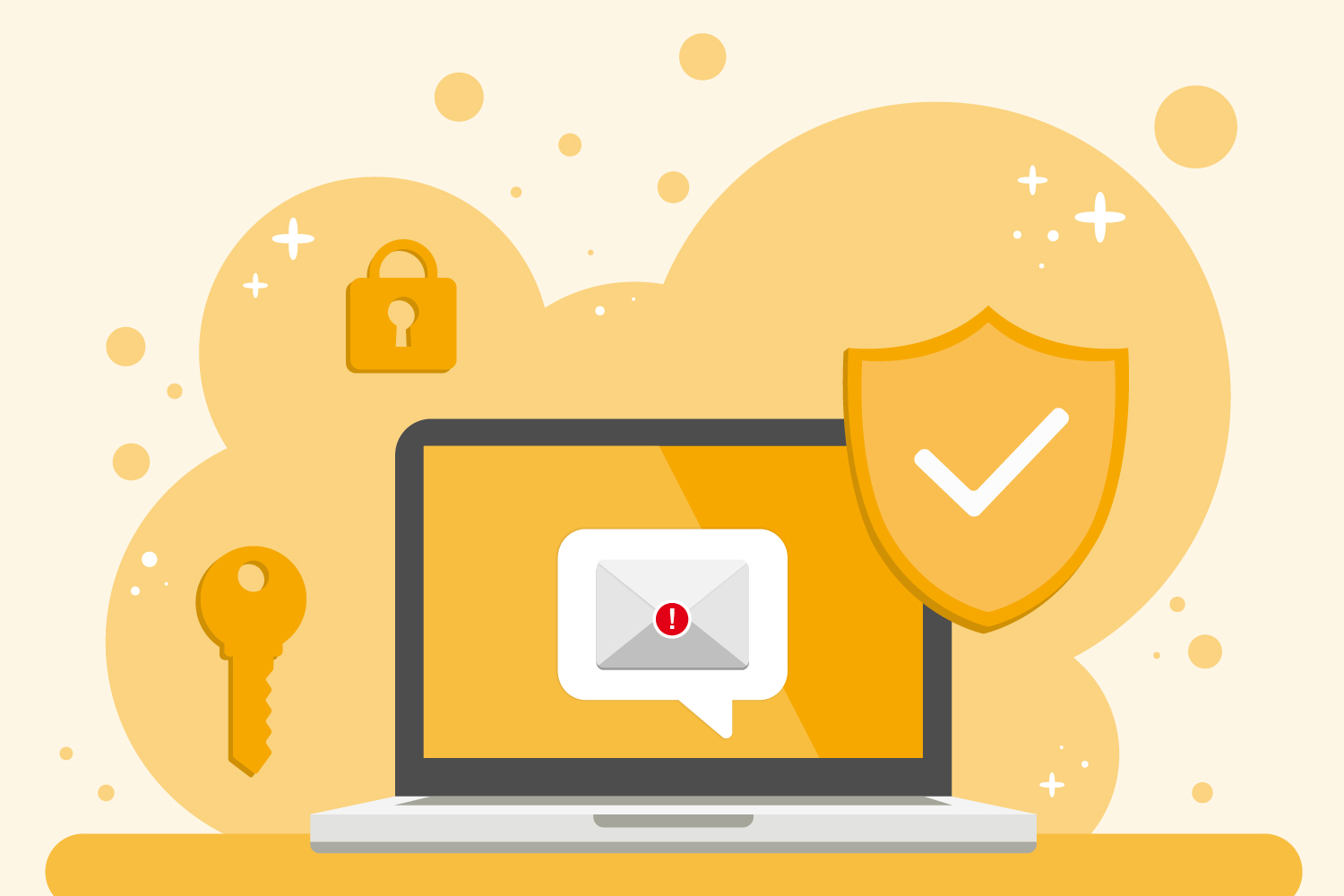
RWTH has a robust email security infrastructure: efficient spam filters and reliable protection mechanisms ensure that large volumes of unwanted messages never even reach our inboxes. Nevertheless, spam and phishing emails have increasingly been finding their way into personal and work RWTH inboxes as “undetected” messages. So, what mechanisms cause even the most reliable spam filters to fail to intercept every suspicious message?
Year 2038 and Year 2036 Problem: No Threat to RWTH IT Systems
Source: Own illustration
Regularly, so-called “time-related issues” arise in IT. These involve technical limitations in the processing of date and time data. In addition to the well-known Year 2000 problem, the Year 2036 problem and the Year 2038 problem are currently the subject of particular discussion. This post provides a brief overview of both topics and explains why there is no risk to the IT systems at RWTH Aachen University.
Welcome to the 2026 Summer Semester!

Source: Own illustration
The days are getting longer, lectures are starting—a new semester is beginning! We are delighted to welcome all students and staff to RWTH Aachen University and wish you a successful start to the 2026 summer semester. Studying and working at RWTH is now more digital and networked than ever before. That’s why we have compiled all the important information about central IT services, innovations, and helpful contact points so that you can get started right away! You can find much of this information in our blog series “Basics at RWTH.” You can also find more information and instructions linked under the respective services.
Digital Cleanup Day 2026: A Fresh Start for Your Digital Devices
Source: Own illustration
We’ve all been there: your desktop is cluttered, your inbox is overflowing, and old apps are piling up on your smartphone. It’s time for a digital spring cleaning! On March 21, 2026, it’s that time again: Digital Cleanup Day invites you to bring order to your digital world while helping the environment.
Spam or Phishing? How to Spot the Difference
Source: Own illustration
In keeping with today’s Safer Internet Day on February 10, 2026, this article is all about digital security. Spam and phishing emails show how important it is to remain vigilant in everyday life and to critically question suspicious emails. With a little caution and the right knowledge, you can better protect yourself — and the IT infrastructure of RWTH Aachen University.
Every day, we receive emails that are not always legitimate or welcome. Two types of unwanted communication are particularly common: spam and phishing. Both can be annoying, but phishing in poses a serious threat to your data.
In this article, you will learn how spam and phishing differ and how you can reliably identify suspicious emails.
European Data Protection Day 2026
Source: own illustration
In today’s digital age, data protection is more important than ever. That’s why every year on January 28, we celebrate European Data Protection Day – a date that reminds us of the importance of protecting our personal data and privacy in the digital world. At IT Center, we use this day as an opportunity to draw attention to key aspects of data protection.
Workshop of the State Initiatives for Federated Identity Management
Source: Pixabay
On November 12 and 13, 2025, the biannual workshop of the state initiatives for federated identity management (IDM) took place at the IT Center of RWTH Aachen University. This year’s meeting was organized by the staff of the IDM.nrw project, which supports universities in North Rhine-Westphalia on their way to a state-wide, federated identity management system.
Representatives from Baden-Württemberg, Bavaria, Berlin, Mecklenburg-Western Pomerania, Lower Saxony, North Rhine-Westphalia, Rhineland-Palatinate, Saxony-Anhalt, and Thuringia, as well as from the German National Research and Education Network (DFN), came to Aachen to exchange experiences, discuss challenges, and initiate joint developments.