
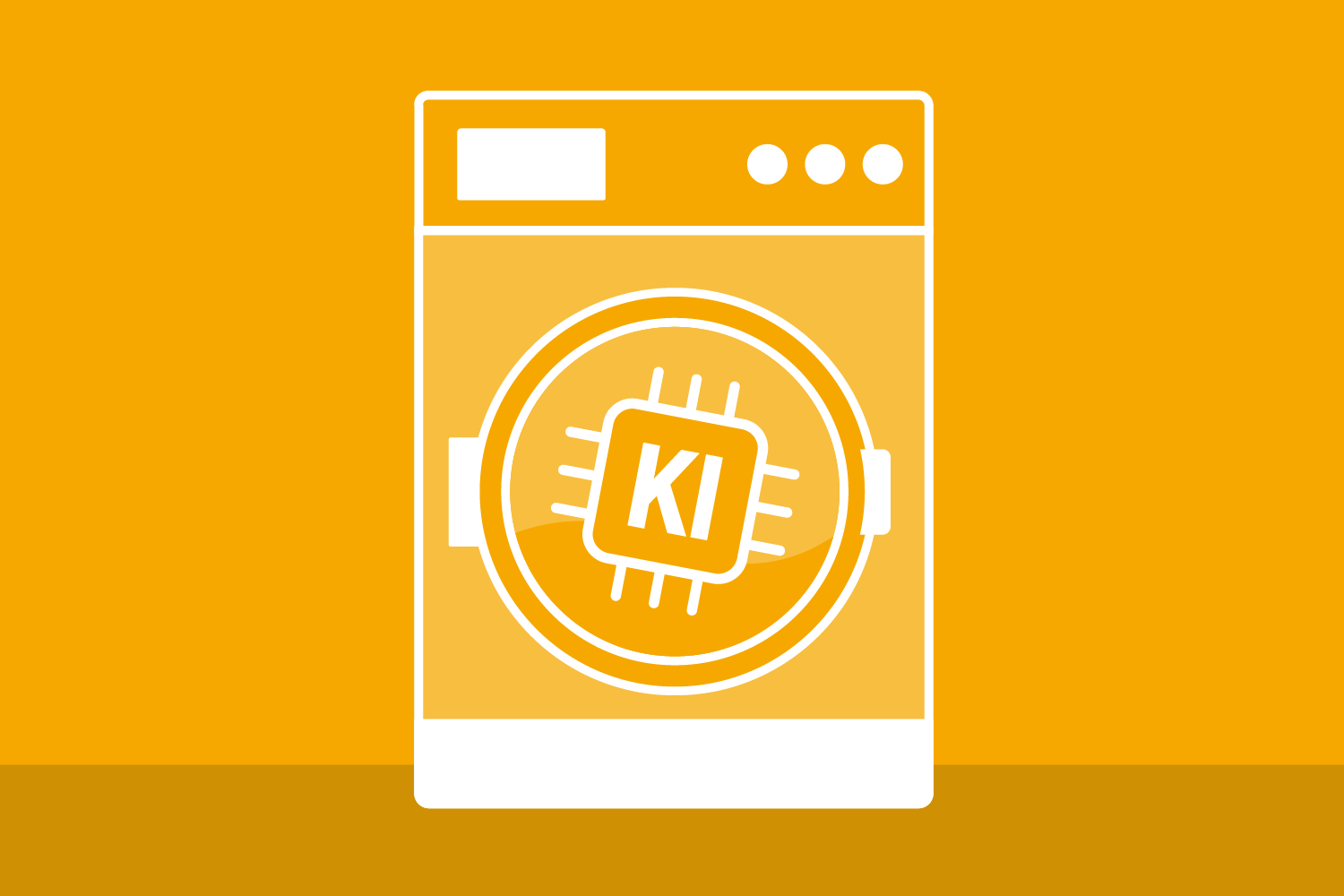
Source: Own illustration
In the age of the AI, artificial intelligence is a central component of almost all new technologies. From mobile learning apps to soft drink recipes: AI is being used everywhere. At least according to the manufacturers. Can this even be true? Why is it so important for companies to advertise their products with AI? In this article, you can find out more about the modern phenomenon of AI washing.
What Is AI Washing?
AI washing refers to the practice of misleadingly marketing products or services as AI-supported, even though they either contain no AI functions or only very basic AI functions. Similar to greenwashing, companies use the current trend of artificial intelligence to make their offerings appear more appealing. Advertising with AI not only makes the products interesting for users, but also more attractive for investors. Companies benefit from the fact that there is no standard definition for AI and AI-supported. In addition, technology is changing so quickly that technologies that were referred to as AI a few years ago are no longer considered AI by experts today. Companies are deliberately using this room for interpretation to secure a competitive advantage. The negative consequences are mainly felt by consumers and the AI industry in general.
Why Is AI Washing a Problem?
The integration of AI offers numerous exciting possibilities. Unfortunately, many developers focus primarily on creating an “AI-based” product as quickly as possible and bringing it to market. The market is flooded with AI products, very few of which address the needs of users and some of which use hardly any AI technology worth mentioning. This can lead to real AI innovations being overlooked. In addition, AI-washing undermines consumer confidence, as many products do not deliver what the “AI” label promises. Companies are not spared the consequences either: legal and regulatory consequences – particularly regarding data protection and ethical standards – cannot be ruled out.
How Can You Recognize AI Washing?
Due to the vague definition of AI, it is not always easy to recognize AI washing directly. Nevertheless, there are typical characteristics of AI washing that you should be aware of – and avoid. Caution is advised when a company promises exaggerated revolutionary developments. These products are often advertised using a variety of technical terms to give the appearance of AI innovation. If companies do not clearly explain how they are using AI, skepticism is warranted. So-called AI washers often hide simple or conventional technologies behind complex language. Reputable providers, on the other hand, provide clear information about their use of AI. Also pay attention to whether companies provide information on the data sources and their quality for their AI applications. Before deciding on a product, it is worth consulting independent reviews or contacting reference customers to get a realistic assessment of the actual AI capabilities.
How much artificial intelligence there is in a product is usually only known by internal employees. According to the employees of the start-up “Engineer.ai”, the company exaggerates its AI capabilities. [1] The company claims to use AI to develop mobile applications, but these AI tools are described as “human-assisted”. Consequently, we can assume AI-washing in this case. [2]
As the AI industry continues to expand, it is important to understand AI washing. Only then can you effectively protect yourself from it – and find the AI applications that benefit you.
Responsible for the content of this article is Masimba Koschke.
The following sources served as the basis for this article:








„Die schnelle Markteinführung von angeblichen KI-Produkten kann echte Innovationen überdecken und das Vertrauen der Verbraucher untergraben.“
Excellent article on AI washing!
Recent regulatory developments underscore the points raised here. In 2024-2025, authorities imposed over $26 million in penalties for false AI claims, targeting companies marketing basic rule-based automation as “AI-powered” when they’re simply connecting APIs to external language models.
The technical distinction matters: genuine AI requires custom model training, independent infrastructure, and proprietary algorithms. Most “AI solutions” are API orchestration platforms – they automate effectively but lack the learning capabilities true AI provides.
Studies show 78% of organizations report higher implementation costs than budgeted because purchased solutions don’t deliver promised capabilities. This undermines trust in legitimate AI innovation and creates market distortions where investment flows toward marketing hype rather than technical substance.
Dear Arne,
Thank you for your feedback!
We’re glad you like our post.
Best regards the IT Center