Kategorie: ‘Informationstechnische Systeme’
Dr.-Ing. Sabine Paarmann receives significant funding for battery research
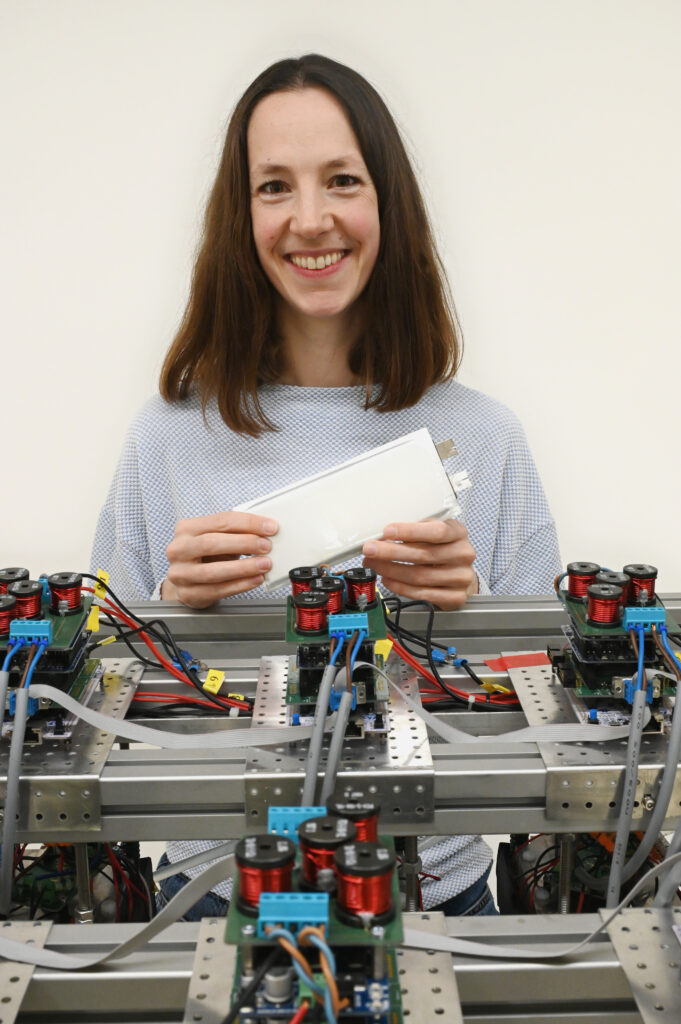
Dr.-Ing Sabine Paarmann has been awarded a highly endowed research grant from the Federal Ministry of Education and Research (BMFTR). As part of the “BattFutur – Junior Research Group for Battery Research” competition, her project will receive €2.7 million in funding over the next five years. This initiative is a central component of the German government’s high-tech strategy and aims to create optimal conditions for outstanding scientists in German battery research.
ISEA
In her project “CooLIB – Thermal design and cooling strategies to boost the performance and lifetime of lithium-ion batteries,” Dr. Paarmann and her team are developing innovative cell concepts. The focus is on investigating thermal and electrochemical inhomogeneities within the cells. Systematic cycle tests are used to measure these inhomogeneities and quantify their interactions in order to specifically reduce their influence. The research results will be directly incorporated into the development of new battery cells and thermal management in order to make future batteries more efficient and durable.
The new research group “Thermal-Electrical Design of Energy Storage Systems” headed by Dr. Paarmann is based at the Center for Ageing, Reliability, and Lifetime Prediction of Electrochemical and Power Electronic Systems (CARL) at RWTH Aachen University. Dr. Paarmann has excellent scientific expertise: she received her doctorate in 2021 from KIT in Karlsruhe in the Department of Chemical Engineering and Process Engineering and, before moving to RWTH Aachen University, conducted research as a DFG-funded postdoc at Imperial College London.
The Faculty of Electrical Engineering and Information Technology is delighted to welcome Dr. Paarmann as the new group leader at ISEA and looks forward to the coming years of research and a successful collaboration.
The future of hearing: Public lecture series at the “NeuroSensEar” workshop
What will the hearing aid of the future look like? And how can the human brain help us build more efficient computers? From March 3 to 5, 2026, as part of the workshop “NeuroSensEar – Neuromorphic Acoustic Sensors for Tomorrow’s High-Performance Hearing Aids”, the Institute of Communications Engineering at RWTH Aachen University invites you to three high-profile public lectures in Lecture Hall FT (Melatener Str. 23, 52074 Aachen).
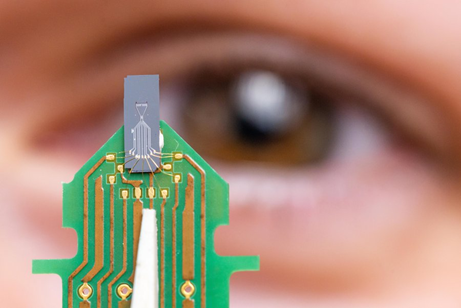
The “NeuroSensEar” project is dedicated to one of the most exciting challenges in current technology: the development of neuromorphic acoustic sensor technology. The goal is to create powerful hearing aids that not only amplify sound better, but also act intelligently and energy-efficiently, just like our brains.
IENT
Accompanying the workshop, three renowned professors from our faculty will provide exclusive insights into their research.
Neuromorphic Computing: Energy Efficiency Through Biologically Inspired Hardware – Tuesday, March 3, 2026 | 5:00 p.m.
Prof. (ret.) Dr.-Ing. Dr. h.c. Rainer Waser
Information technology is facing a paradigm shift: classic, algorithmic data processing is increasingly being replaced by AI-based approaches. This is accompanied by a massive increase in energy consumption. To reduce this, institutes in Faculty 6 are researching neuromorphic systems that work much more efficiently than conventional architectures.
In the upcoming lecture, Prof. Waser will present the physical fundamentals of redox-based memristive components. The focus is on an interdisciplinary approach between materials science, electrical engineering, and computer science that uses the functioning of the human brain as a technical model.
In addition to hardware development, specific AI applications and their social opportunities and risks will be discussed. The lecture will conclude with a reflection on the question of whether future AI systems could develop consciousness.
Real hearing in the laboratory: Hearing research in interactive VR environments – Wednesday, March 4, 2026 | 2:00 p.m.
Prof. Janina Fels
Until now, research into auditory perception and cognitive processes has often relied on controlled but unrealistically simplified laboratory scenarios. The Institute of Hearing Technology and Acoustics (IHTA) at RWTH Aachen University is now using modern audiovisual virtual reality (VR) to simulate complex everyday situations in a realistic and interactive way.
This technology allows test subjects to interact with acoustic scenes in real time. This enables the precise investigation of hearing and attention in acoustically challenging environments such as open-plan offices or busy outdoor areas. A current research focus of the IHTA is the analysis of noise pollution, attention, and listening effort in elementary school classrooms.
The presentation highlights how VR methods bridge the gap between classical hearing psychology and real-life environments. It also discusses how interdisciplinary approaches from audiology and virtual reality are shaping the future of hearing research.
Glasses for the ears: Intelligent communication systems of the future – Thursday, March 5, 2026 | 9:00 a.m.
Prof. Dr.-Ing. Peter Jax
Smart hearables are increasingly evolving from simple headphones to intelligent microcomputers with integrated AI. As “glasses for the ears,” these systems act as personal assistants in the areas of consumer audio, health, and professional communication.
One key potential of this technology lies in 3D telephony. Spatial audio reproduction enables intuitive differentiation between speakers, which greatly enhances immersion and the sense of presence in digital meetings. The goal is communication that achieves the naturalness of a face-to-face conversation despite physical distance.
The presentation highlights current developments in research and industry and discusses the acoustic and technical challenges that must be overcome in the design of such innovative platforms.
Neuromorphic Hardware: Kick-off event in January
The NeuroSys future cluster at RWTH enters its second phase
At the beginning of this year, the Cluster4Future NeuroSys (Neuromorphic Hardware for Autonomous Artificial Intelligence Systems) is entering its second phase.
The Clusters4Future initiative is part of the German government’s High-Tech Strategy 2025 and is funded by the Federal Ministry of Education and Research.
At the kick-off event at the end of January, more than 90 participants discussed their ideas and technologies for the development of neuromorphic hardware in the Super C at RWTH Aachen University.
Neuromorphic systems are modelled on the basic building blocks of the brain, neurons and synapses. Neuromorphic hardware is a resource-saving but powerful basis for energy-intensive artificial intelligence research operations. The aim is to create a technology basis for neuromorphic components and alogrithms, building on the basic research carried out at RWTH Aachen University and the Jülich Research Centre. The coordinator of the future cluster is Professor Max Lemme, Head of the Chair of Electronic Components at RWTH Aachen University.
Learning neuromorphic AI chips could soon enable energy-efficient on-site data processing and thus offer promising prospects for future working methods, smart city concepts and the Internet of Things. Various contributions from autonomous driving to learning systems and personalised medicine will also be delivered.
The second phase of the project is planned for three years and will see RWTH collaborating with a wide range of experts from research and industry.
Further information on the project can be found here
60 Years | IKS
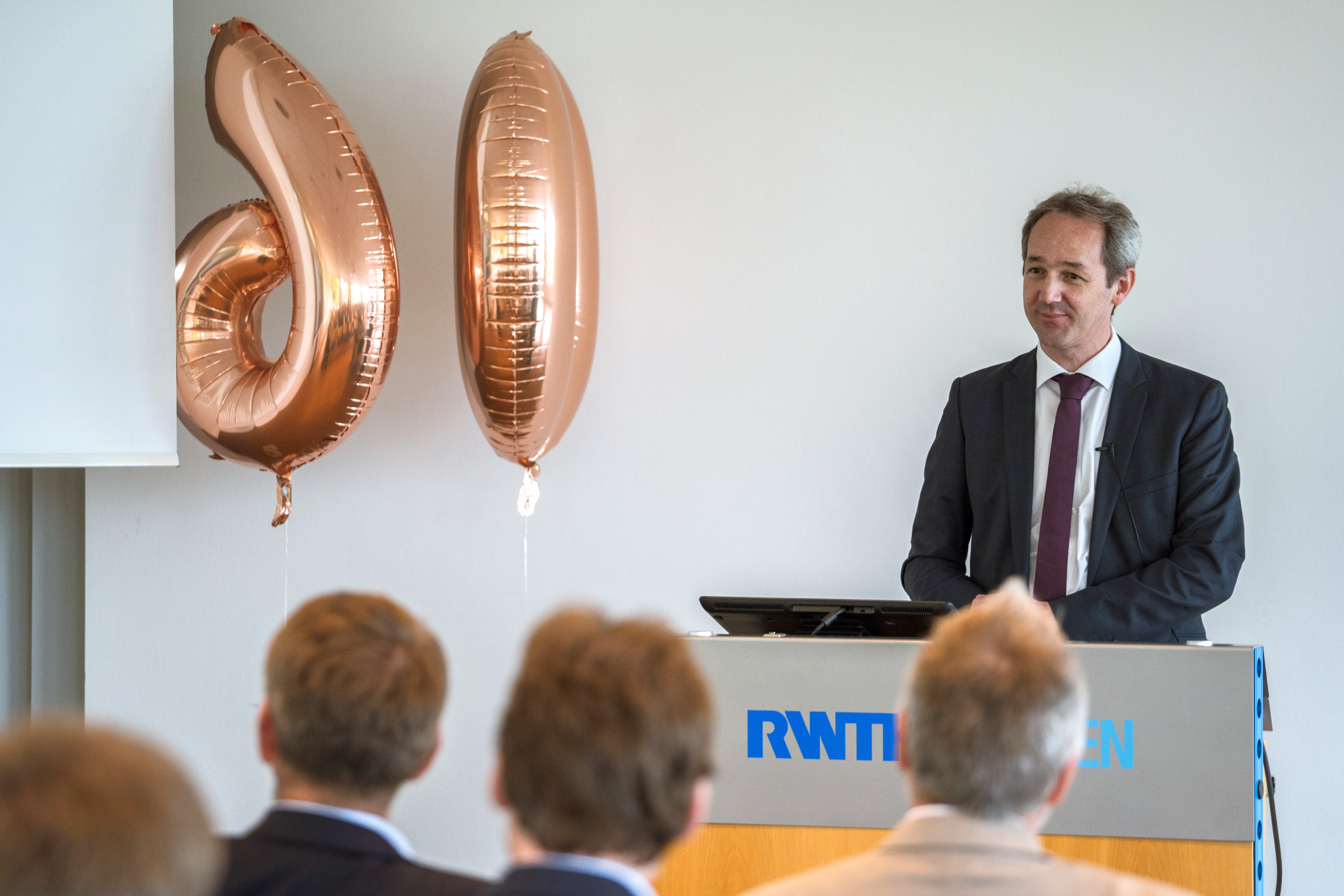
Prof. Dr.-Ing. Peter Jax, Head of the Institute of Communication Systems. © IKS
On 14 June 2024, the Institute of Communication Systems (IKS) celebrated its 60th anniversary.
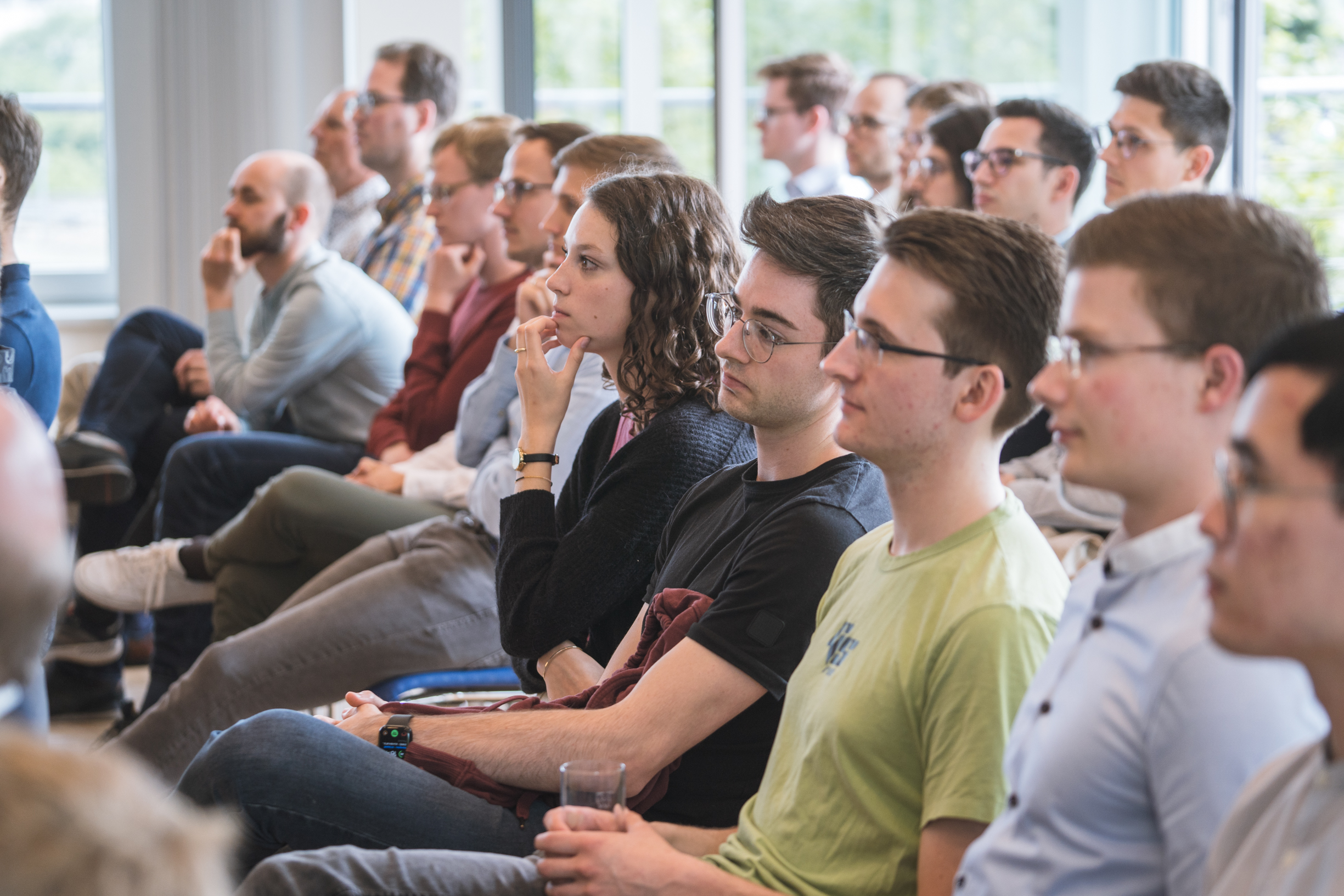
This anniversary was celebrated together with project partners, colleagues and numerous alumni in a festive colloquium and evening event. The event provided an insight into the development of digital speech and audio communication. It was also an opportunity to look back over the past six decades and to discuss future challenges and opportunities in the field of communication systems.
“We would like to thank everyone who has supported the Institute over the past 60 years and look forward to many more successful years,” the IKS announced.
Professor Jax has led the Institute since 2015. He initiated a new name and a research focus on modern digital communication systems. Research continues to focus on speech and audio communication as probably the most important and natural link between us humans. The research deals with signal processing in communication systems, e.g. in hearing aids, hearables or immersive 3D telephony. The aim is to make digital communication systems as natural as “direct” face-to-face speech communication. Both model-based digital signal processing and machine learning methods are used in innovative hybrid solutions.
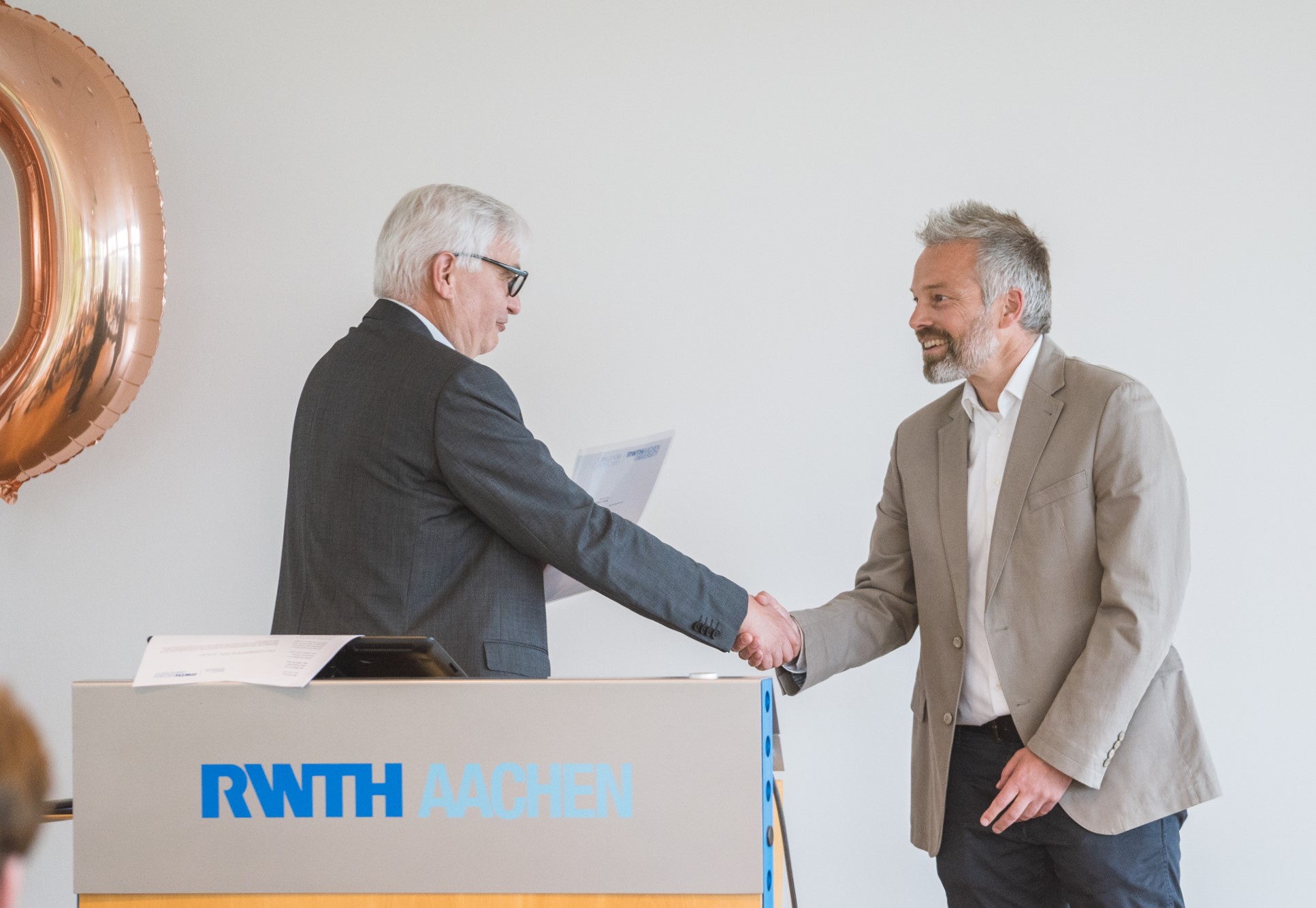
Prof. Dr.-Ing. Albert Moser, Dean of the Faculty of Electrical Engineering and Information Technology and Prof. Dr.-Ing. Marc Adrat, Research Group Manager for Software Defined Radio (SDR) at the Fraunhofer Institute for Communication, Information Processing and Ergonomics (FKIE) in Wachtberg and lecturer at the IKS at RWTH Aachen University. © IKS
One of the highlights of the event was the formal appointment of Marc Adrat as Honorary Professor. He is an internationally recognized expert in the field of Software Defined Radio, which involves programmable digital radio systems where essential transmission functions such as coding, error correction, modulation, and synchronization are implemented via software. His teaching activities focus on modern error-correcting channel coding in the course „Modern Channel Coding for Wireless Communications“, which is offered as part of the regular „Master’s programme in Electrical Engineering and Information Technology“.
“His expertise and commitment will undoubtedly continue to have a significant impact on the quality of our teaching and research,” stated the IKS.
The appointment will also strengthen the collaboration between the Faculty of Electrical Engineering and Information Technology and the Fraunhofer Institute for Communication, Information Processing and Ergonomics.
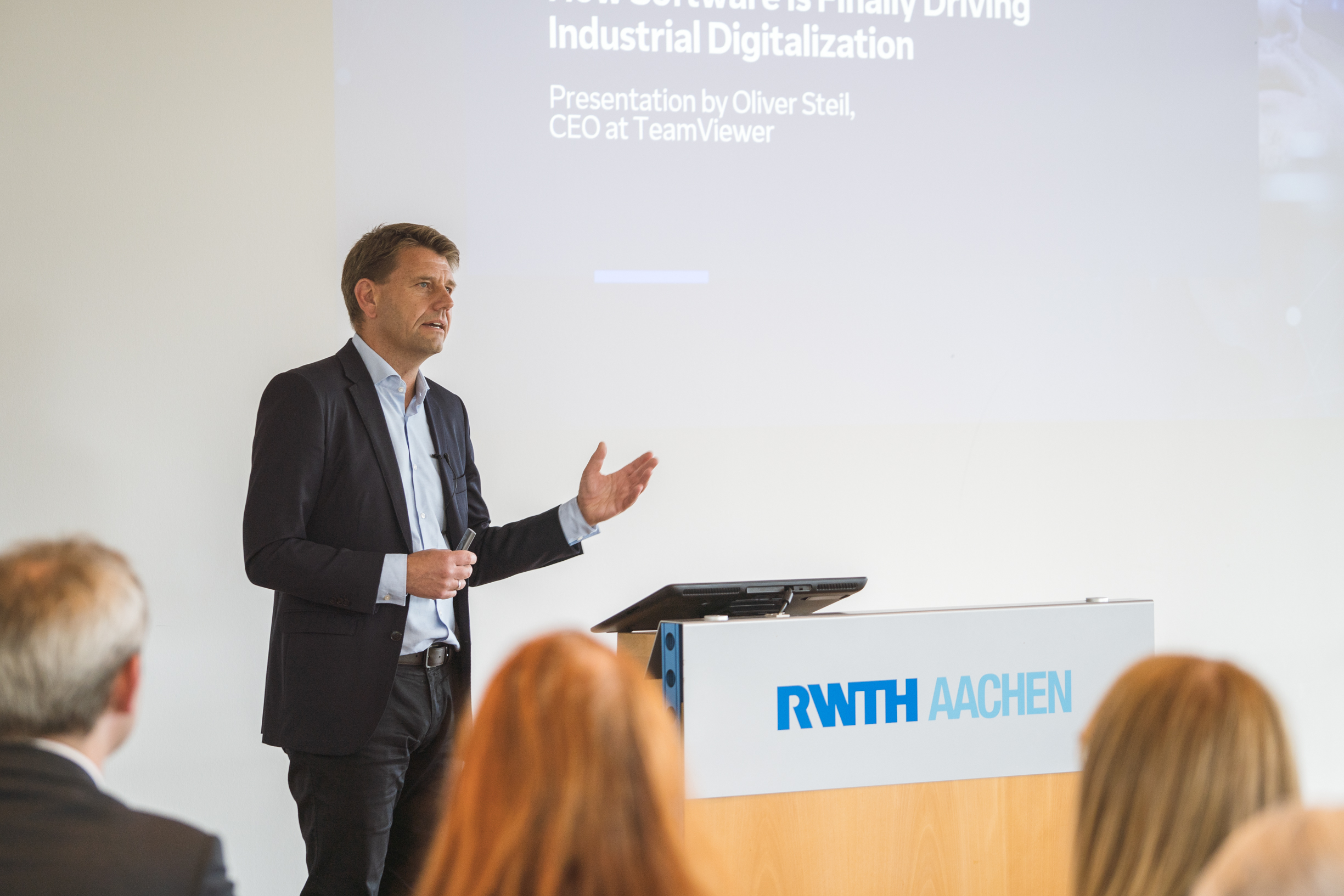
Oliver Steil, former employee of the IKS and current CEO of TeamViewer. © IKS
Another highlight was Oliver Steil’s presentation entitled “Digital Twins, AI, Spatial Computing, et al. – How Software is Finally Driving Industrial Digitalization”. He also spoke about his personal career, which is rooted in the Institute and ultimately led Oliver Steil to his current position as CEO of TeamViewer. The guest of honour provided fascinating insights into the challenges and opportunities of leading a global technology company.
The presentation ended with a lively question and answer session, where attendees had the opportunity to speak directly to Oliver Steil. Questions ranged from specific technical aspects to strategic considerations.
© IKS
Further information can be found on the homepage of the Institute of Communication Systems.
Michael Vorländer is new president of the ASA
© IHTA
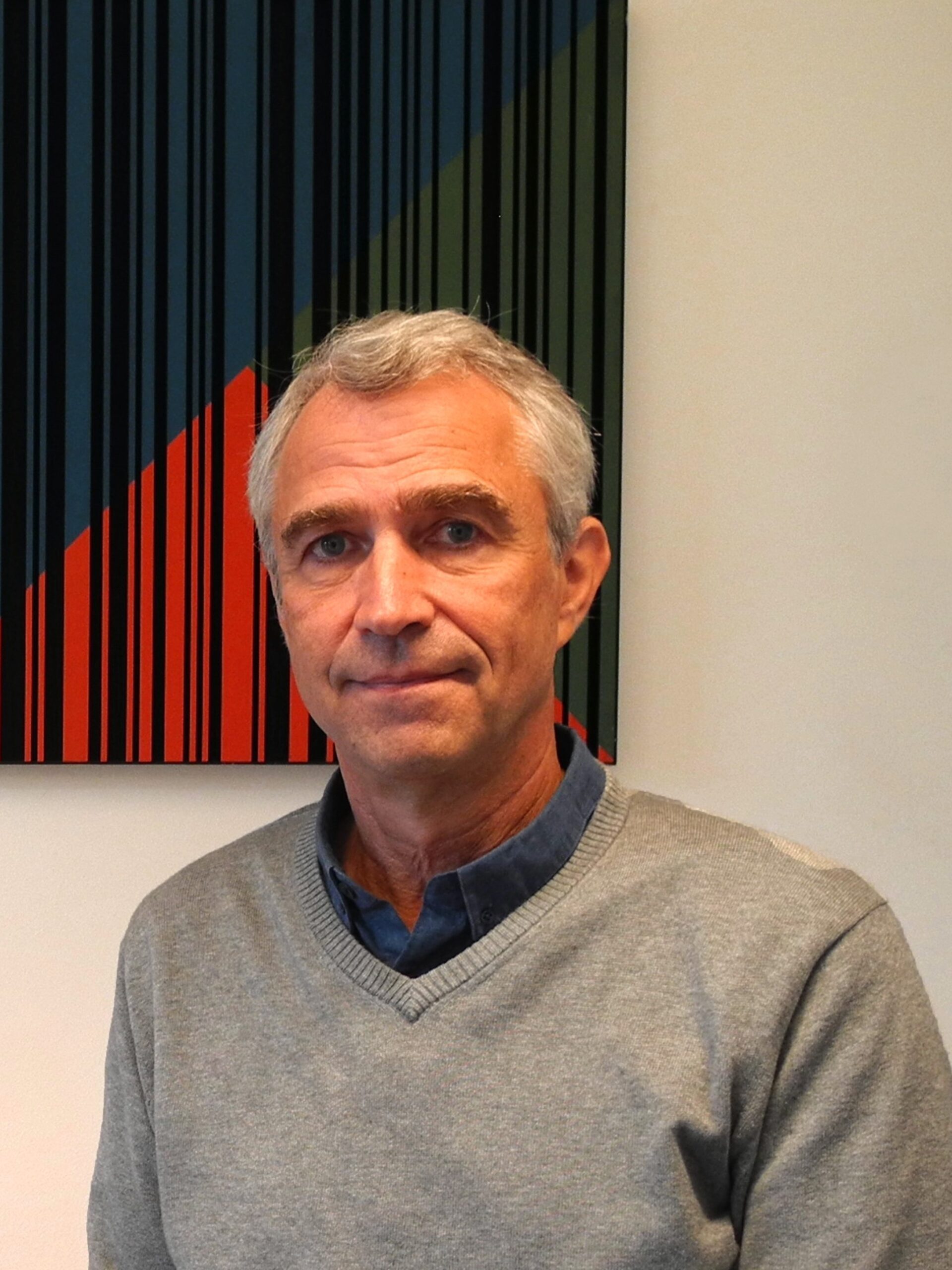
The first non-American president of the Acoustical Society of America (ASA) is Professor Michael Vorländer, Chair of Technical Acoustics at RWTH Aachen University.
Founded in 1929, the ASA is the world’s largest professional society in the field of acoustics. Professor Vorländer will serve as a member of the ASA Board of Directors from May 2024 to May 2027 and as President in 2025/2026.
“It is a great honour to be elected President of the ASA. Being the first non-American President is an important step for international cooperation in acoustics and underlines the increasing importance of international perspectives in the scientific community”,
says Vorländer.
With approximately 7,000 members, the ASA is dedicated to the advancement and dissemination of knowledge in the field of acoustics. The society covers a broad spectrum of acoustical disciplines, supports research, education and application of acoustical principles, develops standards and guidelines, organises conferences and publishes scientific journals such as the renowned “Journal of the Acoustical Society of America”.
For more information about the Acoustical Society of America, please visit their website.
Excellent researchers on an interdisciplinary stage: lecture by Professor Monti
© Peter Winandy
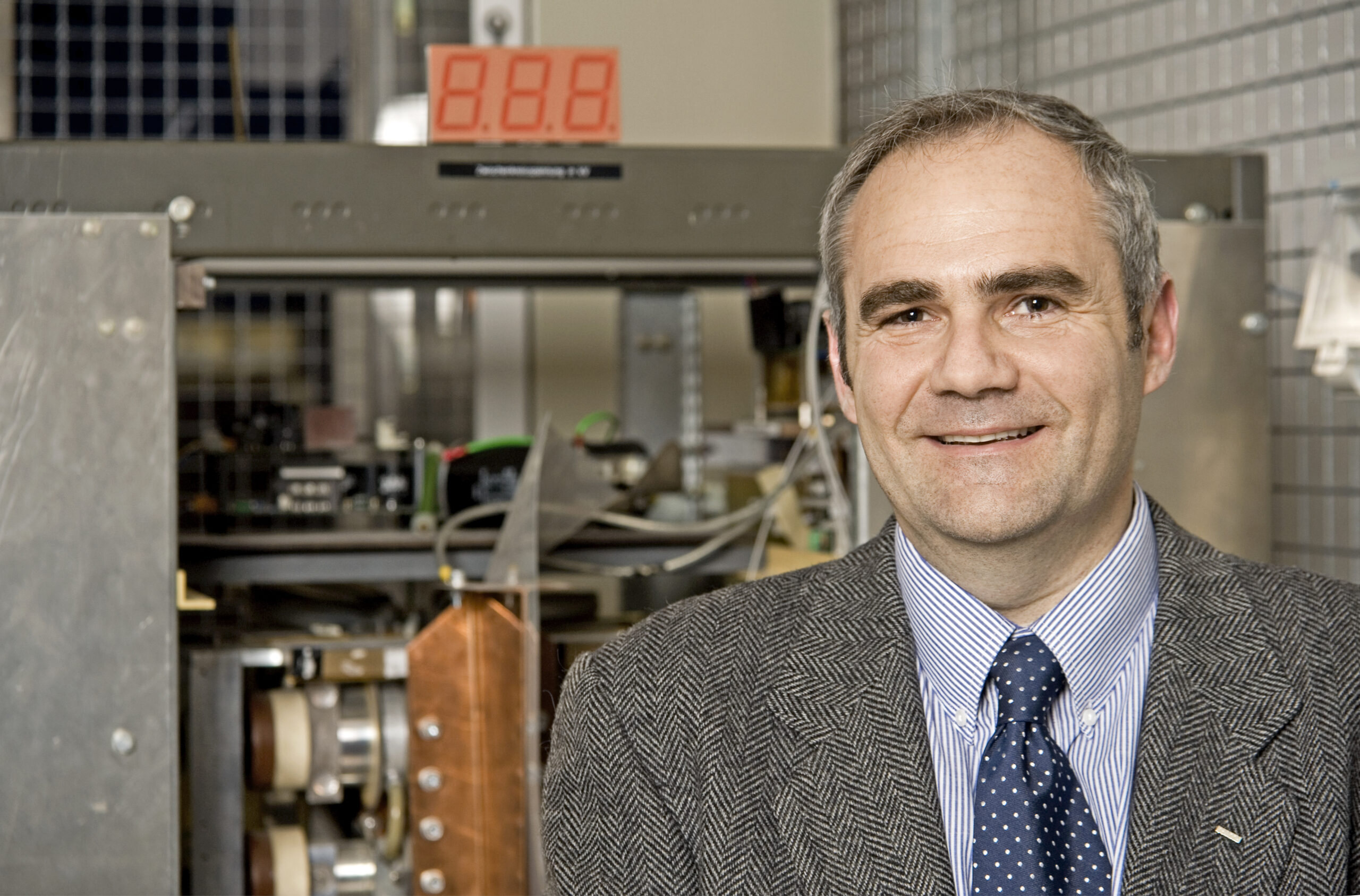
On 17 April, Professor Antonello Monti of RWTH Aachen University will speak at the scientific meeting of the engineering and economics class of the “Nordrhein-Westfälische Akademie der Wissenschaften und der Künste” about the development goals of his discipline in terms of solving major societal challenges.
Against the background of the international situation, the energy transition process is more important than ever.The necessary technological transformation of the energy system must be approached from two angles: On the one hand, a new major player in energy supply has emerged: renewable energy. On the other hand, there are new consumers such as electromobility and heat pumps. Digitalisation is proving to be a key enabler in this process. You could even say that digitalisation is not an option, but a necessity. The power system is consequently becoming a large, programmable cyber physical infrastructure with a high level of complexity. In his presentation “The Digitalisation of the Energy Systems: from the electrons to the cloud”, Professor Monti addresses this complexity by analysing the solutions currently being developed for the different levels of the infrastructure.
” Rethinking the whole architecture means reconsider the basic principles of operation of the new power system but also the corresponding IT systems”,
announced Professor Monti, Director of the Institute for Automation of Complex Power Systems (ACS).
So what does it mean to run a digital grid? And will we be able to build a digital grid that is as reliable as the current infrastructure?
The solutions he proposes in his presentation are the result of concrete experience from large European research projects. Professor Monti leads a research group with about 50 full time scientists working intensively on the the border between energy and information and communication technologies. He is responsible for coordinating some of the most relevant European projects in this field, such as OneNet, TwinEU und int:net. His research work has received several awards, including the prestigious “IEEE Field Medal Award for Innovation in Public Infrastructure” and the “NRW Innovation Award”.
In another presentation – “Sustainable metals: contributions from basic research” – Professor Dierk Raabe from the Max Planck Institute for Sustainable Materials will address the question of whether we can succeed in decarbonising a key industry with “green steel”.
Further information on the Nordrhein-Westfälische Akademie der Wissenschaften und der Künste can be found on the organisation’s homepage.
ITG Conference on Speech Communication
© Katharina Uhlig
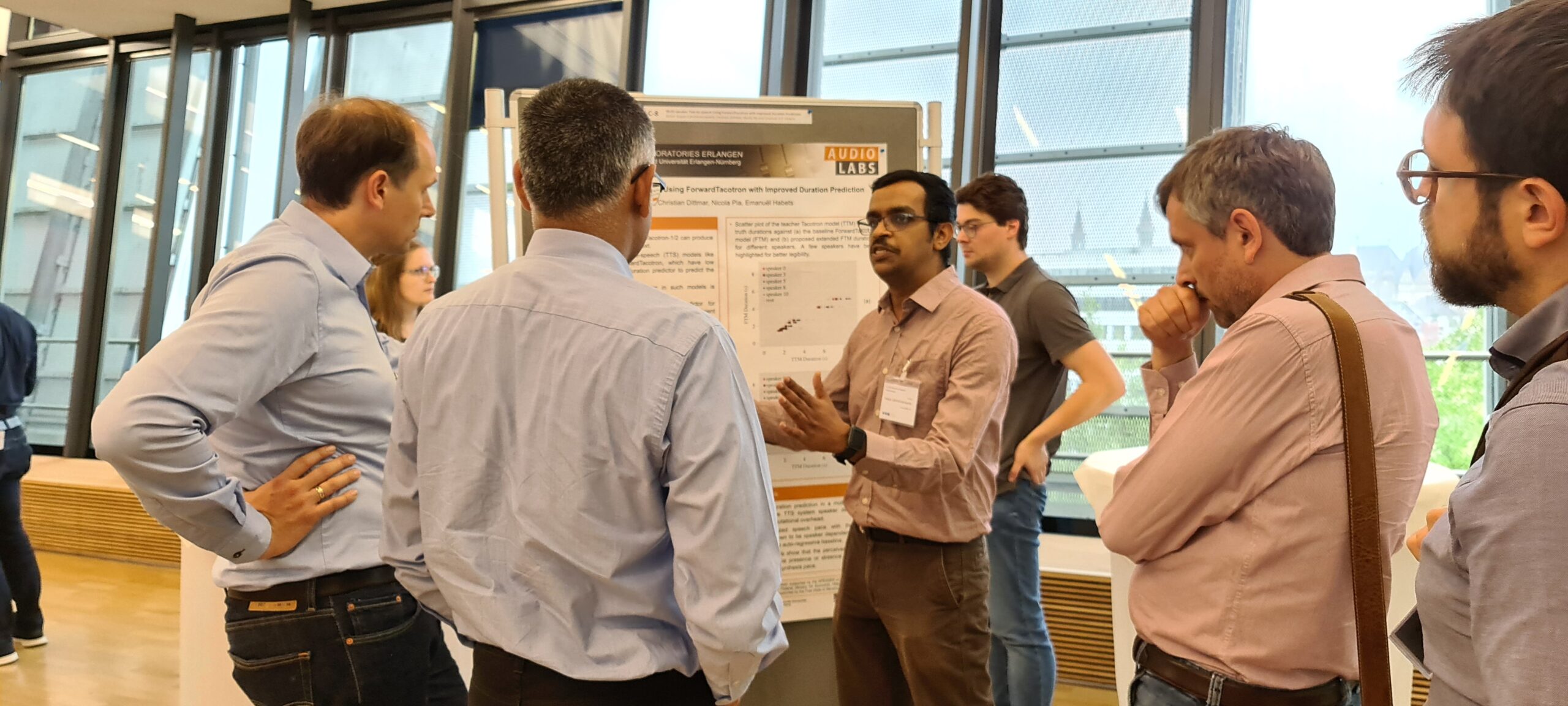
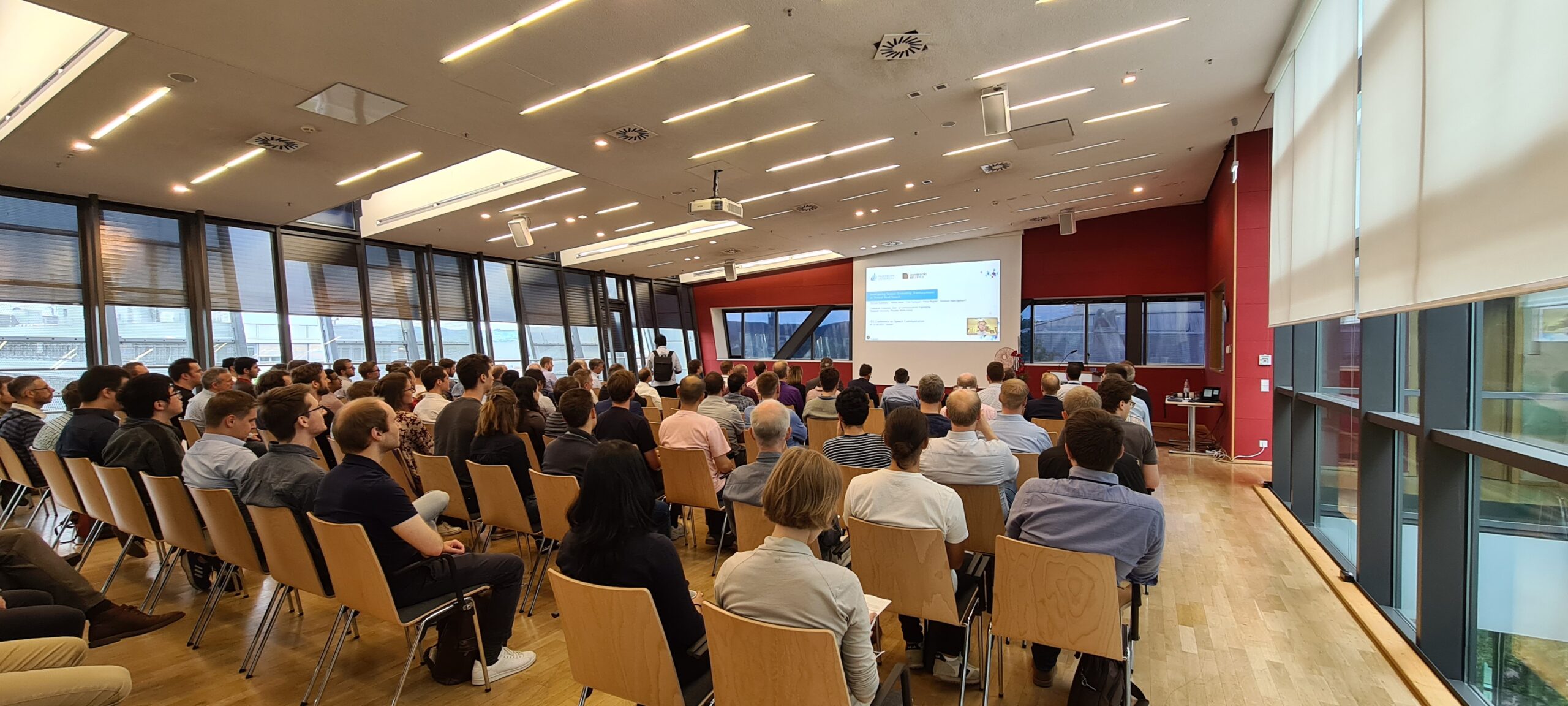
The fifteenth symposium in a successful series of events on the topics of speech processing, audio and spoken language processing took place from September 20 to 22, 2023 in the SuperC building of RWTH Aachen University.
Central and in the heart of university life, a lively scientific exchange took place with a focus on theory, algorithms, and application relevance of the topic composition. Conference participants exchanged ideas in workshops and benefited from both professional and personal networking. Alternating blocks of lectures and poster presentations, as well as a show & tell session formed elements of the three-day conference.
© Katharina Uhlig
Other highlights included three keynote presentations from renowned individuals with expertise:
For Team Viewer, Dr. Hendrik Witt presented real-life use cases for augmented reality solutions for process optimization in the working world and explained the extent to which wearables and sensors are driving the industrial metaverse. The goal, he said, is digitization far from desks, for example in logistics, manufacturing or field service. Team Viewer sees the metaverse as an interface between the real world, the Internet and technology. Its AR platform Frontline offers augemnted reality, mixed reality and artificial intelligence on smart glasses, smartphones, tablets and other wearables. Empowered so-called frontline workers through this could usher in the next industrial revolution.
Professor Nilesh Madhu of Ghent University vividly explored the evolution of communication technology in his talk; from the use of tedious, hand-made, stochastic models to a plethora of impressive state-of-the-art data-driven approaches. His remarks also allowed a glimpse into the future and opened the discussion on whether the knowledge and experiences of the past are suitable to pave the way there.
Focusing on practical experience and the application of research results, Professor Frank Kurth from the Frauenhofer Institute for Communication, Information Processing and Ergonomics presented concrete safety application scenarios that use various approaches, including Deep Learning, for information extraction. Especially with respect to voice communication, the extraction of information from sensor signals is a significant aspect of safety-critical applications. This requires reliable methods, while complying with applicable law. The challenge here is often the poor quality of audio signals combined with the need to process large amounts of data in real time.
In addition to the exciting scientific content shared at the conference, a rich cultural offer was also opened to the participants. The city of Charlemagne showed its best side during the various guided tours and allows many insights into its historical heritage.
The conference was organized by the Informationstechnische Gesellschaft (ITG) in VDE, in cooperation with the Technical Committee Speech Communication AT3, as well as the Technical Program Committee and the Institute for Communication Systems at RWTH Aachen University.
Extensive information can be found on the homepage of the ITG conference.
Writing Workshop E-Technology Winter Semester 2023/24

© Martin Braun
You are studying a bachelor or master subject at the Faculty of Electrical Engineering and Information Technology? The study or final thesis is now imminent? Then get the support of the Language Center and benefit twice!
The semester course in presence strengthens the subject-specific writing and text competence with customized writing advice. Practical workshops based on text examples from electrical engineering and information technology provide know-how on text structure, language, style and citation. The online expert feedback in the writing consultation helps to individually apply what has been learned in the course to the current project or thesis. Voluntary participation in an introductory course on technical subject research at the University Library is also offered as part of the course.
After successful participation, the Language Center awards a certificate and 3 CP, which are creditable according to the respective examination regulations.
International students must prove a German language level of at least C1.2 as a prerequisite for participation in the course.
Registration takes place via the user account at the Language Center.
Registration deadline: September 29 – October 10, 2023
Dates:
| Group 1 02.54478 |
Group 2 02.54479 |
|
Wed, 08.11.2023 Wed, 22.11.2023 Wed, 06.12.2023 Wed, 10.01.2024 each from 09.00 to 12.00 hrs |
Wed, 15.11.2023 Wed, 29.11.2023 Wed, 13.12.2023 Wed, 17.01.2024 each from 09.00 to 12.00 hrs |
Contact for queries: schreibzentrum@sz.rwth-aachen.de
60th Anniversary of the Institute of Hearing Technology and Acoustics
© Institut für Hörtechnik und Akustik
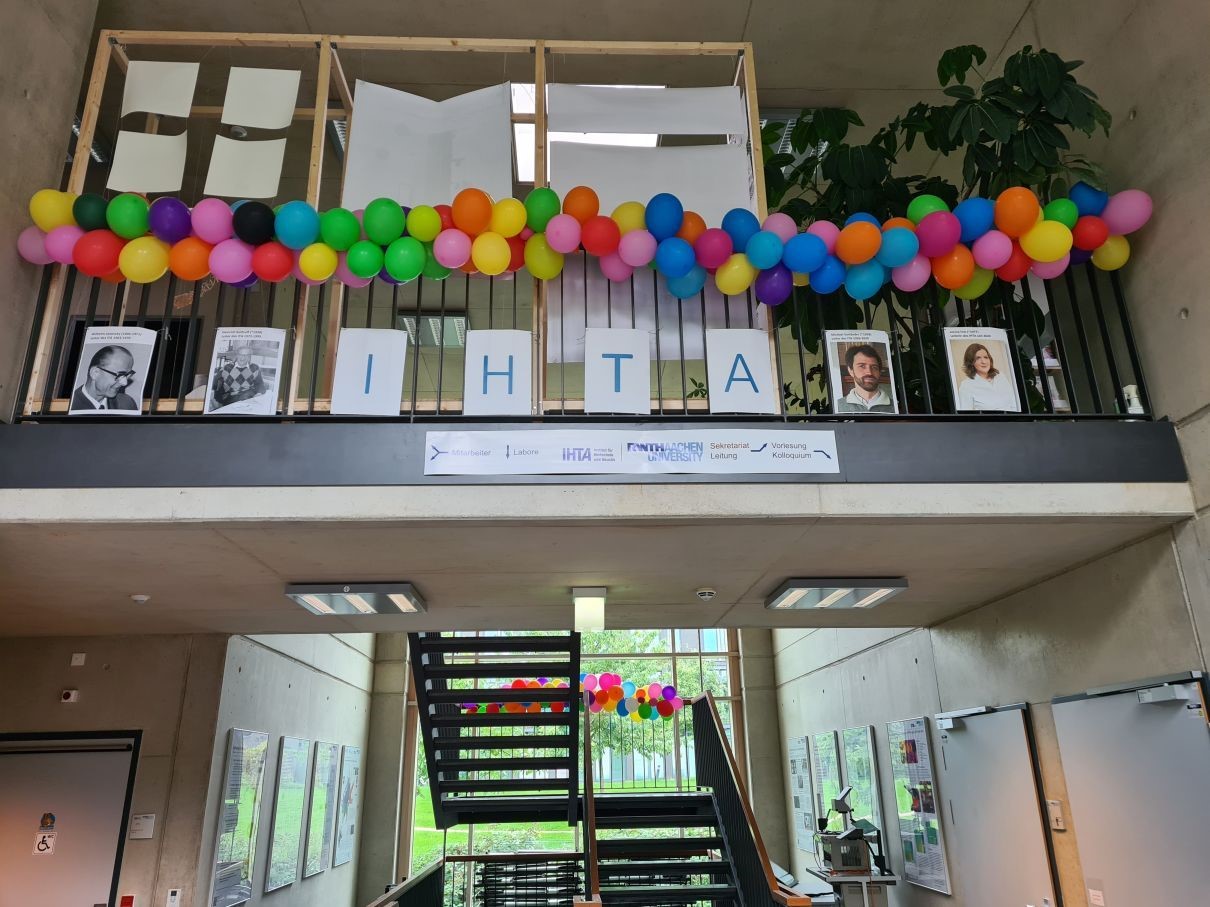
A special day for the Institute of Hearing Technology and Acoustics (IHTA/ITA), was created by all active and former members of the Institute on Saturday, August 19, 2023, when they celebrated its 60th anniversary.
The Institute of Technical Acoustics was officially founded on January 2, 1964 under the leadership of Professor Wilhelm Janovsky and since then has had an impressive history in the research and development of acoustic technologies and hearing techniques. Over the years, outstanding individuals have taken the helm of the Institute, including Professor Heinrich Kuttruff in 1972, Professor Michael Vorländer in 1996, and finally Professor Janina Fels, who has headed the current Institute of Hearing Technology and Acoustics since 2020.
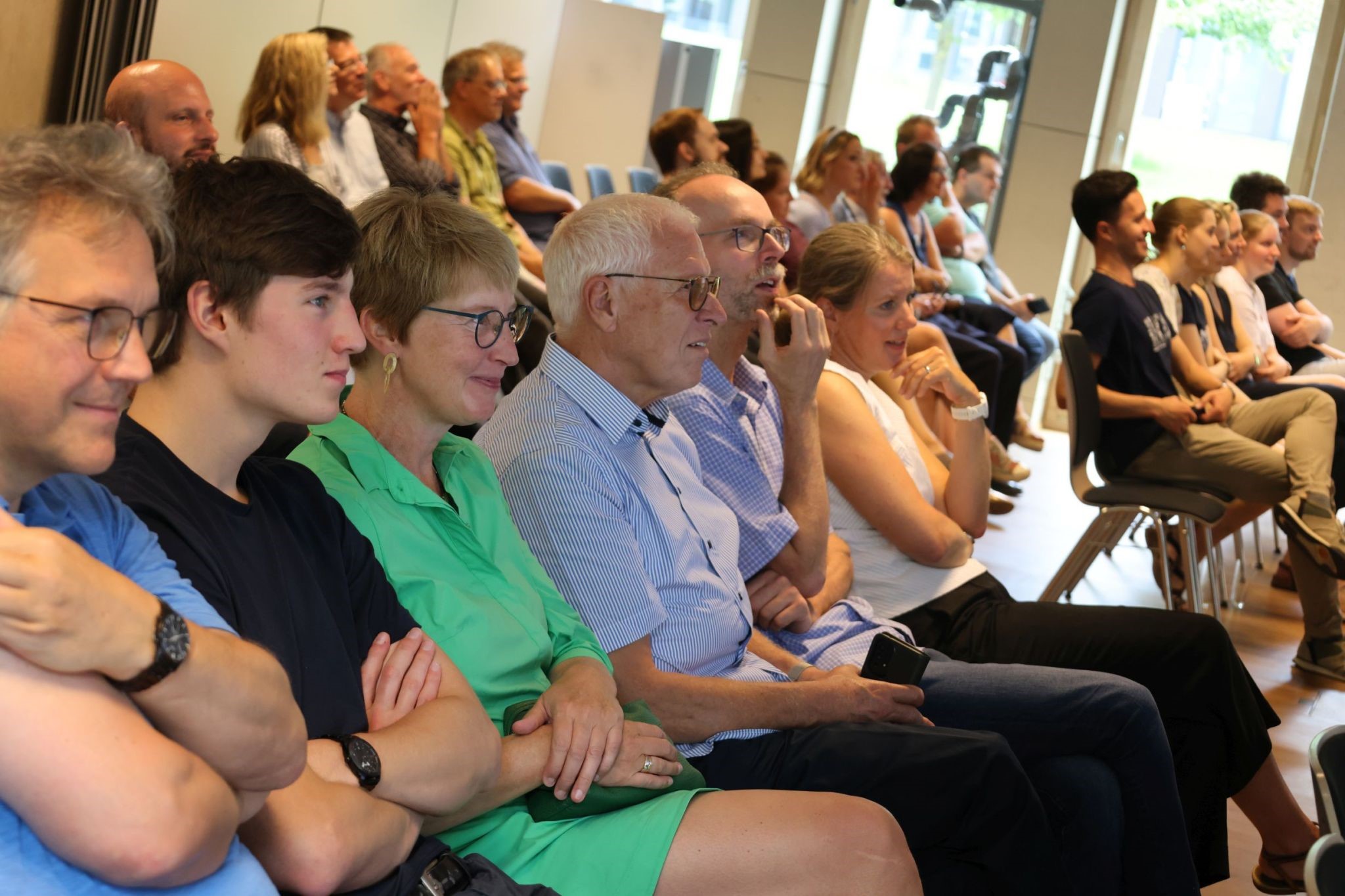
The anniversary celebration drew more than 120 former and active members of the institute who joined in a day full of festivities and activities. The event featured tours of the Institute’s facilities and demonstrations of current research topics highlighting advances and innovations in the field of acoustics and hearing technology. Of course, food, drinks and live music by the IHTA band were not to be missed to round out the festivities.
Special thanks were given to the Association for Technical Acoustics (GfTA), which contributed significantly to the organization and realization of this anniversary celebration. The GfTA is an association that focuses on the promotion of acoustics in Aachen, especially with regard to young talent. It made it possible that the event became an unforgettable event and supports and strengthens the community of the former and active members as well as the new generation in the field of acoustics.
© Institut für Hörtechnik und Akustik
For more on the anniversary celebration, visit the Acoustics Blog. Their goals as well as further information about the Association for Technical Acoustics and all current news and research projects of the Institute of Hearing Technology and Acousticsare available.
First AUDICTIVE Conference 2023
Professorin Janina Fels © Gottfried Behler, Janina Fels und Alexander Raake
A conference like a booster shot for the dynamics of basic research aiming to bridge the gap between auditory perception and cognition on the one hand and virtual reality on the other.
With recent developments in hardware and software technologies, audiovisual virtual reality (VR) has reached a high level of perceptual plausibility, which allows to overcome the limitations of simple laboratory situations. This creates good conditions to explore in a controlled way the ability to interact with a complex audiovisual scene – as a representation of an authentic life experience, for example, in a classroom, an open-plan office, or else as complex outdoor communication situations – depending on acoustic, visual, and other contextual factors. The applicability of the resulting scientific results in the immediate living environment, as well as their feedback for quality enhancement in interactive audiovisual virtual environments and quality assessment methods of the interface of the two disciplines are topics of the conference and the subject of research.
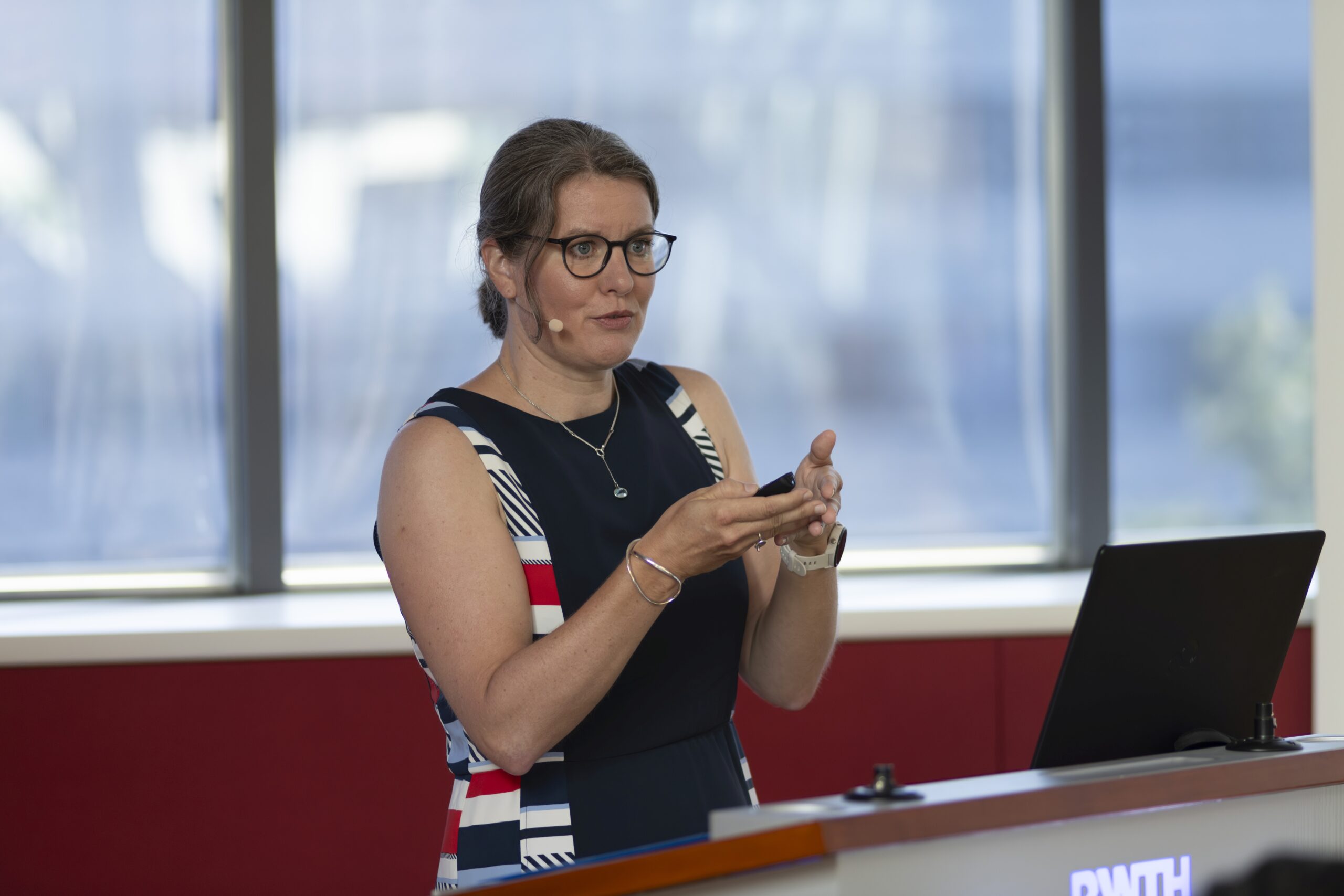
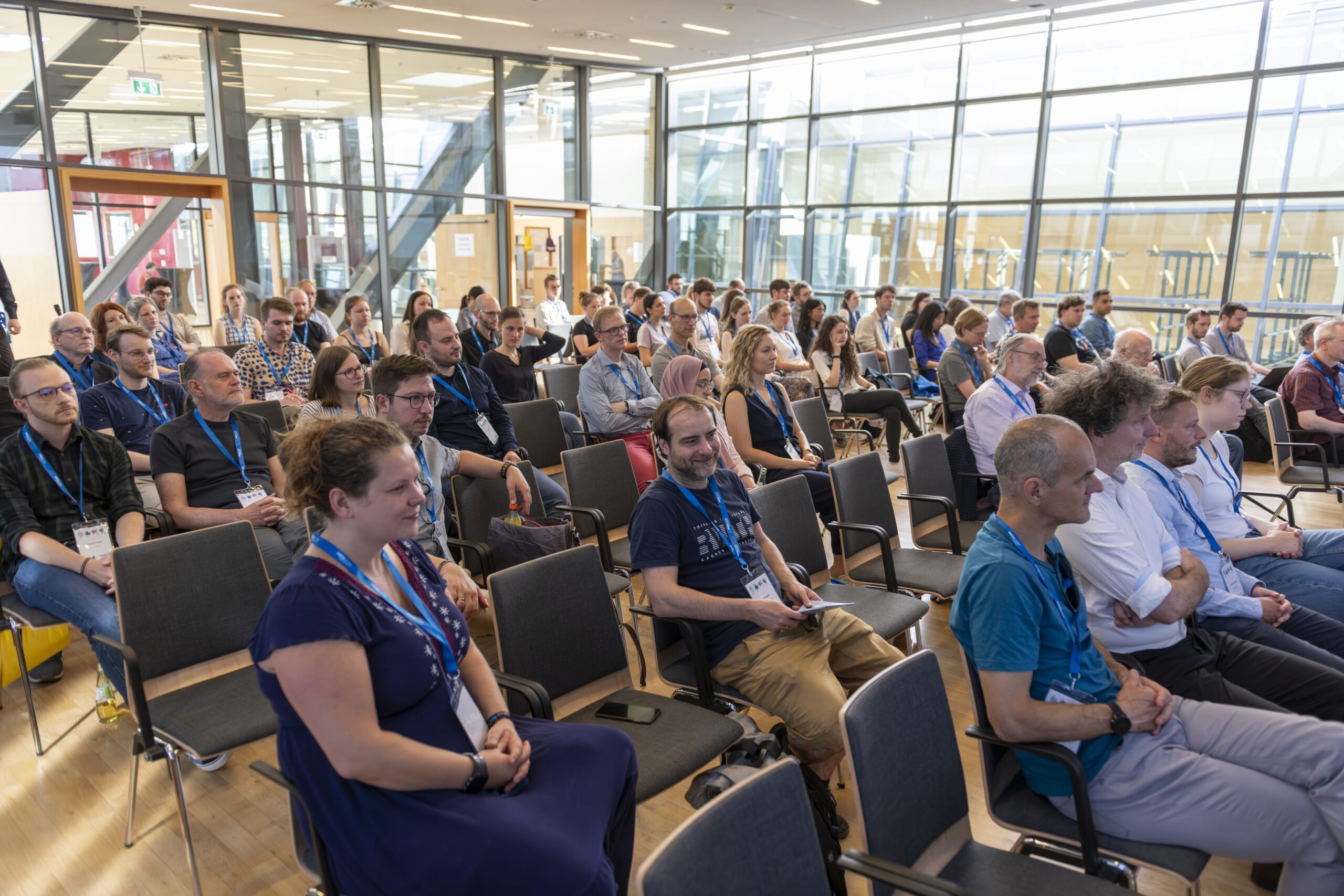
In response to these multidisciplinary challenges, university professor Janina Fels from the Chair of Hearing Technology and Acoustics at RWTH Aachen University invited researchers from the fields of acoustics, cognitive psychology and computer science to the first AUDICTIVE Conference from June 19 to 22, 2023. The goal here was to ensure interdisciplinary collaboration in basic research and to make possible synergy effects that cannot be achieved by a single discipline.
Currently, research efforts are mostly conducted separately within individual scientific research communities. This prevents cognitive psychology and acoustics from fully exploiting the enormous potential of VR to test and extend their existing theories in the more realistic, rich, and interactive virtual environments that can be created with the current state of the art in VR technology. At the same time, VR research can benefit from the knowledge of auditory perception and cognition to understand the important quality criteria that must be met to optimize user perception and cognitive performance, as well as subjective experience and (social) presence in a virtual environment. Due to the added value of the collaboration and research methods of the three disciplines, it is expected that research in the areas of hearing, auditory cognition, and VR can be elevated to a much higher level.
© Gottfried Behler, Janina Fels und Alexander Raake
The conference presentations offered fascinating insights into the future of human-computer interaction, auditory perception and virtual reality:
Professor Barbara Shinn-Cunningham of the Carnegie Mellon Institute elaborated in her presentation on how our brains perceive and evaluate the auditory world around us. It does this by using the interaction between voluntary top-down attention and involuntary bottom-up attention to focus on a speaker while processing new sound sources in our environment. In this talk, Professor Shinn-Cunningham explored how peripheral and central factors combine to determine communicative success, which is influenced by expected and unexpected sounds in everyday environments. She focused on the cortical networks that mediate competition for attention.
In his talk, Professor Frank Steinicke from the University of Hamburg presented the exciting development of the fusion of augmented reality (XR) and artificial intelligence (AI). He emphasized how these technologies enable seamless transitions between real and virtual worlds and have the potential to create immersive experiences.
Still, today’s immersive technology is decades away from the ultimate representation. However, the shortcomings of the human perceptual system, cognition, and motor skills can be exploited to bend reality to enable compelling immersive experiences. His talk presented several XR illusions that bring us closer to the ultimate fusion of intelligence and reality.
Professor Alexandra Bendixen from TU Chemnitz spoke about her research in auditory perception and sensing. She explained how she creates scenes with multiple interpretations and monitors listeners’ perception to investigate factors that stabilize auditory perception in ambiguous scenes. Recent combinations of auditory multistability with eye tracking have provided new insights into the interplay between auditory and visual multistability, with implications for our general understanding of scene analysis across all senses. When psychophysiological measurement logic is flipped, brain responses associated with sensory predictions can be used to evaluate certain aspects of virtual reality (VR), such as the appropriateness of VR latencies.
More information about the AUDICTIVE Conference is available on the official website.


