Kategorie: ‘Medizintechnik’
The future of hearing: Public lecture series at the “NeuroSensEar” workshop
What will the hearing aid of the future look like? And how can the human brain help us build more efficient computers? From March 3 to 5, 2026, as part of the workshop “NeuroSensEar – Neuromorphic Acoustic Sensors for Tomorrow’s High-Performance Hearing Aids”, the Institute of Communications Engineering at RWTH Aachen University invites you to three high-profile public lectures in Lecture Hall FT (Melatener Str. 23, 52074 Aachen).
The “NeuroSensEar” project is dedicated to one of the most exciting challenges in current technology: the development of neuromorphic acoustic sensor technology. The goal is to create powerful hearing aids that not only amplify sound better, but also act intelligently and energy-efficiently, just like our brains.
IENT
Accompanying the workshop, three renowned professors from our faculty will provide exclusive insights into their research.
Neuromorphic Computing: Energy Efficiency Through Biologically Inspired Hardware – Tuesday, March 3, 2026 | 5:00 p.m.
Prof. (ret.) Dr.-Ing. Dr. h.c. Rainer Waser
Information technology is facing a paradigm shift: classic, algorithmic data processing is increasingly being replaced by AI-based approaches. This is accompanied by a massive increase in energy consumption. To reduce this, institutes in Faculty 6 are researching neuromorphic systems that work much more efficiently than conventional architectures.
In the upcoming lecture, Prof. Waser will present the physical fundamentals of redox-based memristive components. The focus is on an interdisciplinary approach between materials science, electrical engineering, and computer science that uses the functioning of the human brain as a technical model.
In addition to hardware development, specific AI applications and their social opportunities and risks will be discussed. The lecture will conclude with a reflection on the question of whether future AI systems could develop consciousness.
Real hearing in the laboratory: Hearing research in interactive VR environments – Wednesday, March 4, 2026 | 2:00 p.m.
Prof. Janina Fels
Until now, research into auditory perception and cognitive processes has often relied on controlled but unrealistically simplified laboratory scenarios. The Institute of Hearing Technology and Acoustics (IHTA) at RWTH Aachen University is now using modern audiovisual virtual reality (VR) to simulate complex everyday situations in a realistic and interactive way.
This technology allows test subjects to interact with acoustic scenes in real time. This enables the precise investigation of hearing and attention in acoustically challenging environments such as open-plan offices or busy outdoor areas. A current research focus of the IHTA is the analysis of noise pollution, attention, and listening effort in elementary school classrooms.
The presentation highlights how VR methods bridge the gap between classical hearing psychology and real-life environments. It also discusses how interdisciplinary approaches from audiology and virtual reality are shaping the future of hearing research.
Glasses for the ears: Intelligent communication systems of the future – Thursday, March 5, 2026 | 9:00 a.m.
Prof. Dr.-Ing. Peter Jax
Smart hearables are increasingly evolving from simple headphones to intelligent microcomputers with integrated AI. As “glasses for the ears,” these systems act as personal assistants in the areas of consumer audio, health, and professional communication.
One key potential of this technology lies in 3D telephony. Spatial audio reproduction enables intuitive differentiation between speakers, which greatly enhances immersion and the sense of presence in digital meetings. The goal is communication that achieves the naturalness of a face-to-face conversation despite physical distance.
The presentation highlights current developments in research and industry and discusses the acoustic and technical challenges that must be overcome in the design of such innovative platforms.
Coffee, pizza and the elixir of the undead
A packed auditorium and lots of curious students: the first MINT Science Slam at RWTH Aachen University was a resounding success. Over 30 schools from the region brought their upper school classes to the MINT Science Slam to gain an entertaining insight into the diversity of MINT degree programmes.
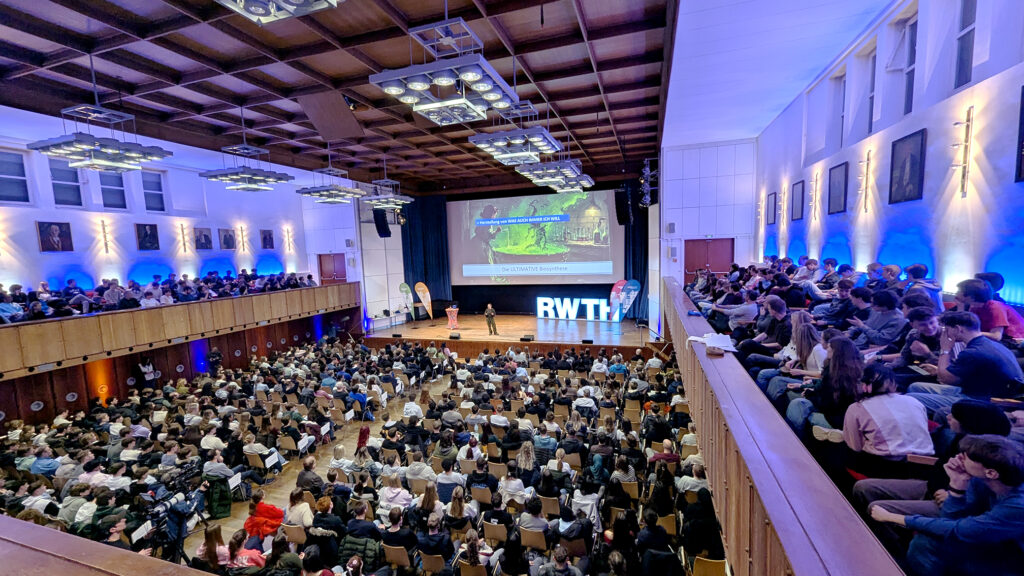
Daphne Heil und Melih Dal
The concept behind Science Slam is simple and effective: young scientists present their research topics in a clear, creative and enthusiastic manner in a maximum of ten minutes. The school pupils then evaluate the presentations themselves. This provides a lively insight into the diversity of STEM subjects, from mechanical engineering and biotechnology to medicine and electrical engineering.
Felix Walger was also there. In his slam, ‘Tailor-made medicine (technology) for everyone’, he impressively demonstrated how engineering research enables concrete social and medical applications. His presentation highlighted the central role that electrical engineering plays in the development of modern, personalised medical technology, a topic that met with great interest among the school pupils.
Alongside Walger, other young researchers took to the stage, including Rosario Othen, who won the slam with his presentation on coffee, paper and science, as well as contributions on topics such as cancer research, biotechnology, mathematics and sustainable energy. Knowledge transfer met entertainment.
The MINT Science Slam was first held as a joint project between the RWTH Knowledge Hub and the Central Student Advisory Service at RWTH Aachen University. In his welcoming speech, Professor Joost-Pieter Katoen, Vice-Rector for Teaching at RWTH, emphasised the importance of STEM subjects as key technologies for understanding our world. The slam was entertainingly moderated by Elena and Martin Lichtenthaler, supported by the Campus Dance Crew, who added to the excitement.
The STEM Science Slam impressively demonstrated how important low-threshold, inspiring formats are for study orientation and how diverse, relevant and exciting STEM research at RWTH is. For the Faculty of Electrical Engineering and Information Technology, Felix Walger’s participation was a successful example of how research, teaching and the promotion of young talent can be effectively combined.
European Research Council Funds Two Groundbreaking RWTH Projects
The RWTH Aachen celebrates a major success: Two researchers have been awarded the prestigious ERC Starting Grant, each receiving €1.5 million in funding over five years.
Prof. Dr. Daniel Truhn, senior physician at University Hospital RWTH Aachen and lecturer at the Chair of Image Processing at our Faculty of Electrical Engineering and Information Technology, where he teaches the lecture “Biomedical Engineering”, is launching SAGMA (Semantic-Aware Generative Medical AI), a project that rethinks AI in radiology by connecting specialized AI modules into an expert team that supports doctors with complex diagnoses.
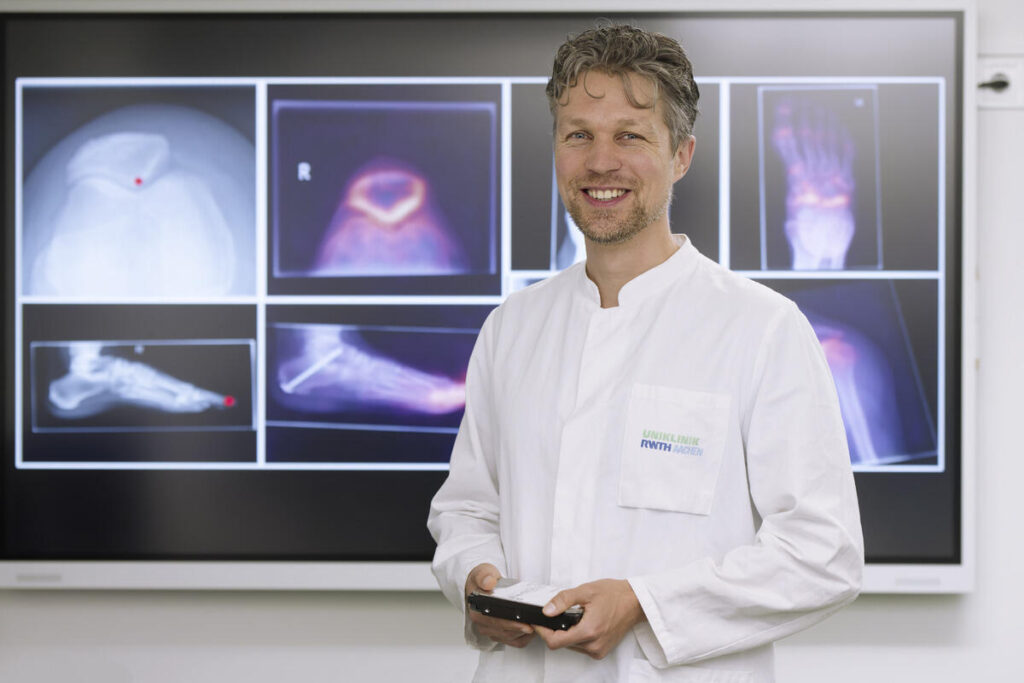
© Peter Winandy / RWTH Aachen University
A second grant goes to, Dr. Khiêm Vu Ngoc, at the Chair of Continuum Mechanics, is developing PolyFun (Polymer Mechanics through Function Spaces), a novel approach that combines physics and machine learning. His models are designed to be not only precise but also reliable and transparent – with wide-ranging applications in materials science, medicine, and robotics.
These grants highlight RWTH’s international recognition and the strong role of our Faculty in advancing AI and medical technology.
Klee Prize 2025: Controllable exoskeletons – Support instead of replacement
Dr.-Ing. Lukas Bergmann impresses with his award-winning doctoral thesis, in which he developed an active exoskeleton and a cooperative controller to support movement intentions in real time.
Dr.-Ing. Lukas Bergmann won second place in the Klee Prize 2025 with his doctoral thesis. He received the award for the development of an active exoskeleton that uses innovative control technology to record and support movement intentions.

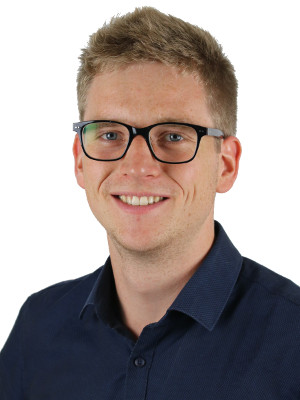
Dr.-Ing. Lukas Bergmann | @mediT
Worldwide, strokes result in mobility problems, and traditional treatments are frequently resource-intensive. Robotic rehabilitation systems can provide support when patients initiate movements independently. Dr. Lukas Bergmann explains:
„In the long term, research into exoskeletons can make a significant contribution to supporting people with musculoskeletal disorders. The exciting thing for me is that control technology has a very practical application here.“
It describes an active exoskeleton that enables safe coupling between humans and devices, as well as a cooperative controller that supports joint torques in real time.
It is also worth mentioning that Dr.-Ing. Sonja Ehreiser (mediTEC, RWTH Aachen University) won first place in the Klee Prize 2025 for her dissertation on improving the care of patients with knee prostheses.
The VDE, a leading technology organization in Europe, has been promoting innovation and technological progress for over 130 years. With the Klee Prize 2025, the VDE honors outstanding research work that offers great benefits for patients and shapes the future of medical technology.
The VDE (VDE Association for Electrical, Electronic & Information Technologies) is based in Frankfurt am Main. More information at VDE Website
Source: VDE Press Release
Professor Janina Fels is the designated president of the German Acoustical Society
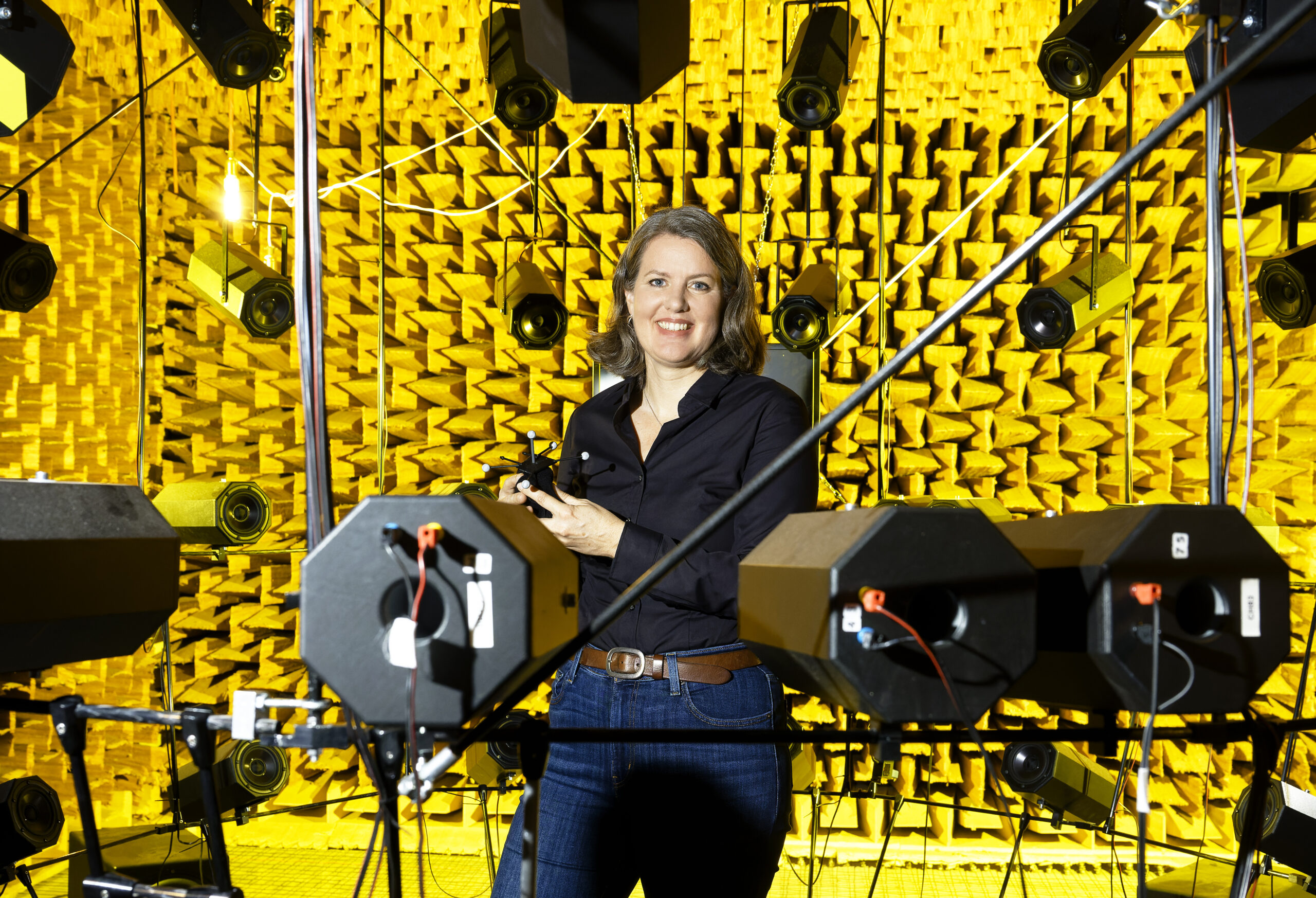
Professor Fels in the soundproofed laboratory, surrounded by loudspeakers at different room heights. © Peter Winandy
We are delighted and honoured to announce that Professor Janina Fels, Head of the Institute for Hearing Technology and Acoustics (IHTA) at the Faculty of Electrical Engineering and Information Technology, has been elected Vice President and designated President of the German Acoustical Society (DEGA).
Professor Fels will begin her term as Vice President on 1 July 2025 and will be appointed President of DEGA in 2028 in accordance with the statutes. This election is not only a personal success for her, but also a significant recognition of the excellent work in the field of acoustics at RWTH Aachen University. With her scientific expertise, which ranges from acoustic virtual reality to medical and psychoacoustics to room and building acoustics, she has had a lasting influence on the field and has built up an excellent reputation both nationally and internationally.
However, her path also began with a degree in electrical engineering at the RWTH, before Professor Janina Fels completed her doctorate with honours at the Institute of Technical Acoustics under the title ‘From Children to Adults: How Binaural Cues and Ear Canal Impedances Grow’.
‘The election of Professor Fels to head this important institution is a strong sign of the visibility and relevance of acoustics research at RWTH Aachen – and an incentive for young scientists to continue along this path,’ says Martina Dahm, Managing Director of the Faculty of Electrical Engineering and Information Technology.
The German Acoustical Society (DEGA) is the central scientific society for acoustics in the German-speaking world. It was founded in 1988 and currently has around 1,900 individual members and more than 70 sponsoring institutions. DEGA promotes interdisciplinary cooperation in acoustics, organises the renowned annual DAGA conference, awards prizes for scientific excellence and is internationally networked in associations such as the European Acoustics Association (EAA) and the International Commission on Acoustics (ICA).
We warmly congratulate Professor Janina Fels on her election and wish her every success for the coming term, scientific impetus and a continued inspiring contribution to shaping the acoustics community.
Further information on acoustics research can be found on the IHTA and DEGA homepages.
Neuromorphic Hardware: Kick-off event in January
The NeuroSys future cluster at RWTH enters its second phase
At the beginning of this year, the Cluster4Future NeuroSys (Neuromorphic Hardware for Autonomous Artificial Intelligence Systems) is entering its second phase.
The Clusters4Future initiative is part of the German government’s High-Tech Strategy 2025 and is funded by the Federal Ministry of Education and Research.
At the kick-off event at the end of January, more than 90 participants discussed their ideas and technologies for the development of neuromorphic hardware in the Super C at RWTH Aachen University.
Neuromorphic systems are modelled on the basic building blocks of the brain, neurons and synapses. Neuromorphic hardware is a resource-saving but powerful basis for energy-intensive artificial intelligence research operations. The aim is to create a technology basis for neuromorphic components and alogrithms, building on the basic research carried out at RWTH Aachen University and the Jülich Research Centre. The coordinator of the future cluster is Professor Max Lemme, Head of the Chair of Electronic Components at RWTH Aachen University.
Learning neuromorphic AI chips could soon enable energy-efficient on-site data processing and thus offer promising prospects for future working methods, smart city concepts and the Internet of Things. Various contributions from autonomous driving to learning systems and personalised medicine will also be delivered.
The second phase of the project is planned for three years and will see RWTH collaborating with a wide range of experts from research and industry.
Further information on the project can be found here
‘Colloquium Biomedical Engineering and Related Fields’ – Invitation to the current lecture
The lecture, entitled ‘Mobility in older adults‘, will be moderated by Professor Steffen Leonhardt, Chair holder of the Medical Information Technology (MedIT) at the Helmholtz Institute for Biomedical Engineering at RWTH Aachen University, on Thursday, 30 January 2025.
Professor Wiebren Zijlstra, Head of the Institute of Movement and Sport Gerontology at the German Sport University Cologne, will deliver a presentation on factors which underly age-related changes in mobility based on experimental laboratory-based studies as well as studies of real-life mobility.
In the abstract that precedes the lecture, Professor Zijlstra outlines the various challenges presented by mobility in daily life, such as finding the way to a target location, while ensuring safe progression by continuously perceiving the environment and adapting locomotion if needed, e.g. in order to avoid potential collisions with obstacles, other pedestrians, or traffic. Such adaptive control of locomotion requires physical and cognitive functions and, even without overt pathological conditions, age-related changes in functioning may cause older persons to show a reduced mobility and an increased fall risk. Mobility limitations are associated with reduced quality-of-life, a plethora of negative health outcomes, and an increased morbidity and mortality. According to Professor Zijlstra, it is important to understand factors that contribute to an age-related reduction in mobility and when possible develop effective interventions.
„Results of recent studies show that physical capacity alone is poor in predicting older adults’ mobility performance in real-life. Other studies show that age-related changes in cognition, especially the so-called executive functions, are associated with a reduced mobility and an increased fall-risk,“ the specialist points out.
Executive functions are crucial for adaptive locomotion, as they enable a person to monitor behaviour in relation to the environment and to adapt behaviour when necessary. By focusing on two key components of executive functions (cognitive flexibility and inhibitory control), this talk will also present recent results from studies that aim to better understand the role of cognitive control during mobility-related tasks.
Despite an abundance of mobility studies and increasing insight in factors that negatively impact on mobility in older persons, it is yet unclear to what degree the combination of these factors predicts real-life mobility, Professor Zijlstra continues in his apstract. Only a limited number of recent studies considered various potential mobility determinants by combining measures from physical, cognitive, and psycho-social functioning.
„These studies showed that real-life mobility cannot yet be predicted very well. Taken together, these findings necessitate more well-focused studies of real-life mobility in various groups of older adults, as well as experimental studies of older adults’ performance of complex mobility tasks which resemble daily life conditions,“ he concludes.
The ‘Colloquium on Biomedical Engineering and Related Areas’ is a regular series of events organised by RWTH Aachen University. The objective of the series is to facilitate interdisciplinary education in these fields and to encourage the interdisciplinary exchange of ideas.
A cordial invitation is extended to all students, clinicians, engineers and scientists to attend this illuminating lecture and engage in discourse with experts in the field of biomedical engineering.
The event will take place from 5 to 5:45 pm at the Helmholtz Institute for Biomedical Engineering at RWTH Aachen University, Pauwelsstraße 20, 52074 Aachen, Germany, seminar room 2.70. It will be coordinated by Prof. Dr. Klaus Radermacher, Chair of Medical Engineering, RWTH Aachen University. For further information please contact the secretariat at meditec@hia.rwth-aachen.de or call +49-(0)241-80 23870.
‘Colloquium Biomedical Engineering and Related Fields’ – Invitation to the current lecture
The lecture, entitled ‘Electrical impedance of muscle: from muscular dystrophy to Mars’, will be moderated by Professor Steffen Leonhardt, Chair holder of the Medical Information Technology (MedIT) at the Helmholtz Institute for Biomedical Engineering at RWTH Aachen University, on Wednesday, 25 September 2024.
In his presentation, Dr Seward B. Rutkove, Nancy Lurie Marks Professor of Neurology, Harvard Medical School Chair, Department of Neurology, Beth Israel Deaconess Medical Center, will talk about innovations in the field of skeletal muscle electrical impedance. His lecture will focus on primary disorders that impact muscle, including muscular dystrophies, amyotrophic lateral sclerosis, muscle injury and the effects of unloading, such as those caused by microgravity or partial gravity. He will then discuss methods and technologies for measurement, and review the data collected in a wide range of conditions in both human and animal models.
„It is necessary to clarify which analytical approaches are currently available and in which direction future research will go“,
indicates Dr Rutkove in his abstract, setting the scene for the discussion that will follow.
The ‘Colloquium on Biomedical Engineering and Related Areas’ is a regular series of events organised by RWTH Aachen University. The objective of the series is to facilitate interdisciplinary education in these fields and to encourage the interdisciplinary exchange of ideas.
A cordial invitation is extended to all students, clinicians, engineers and scientists to attend this illuminating lecture and engage in discourse with experts in the field of biomedical engineering.
The event will take place from 5 to 5:45 pm at the Helmholtz Institute for Biomedical Engineering at RWTH Aachen University, Pauwelsstraße 20, 52074 Aachen, Germany, seminar room 2.70. It will be coordinated by Prof. Dr. Klaus Radermacher, Chair of Medical Engineering, RWTH Aachen University. For further information please contact the secretariat at meditec@hia.rwth-aachen.de or call +49-(0)241-80 23870.
Team AixSense successful in the SensUs competition 2024
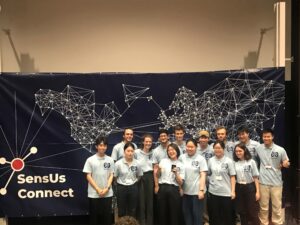
This years AixSense team at the SensUs competition 2024 ©RWTH
The RWTH team impresses with its biosensor for monitoring kidney failure
For the seventh time already, the 15 students of the AixSense team successfully took part in the SensUs competition, organised by Eindhoven University of Technology. This year, 18 teams competed against each other in the international competition with their point-of-care (PoC) biosensor solutions for the real-time detection of creatinine for monitoring acute kidney failure. The AixSense team also included 3 students from the Japanese partner university Tokyo Institute of Technology.
This year, AixSense won three out of five categories with its PoC and also took second place in the technological innovation and technical feasibility categories. Particularly noteworthy is the performance in the area of public relations and scientific communication: the team from Aachen received the Vlog Award for their video diary and AixSense also won the public voting for the Public Inspirations Award.
The Institute for Materials in Electrical Engineering 1 at RWTH Aachen University has been involved in the competition since 2018. Every year, Professor Sven Ingebrandt and Dr. Vivek Pachauri put together a team from various degree programmes. The team is supported by various structures and profile areas at RWTH, such as the Lab center for micro and nanotechnology (ZMNT), which advises the team on technical issues.
The annual competition encourages international and interdisciplinary collaboration in fields such as electrical engineering and micro-nanotechnology, transformative materials, biology, engineering and medical sciences, among others.
Interested parties can apply for the SensUs 2025 competition at pachauri@iwe1.rwth-aachen.de until November 2024.
New lecture in the series ‘Colloquium Biomedical Engineering and Related Fields’
© Andreas Endermann
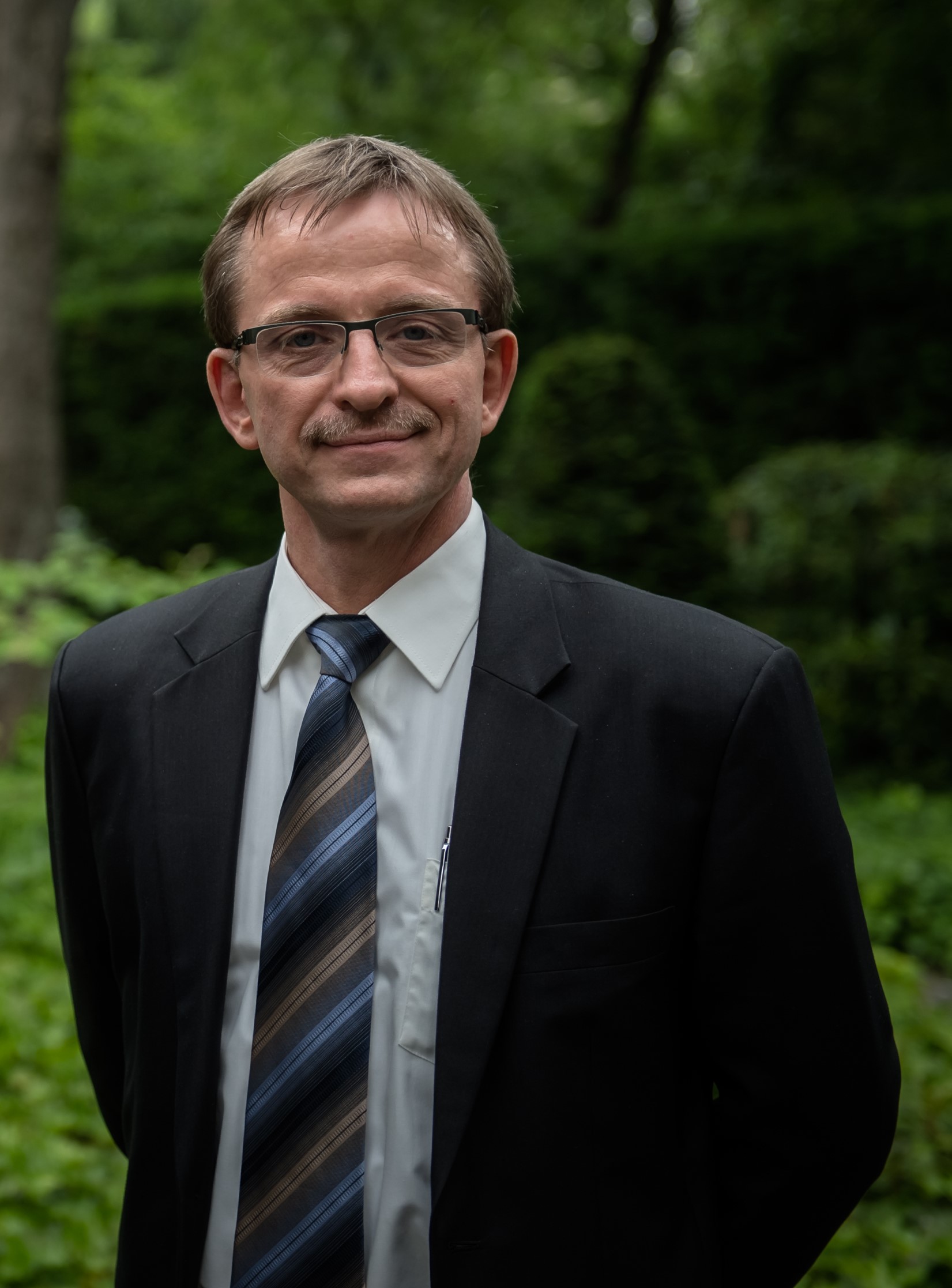
Professor Steffen Leonhardt, holder of the Chair of Medical Information Technology (MedIT) at the Helmholtz Institute for Biomedical Engineering at RWTH Aachen University, will moderate the new lecture: ‘Continuous In-Vehicle Health Monitoring Enabled with Multimodal Signal Fusion’ on 11 July 2024.
We are delighted to welcome Dr Joana M. Warnecke from the Peter L. Reichertz Institute for Medical Informatics at the Technical University of Braunschweig and the Hannover Medical School. Dr Warnecke will present her pioneering research into continuous health monitoring in vehicles. Her work focuses on the development of a redundant sensor system that enables reliable measurement of heartbeat and respiration rate. These systems use a Convolutional Neural Network (CNN) based architecture for data fusion and take into account additional sensors such as steering wheel angle and acceleration to improve signal quality.
“Our findings indicate that over half of the driving time can be utilized for in-vehicle heartbeat and respiratory rate monitoring, highlighting the efficiency and practicality of the proposed approach,”
states Warnecke.
This technology could make a significant contribution to the early detection of cardiovascular and chronic respiratory diseases by being seamlessly integrated into everyday life.
The ‘Colloquium on Biomedical Engineering and Related Areas’ is a regular series of events organised by RWTH Aachen University. The aim of the series is to provide an interdisciplinary education in these fields and to promote the interdisciplinary exchange of ideas. All students, clinicians, engineers and scientists are invited to attend this exciting lecture and exchange ideas with experts in the field of biomedical engineering.
The event will take place from 5 to 5:45 pm at the Helmholtz Institute for Biomedical Engineering at RWTH Aachen University, Pauwelsstraße 20, 52074 Aachen, Germany, seminar room 2.70. It will be coordinated by Prof. Dr. Klaus Radermacher, Chair of Medical Engineering, RWTH Aachen University. For further information please contact the secretariat at meditec@hia.rwth-aachen.de or call +49-(0)241-80 23870.


