
Kategorie: ‘Services’
FDM Netzwerktreffen September 2026
Quelle: eigene Darstellung
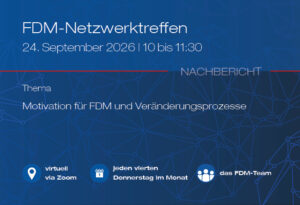
Am 24. September fand das monatliche FDM Netzwerktreffen statt, bei dem Data Stewards und weitere FDM-Interessierte die Möglichkeit haben, sich zu FDM-spezifischen Themen auszutauschen.
Bei diesem Treffen ging es um die Frage, wie Data Stewards Wissenschaftler*innen dazu motivieren können, FDM-Angebote zu nutzen und Veränderungsprozesse vorantreiben können. Es wurde sich über Herausforderungen und Best Practice Beispiele ausgetauscht.
Medienbruch überbrückt – RDMO lernt mit Coscine zu sprechen
Quelle: Eigene Darstellung
Beim Übergang von einer Phase im Forschungsprozess zur nächsten begegnen Wissenschaftler*innen häufig Medienbrüchen. Beispielsweise, wenn sie in RDMO ihren Datenmanagementplan (DMP) finalisiert haben und als Nächstes ein entsprechendes Coscine-Projekt zur Datenspeicherung und -verwaltung erstellen wollen. Bisher mussten die Projektmetadaten dafür manuell übertragen werden. Durch einen Inkubator mit DMP4NFDI hat RDMO nun gelernt, mit Coscine zu sprechen und die Metadaten direkt zu übergeben. Wie genau das funktioniert und welche Voraussetzungen dafür erfüllt sein müssen, beschreibt dieser Blogbeitrag.
Coscine zeigt sich mit neuem User Interface
Quelle: Eigene Darstellung
Seit mittlerweile mehr als drei Jahren befindet sich Coscine im Regelbetrieb und wird von rund 3900 Forschenden verschiedener Hochschulen der DH.NRW sowie teilnehmender NFDI-Konsortien für das Forschungsdatenmanagement genutzt. Einen Überblick über die bisherige Entwicklung von Coscine gibt der Blogbeitrag „Happy Birthday, Coscine!“.
Mit der wachsenden Zahl an Nutzenden und den vielfältigen Anwendungsszenarien entwickeln sich auch die Anforderungen an die Plattform weiter. Daher wird das User Interface (UI) von Coscine grundlegend überarbeitet. Ziel der Anpassungen ist es, die Nutzung der Plattform übersichtlicher, intuitiver und nutzerfreundlicher zu gestalten.
Aktualisierte Barrierefreiheitserklärungen für Coscine

Quelle: Eigene Darstellung
Gute digitale Angebote zeichnen sich nicht nur durch ihre Inhalte aus, sondern auch dadurch, dass sie von möglichst vielen Menschen genutzt werden können. Deshalb wird auch die Barrierefreiheit der Coscine-Webseite und der Dokumentation kontinuierlich verbessert. Die aktualisierten Barrierefreiheitserklärungen aus März 2026 ersetzen die bisherigen Erklärungen aus 2024 und geben Einblick in den aktuellen Stand dieser Arbeiten.
FDM-Weiterbildungsprogramm – Angebote im zweiten Halbjahr 2026

Quelle: Eigene Illustration
Das FDM-Team der RWTH Aachen bietet ein umfangreiches Weiterbildungsprogramm rund um das Forschungsdatenmanagement (FDM) an. Die Angebote richten sich an Forschende, Data Stewards sowie alle Interessierten, die sich mit dem strukturierten Umgang mit Forschungsdaten beschäftigen oder ihr Wissen vertiefen möchten. In diesem Blogbeitrag geben wir Ihnen einen Überblick, welche Weiterbildungen in der zweiten Jahreshälfte anstehen.
Zehn Jahre FAIR-Prinzipien
Quelle: eigene Darstellung
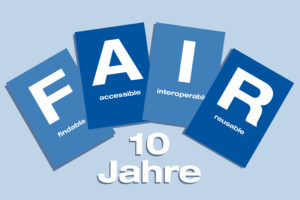
Die FAIR-Prinzipien sind ein Grundbegriff des Forschungsdatenmanagements (FDM). Vor zehn Jahren wurden sie erstmals in der Fachzeitschrift Scientific Data veröffentlicht und haben sich seitdem als internationaler Standard für den nachhaltigen Umgang mit Forschungsdaten etabliert. Auch FDM-Servies an der RWTH Aachen liegen die FAIR-Prinzipien zugrunde und unterstützen Forschende somit dabei, ihre Forschungsdaten über den gesamten Forschungsprozess hinweg FAIR zu gestalten.
Wir nehmen das Jubiläum zum Anlass, um die FAIR-Prinzipien und ihre Entstehung in diesem Blogbeitrag genauer zu betrachten.
FDM-Checkliste: Gut vorbereitet in den Urlaub

Quelle: Eigene Darstellung
Die Urlaubszeit steht vor der Tür und damit für viele Forschende eine wohlverdiente Pause. Doch bevor der Laptop für einige Tage oder Wochen ruht, lohnt sich ein kurzer Blick auf das Forschungsdatenmanagement (FDM). Mit wenigen Vorbereitungen lässt sich sicherstellen, dass Forschungsdaten geschützt sind, Projekte auch während der Abwesenheit reibungslos weiterlaufen können und Vertretungen alle notwendigen Informationen zur Hand haben. In diesem Beitrag geben wir einen Überblick über die wichtigsten Maßnahmen, die Sie vor dem Urlaub im Forschungsdatenmanagement berücksichtigen sollten.
Forschungsdaten veröffentlichen: Diese Fragen sollten Sie im Vorfeld klären

Quelle: Eigene Darstellung
Im vorherigen Beitrag „Creative Commons-Lizenzen einfach erklärt“ haben wir erläutert, wie Creative Commons-Lizenzen funktionieren und welche Möglichkeiten sie bieten, wissenschaftliche Werke zur Nachnutzung freizugeben.
Die Wahl einer geeigneten Creative-Commons-Freigabe ist jedoch nur ein Schritt auf dem Weg zur Veröffentlichung von Forschungsdaten. Bereits im Vorfeld sollten verschiedene rechtliche und organisatorische Fragen geklärt werden. Dazu gehört beispielsweise, ob die Forschungsdaten überhaupt veröffentlicht werden dürfen, ob an ihnen Schutzrechte bestehen und welche Freigabe oder welches Repositorium im jeweiligen Fall geeignet ist.
Dieser Beitrag gibt einen Überblick über die wichtigsten Fragestellungen und zeigt, worauf Forschende bei der Veröffentlichung ihrer Forschungsdaten achten sollten.
Creative Commons-Lizenzen einfach erklärt

Quelle: creativecommons.org
Ob wissenschaftliche Publikation, Präsentation, Grafik oder Lehrmaterial: Wer Forschungsergebnisse veröffentlicht, sollte festlegen, wie diese von anderen genutzt werden dürfen. Genau hier kommen Lizenzen ins Spiel.
Sie schaffen Klarheit darüber, ob Inhalte weitergegeben, bearbeitet oder auch kommerziell genutzt werden dürfen. Damit fördern sie die Nachnutzung wissenschaftlicher Ergebnisse und unterstützen die Ziele von Open Science.
Ein international etabliertes Lizenzsystem sind die Creative Commons-Lizenzen (CC-Lizenzen). Doch was bedeuten die verschiedenen Kürzel eigentlich und welche Lizenz eignet sich für welchen Zweck?
Wohin mit meinen Forschungsdaten? Eine Entscheidungshilfe für die RWTH

Quelle: Eigene Darstellung
Spätestens, wenn Forschungsdaten strukturiert gespeichert, archiviert oder veröffentlicht werden sollen, stellt sich eine wichtige Frage: Wo sind die Daten am besten aufgehoben?
An der RWTH stehen Forschenden verschiedene Services zur Verfügung. Gleichzeitig existieren zahlreiche disziplinspezifische Repositorien, die auf die Bedürfnisse einzelner Fachgebiete zugeschnitten sind. Die richtige Wahl hängt dabei weniger vom Dateiformat als vielmehr vom Ziel ab: Soll aktiv mit den Daten gearbeitet werden? Müssen sie langfristig aufbewahrt werden? Oder sollen sie veröffentlicht und nachnutzbar gemacht werden?
Sprache:
Folgen Sie uns