
Kategorie: ‘Support, Services & Updates’
Limited Availability of IdM
Source: Own illustration
It is that time of year again: The semester change is just around the corner, and with it, another comprehensive maintenance of the central user dashboard of RWTH Aachen University – the Identity Management (IdM) – is taking place. This involves processing a large amount of changed data so that the system can continue to run smoothly in the upcoming summer semester of 2022.
For this reason, the system will have limited availability from Thursday, March 31, 2022 from 4pm until Monday, April 04, 2022 at 9am.
Social Media @ IT Center
Become part of our network!
Source: Own illustration
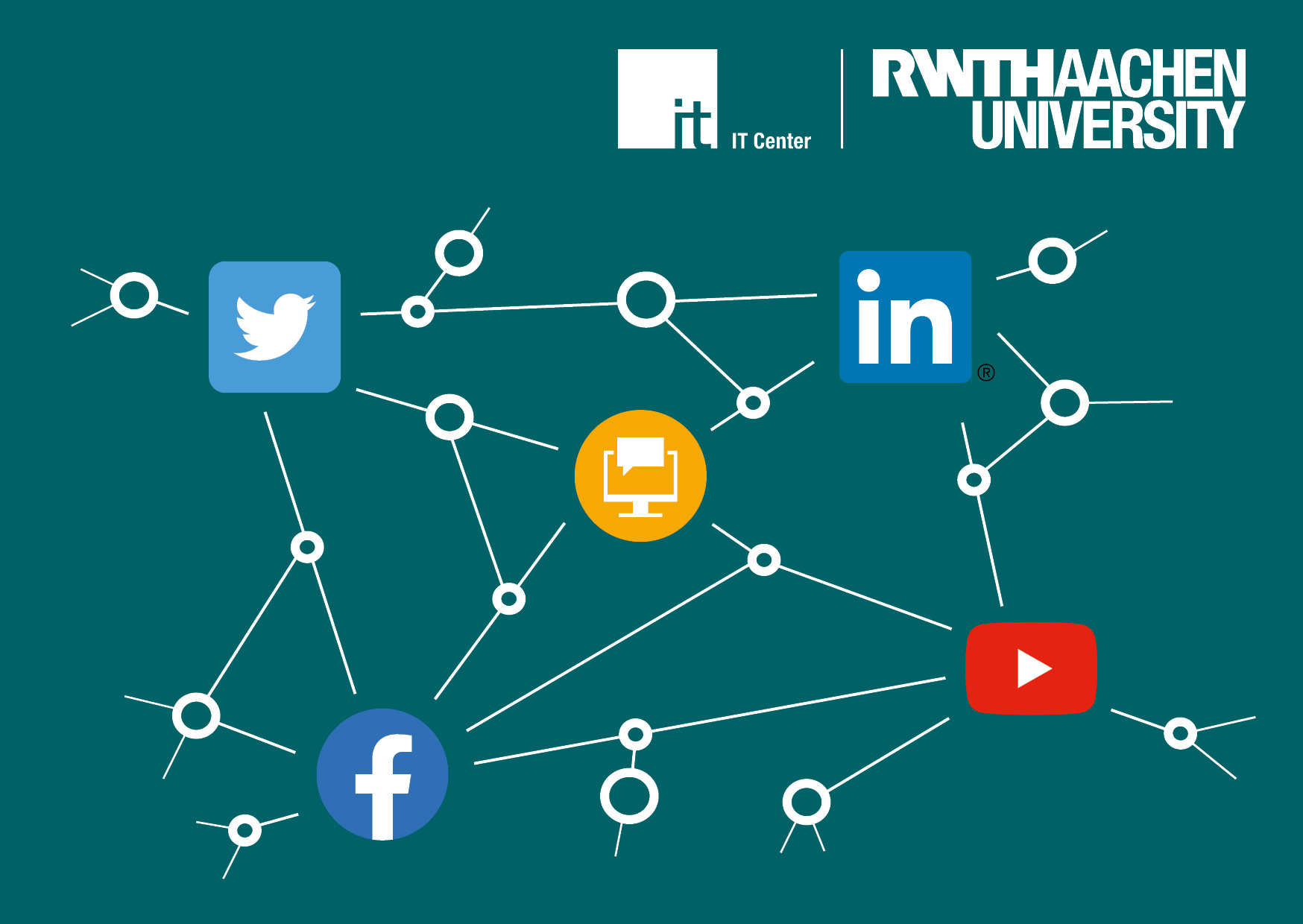
For more than two years now, the motto has been: Social Media @ IT Center! Since October 01, 2019 we are on the road for and with you on Facebook, LinkedIn, Twitter and YouTube.
Become part of our network and follow us on our social media channels in order to never miss an update from #ITCenter! Read the rest of this entry »
Award received – SPEC Contributor Award

SPEC Contributor Award of Sandra Wienke.
Source: Own illustration
The SPEC activities of the RWTH
In October 2021, the Standard Performance Evaluation Corporation (SPEC) released the new SPEChpc™ 2021 (application-oriented) benchmark suites. SPEC was formed in 1988 to establish industry standards for measuring computer performance. Since then, SPEC has become the largest and most influential benchmark consortium in the world. Read the rest of this entry »
New features in IT Center Help
Source: Own illustration
Practical step-by-step instructions, useful quicklinks, helpful information or FAQ – our documentation portal IT Center Help provides you with answers to countless questions about the IT Center’s services for studying, teaching and research.
Since its launch in July 2020, we have continuously optimized our portal based on your feedback and adapted it to your needs. Today, we would like to introduce you to two new features in IT Center Help, which you can now put through their paces. Read the rest of this entry »
RDM Blog – We are now bilingual

Source: Freepik

Source: Pexels
Almost 12,000 people from more than 125 countries currently study, research, teach and work at RWTH Aachen University. This living internationality at RWTH Aachen University is accompanied by strategies, measures and services to promote the internationality of studies, teaching and research. RWTH Aachen sees itself as a member of a global scientific community. For this reason, we are now proud to announce that our RDM Blog can now also be read in English.
Always up-to-date with the status message portal!

Source: Freepik
Error message. Nothing works anymore?
Have you ever woken up in the morning, started to study or work on your PC, but then you got an error message and didn’t know what was going on? We have the solution! Especially for this purpose, we have the status message portal!
FAIR-Data Spaces – How does locally stored data get into the cloud-based data space?

Source: Freepik
On our FDM blog, we recently shared news about Gaia-X and FAIR-Data Spaces. FAIR-Data Spaces is a cloud-based data space for science and business, made possible and developed with the help of collaboration between Gaia-X and the NFDI.
The project
- designs the roadmap for collaboration between the two initiatives,
- clarifies ethical and legal frameworks for data exchange between science and industry,
- develops common technical principles
- and demonstrates the use of Gaia-X technologies for making research data available and usable along FAIR principles in different scientific disciplines and industries.
But how does local data get into the cloud-based data space? To show this data space from a user perspective, we would like to explain the process steps and the technical background in more detail.
Backdoors: Access Through an Alternative Access Point

Source: Pixabay
In life, sometimes it can be very useful to have a plan B or to keep a backdoor open. But would you leave your house and hide the keys to the backdoor under the doormat? For burglars, this setup would probably be an easy target. In IT as well, so-called backdoors are a very popular target for hackers. However, these backdoors are much more tricky and discreet than an open door or hidden keys under a doormat. Because even when the original breach of security, such as an open window, no longer exists, cybercriminals can still get in and out as they please via the implemented backdoor.
Data backup made easy

Source: Unsplash
With the year 2021 nearing its end, a whole new year full of possibilities is about to begin. Once again, the time has come for some good resolutions. This year has clearly shown us how essential a good IT infrastructure is. Day after day, huge amounts of data are created, processed and shared, both privately and professionally. But what if this data unexpectedly disappears? While many people may be aware of the danger of data loss, only a few actively take precautions to protect their data from such a loss in a private context. Frequent backups aim to prevent data loss and are an essential aspect of IT security.
The Metadata Form – Migrate Archive Nodes via Metadata

Source: Unsplash
We know it too well ourselves from moves of all kinds: if we know what is contained in the boxes, it is much easier for us to decide whether we still want to keep certain contents or whether we can say goodbye to them. For this reason, we at least write on the box what is included and where it belongs.
The same goes for data that we want to archive, for example. We don’t have boxes available, but we can “label” the nodes to be archived with metadata. To do this, the appropriate node contacts receive a dedicated link to a metadata form about what exactly belongs to an archive node. What this is all about, you can read in this article.