
“CAMPUS-Office for Students” Says Goodbye to a Well-Deserved Retirement
Next Monday, 16.12.2019, we say goodbye to CAMPUS-Office of the RWTH. The former campus management system for planning studies and teaching will be finally switched off this weekend. Its functions have been replaced by RWTHonline since the winter semester 2018. What this means for you and what you should do before we say “Bye-bye CAMPUS-Office” on Monday, you will find out in this article.
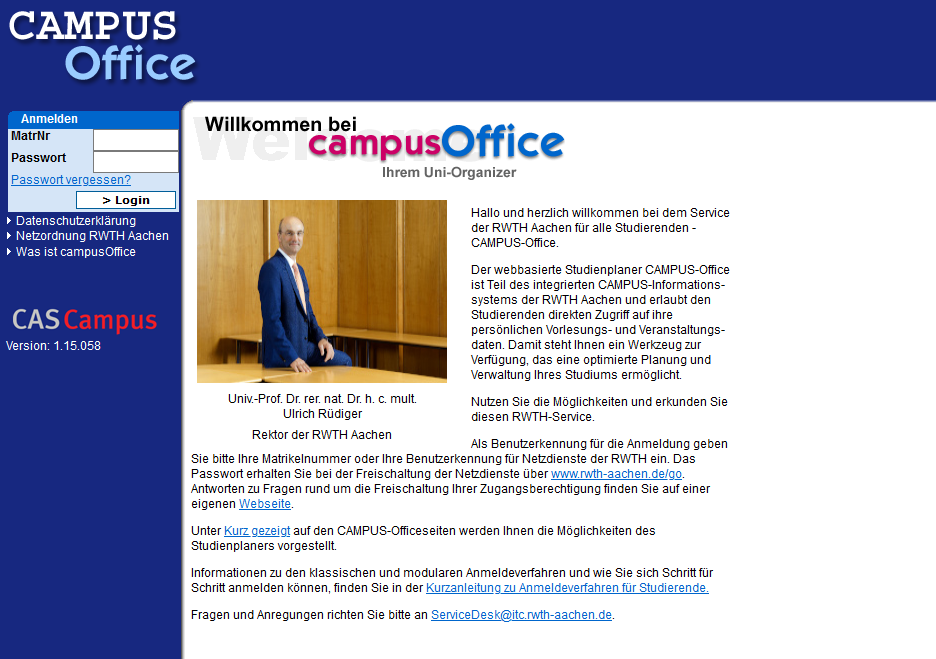
That’s it: Bye bye CAMPUS-Office!
Source: Own illustration
Changed opening hours of the IT-ServiceDesk 13.12.2019

Quelle: Unsplash
Tomorrow, Friday, 13th December 2019, the IT-ServiceDesk will close all locations at 4 p.m. for personal contact due to an internal event (Seffenter Weg 23, location Super C and Wendlingweg 10).
Keeping You Safe II – Our Security Note on Spear-Phishing Attacks
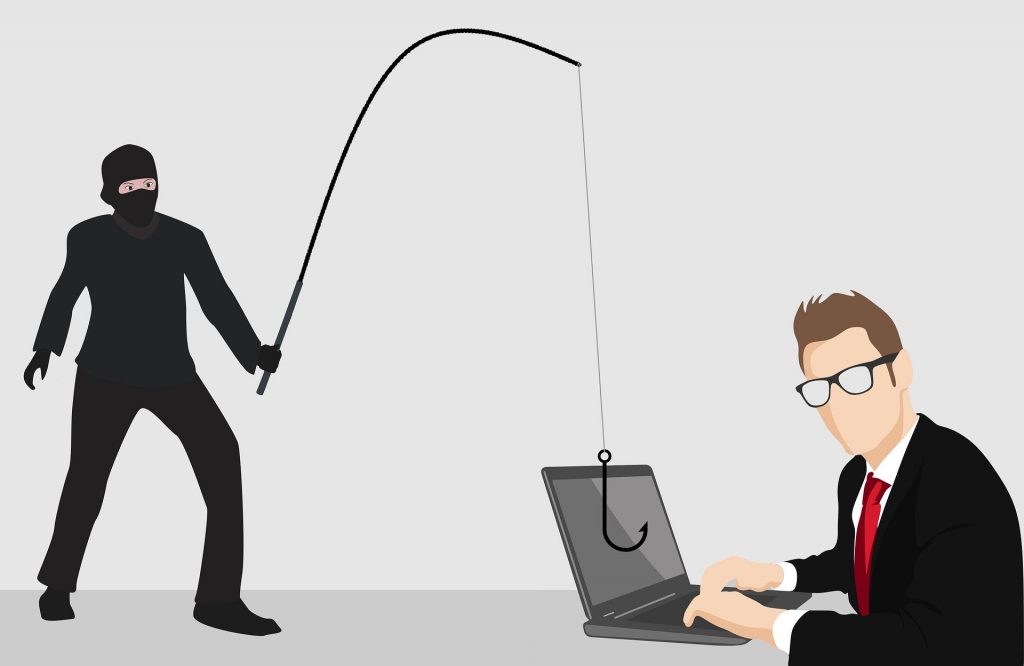
Targeted Phishing: Spear Phishing is a serious threat to our data.
Source: Pixabay
According to the Federal Office for the Protection of the Constitution (BfV), both universities and research institutions are in danger regarding them. What we are talking about here are spear phishing attacks. This is the technical term for very tricky cyber-attacks with targeted e-mails. This time, however, the wave of attacks is particularly vicious: the mails that are sent contain links to realistically simulated fake websites of the particular institutions and request users to enter their access data.
Safety first: Beware of Phishing Mails with RWTH names!
Students and RWTH employees often receive e-mails from official university addresses in their digital mailboxes. But if the sender says “RWTH”, are they really from a person who is a member of the university?
Unfortunately not always and therefore caution is necessary!

Caution before opening your e-mails!
Source: Pixabay
IT Center@Service Desk Forum 2019
Vom 19. bis 20. November 2019 fand das Service Desk Forum 2019 in Mainz statt. Unter den Vortragenden war auch Ingo Hengstebeck, Stellvertretender Abteilungsleiter der Abteilung „Service & Kommunikation“ am IT Center der RWTH Aachen. In einem Forum zur technischen Kompetenz hielt er einen Vortrag mit dem Titel „Qualitätsgesichertes Wissensmanagement in der Abteilung „Service & Kommunikation“.
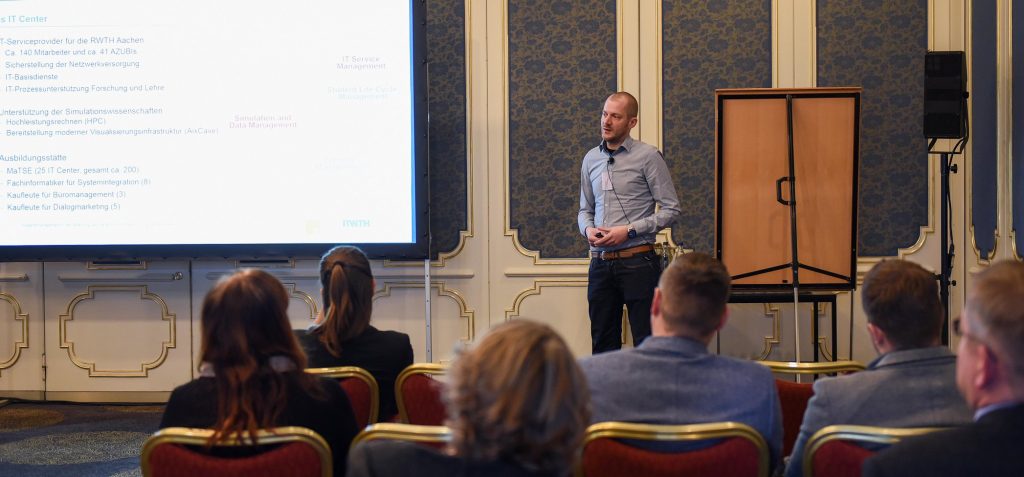
Ingo Hengstebeck in Aktion beim Service Desk Forum 2019.
Quelle: Stefanie Hergenröder/ Euroforum
Das IT Center – stets up to date
IT und Betriebswirtschaft lassen sich gut kombinieren. Das weiß auch Axel Taraschewski, Leiter des IT-ServiceDesks und stellvertretender Leiter der Abteilung Service & Kommunikation am IT Center.
Als Herr Taraschewski im Jahr 2014 diese für ihn erste Führungsposition am IT Center übernommen hat, wurde der Wunsch nach einer berufsbegleitenden Weiterbildung, welche die bisherige IT-Ausbildung sinnvoll im Sinne des neuen Aufgabenspektrums ergänzt, angegangen. Zum Wintersemester 2016 startete er ein MBA-Studium, welches er in diesem Jahr erfolgreich abschließen konnte.

Absolviert und direkt umgesetzt im IT Center. Ein MBA-Studium mit direktem Anwendungsbezug hat Axel Taraschewski 2019 abgeschlossen.
Quelle: Pixabay
Moodle around the World – and We Took Part!
Moodle is not only the most widely used learning management system in the world, as an open source system, it is also supported and constantly expanded by a large global Moodle family. So, it was about time for an international “family meeting”: The first ever MoodleMoot Global.
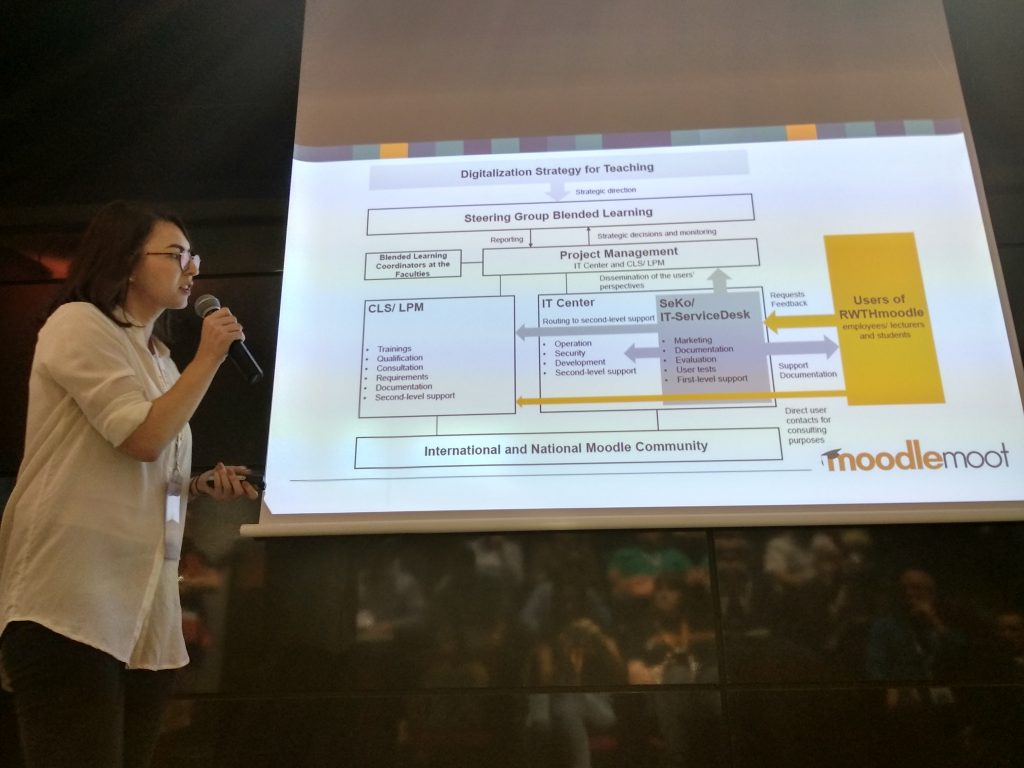
Our staff member Susanne Kubiak during her presentation at MoodleMoot Global in Barcelona.
Source: Own illustration
Exzellente Datenströme
Wer forscht, der generiert Daten. Und die wollen auch bearbeitet und ausgewertet werden. Damit das auch mit sehr großen Datenmengen funktioniert, gibt es nicht nur High Performance Cluster wie unseren CLAIX, sondern auch Zusammenschlüsse von Compute Clustern wie das LHC Computing Grid. Sowohl die Anbindung an das Internet unserer Hochschule als auch die Anbindung dieser Cluster erfolgt über das Deutsche Forschungsnetz (DFN). Dieses sorgt unter anderem dafür, dass die komplexen Daten, welche beispielsweise im CERN Large Hadron Collider (LHC) generiert werden, an die verschiedenen HPC-Systeme übertragen werden. Unser CLAIX ist übrigens Teil dieses internationalen Verbunds von HPC-Systemen.
Dass durch die große Komplexität der Berechnungen ein enormer Datenstrom mit mehreren Terabyte an Daten generiert wird, kann man sich vorstellen. Aber was passiert, wenn sehr viele Rechenaufträge auf einmal fließen? Wir hatten den Fall und berichten.
IT Center around the globe – HPC goes Tokyo and Denver #HPCgoesEastandWest
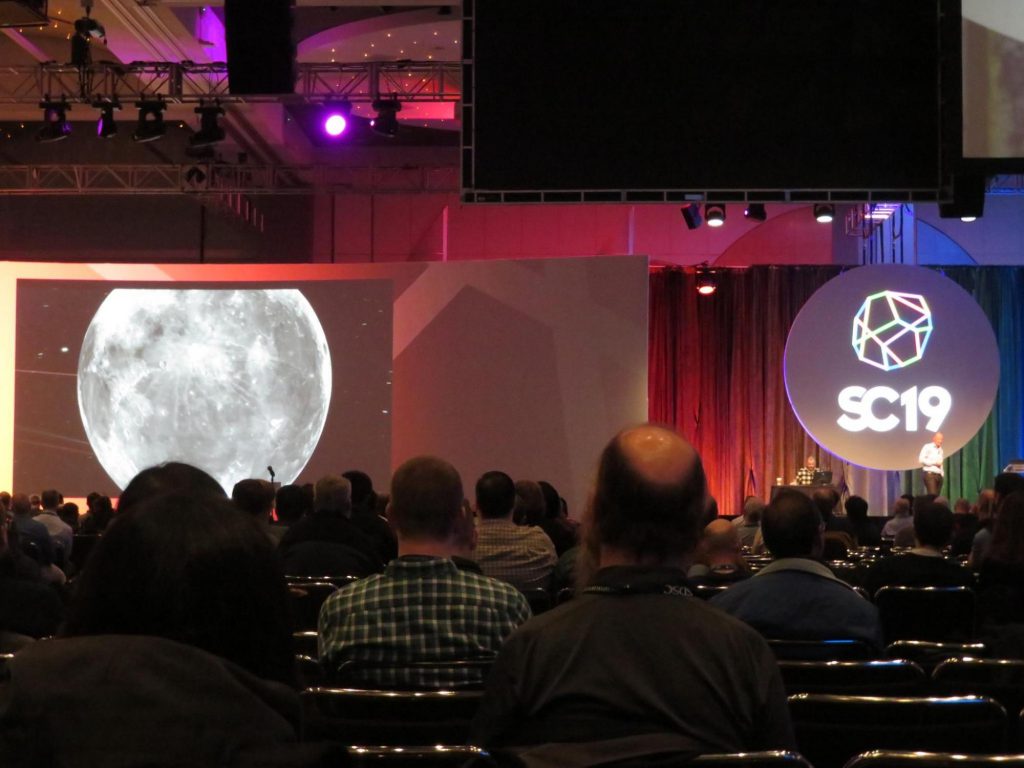
SC19 Openspace: Simulation in Denver.
Source: Own illustration
The trilateral workshop “Convergence of HPC and Data” took place in Tokyo from 6 to 8 November. Science for Future Extreme Scale Intelligent Applications” and we have been there!
In particular, it was Prof. Matthias S. Müller and Dr. Christian Terboven from theChair of Computer Science 12 with a presentation on “Task-parallel Programming for Reactive Numeral Simulation”.
The three-day event in Japan aimed at Japanese, French and German scientists from the HPC community to find out more about the latest research results and future work around the topics High Performance Computing (HPC), Mass Data Processing (Big Data) and Artificial Intelligence (AI) and to discuss and exchange ideas. Since these fields of research are highly interdependent, the the presentations, discussions and joint workshops are important in order to determine the direction of the cooperation between the countries Japan, France and Germany in the respective to detect fields of interest.
The adventure continued from 17 to 22 November at the Supercomputing 2019 – in short SC19, in Denver, USA. This is where the “International Conference for High Performance Computing, Networking, Storage and Analysis” took place.
Dr. Christian Terboven and Prof. Mathias S. Müller participated here as well, together with other high-ranking people such as Mr. Dr.-Ing. Michael Klemm, Mr. Xavier Teruel, Mr. Bronis R. de Supinski, Mr. Ruud van der Pas, Mr. Julian Miller and Mrs. Sandra Wienke.
Needless to say that High Performance Computing in its completeness was the topic of this time as well. With a look into the future, HPC increasingly takes up more and larger parts of the daily life of every human being and is reflected in medicine as well as in agriculture. The SC19 has committed itself to draw attention to this “revolution” in the areas it covers under the motto “The future is now. HPC is now.” to get into the swing of things.
In that context we offered the tutorials “Mastering Tasking with OpenMP” and “Advanced OpenMP: Host Performance and 5.0 Features” as well as a lecture on “Self-paced Learing in HPC Lab Courses”.
The content of the presentations in connection with the presence of high-ranking experts was a really great enrichment and offered helpful input. As a result, we are very happy about the chance to have been represented in terms of HPC from Japan to Denver!
Responsible for the content of this article are Jana Baur and Liza Schwarz.
Different and yet linked –RWTHonline and RWTHmoodle
RWTHonline and RWTHmoodle – two different systems, but they are closely linked. In this blog post we want to take a closer look at the connection between these two platforms, at the underlying systematics, and interdependencies.
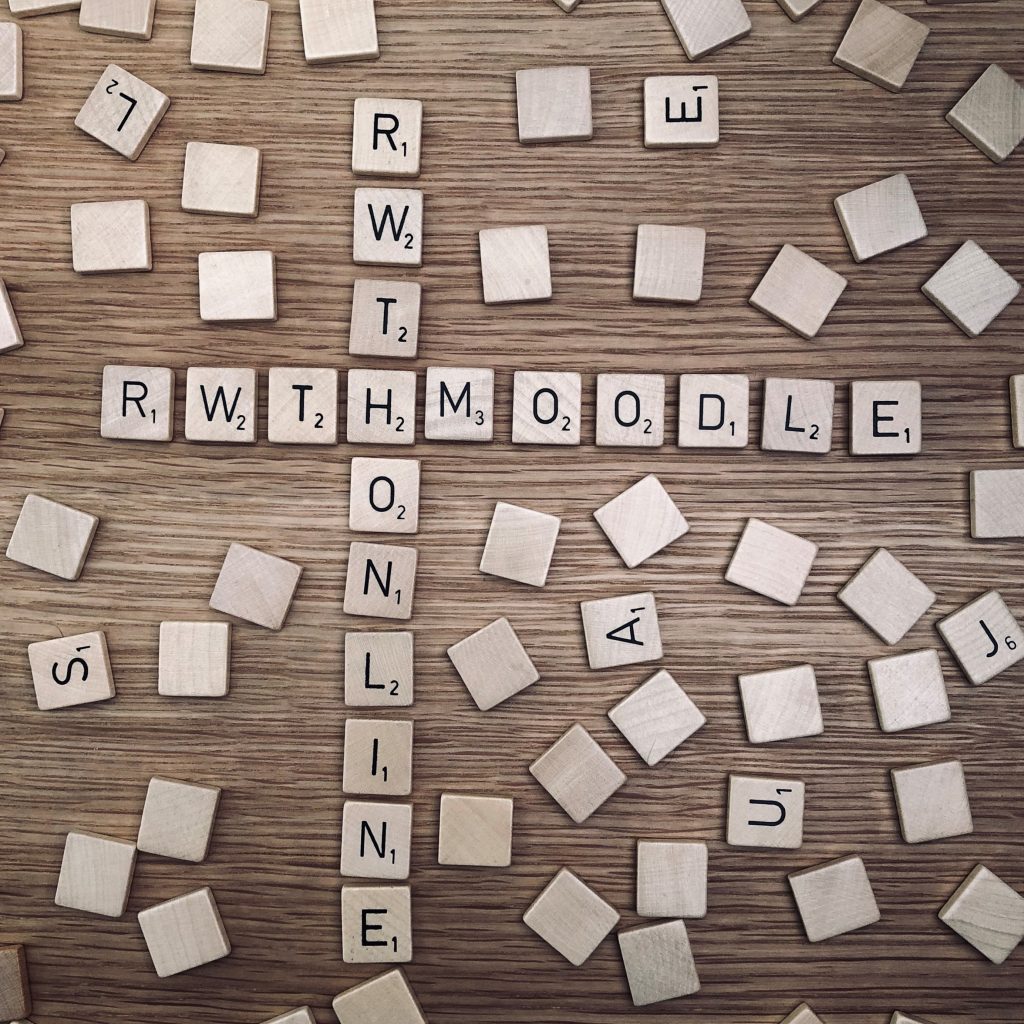
RWTHonline and RWTHmoodle – two different systems, but they are closely linked.
Source: Own illustration