

Kategorie: ‘HPCnews’
#ITCenterEvents – Introduction to High-Performance Computing 2022
Source: Pixabay
This event provides basic information on High Performance Computing (HPC) at the IT Center of RWTH Aachen University for different target groups and needs. It is the basis for the follow-up event PPCES 2022.
It focuses on CLAIX-2018, the cluster installed at our center at the end of 2018 and extended in 2019. Read the rest of this entry »
SC21 – Supercomputing Conference

Source: SC21
The largest HPC conference in the world and we are a part of it
This year at SC21, from November 14-19, thousands of researchers, developers, students, exhibitors, managers, and speakers from institutes of all shapes and sizes will gather to share ideas about the power of high performance computing (HPC) and discover the latest innovations. There are opportunities in St. Louis to attend the conference on-site or to experience SC Remote. Read the rest of this entry »
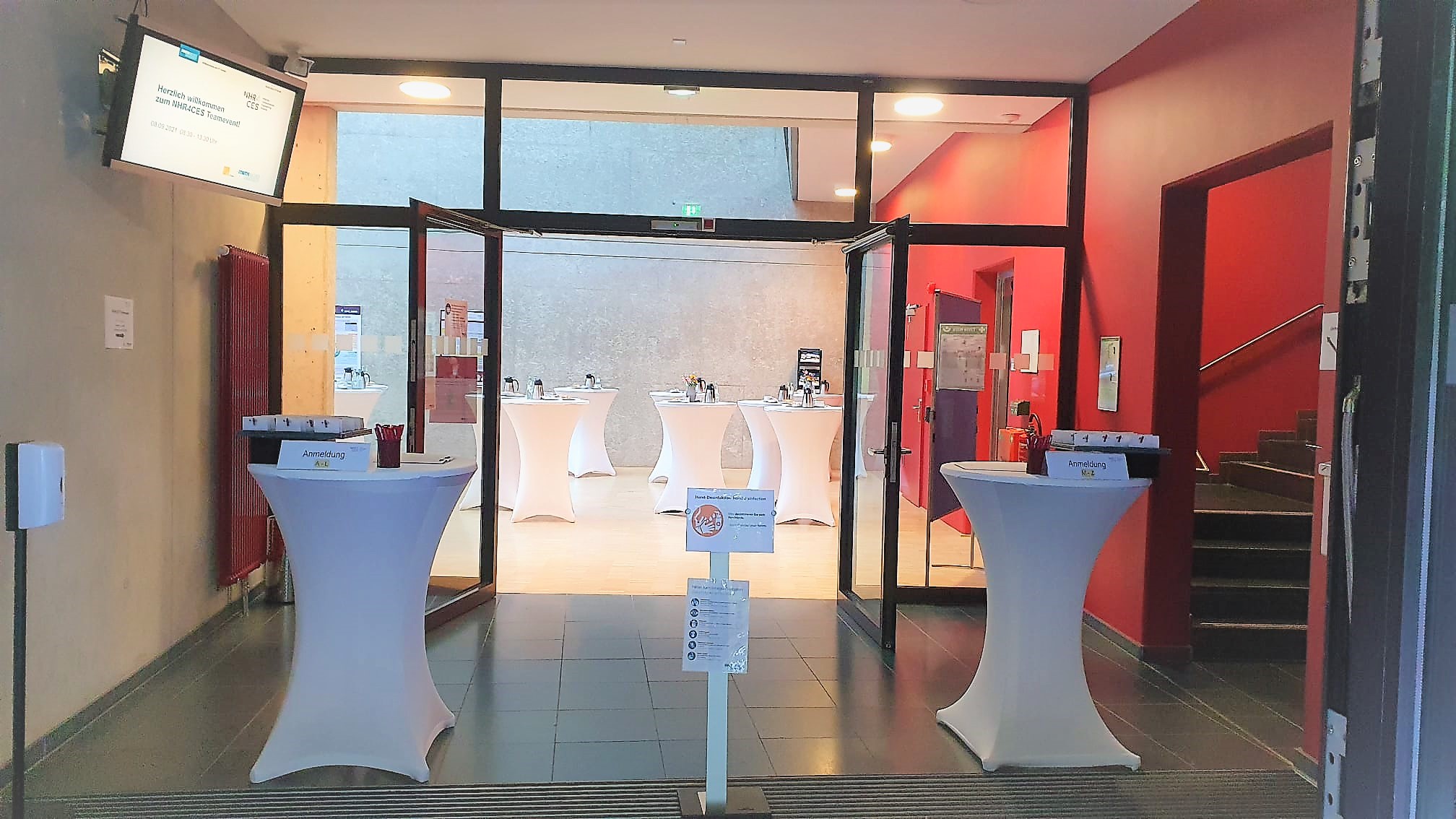
A bit back to normality: The NHR4CES team event in presence at the IT Center
#Safetyfirst – Events at the IT Center
Source: Own illustration
In November 2020, RWTH Aachen University together with TU Darmstadt were accepted into the National High Performance Computing Network (NHR Network). RWTH Aachen University and TU Darmstadt, together with the other six computing centers in the NHR network, are creating optimal framework conditions by establishing a joint infrastructure and offering the best possible support for high-performance computing for scientists* at German universities.
Within the framework of NHR4CES, new structures and new teams are being created to conduct joint, cross-university research and user support. A good cooperation between the colleagues from Aachen and Darmstadt is essential to ensure the success of the project. For this reason, we have organized a team event for the employees of both locations on September 08, 2021, to enable the best possible start by getting to know each other personally.
HPC Consultation Hour – Our experts will answer your questions
Source: Own illustration
The IT Center operates one of the fastest supercomputers in Germany. CLAIX is available to RWTH students in the context of teaching as well as to researchers from all German teaching and research institutions.
The IT Center’s High Performance Computing (HPC) group provides users with methodological support for the efficient use of CLAIX. In addition, the colleagues assist with serial and parallel programming, debugging, correctness analysis, runtime analysis and tunings.
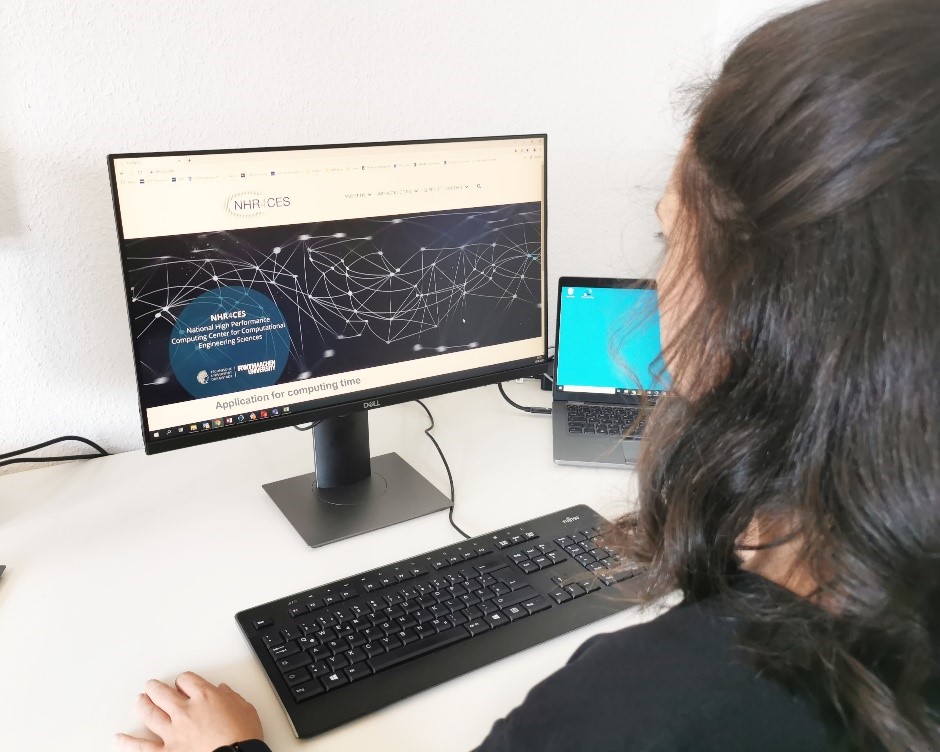
NHR4CES News – New project categories when applying for computing time
Source: Own illustration
Since November 2020, the IT Center of RWTH Aachen University is a National High Performance Computing Center (NHR). Together with seven other funded computing centers in the NHR network, we offer scientists from all over Germany the opportunity to use computing resources and expertise for high-performance computing. RWTH Aachen University and TU Darmstadt have joined thematically to form the “National High Performance Computing Center for Computational Engineering Sciences” (NHR4CES), and thus cooperate in the context of NHR.
For years, RWTH Aachen University, like TU Darmstadt, has successfully operated high-performance computers of national importance – so-called Tier 2 computers. Parts of both systems have since been open to academic researchers from all over Germany. In this way, HPC is promoted nationwide and further funding is ensured.
Because of the alliance is now changing the way computing resources are requested and granted.
The CLAIX Annual Report for 2020 is online!

Source: Own illustration
The CLAIX annual report for 2020 has been published. Which projects were mastered and computed with the help of the computing cluster despite difficult global times are reflected in the detailed CLAIX Annual Report. The HPC office of the IT Center invites you to read it. Read the rest of this entry »
ISC High Performance 2021 Digital –
The largest virtual community meeting for hpc

Live at ISC21
Source: Own illustration
This year, the International Supercomputing Conference (ISC) was once again held digitally from June 24 to July 2, 2021. With more than 3,500 attendees and exhibiting companies, this year’s ISC 2021 Digital is the largest virtual community gathering for High Performance Computing (HPC), Machine Learning (ML) and High Performance Data Analytics (HPDA). Read the rest of this entry »
Research on heterogeneous memory systems
Source: Unsplash
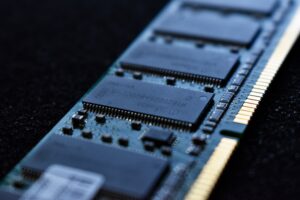
While computational power is steadily increasing in modern computing systems due to the rise of multicore and accelerated systems, the relative performance of the memory subsystem is falling further and further behind. In the context of High-Performance Computing (HPC), this can be partially compensated by combining traditional main memory with a small amount of high-bandwidth memory. In systems with accelerators, heterogeneity is already visible due to the presence of different kinds of memory. However, applications must be heavily modified and use vendor-specific application programming interfaces (APIs) to exploit different kind ofs heterogeneous memory.
Nice to know: Connecting to the cluster – The first steps
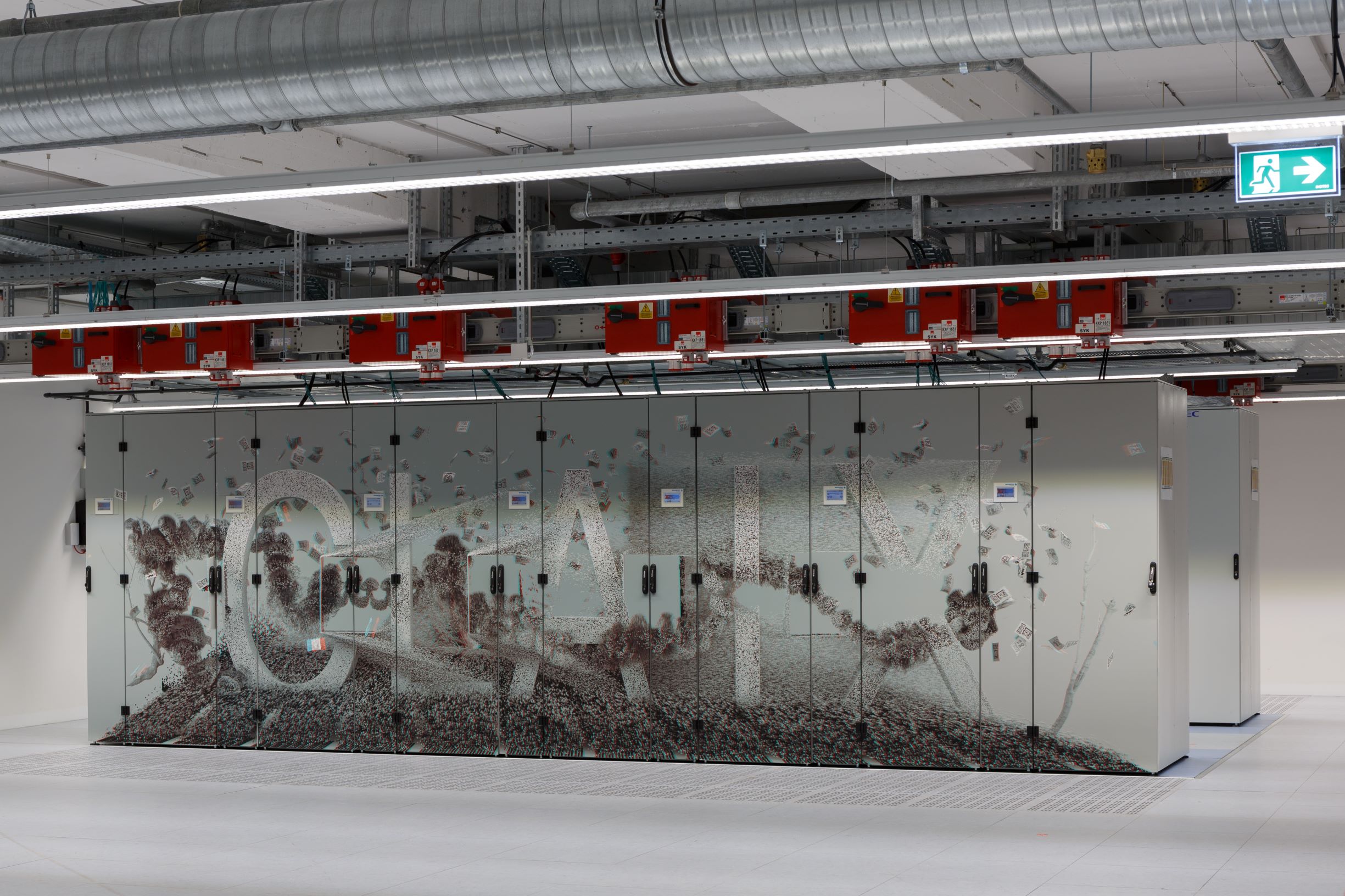
High-performance computing at the RWTH Aachen University. This is what our cluster looks like.
Source: Alexander Müller
For some people, High Performing Computer (HPC) is an unknown topic with many question marks. If the necessary basic knowledge is not available, this can quickly become overtaxing. To counteract this, we have summarized in today’s blog post how this actually works with high performance computing and the connection to the cluster.