
Kategorie: ‘Research data’
PAAD: Visual documentation of Berlin Philharmonie
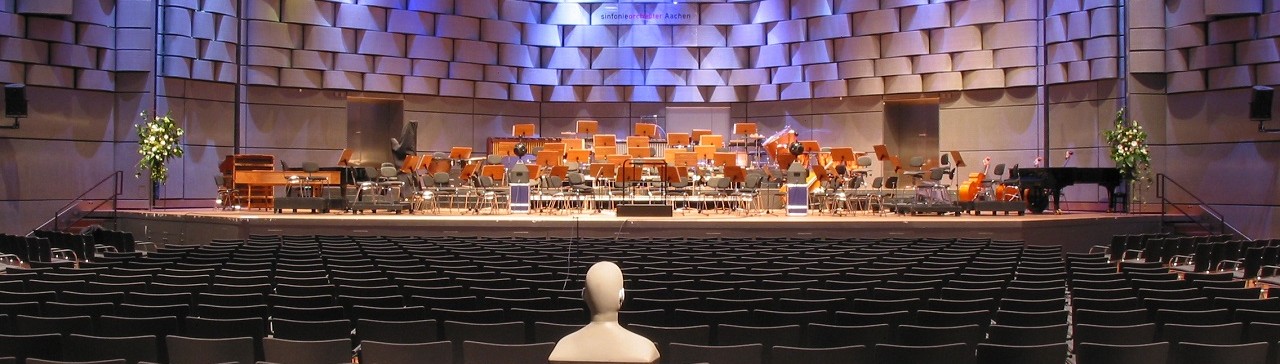
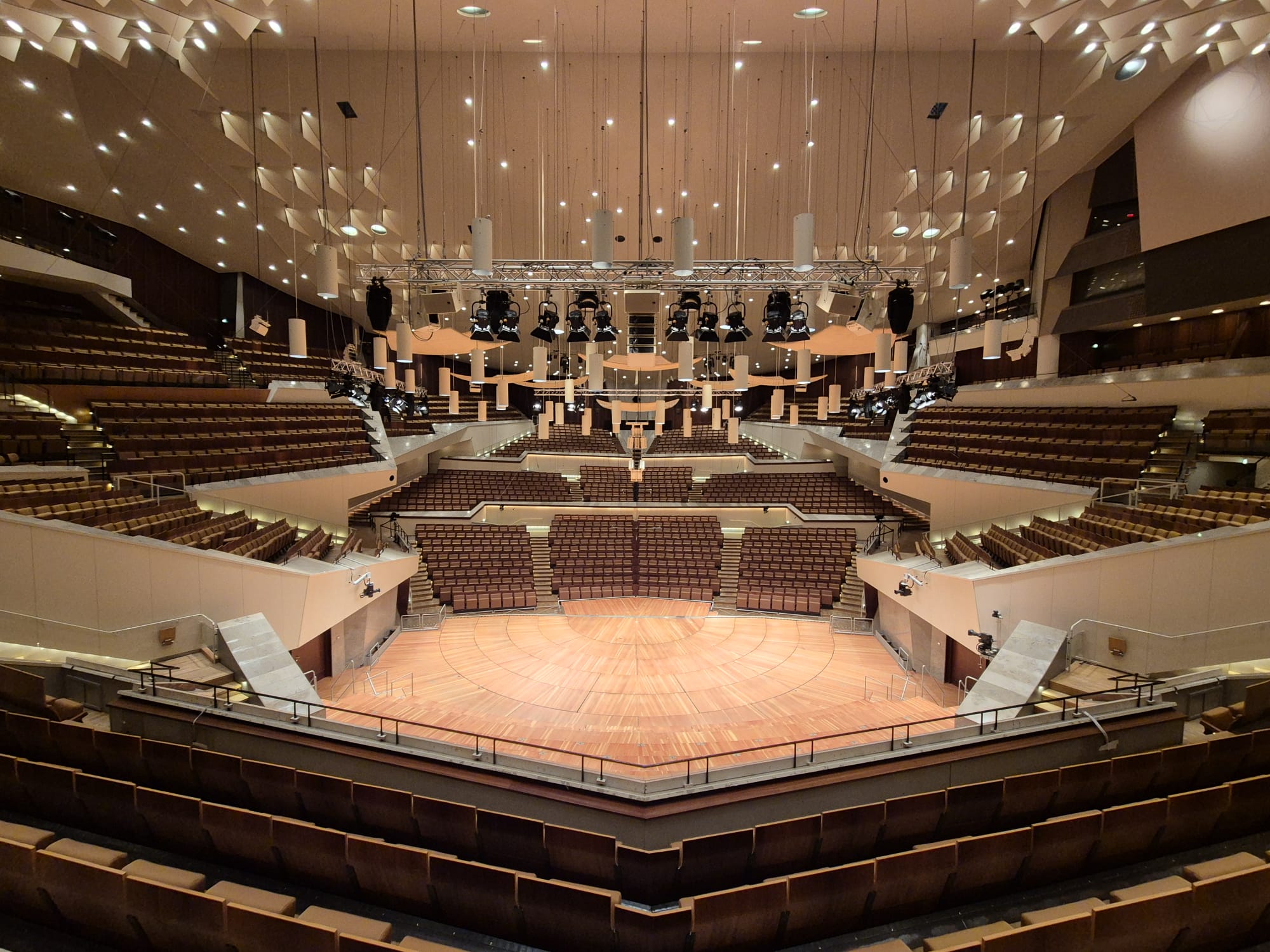
PAAD „Person-focused Acoustics of Architectural Design“ research group has recently visited Berlin Philharmonie to capture 3D data of the auditorium for the MUSKLA Database: a growing collection of narrow angle and spherical photographs of major concert halls in Europe. The goal is to support state of the art multimodal perceptual studies in auditoriums by providing a reference database accessible to the scientific community. In collaboration with our colleagues from Universitat Politècnica de Catalunya and Fraunhofer-Institut für Bauphysik, our team was able to conduct a comprehensive 3D capture of the auditorium.
We documented the auditorium combining imaging techniques to ensure both geometrical accuracy and photorealistic texture:
– 360° panoramic photography to record the spatial impression and visual atmosphere of the hall, located in multiple seating positions from the audience view.
– Narrow angle photo capture to enrich the textures and surface details needed for realistic visualization and to produce accurate photogrammetric model of the hall.
-

- Berlin Philharmonie
-
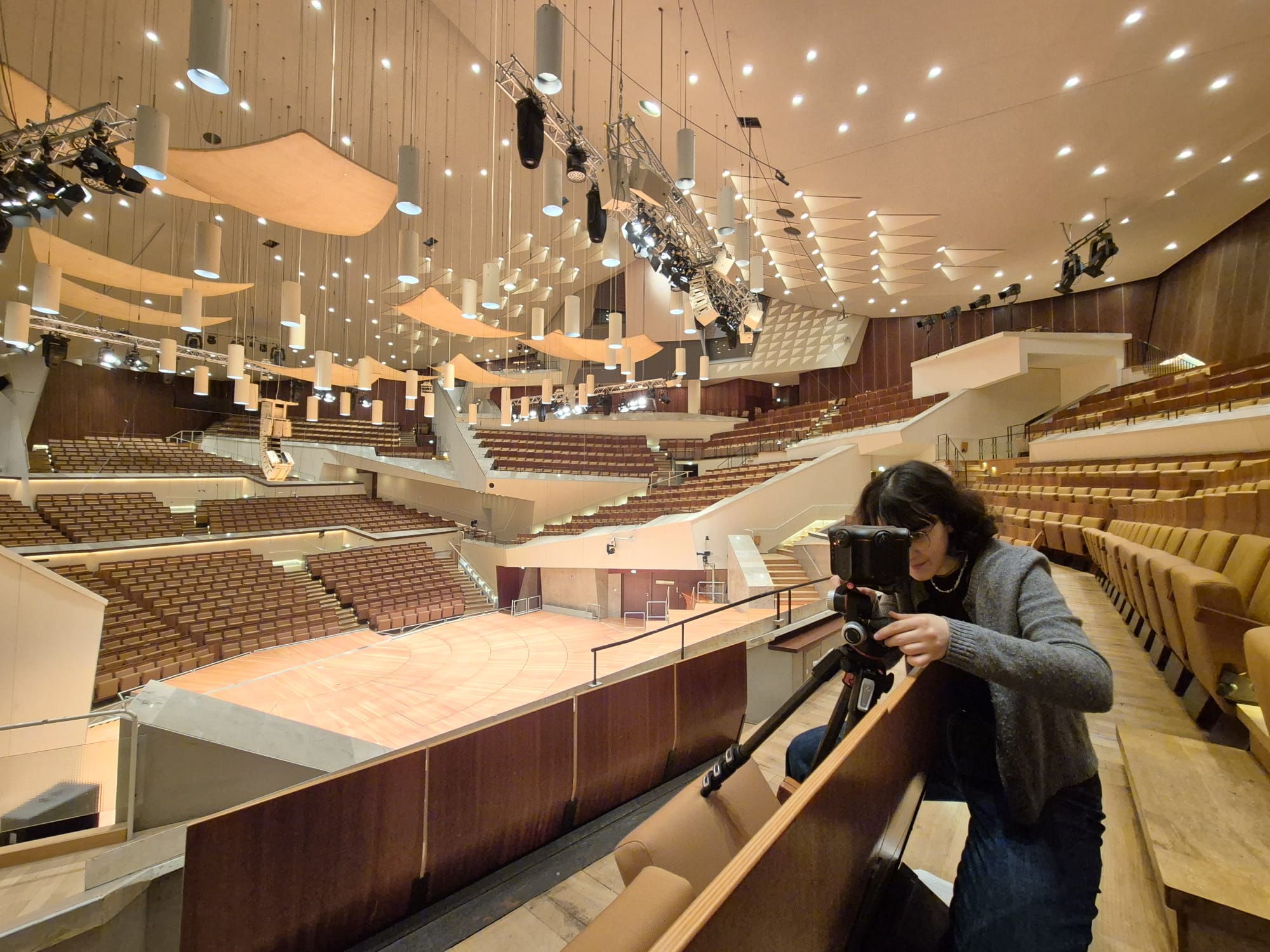
- Setting up the camera equipment
-

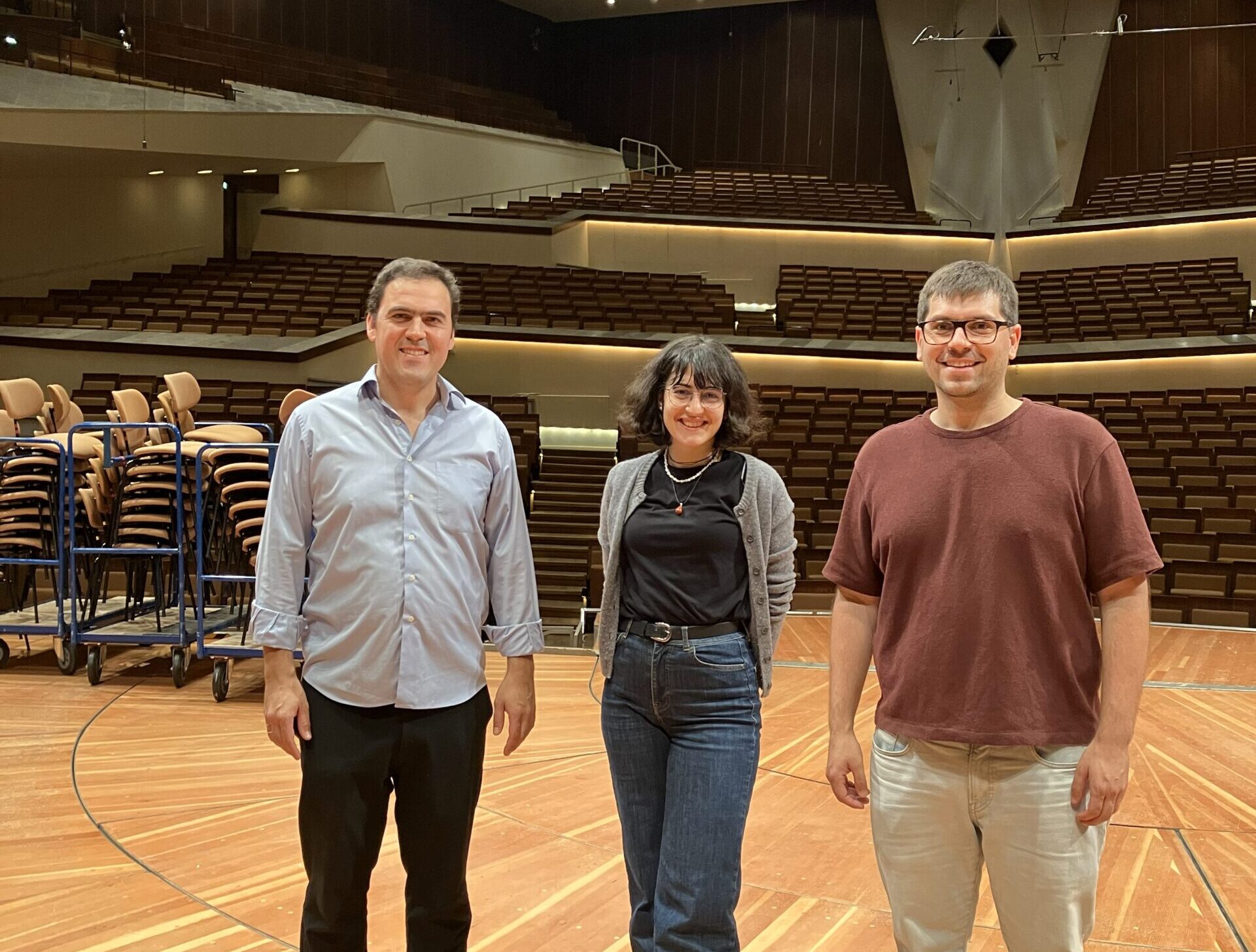
- Project team
The data collected will become openly available through the MUSKLA database providing researchers and practitioners with resources to create immersive virtual experiences as well as accurate 3D models of major auditoriums.
We thank the staff who welcomed our team and supported a smooth operation throughout the day!
The GRAS Innovation Award – The Game-Changer 2025 – has been awarded to IHTA
We are proud to announce that we received the GRAS Award – The Game-Changer 2025 by GRAS Sound and Vibration. The project: A High-Resolution Head-Related Transfer Function Data Set and 3D-Scan of KEMAR by the authors Hark Braren and Janina Fels won the award in the category „the Game-Changer“.
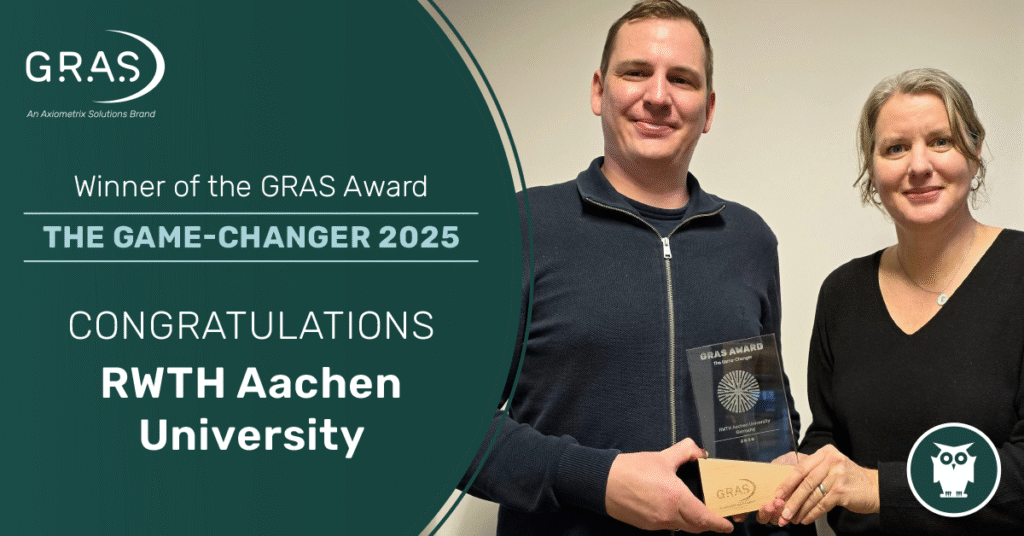
GRAS Award Winner – The Game Changer 2025, Hark Braren and Janina Fels, RWTH Aachen University
The RWTH team created an open, high-resolution HRTF dataset using the GRAS KEMAR Head and Torso Simulator — bridging physical measurement and acoustic simulation. Their work sets a new benchmark for spatial audio realism and paves the way for future breakthroughs in 3D sound and headphone design.
The innovation speaks directly to our core mission: enabling the highest quality in acoustic measurement and supporting industry breakthroughs.
The dataset can be found here: https://doi.org/10.18154/RWTH-2020-11307
We would like to express our sincere thanks to GRAS Sound & Vibration for this special award!
Research data publications at IHTA
In recent years, the importance of open data in academic research has become increasingly prominent. Open data in the context of scientific research refers to the practice of making datasets publicly accessible, either as separate data publications or as supplementary material along with the research article. Making such (documented) data available allows other researchers to build upon existing work or to verify findings. This makes research more efficient, transparent and reproducible. Research data publications are usually assigned a DOI, providing a permanent link to the dataset, which can be cited properly in related scientific work.
Researchers from the Institute for Hearing Technology and Acoustics have published several datasets in the past years – many of them being different kind of HRTF datasets, but also other acoustic measurements, input data for simulations and stimuli for listening experiments. To give a better overview of these data publications, we recently updated the corresponding section on our website, which also lists IHTA’s research software. Further datasets, if published on the Zenodo platform, can also be found in IHTA’s Zenodo-Community.
SEACEN International Round Robin on Auralization
Researchers of the SEACEN project have officially launched the 1st International Round Robin on Auralization. In this extensive comparison of simulation and auralization tools, researchers, users and developers can contribute their results for nine different acoustical scenes including a variation of simple acoustical situations as well as typical room acoustical scenarios. Everyone is invited to particpate. In the first phase of the Round Robin, participants are ask only to use the provided input data. Deadline for the submission of the results is december 31st, 2016.
-

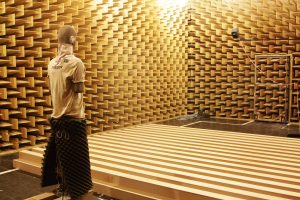
- Simple reflection scene
-
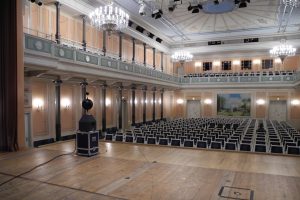
- Room acoustics measurement Berlin chamber music hall
-
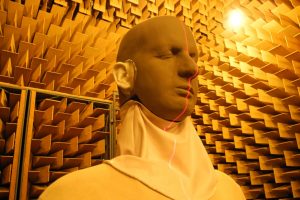
- Measurement of binaural impulse responses using FABIAN dummy head
More information can be found on the offical Auralization Round Robin website.

