
Kategorie: ‘Studies & Teaching’
CLAIX-2025 – Commissioning in Sight?!
Source: Own illustration
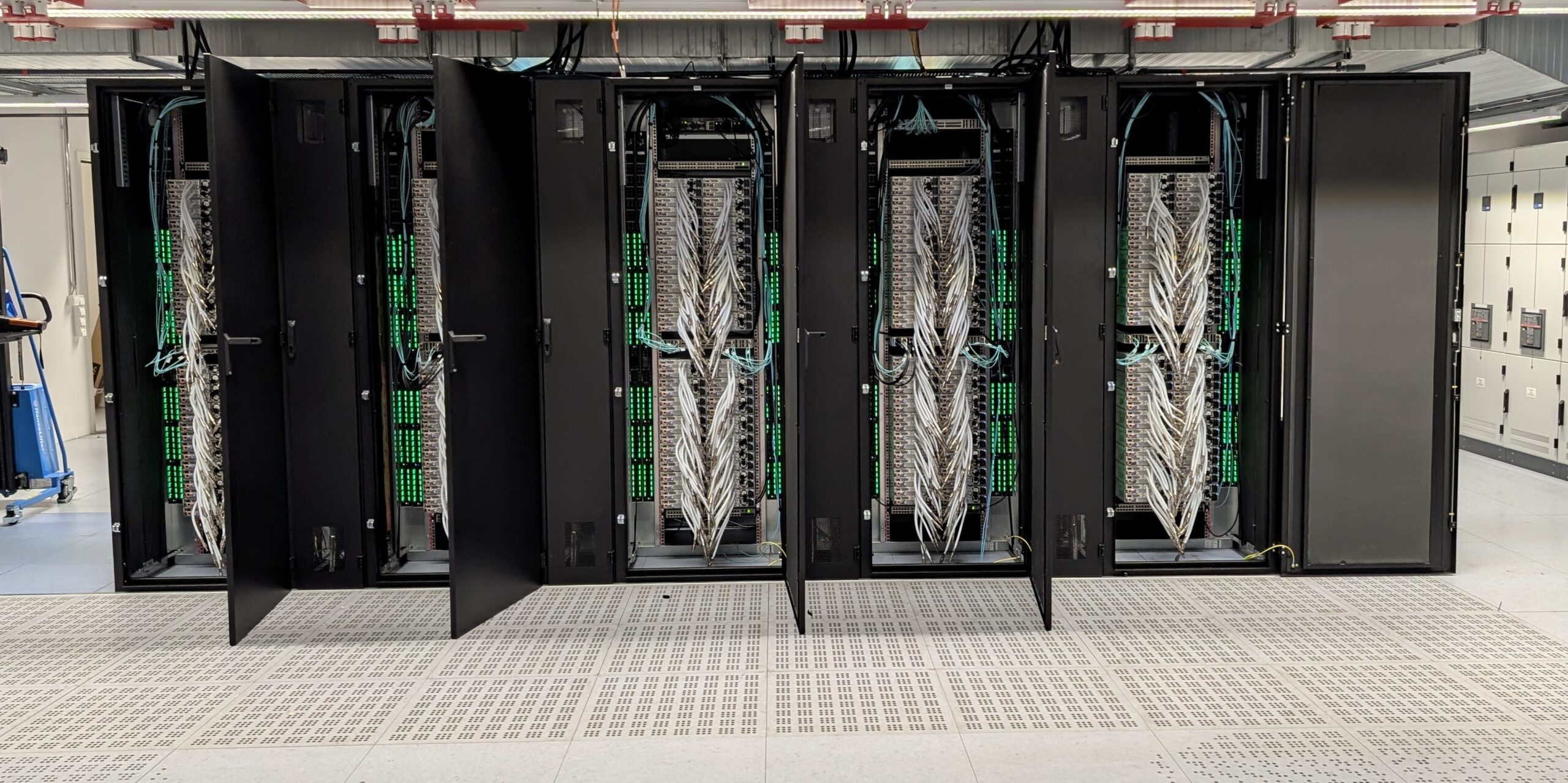
It’s spring 2026 – what’s missing at the RWTH IT Center? The CLAIX-2025 HPC system isn’t yet in production! As part of the proven 1-cluster concept, CLAIX-2025 is intended to complement the existing CLAIX-2023 system at the Tier-2 level. We spoke with our HPC experts at the IT Center to find out why the commissioning has been delayed and what the current status is. Sascha Bücken, Group Leader “Server, Storage, HPC,” Tim Cramer, Group Leader “HPC CORE,” and Christian Terboven, Chief HPC Officer, answer the question on the minds of researchers at RWTH Aachen and across Germany:
Pilot Phase for RWTHmoodle Plugins in the Summer Semester 2026

Source: Own illustration
Attention lecturers and course room managers: Plugins for RWTHmoodle will once again be available for testing this semester. This time, the Sharing Cart and Learning Map plugins will be available.
Welcome to the 2026 Summer Semester!

Source: Own illustration
The days are getting longer, lectures are starting—a new semester is beginning! We are delighted to welcome all students and staff to RWTH Aachen University and wish you a successful start to the 2026 summer semester. Studying and working at RWTH is now more digital and networked than ever before. That’s why we have compiled all the important information about central IT services, innovations, and helpful contact points so that you can get started right away! You can find much of this information in our blog series “Basics at RWTH.” You can also find more information and instructions linked under the respective services.
HPC Events 2026: From Basics to Simulation

Source: Own Illustration
High Performance Computing (HPC) plays a central role in many fields of research—from engineering and data analysis to the simulation of complex physical processes. The IT Center therefore regularly organizes workshops, training sessions, and community events focused on HPC to support researchers and students as they get started and further develop their skills.
In 2026, the event program once again offers numerous opportunities to explore topics related to high-performance computing, scientific programming, and numerical methods. Some events have already taken place, and many more are scheduled throughout the year.
Software Engineering Fair 2026 – Diverse Projects and Teamwork
Source: Own illustration
On Friday, March 6, 2026, the annual Software Engineering Fair took place once again in the foyer of the IT Center on Kopernikusstraße. Between 1:00 and 4:00 p.m., the aspiring mathematical-technical software developers (MATSE) from the dual study program “Applied Mathematics and Computer Science” at Aachen University of Applied Sciences presented their project work.
RWTHmoodle – Introduction of Terms of Use

Source: Own illustration
In order to further increase transparency regarding the use of RWTHmoodle, the IT Center and CLS are introducing written Terms of Use for the platform for the first time. These terms define the framework for using the system and also serve to provide legal protection for the service. Starting March 26, 2026, the Terms of Use will be displayed after logging into RWTHmoodle. These Terms of Use must be accepted once in order to continue using the platform.
Read the rest of this entry »
RWTHmoodle Training Courses

Source: Own illustration
The RWTHmoodle learning platform is an integral part of studying at RWTH. The platform is often used for lectures and seminars to provide presentations, scripts, and texts.
But RWTHmoodle offers many more features to enhance the learning experience for students. To help instructors leverage the full potential of RWTHmoodle, training sessions for the platform are offered regularly. In this blog post, we provide an overview of some of the training sessions offered and explain how you can register.
Artificial Intelligence Meets Virtual Reality
Source: Kühlem et al., 2025
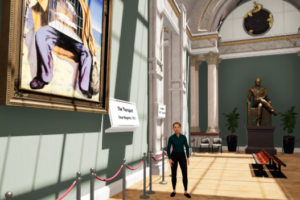
Whether in digital learning spaces or virtual museum tours, virtual reality (VR) makes an important contribution to immersive learning. In this context, users can interact with virtual teachers. At RWTH Aachen University, research is being conducted into how these conversations can be made as realistic and natural as possible.
Always up to Date: The sciebo Blog
Source: sciebo
Anyone who uses sciebo or is interested in secure cloud storage solutions in the university environment should regularly check out the sciebo blog. There, users will find bundled information, news, and helpful background articles about the cloud service.
In addition, the new documentation page offers clear instructions on the functions of sciebo.
HPC Review 2025 – Developments, Collaborations and Highlights
Source: Own Illustration
For the High-Performance Computing (HPC) division at the IT Center of RWTH Aachen University, 2025 was marked by international exchange, practice-oriented workshops, sustainability initiatives, technological developments, and numerous activities related to HPC use and competence building. In this review, we summarize key events, projects, and successes.