
Kategorie: ‘Allgemein’
My Research Internship at the University of Cambridge
- Chemistry M.Sc.
- United Kingdom, Cambridge
- University of Cambridge
- 10/2025 – 03/2026
Before the stay
Before organizing the internship, I asked myself: What do I want to get out of such an experience. From a career/academic point of view, I wanted to improve my English language skills in both everyday life and academic environments, my chemistry skills and learn from other talented people. Nevertheless, I also aimed to experience the student life in another country. With that I was able to narrow it down to the UK, and I applied to several professors at Cambridge whose research matched my field of interest. Fortunately, after a short Zoom meeting about potential research projects, I received an offer for an internship. From that point onward, two main bureaucratic matters had to be handled. The receiving institution required a number of documents and even after submitting those, the review process took quite a long time (2 Months) , and I received my invitation letter only four weeks before the start of the stay. The second aspect was the Erasmus+ process, which, in comparison, required much less time.
Accommodation/Expenses
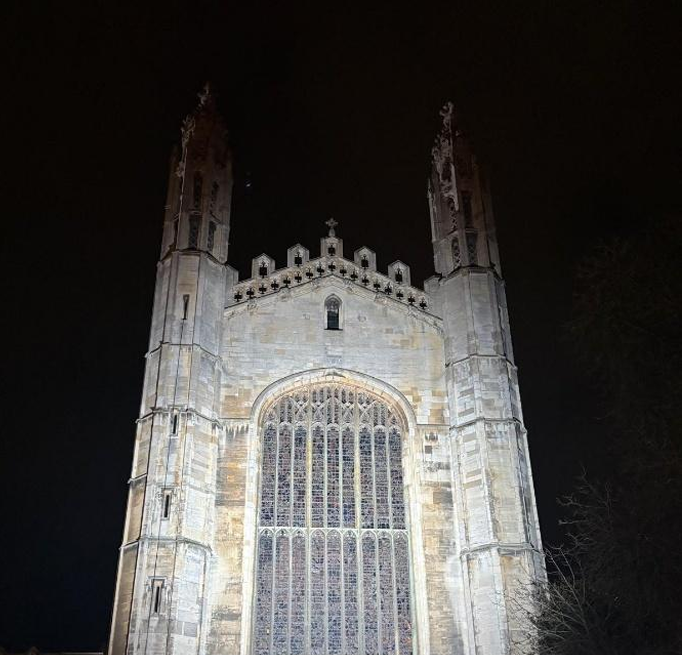
Kings College Chapel at night.
©International Office
Since short-term visiting students in Cambridge are generally not eligible for accommodation in a college dormitory, finding housing required some additional effort. Nevertheless, colleges may offer available rooms to visiting students if vacancies exist. For this reason, I contacted several accommodation officers of colleges located near my department and eventually received an offer. However, the room was relatively far from my department and also much more expensive than other options. In addition, access would have been limited to the accommodation itself, without the wider benefits of college facilities.
I therefore decided to continue searching through the University accommodation website. There, I found a room close to my department that was being sublet by an older couple for around €750 per month. This turned out to be a very fortunate arrangement. The couple was extremely kind and always made sure that I was doing well. They also helped me connect with other communities, which made settling into life in Cambridge much easier.
In Cambridge, the easiest and most convenient means of transportation is usually a second-hand bicycle. For groceries, the cheapest options are generally ALDI and LIDL.
Everyday life
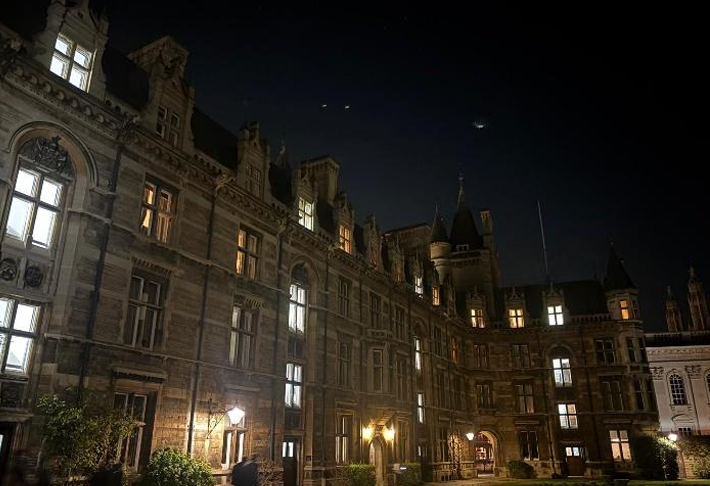
Gonville & Caius College at night.
©International Office
The research group, which mostly consisted of British students, welcomed me warmly and introduced me to everyone from the very beginning. On weekdays, I usually worked in the laboratory from 9:00 a.m. to 5:00 p.m. However, there was a certain degree of flexibility, so I was also allowed to leave earlier or work longer when necessary. My daily laboratory work generally involved the planning, execution, and evaluation of experiments. Whenever support was needed, other group members were always very helpful and provided training or advice. In addition, my supervisor checked in regularly and offered useful suggestions and ideas. Nevertheless, I worked mostly independently, which I appreciated very much. It allowed me to pursue my own ideas and approaches while still having support available whenever needed. In the group meetings, I presented my research results, and challenges or problems were discussed on a regular basis. This not only gave me valuable feedback on my own work but also allowed me to gain insight into other projects within the group. As a result, I was able to further improve both my problem-solving abilities and my communication skills. On special occasions, we went for lunch together, and after work we occasionally met at pubs.
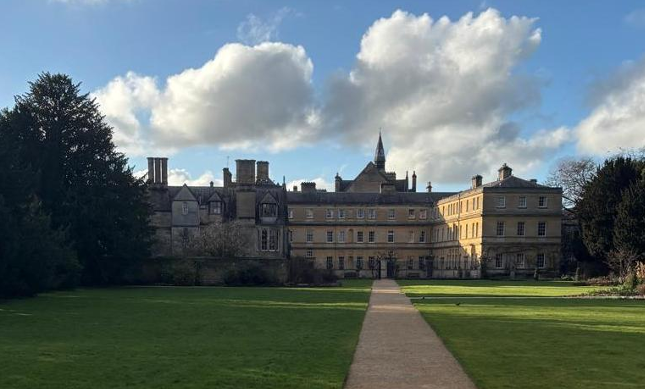
Oxford University.
©International Office
On weekends, I had the opportunity to explore Cambridge and its surroundings. I would strongly recommend visiting the colleges, as they are one of the most distinctive and impressive aspects of the city. Fortunately, my landlord, who was a former student, gave me several tours and was able to share interesting background knowledge. I would also highly recommend attending a “formal”, which is a traditional formal dinner held in a college. To take part in one, it is usually necessary to know someone who can invite you, and formal clothing is required for the occasion.
Besides that, I visited other tourist attractions in Cambridge, such as museums and shops. I also took trips to London and Oxford together with other international students from my department. London is definitely worth visiting because of its many famous and historic landmarks. Oxford, although quite similar to Cambridge in some ways, is also well worth a trip!
Conclusion
Academically, my internship was a very valuable experience. I learned a number of important laboratory techniques and practical skills, but also gained insight into how to manage my own project and develop original ideas independently. In this respect, the stay helped me grow as a laboratory researcher. In addition, I clearly improved my English skills. By working and communicating in English every day, I became much more fluent both in an academic context and in everyday life.
On a personal level, I also benefited greatly from the experience. I made a few friends, primarily within the research group, with whom I hope to stay in contact in the future. Overall, the internship was both academically and personally enriching, and I am very grateful for the opportunity to have spent this time in Cambridge.
My Internship in Amsterdam
- Architecture M. Sc.
- Netherlands, Amsterdam
- Buro Kettinghuls
- 09/2025 – 02/2026
During my Erasmus internship, I had the opportunity to live in Amsterdam and work at the architecture office buro Kettinghuls for six months.
Application/Finding an internship
About five months before starting my internship, I applied to many different architecture offices in the Netherlands, as I was particularly interested in improving my Dutch language skills and experiencing an international working environment. After several applications, I was fortunate to receive an offer from buro Kettinghuls in Amsterdam. With my internship, I then applied for an Erasmus grant.
Accomodation & Living expenses
©International Office
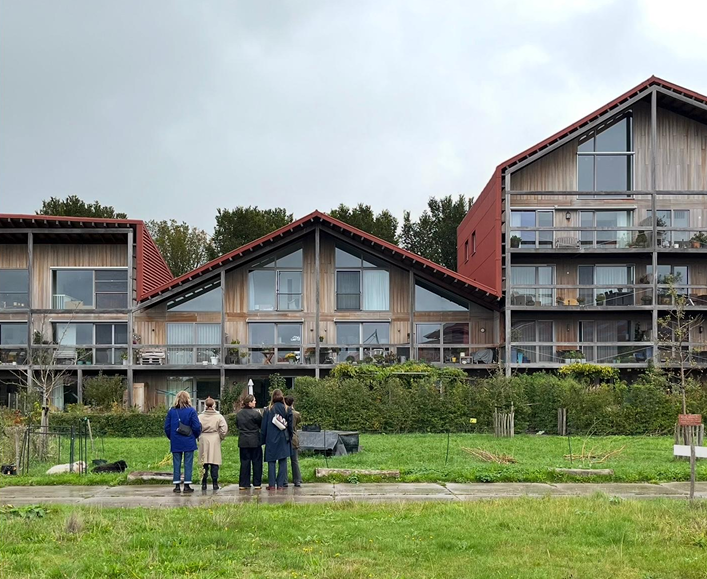
One of the biggest challenges was finding accommodation. The housing market in the Netherlands is extremely competitive, especially in Amsterdam. When searching for housing, it is important to respond to as many listings as possible and as quickly as possible. Temporary accommodation is generally easier to find than long-term rentals. I stayed in one shared apartment room for the first two months and then moved to another shared flat for the remaining four months. Although I had to move, it allowed me to get to know two different neighbourhoods and experience different parts of the city more closely. In general, living expenses are higher than in Aachen, particularly when eating out, which is why I mostly cooked at home. Supermarket prices also vary considerably, with stores like Dirk and Aldi typically being more affordable than Albert Heijn.
Everyday life/ the internship
©International Office
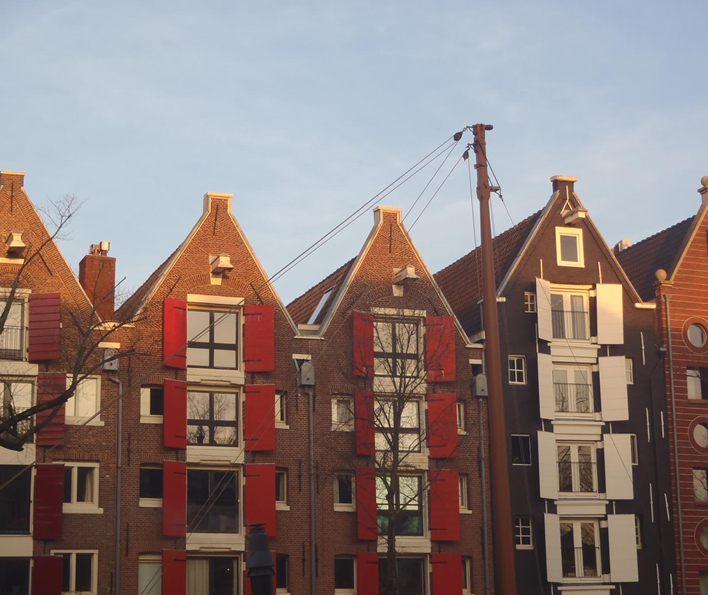
My working hours were from 9 a.m. to 6 p.m. Every day, we had lunch together in the office, usually consisting of homemade salad, bread, and cheese. This was a nice moment to connect with colleagues and as we were an international team it was fun to talk about different cultural experiences. During the internship, I worked on different projects and was given a variety of tasks. I drew plans, prepared visualisations, built models and supported the team in ongoing design processes. My colleagues provided guidance and were always willing to explain things, which helped me learn a lot in a short time. We also went on an office excursion to visit projects and construction sites in Almere, which was particularly exciting because I could see how plans are realized in practice. I really appreciated that there were two other interns at the office, as we would sometimes meet for a coffee before work or make plans together for the weekends, which truly enhanced my overall experience.
Free time/tips
©International Office
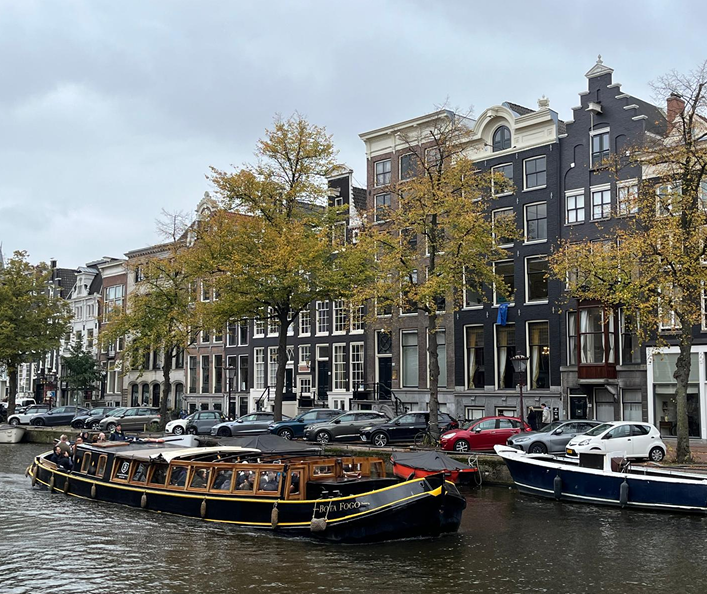
Besides work, I spent most of my free time exploring the city. Cycling is definitely the best way to get around Amsterdam, as it is fast and ideal for discovering different neighbourhoods. Especially during my first weeks in Amsterdam, I always took different streets with my bike. Over time, I visited many new places while also quickly finding my favourite bars and cafés. In September, ESN organized a picnic where I met other international students. From then on, we started organizing a monthly board and card game evening in a bar, which became a regular highlight. I also took advantage of the cultural opportunities the Netherlands has to offer. I highly recommend getting a Museumskaart, which allows you to access most museums in the country for a year. For everyone who is interested in photography, I can especially recommend Huis Marseille and Foam. Many Dutch cities are easy to reach by train, making day trips very convenient. I visited Utrecht and Haarlem with friends and also went on a bike trip to the sea, which was a wonderful experience.
Conclusion
I can highly recommend doing an Erasmus internship in Amsterdam. The city offers the cultural and social opportunities of a large metropolis, yet everything is easily accessible, almost like in a smaller city. Even though moving alone to a new city where you do not know anyone can feel intimidating at first, it is absolutely worth stepping out of your comfort zone. The experience helped me grow, both professionally and personally, and created memories that will stay with me for a lifetime.
My Stay at the NTU in Taipei
- Electrical Engineering and Information Technology M.Sc.
- Taiwan, Taipei
- National Taiwan University
- 08/2025 – 12/2025
Hello everyone! After my previous exchange semester at Washington University in St. Louis during my bachelor’s studies in Electrical Engineering, I had the amazing opportunity to spend the fall semester of 2025 as a now second-semester master’s student at National Taiwan University (NTU) in Taipei. Through this report, I do not only want to share my incredible experiences in Taiwan but also provide some practical tips and insights for anyone who is interested in planning their own study abroad!
1. Preparation and organization of the stay
Compared to my previous exchange semester in the US, applying for a stay at NTU luckily involved a lot less organizational effort. However, for RWTH students, you will still need to plan at least a year in advance. For NTU and other non-Erasmus exchanges, the RWTHWorldwide portal usually closes in November of the previous academic year, regardless of whether your exchange semester begins in fall or spring.
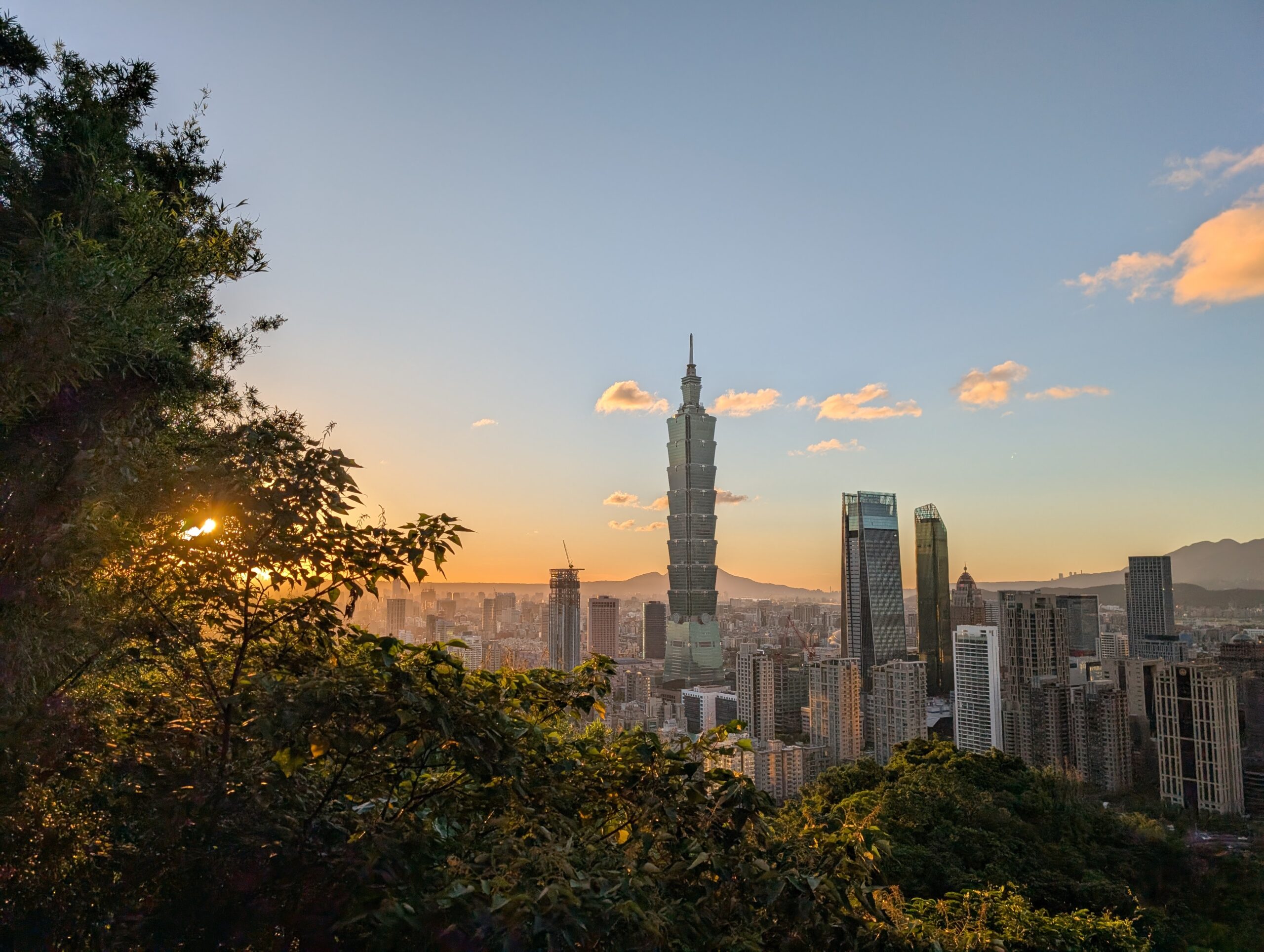
Figure 1: Taipei’s skyline from Elephant Mountain at sunset. Taipei 101 was the world’s highest building for a long time with its 101 floors!
©International Office
RWTHWorldwide Application: As mentioned, the first step towards studying abroad at NTU is applying through the RWTHWorldwide portal. The application takes place online only and involves submitting your CV, transcript (German GPA <2.0), a temporary course selection, and some prompted essays about your personal and academic motivations. For me, preparing all the relevant information and essays took around one day.
From my experience, applying to universities in Taiwan is a lot less competitive compared to other Asian and North American countries; nevertheless, the strict GPA requirement might already filter out many potential candidates.
Here are some of my impressions of my stay at NTU to help you find out if NTU is the right study abroad destination for you (and if yes, write the motivational application essays). Go to NTU if you want…
- … a highly ranked university on your CV: NTU is Taiwan’s best and most famous university, while also being recognized internationally on global- and Electrical Engineering rankings;
- … to learn Chinese,
- … a “beginner-friendly” Asia experience: Taiwanese people speak English comparatively well and use “western” apps (e.g. Google, Instagram, FB);
- … to live in a big city: Taipei obviously is a huge, modern metropolis, but offers a good mix of culture, nature and amazing food scene;
- … to save money: Taiwan is rather cheap compared to other East Asian destinations;
- … to travel: Traveling within Taiwan is inexpensive and easy to navigate, and Taiwan itself is a good base for traveling to other Asian countries.
However, NTU might not be the best place for you if you want…
- … excellent education: From what I have heard from my Electrical Engineering classmates, the best Taiwanese students all move to the US for their master’s programs, where they will receive a much higher salary after graduation;
- … to make lots of local friends: In my experience, most NTU students are very studious and do not have a lot of leisure time to spend with you. Also, there are a ton of other exchange students, with which it feels more natural to hang out with;
- … to transfer good grades back to RWTH: For some reason, RWTH is really strict with credit transfer from Taiwan for graduate students, where a B- at NTU is counted as a 4,0 at RWTH (see RWTH’s Grading Table).
RWTHWorldwide’s application results are usually announced in December, before opening of the Erasmus+ portal. After RWTH’s nomination, applications for the DAAD PROMOS scholarship are due on March 15th and September 15th each.
Application to NTU: RWTH’s International Office will organize a video call in March with all participating students from RWTH and then forward their data to NTU. From then on, you will have time until end of April to complete NTU’s application process, which involves uploading a copy of your passport, a passport photo for the student ID, your transcript of records, a motivational letter, and applying for accommodation. Interestingly, NTU does not have any language requirements for their exchange students. For the transcript of records NTU does not accept outdated transcripts. Meaning: If you are concerned about falling below the NTU’s GPA requirements, you cannot just upload an old transcript of records. Also, in my case, NTU was very strict with my motivational letter and even inquired me to update it to include the specific courses I would like to take at NTU. However, the application to NTU is mostly formal, and I do not know anyone who got rejected by NTU after already receiving a nomination by their home university.
For the accommodation, you can choose between single room with kitchen, single room without kitchen, and double room in NTU’s Prince House dormitory in Gongguan, and a quadruple room in the Yuantong Dormitory in New Taipei City. Contrary to what other experience reports state, three out of five RWTH students got placed into their first choice of single rooms in NTU’s Prince House when I went. From what I have heard, most students in Prince House had very good experiences with their accommodation, while students in Yuantong Dormitory were not as content.
NTU issues your letter of acceptance in June, from when on you will have time to conduct a mandatory health check, buy insurance, and apply for a visa. Personally, I went to LifeLink Radiologie im Kapuzinerkarree for the chest X-ray and to the RWTH’s Hochschularzt for the general health check. For insurances, although NTU expects you to buy health and accident insurance, most German travel health insurances actually fulfill both requirements. I bought and can recommend Envivas by TK, which covered both health and accident insurance and automatically issued me an English proof of insurance within one minute. Regarding visa, NTU actually assured me that it was acceptable from their side to be enrolled with a 90-day tourist visa, as long as your visa status remains valid for the entirety of the semester.
Other steps: Here are some final actions to consider before taking off:
- NTU Email: At some point, NTU switches to communicating via NTU email as opposed to your personal or RWTH email, which is why I suggest setting up the NTU email account as soon as possible.
- Course Selection: There are two course selection periods at NTU in August, where you can register for classes through their portal on a ranking-random basis (not first-come first-served). In case you only make it onto the waiting list, you can still add the respective class by asking the professor during the first weeks of the semester, the so-called add drop period. During my time at NTU, there were only a handful of cases where a student did NOT get into their desired class after kindly asking the professor.
- NTU’s Kick-Off Video Session: NTU does organize a rather messy kick-off session, but you will probably be fine without attending it and only reading their emails.
- Credit Card: Taiwan is still mostly cash-based, which is why you will definitely need a physical card to withdraw money from an ATM. Personally, I can recommend Barclays or Revolut.
- Travel Arrangements: There are direct flights from Germany to Taipei TPE, but I took one by Air China with transfer in Beijing. If you decide to do a visa-run, remember to book a return flight within 90 days of your arrival in Taipei.
To summarize, the application to NTU is a little bit of a tedious process, but not much organizational work in total. I am certain that the incredible experience you will have in Taiwan later on will make every minute of preparation worth it!
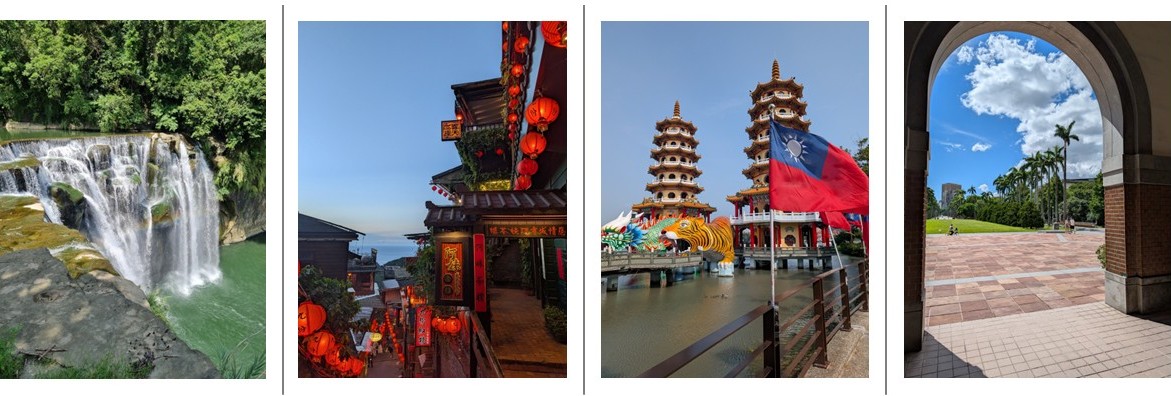
Figure 2: Taiwan impressions. From left to right: Shifen waterfall, Jiufen, Dragon and Tiger Pagodas, and NTU Main Library.
©International Office
2. First steps after arrival in host country
These are the actions I would recommend taking after arriving in Taiwan:
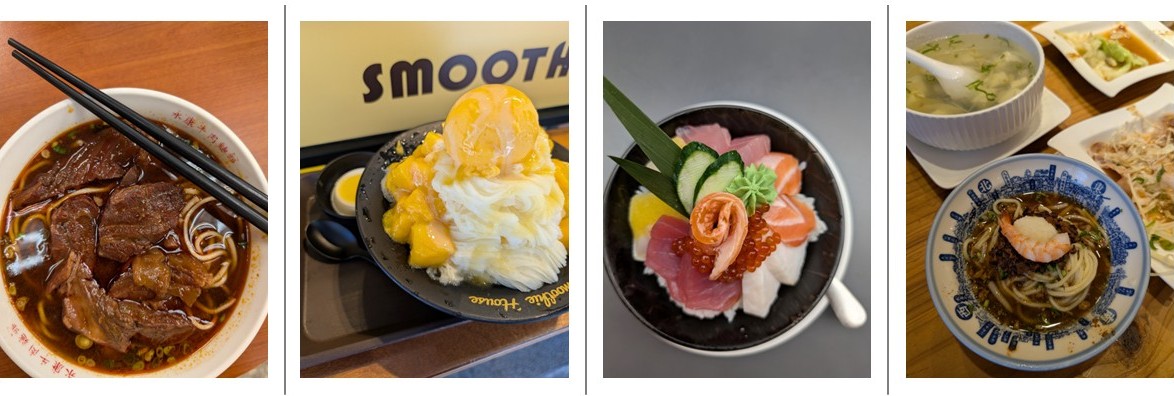
Figure 3: A huge part of Taiwanese culture is eating! From left to right: Beef noodle soup, mango shaved ice, sashimi, and Danzai noodles.
©International Office
SIM card: I can highly recommend getting a SIM card directly at the TPE airport. There is no advantage in getting a SIM card in advance, TPE has good wifi, and most carriers offer student discounts if you go in person. The largest carrier in Taiwan is Chunghwa Telecom, but they are very strict with issuing phone plans according to your visa (e.g., they only offer you a 90 day plan if you have a 90-day visa) and deactivate your phone number as soon as you leave the country. I personally chose the second-largest carrier, Taiwan Mobile 台湾大哥大, which has a little less coverage but does not have the problems stated above.
Transportation: Taipei has a good bus network, but the main public transportation is the Mass Rapid Transport (MRT), Taipei’s underground metro. The MRT is extremely reliable and relatively inexpensive, where you pay with your pre-loaded metro card, the so-called EasyCard. NTU’s student ID card has an integrated EasyCard which gives you a slight student discount for busses as well. Nevertheless, it makes sense to buy an EasyCard at the airport for 100 NTD (≈ 3€) for the first days in Taiwan before getting the student ID.
Besides MRT, the public bike rental service YouBike is also super convenient and commonly used on NTU’s campus. YouBike stations in Taipei are everywhere, the first 30 minutes are free, and you are charged a reasonable amount afterwards. You will need to register with your Taiwanese phone number and either bind your EasyCard or credit card to your account.
Quality of Accomodation: As I mentioned before, I did not stay in either of NTU’s dormitories; not because I did not want to, but rather because I did not receive a placement in any dorm, not even Yuantong dormitories. Before getting the dorm application results, I did not even know that this was possible. I ended up finding private accommodation via the housing agency Borderless House, which offers dormitory-style apartments in central locations for both Taiwanese locals and internationals between the ages of 18 and 30. Albeit more expensive than on the free housing market in Taipei, the application process was easy to sort out from abroad and my suitemates were all extremely nice and easy to get along with. I could not be more grateful for all the memories I made with them by spending each other’s birthdays, Christmas, and a lot of evenings together!
For Prince House, my impression is that all exchange students who stayed there had a good experience. The dorms are quite inexpensive and are located very conveniently at Gongguan MRT station next to NTU campus, the Gongguan night market and probably the largest and best 7-Eleven convenience store. For Yuantong dormitories, I heard that most students got increasingly annoyed at the inconvenient location in New Taipei City around 45 minutes from NTU campus by MRT, and at their three roommates. However, Yuantong might be a good option for the first month to do apartment hunting within Taipei.
Student Volunteer: NTU will assign you a student volunteer who is supposed to help you with the logistics of moving to Taiwan, similar to RWTH’s buddies. However, from my experience, most student volunteers are rather unmotivated. My student volunteer even straight-up told me she did not have any time for me this semester, which makes me wonder why she signed up for the program in the first place.
Orientation (Erstiwoche): Unlike Germany, where orientation is packed full of activities and social events, NTU’s orientation mainly involved some unnecessary information sessions and the formal registration process where you had to submit e.g. your health exam results.
3. Academic & Professional Experience
Although when comparing NTU to my experience studying in Germany and in the US, NTU sometimes felt rather unorganized, I am still more than grateful for everything NTU offered! NTU’s campus is well-maintained for its huge size, has more than plenty affordable dining halls and convenience stores, and two large libraries and even a 24-hour study room. Personally, I recommend checking out NTU’s drunken moon lake 醉月湖, the Social Science Library, and NTU Farm, which produces its own milk, tea, and other fresh produce!
Course Selection: NTU operates on a two-stage course selection period, where the first one starts mid-August. During each of the two periods (not first-come-first-served), you select and rank your desired classes in an online portal. More often than not, you will be waitlisted for your classes, but you will most likely receive a spot in the class as long as you go to the first lecture of the class and ask the professor for a separate registration code. The first two weeks of the semester are therefore referred to as the add-drop-period, where you can also deregister from classes without any consequences. I would therefore recommend you enroll in double the number of classes you plan to take during the course selection period, and drop the classes you are not interested in afterwards. After the add-drop-period, you can still drop courses by letting your professor sign a withdrawal request, but the class will still appear and marked as “W” on your transcript.
For the Chinese classes, you will have to attend a separate registration event, for which NTU’s International Office will send a lot of reminders. In my case, it fell on Saturday morning during orientation week. If you have no previous knowledge in Chinese, you can simply fill out the enrollment sheet; if you do have knowledge, you will have to take a placement test including questions on Chinese grammar, writing a report, and doing an oral interview with the Chinese teacher. You will then get placed into one of the 36 levels of Chinese classes; however, NTU is quite strict and even most of my friends, who have taken Chinese classes at their home university before, ended up in the first level. As a side note, writing in Simplified Chinese or Pinyin is actually allowed during the placement test, as well as in most Chinese classes.
Classes: Although I personally did not take as many engineering classes as one could have, I am very sure that, as an RWTH student, you will be adequately prepared for NTU’s classes as well. From NTU side, you are required to take at least two classes per semester regardless of number of credits, but I would recommend taking around four classes (1 Taiwanese credit = 2 ECTS) for a good balance between campus life and leisure time. Most exchange students at NTU take Chinese classes, ICL, and classes from the “Exploring Taiwan” series, so you might want to consider them if you want to get to know other international students.
- General Chinese (3 Credits): This class takes place either MON-WED-FRI morning, MON WED evening or TUES-THURS evening and has mandatory attendance. However, my teacher was quite relaxed, my fellow international classmates were fun and social, and the class was extremely funny for some reason. Interestingly, I think Chinese class was a bigger help in getting to know new people than orientation week.
- Enhancing Chinese (1 Credit): This class takes place TUES-THURS morning. Unless you are very motivated to improve your Chinese, I would not recommend this class solely because of the timetable, where you have to get up really early to learn similar contents to General Chinese.
- Phys1039 International Companions for Learning (2 Credits): ICL is a cultural exchange volunteering program between international university students and Taiwanese children. Besides the weekly video calls, the most interesting part was going to different schools all across Taiwan for free and participating in all the events the schools organize!
- Geo1008 Introduction to Field Geology (2 Credits): In this class, you spend three weekends going on an excursion to Kenting in the South of Taiwan, including preparation and final exam. The Professor is a multi-awarded teacher who really conveys his enthusiasm for geology! Obviously, this class is extremely fun and an easy way to obtain credits, but the grading is surprisingly strict.
Other than these classes, some classes my exchange student friends took were classes from the “Exploring Taiwan” series, “Edible Insects”, “Basic Taiwanese”, and various sports classes. The first two are catered specifically towards international students, taught in English, and have a very light workload. For the last two, the classes are taught predominantly in Chinese. You should look into all of these if you are interested in other fun classes!
For each “serious” class, you can expect mandatory attendance, homework problems, quizzes, a midterm exam, a final exam, and a final project or report. Graduate classes are usually seminar-style with around ten students per class, while undergraduate classes can have well over 60 students.
- Introduction to Power Electronics (3 Credits): The Professor is truly the absolute nicest and most caring professor from all classes I have ever attended! If you have not yet attended the equivalent Bachelor course at RWTH (“Power Electronics: Fundamentals, Topologies and Analysis”), I can highly recommend you taking her class. Her famous YouTube series on Power Electronics provides good insight into her fantastic teaching style.
- EE5078 Digital IC Engineering (3 Credits): This class covers highly industry-relevant topics with the Professor being a TSMC alumna. Although the class content was very interesting, it was difficult keeping up with the fast-paced lecture as there were no homework problems, or any other exercises whatsoever before the exams.
- IE5009 Game Theory with Applications (3 Credits): This class was an almost exact replica of Yale’s ECON159 Game Theory lecture series. The homework problems felt manageable, but the midterm and final exams were much harder and graded quite strictly.
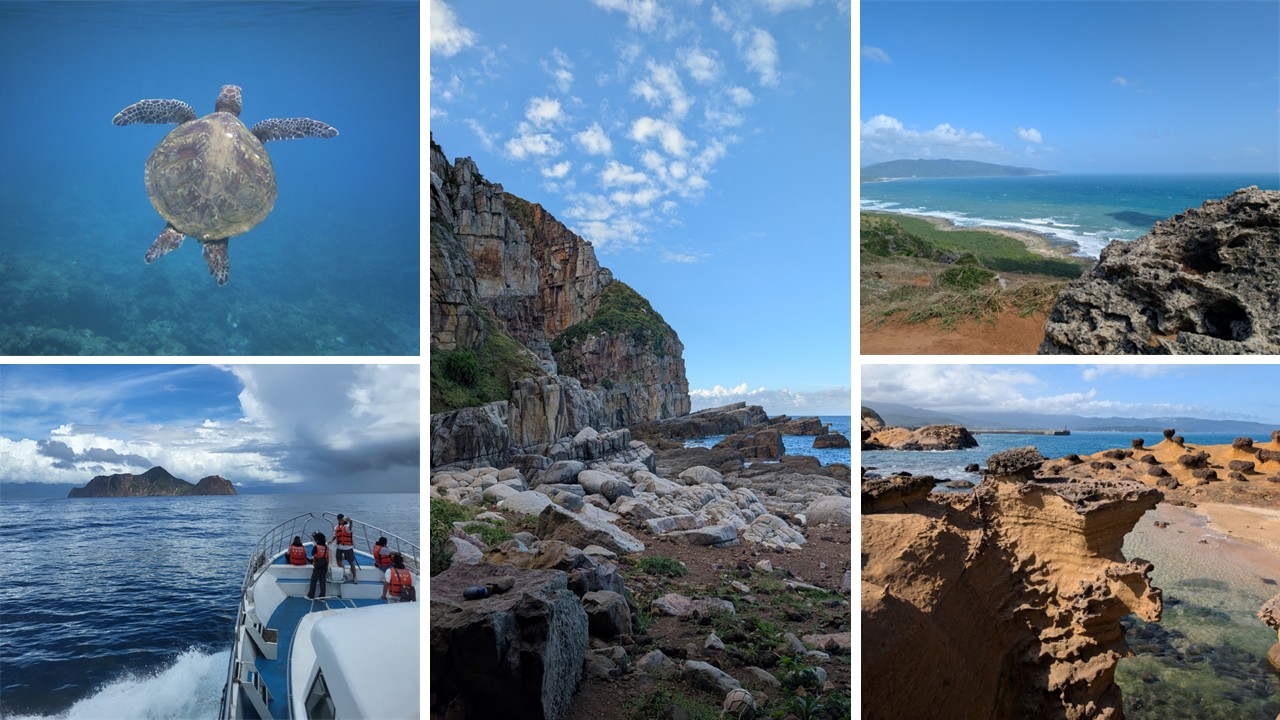
Figure 4: Taiwan’s geology is actually a very interesting field of knowledge to learn about! There is a lot of diversity in fauna and rock formations along Taiwan’s coastline!
©International Office
Generally, for RWTH’s master’s in Electrical Engineering, you can accredit all classes with some engineering applications as part of your Elective or General catalogue, while all other classes including the Chinese language courses can count towards Additional. However, I recommend double-checking with your academic advisor at RWTH beforehand.
Student Life & Extracurricular Activities: If you are able to speak Chinese, I am certain that you will be able to get the most out of campus life. Most local NTU students join at least one of their numerous student clubs, which are also presented at the NTU Club Fair at the beginning of the semester. For instance, I auditioned for and joined NTU’s K-Pop Dance Performance Club, which also hosted a ton of social icebreakers. It is, however, important to note that attending a student club is usually a weekly commitment, and I would consider wisely whether you want to sacrifice potential travel time for that.
If you do not speak Chinese, I got the impression that most student clubs are more hesitant to select you during auditions. Some Taiwanese people are unconfident about their English skills and seem to rather not want to go out of their way to talk to you in English. Also, some student clubs, e.g. NTU Hiking, do not accept exchange students per principle.
4. Financing
In general, RWTH’s PROMOS is a partial scholarship with 450€ per month (as of 2025/26) and no travel funding. This will unfortunately not be enough to cover your living expenses in Taiwan, even if you live frugally. I have heard of some other exchange students getting the MOFA Taiwan-Europe Connectivity Scholarship, although upon my request, RWTH’s International Office did not want to nominate me.
| Monthly budget breakdown (for 4 months) | |
| Flight, round trip | 200€ |
| Insurance | 50€ |
| Tuition* | 4€ |
| Accommodation | 350€ |
| Food** | 250€ |
| Transportation | 35€ |
| Entertainment / Leisure / Travel*** | 250€ |
| Total | 1,139€ |
Table 1: Monthly budget breakdown for one semester (= 4 months) at NTU. One-time costs are divided by 4.
* Tuition: As RWTH student, your tuition fees are waived, but you will have to pay a one-time campus internet access fee of 600 NTD (≈ 16€) before registration.
** Food: In my opinion, costs for food can vary very drastically. As mentioned before, NTU offers excellent dining options for lunch and dinner which can go as low as 50 NTD (≈ 1.30€) per filling meal. Convenience stores like 7-Eleven, FamilyMart, or HiLife are also around every corner both on campus and in Taipei, where you can get a full meal for under 100 NTD (≈ 3€). However, if you want to try all the amazing food Taiwan has to offer, it does make sense to spend a little more to around 120 NTD (≈ 3.30€) at a “normal”-priced Taiwanese restaurant. This is actually what a lot of Taiwanese students go for on a regular basis, which is also why you will find a ton of similarly priced restaurants near campus. Another great way to experience Taiwanese food culture are night markets, which offer street food but rarely go below 200 NTD (≈ 5.50€) per full meal. Lastly, like in every big city, you can get over-the-top food for ridiculous prices as well, especially sushi and sashimi. The above calculation is made with around 8.25€ per day, considering you do not cook at home, which most Taiwanese people actually don’t.
*** Entertainment / Leisure / Travel: As opposed to food, going out for drinks is about the same price in Taipei as in Aachen. For every larger weekend trip within Taiwan, I spend around 100€ in total including accommodation and transportation, but this can vary a lot depending on which level of comfort you want and which activities you plan. Personally, I went on some kind of trip within Taiwan almost every weekend, but most of them were hiking trips that are rather uncostly. However, if you plan to travel to other Asian countries, you of course have to budget in higher costs.
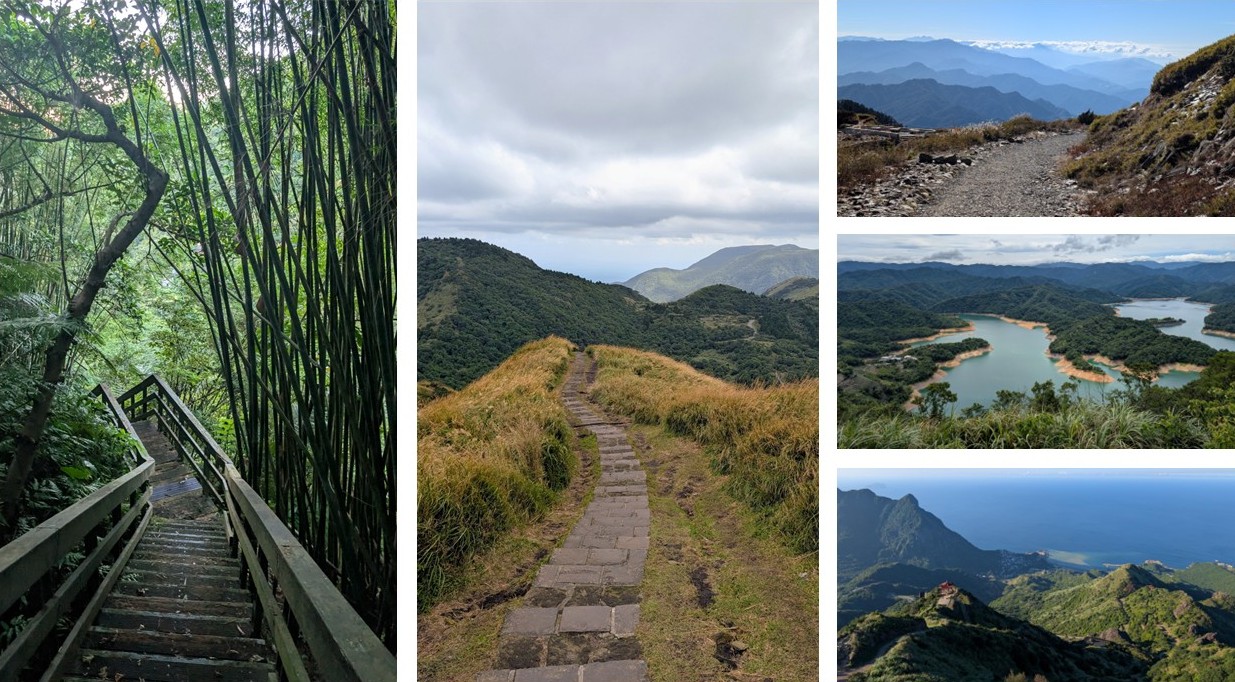
Figure 5: Taiwan is a nature-lover’s and hiker’s paradise! From left to right: Bamboo forests at Maokong, Silvergrass at Yangmingshan National Park, Hehuanshan, Thousand Island Lake, and Teapot Mountain Trail.
©International Office
5. Leisure & Cultural Experience
In case it didn’t become clear yet: I had a phenomenal time in Taiwan! I absolutely fell in love with the lively city of Taipei, NTU’s student community, and the diverse nature Taiwan has to offer. Most importantly, studying at NTU enabled me to meet so many different people from very different backgrounds, surprisingly including a lot of exchange students who also had more time on their hands to explore Taiwan. Each semester, there are more than 1000 exchange students at NTU, and although I surely have not talked to all of them, I can assure that not a single one had a bad time at NTU!
Exploring Taipei: Although most buildings in Taipei do not look the most polished, Taipei is extremely technologically advanced and modern. Everything is so well connected through MRT and YouBike, so that Taipei does not even feel like the huge city it is. Taipei’s most iconic landmarks are the skyscraper Taipei 101, Chiang Kai-Shek Memorial Hall, and Longshan Temple, but I can also recommend visiting the National Palace Museum, Taipei Fine Arts Museum, and Sun-Yat-Sen Memorial Hall. NTU occupies almost the entirety of Gongguan Area within the central Da’an District, which is one of the “old money”-wealthier areas in Taipei. Here, you can find a lot of cheap restaurants, study cafés, and bars, as well as the biggest park in Taipei, Da’an Park.
Generally, café culture is huge in Taiwan. Students regularly go to cafés to study, work, or hang out in the evening, which is why there are more late-night cafés than bars in Taipei. Besides Gongguan, Yongkang and Zhongshan District host many cozy cafés with fast Wi-Fi, power outlets, and no time limit. From what I have seen, Yongkang District is more artsy and traditional with many galleries, teahouses, souvenir stores and Taiwanese restaurants, while Zhongshan District primarily has trendy and modern shopping malls. Ximending is also a lively and modern shopping area, but also quite touristy.
Taiwanese people rarely seem to party, which is why you will find mostly foreigners in the party districts of Maji-Square in Yuanshan, and Xinyi District near Taipei 101. In both cases, the
cheapest way to go out is to pre-drink at one of the many convenience stores. Even in comparison to South Korea, Japan, and Thailand, I personally prefer Taiwanese convenience stores for their product variety, surprisingly clean restrooms, and large seating areas. In case you are staying in the Prince House dormitories, the 7-Eleven at Gongguan even offers beer on tap!
Another important part of Taiwanese culture is definitely their amazing food, which has a lot of Mainland Chinese influences. In my opinion, the best way to enjoy them is through sampling
at night markets! My favorite night markets include Raohe Night Market for their pepper buns 胡椒饼, Ningxia Night Market for their oyster omelet 蚵仔煎, and Linjiang Night Market for their tangyuan 冰火汤圆. However, my most visited night markets would have to be Gongguan and Shida Night Market solely because of their proximity to NTU, where I can highly recommend Hsiung Chi’s scallion pancakes 葱抓饼, millet donuts 小米甜甜圈, and Hohomei’s pineapple buns 冰火菠萝包. However, since it is just so much fun to explore and find new interesting foods, I will leave things for you to discover!
Traveling in Taiwan: I can confidently say that one semester at NTU was enough time for me to see most of Taiwan’s major attractions, and I believe the same is true for most other exchange students too! Firstly, most attractions in New Taipei City are easily reached by public busses, including the cities of Keelung, Shifen, and Jiufen. Cities on the west coast like Taichung, Tainan, and Kaohsiung can also be reached comfortably by the reasonably-priced High Speed Rail train in under three hours from Taipei. If you participate in the ICL program, you will also have plenty of options to visit these cities for free, and if you attend the field geology class, you will also go to Kenting, the Southern peninsula of Taiwan.
Apart from exploring Taipei, I would say that traveling in Taiwan mostly involves enjoying natural landscapes, hiking, and eating good food for cheap prices. If you are into surfing, diving, or snorkeling, you may also consider traveling to Green Island, Orchid Island, or the Penghu islands. Culturally, Tainan might also be interesting due to its many temples.
Traveling in Asia: Taiwan is an excellent base for exploring other Asian countries due to the plethora of cheap flights! I personally made it to South Korea and Thailand during the semester and Japan, Singapore, and Malaysia afterwards, but I heard other exchange students also explored Mainland China, Hong Kong, and the Philippines. For traveling during the semester, I can recommend checking with your teachers beforehand regarding attendance, who are very understanding and relaxed from my experience, especially if you tell them that you have to leave Taiwan for visa reasons. If you plan to travel to Mainland China, you might want to inform yourself about the visa regulations since I heard some NTU exchange students had difficulties re-entering Taiwan afterwards.
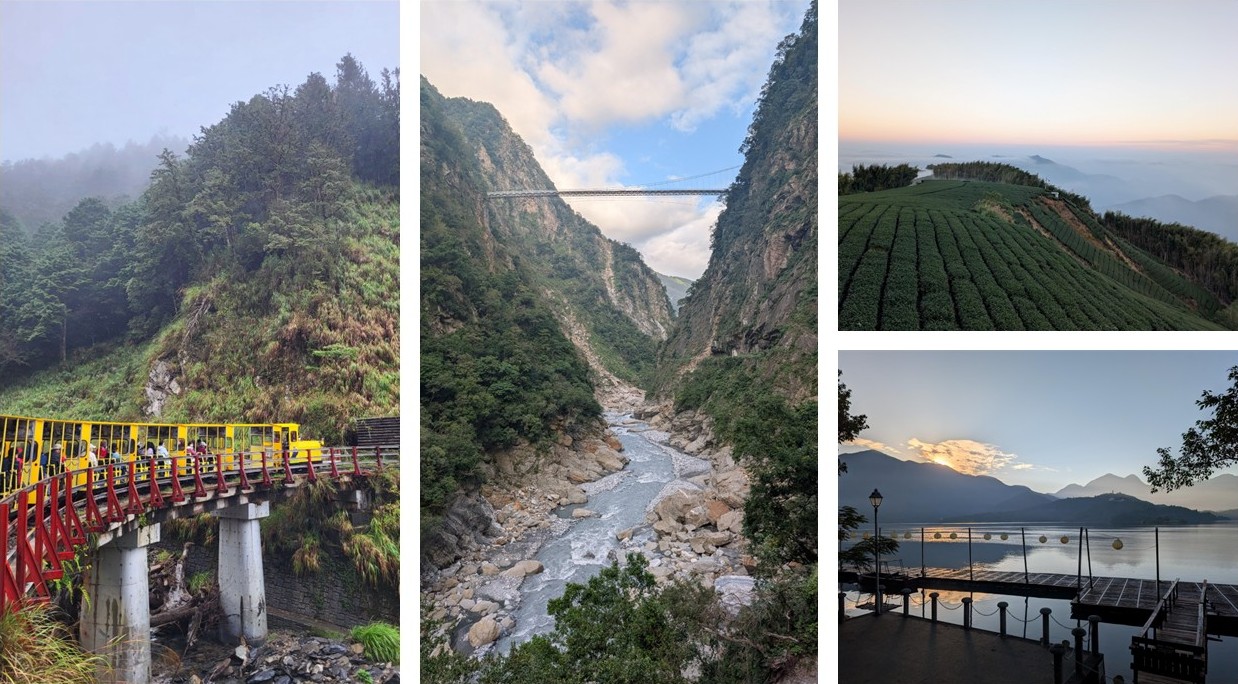
Figure 6: Taiwan’s major natural attractions: Taipingshan Natural Forest Recreation Area, Taroko Gorge, Sunrise at Alishan, and Sun Moon Lake.
©International Office
Safety: During my time in Taiwan, I experienced multiple earthquakes and typhoons but was never really affected in Taipei (although I had to change my travel plans a couple of times). The people in Hualien County however are almost always affected by any natural catastrophe, which is a) devastating to see, and b) should remind you to not underestimate the risks of traveling along Taiwan’s East coast, where e.g. over 1100 people were injured during the 2024 earthquake.
Also, during my time in Taipei, there was one mass stabbing attack on the MRT, which came really surprising even to the Taiwanese locals I talked to. Generally, Taiwan is considered extremely safe regarding crime rates, to the point where I as a women felt safer at night in Taipei than in Aachen. There were also no indications of the China-Taiwan-conflict in Taiwan itself during my time at NTU.
Insider Tips: While I have a ton of insider tips, I believe half the fun lies in discovering them yourself! Still, I have some recommendations: Mark your calendars for fireworks during the Taipei Summer Festival in August, Keelung Ghost Festival in September, and National Day in October. Also, if you want to climb Taiwan’s highest mountain peak, Yushan, you should keep in mind to apply for a permit one month in advance. Other than that, just relax and enjoy what Taiwan and NTU have to offer! You will have a great time, no matter what you choose to do or not to do during your semester abroad 🙂
6. What added value did the stay have for my studies / career prospects? How can / could the society benefit from my personal experience?
If my enthusiasm so far has not already sparked your interest in studying abroad, let me again point out the obvious advantages: An exchange semester makes a great addition to your CV by showcasing international experience, especially from such a prestigious university like NTU. For Electrical Engineering students interested in the semiconductor industry in particular, I believe that Taiwan is an excellent, career-relevant destination; but in general, Chinese skills are a valuable asset to have.
Personally, I feel like a semester abroad makes a good break in your usual study plan at RWTH and gives you a lot of opportunities to find new hobbies, see the world, and connect with very different people, all in a new cultural environment. For me, both of my semesters abroad were very critical for my personal development, and I would genuinely not be the same person I am now without them. So, in short, if you have the means, I can only highly encourage pursuing an exchange semester too!
7. To what extent does my stay abroad have a sustainable character?
As you can probably tell, I am an extremely strong advocate for exchange semesters, and I will be more than happy to share my amazing experiences through volunteering at RWTH’s Welcome Week and GoAbroad Fair. As VDE’s scholarship holder, I will also be holding a speech about my semester abroad at the upcoming member’s assembly, in case for some reason you are very interested?
Finally, I believe in giving back the invaluable support I received in the whole process of planning and embarking on my study abroad. So, whether you are planning, currently on, or reflecting upon your own exchange semester, I am more than happy to connect and help! Feel free to reach out, I always like to get to know new people anyways!
My Stay in New Zealand as a RWTH Research Ambassador
- PhD candidate for Marketing
- New Zealand, Dunedin and New Zealand, Christchurch
- University of Otago and University of Canterbury
- 02/2026 – 04/2026
Preparation and organization of the stay
My stay in New Zealand grew out of my own research interests. My work focuses on how companies communicate technological novelty, specifically, how linguistic framing shapes the acceptance of novel technologies. One Professor’s research at the University of Otago on market-led innovation and consumer communication was therefore a natural complement to my own work. Once I reached out to her, the collaboration came together quickly, and the planning developed from there.
One point I would emphasize from the beginning: I organized my stay on shorter notice than I would recommend. Ideally, planning should start at least eight months in advance. There is more to coordinate than it may first appear, and one detail that can easily catch people off guard is the structure of the academic year in New Zealand. It runs in the opposite rhythm to the European academic year: the semester begins in February, while the southern hemisphere summer falls in December and January. If the aim is to be integrated into semester activities (which, in my view, is where the real value of a stay like this lies), it is important to time the arrival accordingly and work backwards from local course schedules and invitation deadlines.
For accommodation, I would recommend checking with the university to see if there are student apartments available. Due to my time of arrival, I opted for AirBnB.
First steps after arrival in host country
My stay began in Christchurch, where I visited the University of Canterbury (UC) before continuing to Dunedin. At UC, I met with my supervising professor, whose research on health communication, including how institutions communicated with the public during the Covid-19 pandemic, opened up a rich conversation with direct relevance to my own work on framing and the communication of novelty. It was a thought-provoking start to the trip and a valuable reminder of how questions of framing, communication, and acceptance travel across different domains.
From Christchurch, I made my way to Dunedin and the University of Otago, the oldest university in New Zealand, founded in 1869. The campus reflects this history beautifully: historic buildings, green lawns along the Leith River, and a strong sense of academic tradition. The research group around my supervising professor welcomed me warmly from the very beginning. I was quickly included in departmental life through seminars, group meetings, and informal exchanges, and within the first week I already felt genuinely part of the community. My Airbnb near the beach was the perfect base: compact, cozy, and close to the ocean. I made very good use of that throughout my stay.
Academic/professional experience
The academic core of my time at Otago was built around two formats. First, I co-led workshops and seminars in the course “Market-Led Innovation” at the Otago Business School, in which students develop their own innovation ideas and business models through an iterative, workshop-based process. I contributed content and coaching drawing on the work of the WIN group and the RWTH Entrepreneurship Center, guiding students from early stage idea through market logic and business model development. What struck me throughout was how universal the core tensions of entrepreneurship are and how much context shapes the answers. Woven into the course were industry talks from New Zealand and international companies, among them ZURU, a globally successful consumer goods company that built its reach from New Zealand outward. A compelling illustration that market driven innovation can work from almost anywhere, and an example I’ve already brought back into my own teaching. Second, I delivered a research seminar for staff and postgraduate students, presenting my paper “Framing Novelty in Innovation – Exploring the Role of Linguistic Framing in the Acceptance of Novel Technologies.” This connects directly to what had drawn me to my supervising professor’s work in the first place: we are both interested in how novelty is communicated and received, approaching it from adjacent angles. The discussion that followed was dense and substantive, and the marketing science perspective I took away has fed back directly into my research.
Financing
New Zealand is not a cheap destination. Rent is the largest fixed cost. For a private place, one should expect to pay around NZD 1,500–2,000 per month, depending on location and
standard. Student accommodation may be cheaper, especially if the timing of the stay aligns well with the academic year, but this needs to be checked early.
Day-to-day living costs are more manageable if you cook for yourself. Supermarkets are well stocked, and grocery prices are reasonable overall. One practical tip: make sure your accommodation has a proper kitchen. Eating out regularly becomes expensive quickly, although that is also true in Germany.
Flights are the other major expense and should be planned and booked as early as possible. In addition, I had to account for visa-related fees, international health insurance, and local transport. Overall, the budget is manageable, but it is important to go in with realistic numbers.
One very positive surprise was the coffee culture. The coffee in New Zealand is excellent and, in many places, significantly cheaper than in Germany. I have rarely encountered such a high density of wonderful cafés.
Leisure/ cultural experience, insider tips
Dunedin is a wonderful base for a longer stay. The city is compact, the pace is relaxed, and the community feels genuine and open. I got to know local surfers at St Clair Beach, found
great places to dance, stayed active, and spent a lot of time outdoors hiking, camping, and exploring. The Otago Peninsula alone is worth the trip. It offers wildlife, dramatic coastlines, and some of the best short walks I have done anywhere. Beyond Dunedin, New Zealand is made for road trips. I drove, hiked, and camped across the South Island, and I have never experienced another country where the landscapes shift so constantly and dramatically, from fiords to alpine passes to open coastline.
If you have sufficient time, use it. The distances are manageable, and the rewards are invaluable. Classic New Zealand experiences, such as a night in a backcountry hut, waking up to mist over a lake, or driving through scenery so beautiful that you have to stop the car, are all within reach on weekends.
What added value did the stay have for my studies/career prospects?
Working within a genuinely different academic system with a different teaching culture, different industry relationships, and a different relationship between university research and market application has expanded the way I think about innovation education and what it means to support people on the path from idea to venture.
The workshop-based teaching approach I taught at Otago has given me concrete methods and formats that I can bring directly into coaching and workshop settings at RWTH. The
industry examples from companies that have built global reach from a small and geographically remote market are immediately useful in conversations with RWTH students and researchers, especially when they assume that geography is a major constraint.
In that sense, the stay has value beyond my own professional development. The insights I gained can help me support students and researchers more effectively in translating ideas into viable innovation projects. This is particularly relevant in a university environment like RWTH, where many promising ideas originate in science and engineering but need support in becoming understandable, market-oriented, and socially relevant.
To what extent does my stay abroad have a sustainable character?
My supervising professor and I are exploring expanding our collaboration in teaching, which creates a recurring point of connection between the University of Otago and RWTH Aachen. The conversations at the University of Canterbury also opened up a complementary line of research exchange.
More broadly, the methods, examples, and perspectives I brought back will continue to shape my teaching, coaching, and research at RWTH for the foreseeable future. Three months of genuine integration into a department builds relationships, routines, and ways of thinking that do not disappear once the stay ends.
Conclusion
If you are considering a research stay abroad and New Zealand is on your radar: go. The RWTH Research Ambassador Scholarship creates a valuable opportunity to step outside your usual academic environment, work in a genuinely different research and teaching culture, and return with perspectives and skills that are difficult to develop at home.
For me, the stay at the University of Otago was academically productive, professionally enriching, and personally memorable. It strengthened my research, expanded my teaching repertoire, and created new opportunities for international collaboration. At the same time, it allowed me to act as a representative of RWTH abroad and to contribute, in a concrete way, to strengthening international academic relationships.

©International Office
My Research Internship at the Seoul National University
- Business Administration and Engineering: Mechanical Engineering B.Sc.
- South Korea, Seoul
- Seoul National University
- 10/2025 – 10/2026
1. Preparation and organization of the stay
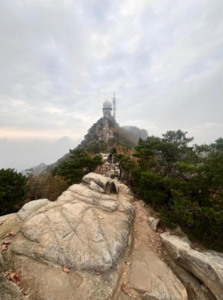
Gwanak-Gu Mountain
©International Office
– My former supervisor at an institute at RWTH has been working with this specific lab on some projects before and when I mentioned, I was looking for a stay abroad, he made the contact.
– Although almost every Korean learns English since kindergarten, they can´t speak it and are better at texting. Working in an English speaking environment in Korea is therefore more rare than common.
– If you visit the country under 90 days and don´t work/are unpaid, you don´t need a VISA, you need to fill out the e-arrival card
– I found my apartment via 33m2
– For insurance I just added a stay-abroad to my already existing german insurance
– Travel-Arrangements: International Airport is Seoul, Incheon. From there you can go by Airport Bus (10 Euros), Subway (3 Euros) and Uber (20-50 Euros)
2. First steps after arrival:
– My first night was in an hotel, so getting there was my first step
– Hotel-/stay booking over booking.com/Airbnb is much more expensive and you get worse quality. I recommend booking via local platforms.
3. Academic/professional experience:
I did a research internship, where I worked every day. I needed to find my own problem on which no one has ever worked before and then try solving it. I didn´t take any courses and wasn´t an enrolled student. I learned many skills the RWTH doesn´t teach you: Robotics, Sensors, working with hardware, working with Linux, real programming, ROS2…
4. Financing:
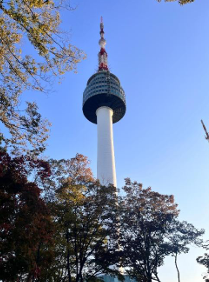
N-Tower
©International Office
– Rent: 500-800 euro ( if you are on a real tight budget, you can get a goshiwon for 200 Euros)
– Insurance: ask your German insurance company, mine offers a full coverage for 200-300 Euros for 3 months
– Food: you don´t really cook in Korea. Kitchens are small and shared by many people( in my apartment by 20-25 people). You always eat out. It is common to eat instant ramen in convenience, although they aren´t really nutritious. The University offers many different cafeterias and cheap meals. (Ranging from 1.000 KRW to 12.000 KRW). There are also Burger, Sandwich and Fried Chicken Franchises on Campus. For Dinner you can get many meals for 8000 -14.000 KRW(5 – 8 Euros). Water is always for free at restaurants.
– If you want to go out on the weekends, you should plan 30-60 Euros for one evening. (you usually go to multiple places in one evening)
– Public Transport is pretty good. Try to find a place in 5 min walking distance to a Line 2 station and get a climate card (you can get it at a CU).
– Unless you have a residency card, you won´t be able to get a Korean bank account. Transfers between foreign bank accounts and Korean bank accounts are not possible. There are often places (even Chains) who won´t accept foreign banking cards. So always have some cash or you can load a T-Money Card(from a Convenience Card) with some Cash at subway stations.
– 100 to 200 Euros per month for extra activities
– 100 Euros Buffer
– I would say with everything, plan the upper end of your budget estimates.
5. Leisure:
Seoul is really big. You often need 0,5 to 1 hour for your commute, so just explore all the areas. I also often asked AIs for Tips. This way I often went to places, often locals didn´t know. Many areas have a very distinct character with beautiful Cafés, Bars and Restaurants. Just explore. If you like some sporty activities hike up some “mountains” that are around Seoul or hike to some hidden Buddhistic temples. If you like shopping there are many department stores and malls. There are also ski resorts in 1 to 2 hours distance of Seoul. Clubbing isn´t really a big thing in Seoul, but Karaoke is. So definitely try this one out! For finding places and for your daily commute use Naver Maps (better for finding places) and Kakao Map (better for commuting). Google Maps, Apple Maps,… don´t work in Korea for security reasons.
6. What added value did the stay have for my studies/career prospects?

Starfield Library
©International Office
In German Institutes stuff often needs to be variously planned. Here they try to implement the silicon valley motto: try fast, break fast, improve fast. One thing I haven´t learned yet at my HiWi-Jobs. You are also completely independent and self reliant. If something doesn´t work, it´s your fault, but if something work, it´s your win. So this really shaped my understanding of handling engineering tasks. Just try it out, you´ll figure it out along the way. And this mindset I think should be more implemented in Germany and is something we planning Germans (haha) could benefit from.
7. To what extent does my stay abroad have a sustainable character?
You can realistically only get there by plane, but Seoul has this initiative for some years now to reduce carbon emissions by having a good public transportation (especially if you live near line 2). So completely relying on the subway and busses had a sustainable character. More Over South-Korea gets a lot of the fine dust by wind from North-Korea and China in early spring. Checking out the Air Quality and wearing masks, when it is bad, is recommended.
8. Conclusion:

Hongdae
©International Office
The stay was definitely worth it and I learned a lot regarding to my engineering capabilities. Living and Working in an completely different culture and language is an experience. The now in Germany discussed 4 day work week would be a joke in Korea and is more parttime. People often work 7 days a week, 10 hours a day. I remember once coming to work at 7:30 am and seeing my colleague has already arrived. I asked him, since when he is here. He told me: 10. Me: Oh 10 pm? Did you work through the night? He then continued telling me, he has been working since 10 am yesterday. It wasn´t the last time, I saw him, doing this. So all-nighters because of deadlines and the sheer work load are a thing here and I also had to do it once. (I can relieve you a bit: the expectations for foreigner are lower) Koreans area very hardworking. And if you have the opportunity, I recommend it! It is lots of fun. (if you like some suffering along the way as well 😉)
Mein Aufenthalt als RWTH Research Ambassador in Neuseeland
- PhD-Kandidat in der Energiewirtschaft
- Neuseeland, Christchurch und Neuseeland, Dunedin
- University of Canterbury und University of Otago
- 01/2026 – 04/2026
1. Vorbereitung und Organisation des Aufenthalts
Die Vorbereitung meines Aufenthalts in Neuseeland begann mit der fachlichen Abstimmung mit den Gastgebern und der formalen Einbettung in die jeweiligen Strukturen der Partneruniversitäten. Es wurde direkt zu Beginn klar gemacht, dass man eigenes Funding mitbringen muss. Da dies in meinem Fall gegeben war, war der Kontakt mit den ForschungsgruppenleiterInnen pragmatisch und “welcoming”.
Gastuniversitäten und Einbindung
-

©International Office
University of Canterbury (Christchurch): Sustainable Energy Research Group (SERG)
- University of Otago (Dunedin): Austausch mit der lokalen Energieforschung

Inhaltlich stand von Beginn an fest, dass der Aufenthalt in Christchurch nicht nur einem klassischen Forschungsbesuch dienen sollte, sondern die gezielte Weiterentwicklung und Finalisierung einer internationalen Kooperation im Themenfeld „low carbon und climate resilient buildings“ im Kontext der Horizon Europe Förderlandschaft vorantreibt. Der Forschungsaufenthalt in Dunedin war jedoch ergebnisoffen.
Visa, Einreise, Versicherung (Rahmenbedingungen)
Für deutsche Staatsangehörige ist bei Kurzaufenthalten häufig eine Einreise über das Visa Waiver Programm mit vorheriger NZeTA-Beantragung möglich; bei Einreise kann dann ein Besuchsstatus von bis zu 3 Monaten gewährt werden. (Immigration New Zealand)
In der Praxis lohnt es sich, früh zu prüfen, ob die eigene Tätigkeit (z.B. Forschungsaufenthalt ohne lokale Vergütung) vollständig mit dem gewählten Status kompatibel ist, und ob zusätzliche Anforderungen der Gastinstitution (z.B. Nachweise zur Krankenversicherung) gelten.
Zusätzlich sollte man die International Visitor Conservation and Tourism Levy (IVL) einplanen, die bei vielen Einreise- und Visaprozessen anfällt und aktuell bei NZD 100 liegt. (Immigration New Zealand)
Reiseorganisation
Da Neuseeland sehr weit entfernt ist, sind Jetlag und „Ankommenszeit“ realistische Faktoren in der Planung. Ich habe daher bewusst Puffer für die ersten Arbeitstage eingeplant, um direkt arbeitsfähig zu sein. Für mobile Phasen (Christchurch und später Dunedin) hat es sich bewährt, Unterlagen digital und redundant verfügbar zu halten (Cloud plus Offline-Kopie), da man häufig zwischen Campus, Unterkünften und Terminen pendelt.
2. Erste Schritte nach der Ankunft und Qualität der Unterkunft
Nach der Ankunft standen zunächst pragmatische Dinge im Vordergrund: lokale SIM, grundlegende Orientierung, Wege zum Campus, sowie die Abstimmung der Arbeitsroutinen (Zugang, Büro, Meetingstruktur). Besonders hilfreich war, dass beide Universitäten mit internationalen Gästen routiniert umgehen und entsprechende Kontaktpunkte anbieten.
Unterkunft
In Neuseeland ist der Wohnungsmarkt in Universitätsstädten spürbar angespannt, und kurzfristige, möblierte Optionen sind häufig deutlich teurer als langfristige Mietverträge. Für Forschungsaufenthalte mit Standortwechsel ist eine möblierte Kurzzeitlösung dennoch meist die praktikabelste Option. Aus meiner Sicht lohnt sich:
- frühzeitige Suche über AirBnb oder Uniangebote (je nach Saison mehrere Wochen bis Monate vorher),
- klare Lageprioritäten (Nähe zum Campus vs. Innenstadt),
- Heizstandard/Isolierung aktiv prüfen, weil Gebäudequalität stark variieren kann (gerade im Winterhalbjahr à für mich nicht relevant, da Sommer).
3. Akademische und berufliche Erfahrungen
Der Kern meines Aufenthalts war die Kombination aus inhaltlicher Projektarbeit, institutioneller Repräsentation und strategischer Netzwerkentwicklung.
Forschungs- und Projektfokus
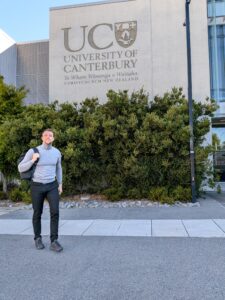
©International Office
In Christchurch war ich am SERG an einem RWTH-geführten Horizon-Europe-Konsortium im Built4People-Kontext angebunden. Inhaltlich adressiert der Call innovative Pfade zur Dekarbonisierung und Klimaanpassung des Gebäudebestands und betont dabei Skalierbarkeit, Validierung in mehreren Ländern sowie die Einbindung relevanter Stakeholder entlang der Wertschöpfungskette. (CORDIS)
Als Projektverantwortlicher habe ich vor Ort insbesondere:
- die technische und konzeptionelle Abstimmung zwischen europäischen und neuseeländischen Partnern koordiniert,
- die Beiträge konsistent in die Gesamtarchitektur des Antrags integriert,
- die finale Einreichung im Zeitfenster der Ausschreibung aus Christchurch heraus abgeschlossen.
Der Call selbst war im EU Funding & Tenders Portal mit Öffnung im September 2025 und einer Deadline Mitte Februar 2026 gelistet. (European Commission)
Damit wurde der Aufenthalt auch organisatorisch zu einem „Real-Life-Stresstest“: internationale Zeitzonen, parallele Abstimmungsprozesse und die Notwendigkeit, in kurzer Zeit belastbare Konsenspositionen herzustellen.
Wissenschaftlicher Austausch und Sichtbarkeit
Während meines Aufenthalts habe ich meine Forschung und die Arbeit meines Instituts an der RWTH Aachen University (insbesondere zu E-Mobilität, Energiespeichern, Demand-Side-Flexibilität und Energiesystemintegration) in zwei Formaten vorgestellt:
- SERG Research Talk in Christchurch
- OERC Seminar in Dunedin
Als Research Associate und PhD-Kandidat in der Energiewirtschaft arbeite ich an der Schnittstelle von Energiesystemen, Marktmechanismen und Akzeptanz bzw. Nutzerverhalten, unter anderem zu dynamischer Bepreisung und Flexibilitätsoptionen.
Die Präsentationen waren besonders wertvoll, weil sie nicht nur Forschungsergebnisse „exportiert“ haben, sondern die Gelegenheit boten, die Anschlussfähigkeit an die neuseeländische Forschungsagenda konkret zu diskutieren (z.B. Gebäudebestand, Systemintegration erneuerbarer Energien, Elektrifizierung).
Zweiter Standort: University of Otago
Der anschließende Aufenthalt in Dunedin war ein bewusst gesetzter zweiter Ankerpunkt. „Ergebnisoffenes“ Ziel war es, eine zusätzliche institutionelle Schnittstelle aufzubauen und den Austausch mit der lokalen Energie-Forschungsgemeinschaft zu vertiefen. Das hat die Kooperationsperspektive deutlich verbreitert, fachlich wie organisatorisch.
4. Finanzierung und Kosten
Neuseeland ist insgesamt ein Land mit geringeren Lebenshaltungskosten als viele Studierende und Forschende es aus Deutschland gewohnt sind, insbesondere bei Lebensmitteln und Restaurantbesuchen. Voraussetzung für diese Wahrnehmung ist das deutsche Gehalt, denn das Lohnniveau der NeuseeländerInnen ist geringer als das der Deutschen.
Dennoch gibt es gewisse Kostentreiber
- Unterkunft: Kurzzeitmieten schlagen stark zu Buche, vor allem bei guter Lage und möblierter Ausstattung.
- Mobilität: Innerstädtisch geht vieles mit Bus und zu Fuß, aber für Ausflüge und interregionale Wege sind Mietwagen oder Inlandsflüge häufig die realistischen Optionen.
- Lebensmittel: Wenn man sich abseits der lokal hergestellten Nahrungsmittel kulinarisch bewegen will. Produkte aus Europa (z.B. Mozzarella, Parmesan, Olivenöl) sind verständlicherweise teurer.
Praktische Punkte
- Eine Kreditkarte ohne Auslandsgebühren ist sehr hilfreich.
- Viele Zahlungen laufen kontaktlos, Bargeld ist nebensächlich (habe genau gar keins gebraucht).
5. Freizeit, Kultur, Insider-Tipps
Neuseeland eignet sich hervorragend, um Naturerlebnis und Arbeitsalltag zu verbinden, gerade weil viele Orte in kurzer Zeit erreichbar sind, wenn man Wochenenden strategisch nutzt.
Rund um Christchurch
- Port Hills für kurze After-Work-Hikes mit Blick über die Stadt
- Banks Peninsula und Akaroa für Küstenlandschaft und „kleine Auszeit“
- Tages- oder Wochenendtrip Richtung Arthur’s Pass oder Lake Tekapo (Wetterfenster beachten)
Rund um Dunedin
- Otago Peninsula (Natur, Küste, Wildlife)
- Moeraki Boulders als klassischer Abstecher an der Küste
- Die Catlins, wenn man ein langes Wochenende einplanen kann
Kulturell
Was ich besonders positiv erlebt habe: eine sehr zugängliche Gesprächskultur im akademischen Umfeld und eine hohe Selbstverständlichkeit interdisziplinärer Perspektiven, gerade in Energie- und Gebäudethemen (Technik, Policy, soziale Dimensionen).
6. Mehrwert für Studien- und Karriereweg und gesellschaftlicher Nutzen
Der Aufenthalt hat meinen akademischen Weg in mehrfacher Hinsicht konkret gestärkt:
Karriere- und Forschungsmehrwert
- Internationale Leitungserfahrung: Die Antragseinreichung unter realen Zeit- und Koordinationsbedingungen hat Projektführungsfähigkeiten in einem Horizon-Europe-Setting deutlich geschärft.
- Inhaltliche Erweiterung: Der neuseeländische Kontext (Gebäudebestand, Klima, Systembedingungen) hat neue Vergleichs- und Transferfragen eröffnet, die ich in meine Forschung zurücktrage.
- Sichtbarkeit der RWTH: Durch Vorträge und institutionelle Anbindung wurde RWTH-Forschung in der lokalen Community präsent und konkret „adressierbar“.
Gesellschaftlicher Nutzen (Transfergedanke)
Ein persönlicher roter Faden meiner Arbeit ist die Frage, wie Energiewende praktisch akzeptiert, verstanden und mitgetragen werden kann. Ich engagiere mich dafür auch außerhalb der Universität, etwa über Formate zur Energiekompetenz und zur Verbindung von Technik, Kosten und Alltagsrealität.
Die neuseeländischen Gespräche haben mir neue Beispiele geliefert, wie Kommunikation über Energie und Gebäude stärker nutzerzentriert und weniger technokratisch gelingen kann.
7. Nachhaltiger Charakter des Auslandsaufenthalts
Der nachhaltige Charakter meines Aufenthalts ergibt sich aus drei Punkten:
- Verstetigung von Kooperationen: Der Besuch war nicht nur Networking, sondern direkt in ein gemeinsames, strategisches Vorhaben eingebettet (Built4People/Horizon Europe). (CORDIS)
- Zwei institutionelle Anker: Christchurch und Dunedin bilden zwei Kontaktpunkte, die perspektivisch unterschiedliche Kooperationspfade eröffnen (thematisch wie personell).
- Wissenschaftliche Anschlussfähigkeit: Es sind gemeinsame Paper-Ideen, die Bereitschaft von Daten- und Methodenaustausch, mögliche Co-Supervisionen und Gastvorträge entstanden.
8. Fazit
Als RWTH Research Ambassador in Neuseeland war mein Aufenthalt mehr als ein klassischer Forschungsbesuch. Er war eine Kombination aus Projektverantwortung, wissenschaftlicher Sichtbarkeit und gezieltem Aufbau belastbarer Partnerschaften. Besonders wertvoll war die Erfahrung, einen zentralen Antragsschritt eines internationalen Konsortiums direkt vor Ort zu finalisieren und gleichzeitig RWTH-Forschung im neuseeländischen Kontext zu positionieren.
Ich bin dankbar für das Vertrauen, das mir mit dem Stipendium entgegengebracht wurde, und sehe in den geknüpften Kooperationen eine sehr konkrete Basis für langfristige gemeinsame Forschung und nachhaltigen Wissenstransfer zwischen RWTH Aachen University und Partnern in Neuseeland.
My Clinical Elective in Granada
- Medicine
- Spain, Granada
- Universidad de Granada
- 11/2025 – 01/2026
1. Finding an Internship

©International Office
Organising clinical rotations as a medical student in Spain can be quite challenging, as most Spanish hospitals only accept foreign students during the summer months, when Spanish students are on break. I tried to obtain a placement in Madrid and Valencia without success but eventually secured an internship in the Department of General Surgery at Hospital Clínico San Cecilio through a personal connection via my Spanish teacher in Germany. It can be difficult to reach the department secretary; however, if you are interested, you are welcome to contact me for the email address of the Head of General Surgery (louisa.wolters@gmail.com).
I would recommend organising the internship several months in advance, as Spanish hospital administration tends to respond more slowly, for example when it comes to signing the Learning Agreement for Traineeships. In addition, I had to register on an online platform (r0) of the University of Granada, for which an erweitertes Führungszeugnis (extended police clearance certificate) is required. Obtaining this document can take several weeks. Apart from that, the application for the Erasmus scholarship is very straightforward and quick. Since I split my practical year tertial and only completed a two-month internship, I did not have to enrol at the Spanish university.
2. Accommodation & Living Expenses
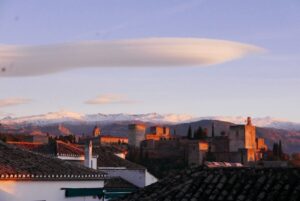
Generally speaking, accommodation in Spain is cheaper than in Germany. I paid €290 per month for a small but beautiful room in a shared house in the Albaicín, with a rooftop terrace and a view of the Alhambra and the Sierra Nevada. There were 18 international students living in the house, which may sound a bit overwhelming at first. For me, however, it was ideal, as I assumed it might be difficult to meet many people during such a short stay. My roommates were incredibly kind and quickly felt like a small family. Since some of them were Latin American and most had a good level of Spanish, we mainly spoke Spanish at home.
©International Office
I personally really enjoyed living in the Albaicín, as it is a very quiet neighbourhood with hardly any cars. However, you do have to walk up a fairly steep hill every day, which can be somewhat exhausting. On the other hand, this also allows you to enjoy a beautiful sunrise over the rooftops of Granada every morning on your way to the bus stop. Many Erasmus students also live in the city centre around the cathedral or near Camino de Ronda, where most bars and clubs are located.
Accommodation can mainly be found via Idealista. Many listings specify minimum rental periods, but I would still recommend asking, especially if you start your internship in the middle of the semester, as many rooms may still be available. Since contact is usually directly with the landlord (even for shared apartments) and scams are relatively common, I strongly recommend arranging at least a video call before making any payments—ideally also getting in touch with someone currently living in the apartment. The lead time before the start of the rental period is usually quite short; for example, I found my room just one week before my flight. Many people also choose to rent an Airbnb or stay in a hostel for the first week and look for accommodation after they arrive in Granada. During the winter months, I would definitely recommend renting a room with heating, as it can get quite cold in Granada and Spanish houses are generally not as well insulated as German ones. Supermarket and public transport prices are slightly cheaper than in Germany.
3. Everyday Life
Cycling in the city is not very common and seems rather dangerous, which is why I used the bus to get to the hospital. Since Granada is a very small city, most distances are walkable, and even the longest bus rides take no more than 20–30 minutes. As I was not enrolled at the University of Granada, I was not eligible for the student bus ticket, but a regular monthly ticket is available for around €30.

©International Office
As a medical student, you should be aware that in Spain it is very uncommon for students to be actively involved in clinical work, and internships are generally considered observational. In my case, the doctors were very friendly and eager to explain things, but I still missed being able to participate more actively and feeling like a real part of the team, as is often the case in Germany. During my two-month internship, I did not receive an access card to open doors (such as the entrance to the surgical area) or a code for the scrubs dispenser, which meant that I had to wait for and ask doctors every day to enter restricted areas and obtain my work clothes. Nevertheless, especially the residents treated me very kindly and included me in team activities, such as having a beer with the head of department after work, visiting the Alhambra, or attending their Christmas dinner.
Moreover, students are not really expected to stay at the hospital in the afternoons, and on most days, I was able to leave between 12 and 2 p.m. This left me with plenty of free time to explore Granada and work on my doctoral thesis. I would definitely recommend having a good level of Spanish. Even though some doctors speak English, most prefer Spanish and are clearly relieved when they realise that you speak it as well.
4. Free Time
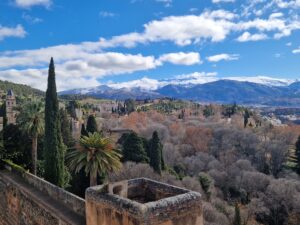
Granada is an ideal city for anyone interested in history, architecture, and culture. It represents a true melting pot of Arabic, North African, Spanish, and Gitano culture. Even though the city is not very large, it offers countless restaurants, clubs, and, of course, tapas bars, where drinks are still traditionally served with a free tapa. There are many remarkable places to visit, such as the Alhambra, but also the numerous cármenes and viewpoints in the Albaicín.
©International Office
Depending on the season, hiking, climbing (including via ferratas), and skiing are possible in the Sierra Nevada mountains, which can easily be reached by bus. I personally enjoy dancing salsa and was very happy to discover that Granada offers several dance schools and a number of social dance events each week. This is also a great way to connect with locals; for example, my class would often go out for drinks together after the lessons. Running and cycling can be somewhat challenging due to the city’s many hills and the lack of proper cycling lanes. Andalucía also offers many stunning cities that are well worth visiting, such as Málaga, Córdoba, Sevilla, and Cádiz. In summer, there are also several beach towns nearby that are ideal for short trips.
5. Conclusion
I would definitely recommend completing part of your practical year abroad, and especially in Granada. For me, it was the perfect city: small enough to quickly feel like home yet offering a great variety of activities and an incredible richness of culture and history. I had already completed an Erasmus semester in Málaga two years earlier and had fallen in love with Spanish culture, particularly Andalucía. But even if you are simply looking to escape the grey German winter, Granada is an ideal place to enjoy the afternoon sun on a rooftop terrace.
From a career perspective, however, the experience can be somewhat frustrating. Therefore, I would not recommend choosing a specialty you are seriously interested in or staying for longer than two months, unless you know in advance that the department allows students to actively participate. Since I did not have particularly high expectations and needed to work extensively on my doctoral thesis anyway, this did not bother me too much. Moreover, I am extremely grateful for this special time and for the friendships I made in Granada, and I would choose to do it the exact same way again.
Researching Abroad: My 9-Month Experience in Canada
- Molecular and Applied Biotechnology M.Sc.
- Canada, Edmonton
- University of Alberta
- 04/2025 – 01/2026
How It All Started – Motivation and First Steps
Having already spent time in Canada during my Bachelor’s studies in Vancouver, I initially planned to pursue my Master’s research in a different country in order to gain new perspectives and challenges. However, the long-standing partnership between RWTH Aachen and the University of Alberta (UofA) changed my plans, and the opportunity to return to Canada ultimately felt both natural and exciting. Supported by the RWTH Aachen Junior Research Fellowship and subsequently the UARE Scholarship from the UofA, I was able to complete my Master’s thesis in Edmonton. This gave me the chance to experience a completely different side of Canada compared to my earlier stay on the west coast.
Finding My Place in Edmonton – Campus
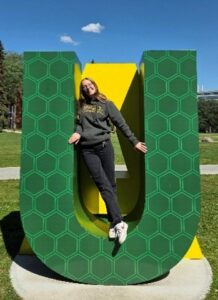
After arriving in Edmonton, I focused on settling into my accommodation, opening a bank account, and becoming familiar with the university campus. While many students go for shared flats or studio apartments, I chose to live with a host family, a rather uncommon option, but for me the best decision. Living with a local family offered valuable insights into everyday Canadian life and culture. Thanks to the UofA guidance handbook and the advisors for international students, the administrative process was surprisingly smooth. Whenever questions arose, reliable support was available. The International Office played an important role during this initial phase and throughout my stay. The staff were helpful, even beyond regular office hours, ensuring that potential issues were resolved quickly and efficiently.
©International Office
Compared to RWTH Aachen University, the campus in Edmonton felt like a small town, with its own libraries, cafés, sports facilities, and green spaces. Finding my way around this environment was an adventure itself. Over time, however, it became familiar, and certain places, such as my lab, the Student Union Building (SUB), the gym, and the swimming pool, became anchors in my daily life.
Integrating into my research group was another key step. Although English was the working language, the team was highly international, bringing together students and researchers from diverse academic and cultural backgrounds. This created an open and dynamic atmosphere, while also requiring initiative and independence. Learning when to seek guidance, when to work autonomously, and how to communicate effectively in this environment became an essential part of my integration.
Learning, Struggling, Growing – My Research Experience
Working in a research laboratory at the UofA was both exciting and demanding from the very beginning. The first weeks were dedicated to orientation and training, including mandatory safety courses, laboratory inductions, and equipment certifications required before conducting independent experiments. During this period, I also familiarized myself with ongoing projects in the group, observed other students’ work and assisted in experiments. This helped me understand the broader scientific framework of our research and how individual experiments contributed to the overall goals.
After the training phase, I was given a high degree of freedom to develop my own project within the group’s overarching research goals. While this autonomy was highly motivating, it also became one of the greatest challenges of my stay. Aligning academic expectations from both Germany and Canada, establishing a realistic timeline, and coordinating communication across time zones required careful planning. Additionally, assessing available equipment and resources to design feasible experiments demanded a high degree of organization. Compared to my previous academic experiences, the level of autonomy was significantly higher. Although supervision was readily available when needed, my day-to-day progress depended largely on my own initiative, organizational skills, and problem-solving abilities.
As time passed, I learned how to manage the responsibility of working independently while seeking feedback when necessary. This balance between autonomy and guidance became one of the most valuable elements of my stay and marked a significant step in my development as an independent researcher.
Beyond the Lab – Life in Canada Outside of Work
While my research represented a significant part of my daily routine, life outside the lab was equally important to make my stay truly memorable. Spending time in nature, exploring new places, and sharing moments with friends provided a valuable balance to the intensity of academic work.
The university’s International Office organized a wide range of social and cultural events that made it easy to connect with other students and build a supportive network. One particularly enriching opportunity was joining the Language Club, which brought together students interested in practicing different languages. These informal meetings were a relaxed way to engage in cultural exchange and helped me maintain and expand my language skills while making new friends from diverse backgrounds.
Over the course of the year, I noticed seasonal differences in campus life. While the summer term was relatively quiet, the fall term brought numerous new events, student initiatives, and opportunities to join sports clubs and societies. I personally joined the university swim club, which allowed me to register as a Canadian swimmer and participate in local competitions, a fantastic experience! Beyond sports, I also found moments of balance through music. Several pianos were freely accessible across the campus, and I often used them in the early morning hours, when the university was still calm and nearly empty. Additionally, attending Edmonton Oilers ice hockey games and spending time in nature, particularly in the Canadian Rockies, were memorable experiences that balanced the intensity of my research work. The hiking trips to the Banff and Jasper National Parks with their breathtaking landscapes, were among the most impressive experiences of my stay.

©International Office
©International Office
Looking Back – What I Take With Me
Reflecting on my nine months in Canada, it’s clear how this experience shaped my academic and personal development. While my studies at RWTH Aachen provided a strong scientific foundation, my time at the University of Alberta required me to apply this knowledge in a much more independent and self-directed way. Taking responsibility for my own project, making decisions with limited guidance, and adapting to a different academic culture had a lasting impact on my approach to research. The international environment in Edmonton further broadened my perspective on collaboration and academic careers. Working alongside students and researchers from many different cultural and educational backgrounds reinforced the importance of openness, mutual respect, and diverse viewpoints in advancing research. These experiences strengthened my understanding of what it means to be part of a global research community.
For future students considering a similar path, I highly recommend pursuing international exchange opportunities. Starting the application process early, actively reaching out to supervisors, and being open to stepping outside your comfort zone are key to success. Approaching the experience with curiosity and openness will help you benefit fully from both the academic and personal dimensions of studying abroad.
For me, my time in Canada was far more than just a temporary change of location. It was a formative period that helped shape my academic interests, career aspirations, and personal outlook. The skills, experiences, and friendships I gained continue to influence my path today. I am deeply thankful for this experience.
My Research Stay at Stanford University
- PhD Candidate for Product Engineering of E-Mobility Components
- USA, Stanford
- Stanford University
- 06/2025 – 11/2025
Preparation and organization of the stay
I am currently a fourth-year PhD candidate at the PEM at RWTH Aachen University. From early on in my academic career, it was a clear personal and professional goal to spend part of my doctoral studies abroad. During my Master’s degree, this plan could not be realized due to the COVID-19 pandemic, which made international research stays largely impossible at the time.

©International Office
As a result, I continuously sought opportunities later on and remained in close exchange with professors and group leaders from relevant research groups in the United States. These discussions helped me sharpen my research interests and identify potential host institutions. Ultimately, a combination of persistence and good fortune led to an exciting opportunity at Stanford University, where I was offered a visiting research stay within the STEER research group.
Following the initial contact, the process moved forward very quickly, and I received an official invitation from Stanford. A particularly positive aspect was the excellent administrative support on the host side: a dedicated contact person at the department guided me through all formalities, including visa-related questions and institutional requirements. This support significantly reduced the bureaucratic burden and made the overall process smooth and manageable.
In parallel, I applied early for on-campus housing through Stanford’s internal housing lottery system. Although I was not allocated permanent housing through this route, I was able to secure two consecutive sublets directly on campus. This required some flexibility and a bit of luck, but it was strongly facilitated by an active and supportive German community at Stanford. In this context, I can highly recommend joining relevant community groups or chat channels, as they are extremely helpful for housing, administrative questions, and general orientation.
Regarding financing, a small portion of the travel and stay expenses could be covered through my research project, with explicit support from the project sponsor. Institutionally, the entire stay was handled as an extended business trip, which simplified internal approval processes and reimbursement procedures.
Overall, the preparation phase required initiative and coordination but was greatly eased by strong institutional support on both sides, proactive networking, and early planning – especially with respect to housing and administrative requirements.
First steps after arrival in host country
My stay effectively started immediately after arrival. I was able to move directly into my sublet room, which was located on campus at Stanford University. This proved to be extremely convenient, as it allowed for very short walking distances to all relevant facilities, including offices, laboratories, and shared infrastructure.
Since I was not enrolled as a regular student, I did not have to select or attend any courses. Instead, I was able to start my research activities in the host research group right away, without any delay. Administrative formalities, such as obtaining a student or visiting researcher ID card and access credentials, were handled very efficiently and could be completed within a single day.
One practical recommendation that cannot be overstated is to obtain a bicycle as early as possible. University campuses in the United States are typically very large and spatially cohesive. Compared to Aachen, distances are significantly longer, and daily mobility without a bike is impractical. A bicycle quickly became an essential part of everyday life and greatly improved flexibility and efficiency on campus.
Academic experience
I was officially registered as a Visiting Student Researcher at Stanford University. In this status, I was neither required nor formally allowed to enroll in regular courses for credit. However, in coordination with the respective principal investigators, it was possible to sit in on lectures and attend courses informally. I would strongly recommend making use of this opportunity, even if it is not mandatory.
The teaching quality at a university like Stanford is exceptionally high. Courses are very well structured, clearly motivated, and highly engaging. Beyond their academic value, some lectures are also extremely beneficial from a personal and professional development perspective. A particularly striking example was the course “Personal Finance for Engineers”. The way financial literacy, personal finance, and investment strategies are taught to engineering students is exemplary and forward-looking. This is an area that, in my view, should receive significantly more emphasis in engineering education in Germany as well.
In terms of social and academic integration, the German community at Stanford plays an important role. It is the second-largest international community on campus, which made integration very easy. I was warmly welcomed and quickly connected with like-minded people, both academically and socially. This network not only facilitated everyday life but also enabled valuable exchanges on research, career paths, and life in the US more broadly.
Overall, despite not being formally enrolled in courses, the academic exposure, high-quality teaching environment, and strong community integration resulted in a highly enriching professional and personal experience.
Financing
The research stay was financed primarily through private means, supplemented by funding from my ongoing research project and the support of the RWTH Ambassador Scholarship. This combination made it possible to cover the essential costs associated with the stay, including travel, insurance, and part of the living expenses.
It comes as no surprise that private universities in the United States – and especially in the Bay Area – are associated with very high costs. As a visiting researcher, I was required to pay a monthly university fee. In addition, general living expenses, particularly for food and daily necessities, are significantly higher than in Germany. Housing costs also represent a substantial share of the overall budget, even when living in shared or sublet accommodations.
Nevertheless, the stay is absolutely manageable from a financial perspective with appropriate planning and funding support. More importantly, it should be viewed as a strategic investment in one’s own education and professional development. The return on this investment – through academic exposure, international experience, networking, and personal growth – is exceptionally high and, in my assessment, clearly justifies the associated costs.
Leisure

©International Office
California is, quite simply, breathtaking. This is often said – but experiencing it firsthand truly confirms it. The diversity of landscapes along the US West Coast is remarkable, ranging from dramatic coastlines and deserts to mountains and forests. Combined with the consistently pleasant climate throughout most of the year, California offers exceptional conditions for outdoor and leisure activities.
One absolute highlight – and a clear recommendation for anyone spending time in the region – is visiting the national parks. They are unique on a global scale and offer experiences that are difficult to compare with anything in Europe. In particular, trips to Yosemite National Park, Sequoia National Park, Kings Canyon National Park, Death Valley National Park, Joshua Tree National Park, and the Grand Canyon are strongly recommended. Each of these parks is distinctive in its own way – whether through scale, geology, climate, or biodiversity – and all are truly unforgettable.
What added value did the stay have for my career prospects?
For me personally, the stay was particularly valuable due to the different working culture and the strong attention to detail within the host research group at Stanford University. The way research questions were approached – often with a high level of precision, openness, and constructive discussion – was both refreshing and intellectually stimulating.
The people I worked with were, without exception, highly interesting personalities with very diverse and inspiring backgrounds. This diversity of perspectives significantly enriched daily research interactions and broadened my own way of thinking. Beyond the immediate academic collaboration, one of the most lasting outcomes of the stay is the international network that emerged and continues to exist beyond the exchange itself.
At the same time, the exchange was not a one-way transfer. Through my own research background and prior project experience, I was able to contribute concrete technical expertise and practical insights to the group on site. This mutual exchange of knowledge and perspectives was a key strength of the stay.
On a broader level, California and Germany share more similarities than is often assumed, particularly with regard to innovation-driven industries and technology ecosystems. This is especially true in my field of work, the battery industry, where comparable ambitions exist in terms of sustainability, industrial scaling, and technological leadership. Many of the approaches, mindsets, and organizational structures observed in California offer valuable learnings that should be examined more closely and, where appropriate, adapted for application in Germany.
Especially in the current politically turbulent times, it is becoming increasingly important to identify partners with shared values and to strengthen cooperation with regions such as California. Building closer ties in strategically relevant technology fields can help enhance resilience, innovation capacity, and long-term competitiveness – benefiting both individual researchers and society as a whole.
To what extent does my stay abroad have a sustainable character?
The stay abroad has a clearly sustainable character, as the exchange of experience and knowledge extends well beyond the physical duration of the visit. The professional and personal connections established during the stay continue to enable ongoing scientific dialogue, informal consultation, and mutual learning over time.
Conclusion
I can wholeheartedly recommend such an exchange stay to anyone considering it. Despite the organizational and financial challenges involved, the personal and professional benefits clearly outweigh the costs. One should not be discouraged by the financial effort required – when viewed in the context of long-term career development, the investment is more than justified.
My Internship at Bosch Cooperation in Tranås
- Chemical Engineering M.Sc.
- Sweden, Tranås
- Bosch Cooperation
- 03/2024 – 08/2024
Application & Finding an Internship
A fellow student told me about her internship at a company in Tranås, Sweden. There, the company develops and researches all kinds of heat pumps, utilizing power from the mountain, the water, or the air. On the company website, I found several open positions in different departments starting in spring 2024. I applied for a few positions and quickly received their answers. After 2 interviews, I got the internship position in the engineering department, which is working on the reliability of the components in the refrigerant circuit of the heat pump.
Accomodation & Living Expenses
The company is located in Tranås, a small city in the prince Småland in Sweden. I was accommodated with other international interns and thesis students in a hotel directly next to the lake Sommen. Every intern had their own private room and bathroom.The living room, kitchen, Office and laundry room was shared with the other interns. There was also a gym and sauna in the hotel, which we were allowed to use. It took about 10 minutes to drive from the hotel to the city center of Tranås and about 15 minutes to the company. We were provided with 2 cars and 1 van for us interns to drive to work, grocery shopping and other activities. It was also possible to rent company bikes, which was especially nice in the summer.
The provision of accommodation and cars simplified the preparation for the internship a lot, because I didn’t had to look for apartments abroad. Living with 13 other international interns and students, it was easy to settle in and find friends. I really enjoyed living with so many people from different countries and cultures. We often cooked dinner together and spent the evenings on the terrace enjoying the sunset over the lake together.
Everyday Life & The Internship
For my internship contract I had to work 40 hours per week, usually from 7:30 am in the morning until 4:30 pm in the afternoon with a 1-hour lunchbreak. The interns were allowed to work flexible hours and arrange their working hours themselves. During my time at the company, I worked with my supervisor on 3 big, different topics. I was able to get deep into the different topics, apply my knowledge from university and get some work experience.
The working culture in Sweden is non-hierarchical. Everyone is approached just with their first name, regardless of their title, age or status in the company. This is also reflected in the casual dress code at the office. Managers and workers are both working in comfortable and convenient clothing like jeans and sweatshirts. It is also worth mentioning that the Swedes have a very high sense of duty and connection towards their work, their team and the company. Therefore, they are often proudly wearing clothing with the company logo. Important decisions are not only made by senior managers or executives, but everyone on their team is also included in the decision and asked on their opinion on the subject matter. As an intern I felt as part of the team since my first day at work and my opinion was valued and not less worth than from other colleagues. The Swedish way of working is characterized by trust, independence and flexibility of the employes. You are able to organize your workday as you prefer, whether you want to work from your desk, a meeting room or from home.
A very important part of the Swedish work culture is the Swedish coffee break called “Fika”. At least once per day you get yourself a coffee, tea or hot chocolate and sit down with your colleagues on the couch and talk about non work-related topics. Usually someone brings some baked goods with them to share and enjoy during Fika. There is a huge variety of different swedish pastries, like the famous Kanelbullar, Wienerbröd, Chokladbollar and Blabärspaj. I was not surprised, when learned that Sweden is one of the countries that consumes the most amount of coffee per person.
People in Sweden value their work life balance a lot. During lunch time I could go to free Yoga classes, go for a quick session at the companys gym or join one of the running groups.
My colleagues at work were from a lot of different countries, so I talked Englisch most of the time during my internship. Since I shared my accommodation with other interns from all over Europe, I was able to learn some phrases in French, Italian, Swedish and Portuguese.
Free time & Tips
Summer is the best season to for a visit in Sweden, since the amazing Swedish nature with all the beautiful lakes and woods is coming alive. In Sweden, there is the so called “Allemansrätt”, which guarantees you free access to all parts of nature. You are allowed to visit ever dock on the lake, collect as much berries or mushrooms as you want and put up your tent on every island or wood as long as you don’t bother the owner. Everywhere in Sweden you can find amazing hiking trails through fairytale woods with shelters and fireplaces for camping. Even though the summers in Sweden are not as warm, you can easily go swimming in one of the many beautiful and peaceful swimming lakes.
On the weekends I often visited one of the citys around Tranås. I really enjoyed my trip to the small town Gränna, where the sugar cane was invented and stroll past all the candy shops with all the colorful candys displayed. I spend a few sunny afternoons sitting in small cafes in Eksjö surrounded by old pastel colored timber houses. But also, bigger citys like Linköping with the medieval cathedral and Jönköping at the lake Vättern are definitely worth a visit.
From Tranås, you can travel to Stockoholm in 3-4 hours by using the train. I had a lot of fun walking around the old part of the town “Gamla Stan”, visiting the famous Vasa Museum and going for a night out in big city like Stockholm.
Gothenburg is known for its archipelago, several scattered islands on the west coast of Sweden. I had a marvelous time while driving with ferries from island to island. On one of the islands, we rented a kajak and paddled along the coastline for a few hours, of course with a few stops for Fika and a swim in the sea. In the evenings, we visited different bars and listened to swedish metal and rock music.
One of my highlight during my time in Sweden was my canoe trip on the lake Ansen. We rented a canoe for a few days at one of the several canoe rentals. We drove through the national park, enjoyed the beautiful nature and stopped on one of the many islands to build up the tent and sleep for the night. I can highly recommend renting a canoe or kajak and going onto the lake, even just for a few hours.
Another one of my highlights was our trip to the island Öland during Midsommar, the national holiday at the summer solstice. At Midsommar everyone is celebrating all day wearing flower crowns in their hair and dancing around a tree, decorated with flowers and leaves. Since it’s the longest day in the whole and it’s not getting dark, you stay up late and party all night.
Conclusion
I spent a fantastic and wonderful summer during my internship in Sweden, experiencing the incredible nature and landscapes. All the Swedes I met were open-minded, super friendly and made me feel very welcome. The work ethic and culture is much more relaxed than in Germany and you meet your colleagues at eye level, regardless of their hierarchical level and enjoy a coffee and cake during Fika. I am thankful for all the beautiful experiences, memories and new friends I made during my time in Sweden.
