
Face ID on the Rise – But What Is Behind the Technology?

Source: Freepik
Face ID has been around for a relatively short time. Facial recognition secures our data and makes it accessible only to us. We have explored this technology and gathered all the essential information to provide insight into its complex mechanics and potential security risks.
New Certification Authority: From Sectigo to Harica

Source: Own illustration
The time has come! Since April 1, 2025, user certificates (S/MIME) can again be requested in the RA-Portal. After our previous certificate provider, Sectigo, terminated its contract on January 10, 2025, we now have a new provider. The German Research Network (DFN) and GÉANT have contracted a new provider for public-key certificates. The choice fell on the Greek trusted provider HARICA (Hellenic Academic & Research Institutions Certification Authority). HARICA is a certification authority of the Greek university network GUnet, is specially optimized for research institutions and meets the highest security standards.
Effective Backup Strategies: Correct Data Backup
Source: Freepik
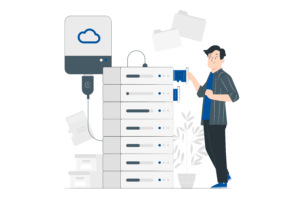
Backing up important professional or private files, such as texts, images and other documents, is essential. Data loss can have catastrophic consequences, whether caused by technical mishaps, accidental deletion or even hardware theft. Data loss can also be caused by viruses or hacker attacks. Viruses can, for example, encrypt the hard drive and then demand a ransom. Here are some proven strategies and tools to ensure that your data always remains safe and accessible. You can also take a look at the category IT-Security on our website to find out more tips.
IT Security When Traveling

Source: Freepik
Those who frequently use public transportation are often reminded to take care of their personal belongings. The material damage caused by theft or loss is obvious. The dangers of data theft are perhaps less apparent but have equally serious consequences. These consequences include identity theft, unauthorized access to financial data and potential damage to your personal and professional reputation.
With the right IT security tips, you can reliably protect your data on the move and travel with peace of mind. In this blog post, you can find out how to protect your data effectively – whilst enjoying every trip in peace.
The Printing Service at the IT Center Is Extending Its Hours!
Source: Own illustration
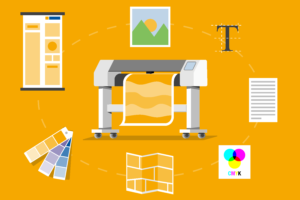
We have great news for you! Starting April 1, 2025, we are extending our hours: The printing service will be available Monday to Friday for RWTH institutions!
The ITSSM Department in Focus: IT Services & IT Security

Source: Alexander Müller
The IT Service & Security Management (ITSSM) department plays a key role in the establishment, control and further development of IT service management processes and security processes in the IT center. The processes support service provision, service operations, IT security, reporting and support. In the following blog post, we take a closer look at the department’s areas of work.
Review of the Software Technology Fair 2025
Source: Own illustration
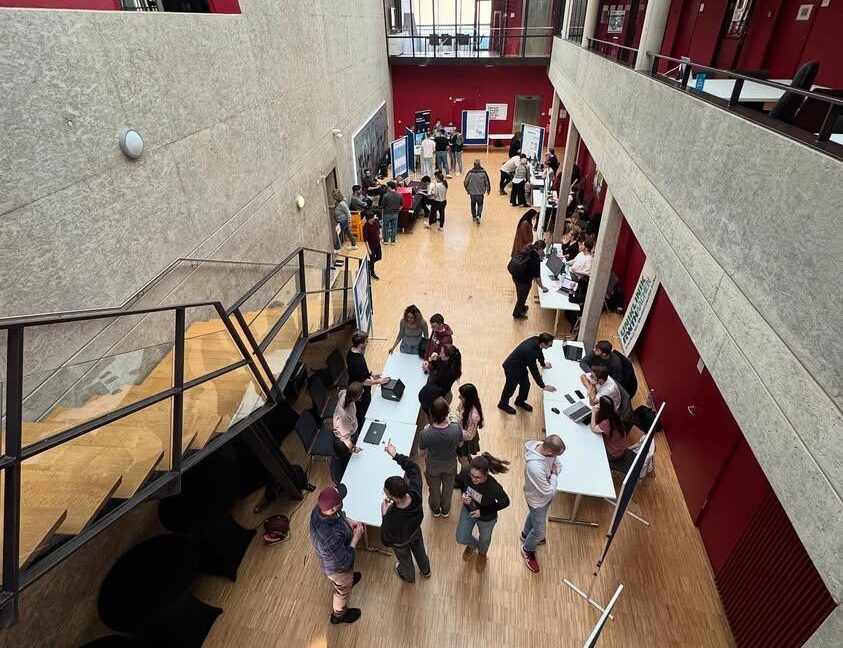
This year’s Software Technology Fair (SWT Fair) took place at the IT Center on March 7. This marks the end of the “Software Engineering” module for the dual study program “Applied Mathematics and Computer Science” at FH Aachen. The prospective mathematical-technical software developers (MATSE) presented their projects and showed what they had learned over the course of the semester.
Read the rest of this entry »
Blockchain Technology

Source: Freepik
Blockchain technology, often referred to simply as ‘blockchain’, is transforming the way data is stored and secured. Originally developed as the basis for cryptocurrencies such as Bitcoin, it has quickly developed into a versatile technology that is used in numerous industries.
In this blog post, you can find out how it all works and what applications there are in general.
RWTHmoodle – Start of Test Phase for Course Templates

Source: Own Illustration
In the summer semester 2025, the RWTHmoodle team will be testing two course templates for the first time. These offer a pre-structured course environment that lecturers can customize and use directly. These course templates are intended to facilitate the design of learning spaces for teachers and make getting started with RWTHmoodle even more efficient.
Exmatriculation – What Then?

Source: Unsplash
The last exams have been written and the final thesis has been handed in – your studies are coming to an end. An era is ending and new paths are waiting for you, be it a job, further studies or other exciting challenges.
But what happens to the RWTH services that accompanied you during your studies? How long will you still have access to your accounts, documents and data?
Here you can find out what remains and what you should definitely do before exmatriculating.