

Schlagwort: ‘Cambridge’
My Research Internship at the University of Cambridge
- Chemistry M.Sc.
- United Kingdom, Cambridge
- University of Cambridge
- 10/2025 – 03/2026
Before the stay
Before organizing the internship, I asked myself: What do I want to get out of such an experience. From a career/academic point of view, I wanted to improve my English language skills in both everyday life and academic environments, my chemistry skills and learn from other talented people. Nevertheless, I also aimed to experience the student life in another country. With that I was able to narrow it down to the UK, and I applied to several professors at Cambridge whose research matched my field of interest. Fortunately, after a short Zoom meeting about potential research projects, I received an offer for an internship. From that point onward, two main bureaucratic matters had to be handled. The receiving institution required a number of documents and even after submitting those, the review process took quite a long time (2 Months) , and I received my invitation letter only four weeks before the start of the stay. The second aspect was the Erasmus+ process, which, in comparison, required much less time.
Accommodation/Expenses
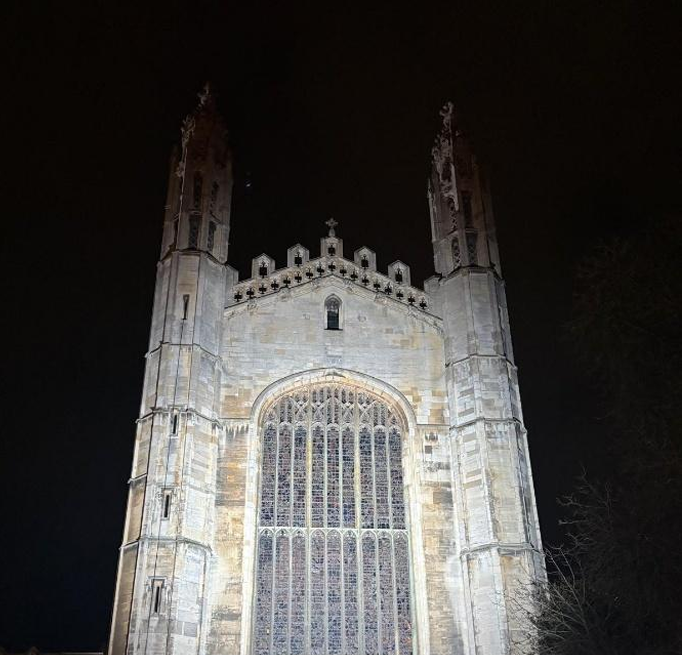
Kings College Chapel at night.
©International Office
Since short-term visiting students in Cambridge are generally not eligible for accommodation in a college dormitory, finding housing required some additional effort. Nevertheless, colleges may offer available rooms to visiting students if vacancies exist. For this reason, I contacted several accommodation officers of colleges located near my department and eventually received an offer. However, the room was relatively far from my department and also much more expensive than other options. In addition, access would have been limited to the accommodation itself, without the wider benefits of college facilities.
I therefore decided to continue searching through the University accommodation website. There, I found a room close to my department that was being sublet by an older couple for around €750 per month. This turned out to be a very fortunate arrangement. The couple was extremely kind and always made sure that I was doing well. They also helped me connect with other communities, which made settling into life in Cambridge much easier.
In Cambridge, the easiest and most convenient means of transportation is usually a second-hand bicycle. For groceries, the cheapest options are generally ALDI and LIDL.
Everyday life
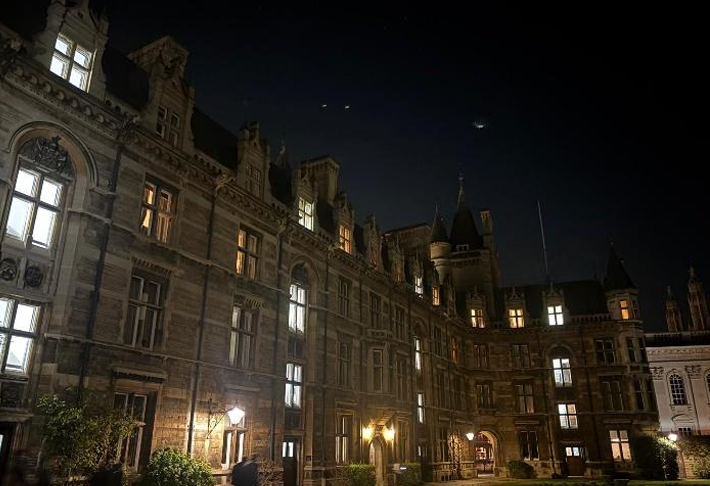
Gonville & Caius College at night.
©International Office
The research group, which mostly consisted of British students, welcomed me warmly and introduced me to everyone from the very beginning. On weekdays, I usually worked in the laboratory from 9:00 a.m. to 5:00 p.m. However, there was a certain degree of flexibility, so I was also allowed to leave earlier or work longer when necessary. My daily laboratory work generally involved the planning, execution, and evaluation of experiments. Whenever support was needed, other group members were always very helpful and provided training or advice. In addition, my supervisor checked in regularly and offered useful suggestions and ideas. Nevertheless, I worked mostly independently, which I appreciated very much. It allowed me to pursue my own ideas and approaches while still having support available whenever needed. In the group meetings, I presented my research results, and challenges or problems were discussed on a regular basis. This not only gave me valuable feedback on my own work but also allowed me to gain insight into other projects within the group. As a result, I was able to further improve both my problem-solving abilities and my communication skills. On special occasions, we went for lunch together, and after work we occasionally met at pubs.
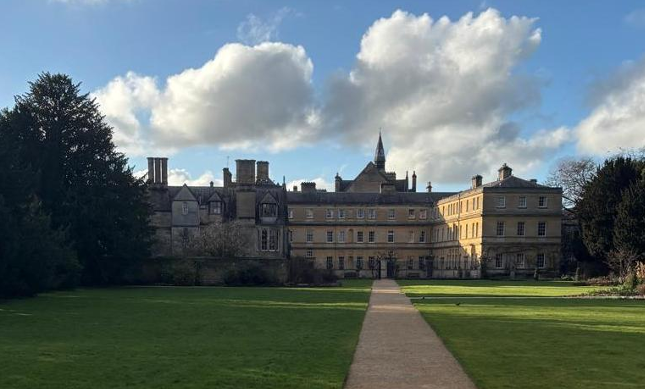
Oxford University.
©International Office
On weekends, I had the opportunity to explore Cambridge and its surroundings. I would strongly recommend visiting the colleges, as they are one of the most distinctive and impressive aspects of the city. Fortunately, my landlord, who was a former student, gave me several tours and was able to share interesting background knowledge. I would also highly recommend attending a “formal”, which is a traditional formal dinner held in a college. To take part in one, it is usually necessary to know someone who can invite you, and formal clothing is required for the occasion.
Besides that, I visited other tourist attractions in Cambridge, such as museums and shops. I also took trips to London and Oxford together with other international students from my department. London is definitely worth visiting because of its many famous and historic landmarks. Oxford, although quite similar to Cambridge in some ways, is also well worth a trip!
Conclusion
Academically, my internship was a very valuable experience. I learned a number of important laboratory techniques and practical skills, but also gained insight into how to manage my own project and develop original ideas independently. In this respect, the stay helped me grow as a laboratory researcher. In addition, I clearly improved my English skills. By working and communicating in English every day, I became much more fluent both in an academic context and in everyday life.
On a personal level, I also benefited greatly from the experience. I made a few friends, primarily within the research group, with whom I hope to stay in contact in the future. Overall, the internship was both academically and personally enriching, and I am very grateful for the opportunity to have spent this time in Cambridge.
My research internship at the University of Cambridge
- Chemistry M.Sc.
- United Kingdom, Cambridge
- University of Cambridge
- 10/2025 – 01/2026
Application/Finding an internship

©International Office
At the beginnings of my master’s studies at RWTH, I heard about invaluable experiences and strong recommendations from several students who had gone abroad for university-related stays. Intrigued by these stories, I wanted to combine academically high-impact research with improving my English language skills. Despite the common stereotype about rainy weather, I selected the UK as my host country. As I always have been impressed by the great history of the Universities of Oxford and Cambridge, I applied to three research groups at these universities by emailing the respective professors. Thereby, it gave me planning reliability to commence with the application process one year in advance to the intended time of the stay abroad. Gratifyingly, after one Zoom meeting with the professor, I was offered a research internship position at the University of Cambridge and was allowed to communicate my preferred research topics. Following the offer, I was confronted with a huge bureaucratic burden. However, helpful assistance and some flexibility regarding English language certificates from the host university simplified the process to some extent.
Accomodation & Living expenses
As far as I understood, living in colleges is rather not amenable to short-term visiting students. Hence, I had to search for private accomodation, some of which was advertised on a website of the university. This lowered the risk of scams, but rents of far more than 1000€ for the advertised accomodations were not affordable. Ultimately, I found a suitable accomodation, including a room, private bathroom, and a convenient distance to the uni, via the website “SpareRoom”. I lived together with my British landlord, which turned out to be a great opportunity for learning more about the (pub) culture and the language.
At the very beginning of my stay I realized that the primary means of transportation in Cambridge is the bicycle. Fortunately, the wide availability of second-hand bikes saved me from spending a fortune on a new one. In my experience, discount stores such as Aldi or Lidl are the most convenient options for grocery shopping at prices comparable to those in Germany.
Everyday life / the internship
During the week, I worked at the chemistry department, usually from 9:30 until 18:00. Without strictly fixed working hours, I could call it a day at my own discretion. After long days at work, I normally limited my activities to cooking or going to a gym near my accomodation.
I greatly enjoyed my work in the chemistry department due to the diverse combination of laboratory and office tasks, as well as frequent meetings. Contrarily to my experience with previous research projects conducted in germany, I worked quite independently on the project assigned to me. Initially, this felt unaccustomed, but over time I became increasingly comfortable planning and conducting experiments based on my own ideas. Furthermore, I could always consult my supervisor, and the group members were very supportive, especially in the beginning. Another surprising difference compared to germany, was my strong integration into academic discussions during group meetings. Throughout my stay, I presented my ideas and results every two weeks in a subgroup meeting and twice in the weekly group meeting. This helped me improving my english abilities and my academic communication skills in general.

©International Office
The research group consisted of many interesting personalities from different countries, rendering the group highly international. Since several new members joined the group around the same time as I did, we often shared similar questions and challenges. With the great assistance from experienced members, a group dynamic developed, leading to several evenings spent in pubs, visits to the Christmas market, as well as a trip to London. As a result, the atmosphere in both the laboratory and the office was very pleasant, friendly, and, especially, funny.
Free time / tips
Free time was mostly constrained to the weekends, during which I explored the centre of Cambridge and its impressive college buildings together with friends from the working group or visiting friends and family from Germany. In this regard, I strongly recommend booking a punting tour, during which a guide propels a small wooden boat along the River Cam by pushing a long pole against the riverbed while explaining aspects of the colleges’ history. Further adventures I undertook were trips to Oxford and London. The skyscraper scenery combined with historic landmarks such as the Palace of Westminster, the prominent Elizabeth Tower, and the Buckingham Palace, made the trip to London more than worthwhile. As a tip, the view from Sky Garden – London’s highest public garden at a height of 160 meters – is breathtaking, and, even better, access to the skyscraper is free of charge! Also, visiting the Tower Bridge by entering the towers and the former engine room was a highlight.

©International Office
Conclusion
All in all, it was an invaluable experience and great opportunity to foster both my academic and personal development. From an academic view, I worked independently on a research project, presented my ideas and experimental results in several meetings, and improved my english language abilities as aimed for. Personally, I made new friends from all over the world, experienced the beauty of Cambridge and London, and broadened my horizons by getting in touch with diverse cultures. I am very grateful for the support provided by Erasmus, enabling an adventure I will never forget.
