
Archive for April, 2026
Mein Aufenthalt als RWTH Research Ambassador in Neuseeland
- PhD-Kandidat in der Energiewirtschaft
- Neuseeland, Christchurch und Neuseeland, Dunedin
- University of Canterbury und University of Otago
- 01/2026 – 04/2026
1. Vorbereitung und Organisation des Aufenthalts
Die Vorbereitung meines Aufenthalts in Neuseeland begann mit der fachlichen Abstimmung mit den Gastgebern und der formalen Einbettung in die jeweiligen Strukturen der Partneruniversitäten. Es wurde direkt zu Beginn klar gemacht, dass man eigenes Funding mitbringen muss. Da dies in meinem Fall gegeben war, war der Kontakt mit den ForschungsgruppenleiterInnen pragmatisch und “welcoming”.
Gastuniversitäten und Einbindung
-

©International Office
University of Canterbury (Christchurch): Sustainable Energy Research Group (SERG)
- University of Otago (Dunedin): Austausch mit der lokalen Energieforschung

Inhaltlich stand von Beginn an fest, dass der Aufenthalt in Christchurch nicht nur einem klassischen Forschungsbesuch dienen sollte, sondern die gezielte Weiterentwicklung und Finalisierung einer internationalen Kooperation im Themenfeld „low carbon und climate resilient buildings“ im Kontext der Horizon Europe Förderlandschaft vorantreibt. Der Forschungsaufenthalt in Dunedin war jedoch ergebnisoffen.
Visa, Einreise, Versicherung (Rahmenbedingungen)
Für deutsche Staatsangehörige ist bei Kurzaufenthalten häufig eine Einreise über das Visa Waiver Programm mit vorheriger NZeTA-Beantragung möglich; bei Einreise kann dann ein Besuchsstatus von bis zu 3 Monaten gewährt werden. (Immigration New Zealand)
In der Praxis lohnt es sich, früh zu prüfen, ob die eigene Tätigkeit (z.B. Forschungsaufenthalt ohne lokale Vergütung) vollständig mit dem gewählten Status kompatibel ist, und ob zusätzliche Anforderungen der Gastinstitution (z.B. Nachweise zur Krankenversicherung) gelten.
Zusätzlich sollte man die International Visitor Conservation and Tourism Levy (IVL) einplanen, die bei vielen Einreise- und Visaprozessen anfällt und aktuell bei NZD 100 liegt. (Immigration New Zealand)
Reiseorganisation
Da Neuseeland sehr weit entfernt ist, sind Jetlag und „Ankommenszeit“ realistische Faktoren in der Planung. Ich habe daher bewusst Puffer für die ersten Arbeitstage eingeplant, um direkt arbeitsfähig zu sein. Für mobile Phasen (Christchurch und später Dunedin) hat es sich bewährt, Unterlagen digital und redundant verfügbar zu halten (Cloud plus Offline-Kopie), da man häufig zwischen Campus, Unterkünften und Terminen pendelt.
2. Erste Schritte nach der Ankunft und Qualität der Unterkunft
Nach der Ankunft standen zunächst pragmatische Dinge im Vordergrund: lokale SIM, grundlegende Orientierung, Wege zum Campus, sowie die Abstimmung der Arbeitsroutinen (Zugang, Büro, Meetingstruktur). Besonders hilfreich war, dass beide Universitäten mit internationalen Gästen routiniert umgehen und entsprechende Kontaktpunkte anbieten.
Unterkunft
In Neuseeland ist der Wohnungsmarkt in Universitätsstädten spürbar angespannt, und kurzfristige, möblierte Optionen sind häufig deutlich teurer als langfristige Mietverträge. Für Forschungsaufenthalte mit Standortwechsel ist eine möblierte Kurzzeitlösung dennoch meist die praktikabelste Option. Aus meiner Sicht lohnt sich:
- frühzeitige Suche über AirBnb oder Uniangebote (je nach Saison mehrere Wochen bis Monate vorher),
- klare Lageprioritäten (Nähe zum Campus vs. Innenstadt),
- Heizstandard/Isolierung aktiv prüfen, weil Gebäudequalität stark variieren kann (gerade im Winterhalbjahr à für mich nicht relevant, da Sommer).
3. Akademische und berufliche Erfahrungen
Der Kern meines Aufenthalts war die Kombination aus inhaltlicher Projektarbeit, institutioneller Repräsentation und strategischer Netzwerkentwicklung.
Forschungs- und Projektfokus
©International Office
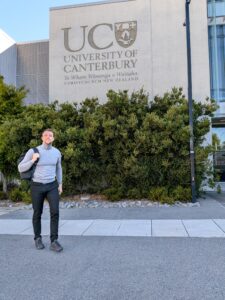
In Christchurch war ich am SERG an einem RWTH-geführten Horizon-Europe-Konsortium im Built4People-Kontext angebunden. Inhaltlich adressiert der Call innovative Pfade zur Dekarbonisierung und Klimaanpassung des Gebäudebestands und betont dabei Skalierbarkeit, Validierung in mehreren Ländern sowie die Einbindung relevanter Stakeholder entlang der Wertschöpfungskette. (CORDIS)
Als Projektverantwortlicher habe ich vor Ort insbesondere:
- die technische und konzeptionelle Abstimmung zwischen europäischen und neuseeländischen Partnern koordiniert,
- die Beiträge konsistent in die Gesamtarchitektur des Antrags integriert,
- die finale Einreichung im Zeitfenster der Ausschreibung aus Christchurch heraus abgeschlossen.
Der Call selbst war im EU Funding & Tenders Portal mit Öffnung im September 2025 und einer Deadline Mitte Februar 2026 gelistet. (European Commission)
Damit wurde der Aufenthalt auch organisatorisch zu einem „Real-Life-Stresstest“: internationale Zeitzonen, parallele Abstimmungsprozesse und die Notwendigkeit, in kurzer Zeit belastbare Konsenspositionen herzustellen.
Wissenschaftlicher Austausch und Sichtbarkeit
Während meines Aufenthalts habe ich meine Forschung und die Arbeit meines Instituts an der RWTH Aachen University (insbesondere zu E-Mobilität, Energiespeichern, Demand-Side-Flexibilität und Energiesystemintegration) in zwei Formaten vorgestellt:
- SERG Research Talk in Christchurch
- OERC Seminar in Dunedin
Als Research Associate und PhD-Kandidat in der Energiewirtschaft arbeite ich an der Schnittstelle von Energiesystemen, Marktmechanismen und Akzeptanz bzw. Nutzerverhalten, unter anderem zu dynamischer Bepreisung und Flexibilitätsoptionen.
Die Präsentationen waren besonders wertvoll, weil sie nicht nur Forschungsergebnisse „exportiert“ haben, sondern die Gelegenheit boten, die Anschlussfähigkeit an die neuseeländische Forschungsagenda konkret zu diskutieren (z.B. Gebäudebestand, Systemintegration erneuerbarer Energien, Elektrifizierung).
Zweiter Standort: University of Otago
Der anschließende Aufenthalt in Dunedin war ein bewusst gesetzter zweiter Ankerpunkt. „Ergebnisoffenes“ Ziel war es, eine zusätzliche institutionelle Schnittstelle aufzubauen und den Austausch mit der lokalen Energie-Forschungsgemeinschaft zu vertiefen. Das hat die Kooperationsperspektive deutlich verbreitert, fachlich wie organisatorisch.
4. Finanzierung und Kosten
Neuseeland ist insgesamt ein Land mit geringeren Lebenshaltungskosten als viele Studierende und Forschende es aus Deutschland gewohnt sind, insbesondere bei Lebensmitteln und Restaurantbesuchen. Voraussetzung für diese Wahrnehmung ist das deutsche Gehalt, denn das Lohnniveau der NeuseeländerInnen ist geringer als das der Deutschen.
Dennoch gibt es gewisse Kostentreiber
- Unterkunft: Kurzzeitmieten schlagen stark zu Buche, vor allem bei guter Lage und möblierter Ausstattung.
- Mobilität: Innerstädtisch geht vieles mit Bus und zu Fuß, aber für Ausflüge und interregionale Wege sind Mietwagen oder Inlandsflüge häufig die realistischen Optionen.
- Lebensmittel: Wenn man sich abseits der lokal hergestellten Nahrungsmittel kulinarisch bewegen will. Produkte aus Europa (z.B. Mozzarella, Parmesan, Olivenöl) sind verständlicherweise teurer.
Praktische Punkte
- Eine Kreditkarte ohne Auslandsgebühren ist sehr hilfreich.
- Viele Zahlungen laufen kontaktlos, Bargeld ist nebensächlich (habe genau gar keins gebraucht).
5. Freizeit, Kultur, Insider-Tipps
Neuseeland eignet sich hervorragend, um Naturerlebnis und Arbeitsalltag zu verbinden, gerade weil viele Orte in kurzer Zeit erreichbar sind, wenn man Wochenenden strategisch nutzt.
Rund um Christchurch
- Port Hills für kurze After-Work-Hikes mit Blick über die Stadt
- Banks Peninsula und Akaroa für Küstenlandschaft und „kleine Auszeit“
- Tages- oder Wochenendtrip Richtung Arthur’s Pass oder Lake Tekapo (Wetterfenster beachten)
Rund um Dunedin
- Otago Peninsula (Natur, Küste, Wildlife)
- Moeraki Boulders als klassischer Abstecher an der Küste
- Die Catlins, wenn man ein langes Wochenende einplanen kann
Kulturell
Was ich besonders positiv erlebt habe: eine sehr zugängliche Gesprächskultur im akademischen Umfeld und eine hohe Selbstverständlichkeit interdisziplinärer Perspektiven, gerade in Energie- und Gebäudethemen (Technik, Policy, soziale Dimensionen).
6. Mehrwert für Studien- und Karriereweg und gesellschaftlicher Nutzen
Der Aufenthalt hat meinen akademischen Weg in mehrfacher Hinsicht konkret gestärkt:
Karriere- und Forschungsmehrwert
- Internationale Leitungserfahrung: Die Antragseinreichung unter realen Zeit- und Koordinationsbedingungen hat Projektführungsfähigkeiten in einem Horizon-Europe-Setting deutlich geschärft.
- Inhaltliche Erweiterung: Der neuseeländische Kontext (Gebäudebestand, Klima, Systembedingungen) hat neue Vergleichs- und Transferfragen eröffnet, die ich in meine Forschung zurücktrage.
- Sichtbarkeit der RWTH: Durch Vorträge und institutionelle Anbindung wurde RWTH-Forschung in der lokalen Community präsent und konkret „adressierbar“.
Gesellschaftlicher Nutzen (Transfergedanke)
Ein persönlicher roter Faden meiner Arbeit ist die Frage, wie Energiewende praktisch akzeptiert, verstanden und mitgetragen werden kann. Ich engagiere mich dafür auch außerhalb der Universität, etwa über Formate zur Energiekompetenz und zur Verbindung von Technik, Kosten und Alltagsrealität.
Die neuseeländischen Gespräche haben mir neue Beispiele geliefert, wie Kommunikation über Energie und Gebäude stärker nutzerzentriert und weniger technokratisch gelingen kann.
7. Nachhaltiger Charakter des Auslandsaufenthalts
Der nachhaltige Charakter meines Aufenthalts ergibt sich aus drei Punkten:
- Verstetigung von Kooperationen: Der Besuch war nicht nur Networking, sondern direkt in ein gemeinsames, strategisches Vorhaben eingebettet (Built4People/Horizon Europe). (CORDIS)
- Zwei institutionelle Anker: Christchurch und Dunedin bilden zwei Kontaktpunkte, die perspektivisch unterschiedliche Kooperationspfade eröffnen (thematisch wie personell).
- Wissenschaftliche Anschlussfähigkeit: Es sind gemeinsame Paper-Ideen, die Bereitschaft von Daten- und Methodenaustausch, mögliche Co-Supervisionen und Gastvorträge entstanden.
8. Fazit
Als RWTH Research Ambassador in Neuseeland war mein Aufenthalt mehr als ein klassischer Forschungsbesuch. Er war eine Kombination aus Projektverantwortung, wissenschaftlicher Sichtbarkeit und gezieltem Aufbau belastbarer Partnerschaften. Besonders wertvoll war die Erfahrung, einen zentralen Antragsschritt eines internationalen Konsortiums direkt vor Ort zu finalisieren und gleichzeitig RWTH-Forschung im neuseeländischen Kontext zu positionieren.
Ich bin dankbar für das Vertrauen, das mir mit dem Stipendium entgegengebracht wurde, und sehe in den geknüpften Kooperationen eine sehr konkrete Basis für langfristige gemeinsame Forschung und nachhaltigen Wissenstransfer zwischen RWTH Aachen University und Partnern in Neuseeland.
My Clinical Elective in Granada
- Medicine
- Spain, Granada
- Universidad de Granada
- 11/2025 – 01/2026
1. Finding an Internship

©International Office
Organising clinical rotations as a medical student in Spain can be quite challenging, as most Spanish hospitals only accept foreign students during the summer months, when Spanish students are on break. I tried to obtain a placement in Madrid and Valencia without success but eventually secured an internship in the Department of General Surgery at Hospital Clínico San Cecilio through a personal connection via my Spanish teacher in Germany. It can be difficult to reach the department secretary; however, if you are interested, you are welcome to contact me for the email address of the Head of General Surgery (louisa.wolters@gmail.com).
I would recommend organising the internship several months in advance, as Spanish hospital administration tends to respond more slowly, for example when it comes to signing the Learning Agreement for Traineeships. In addition, I had to register on an online platform (r0) of the University of Granada, for which an erweitertes Führungszeugnis (extended police clearance certificate) is required. Obtaining this document can take several weeks. Apart from that, the application for the Erasmus scholarship is very straightforward and quick. Since I split my practical year tertial and only completed a two-month internship, I did not have to enrol at the Spanish university.
2. Accommodation & Living Expenses
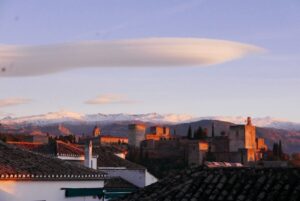
Generally speaking, accommodation in Spain is cheaper than in Germany. I paid €290 per month for a small but beautiful room in a shared house in the Albaicín, with a rooftop terrace and a view of the Alhambra and the Sierra Nevada. There were 18 international students living in the house, which may sound a bit overwhelming at first. For me, however, it was ideal, as I assumed it might be difficult to meet many people during such a short stay. My roommates were incredibly kind and quickly felt like a small family. Since some of them were Latin American and most had a good level of Spanish, we mainly spoke Spanish at home.
©International Office
I personally really enjoyed living in the Albaicín, as it is a very quiet neighbourhood with hardly any cars. However, you do have to walk up a fairly steep hill every day, which can be somewhat exhausting. On the other hand, this also allows you to enjoy a beautiful sunrise over the rooftops of Granada every morning on your way to the bus stop. Many Erasmus students also live in the city centre around the cathedral or near Camino de Ronda, where most bars and clubs are located.
Accommodation can mainly be found via Idealista. Many listings specify minimum rental periods, but I would still recommend asking, especially if you start your internship in the middle of the semester, as many rooms may still be available. Since contact is usually directly with the landlord (even for shared apartments) and scams are relatively common, I strongly recommend arranging at least a video call before making any payments—ideally also getting in touch with someone currently living in the apartment. The lead time before the start of the rental period is usually quite short; for example, I found my room just one week before my flight. Many people also choose to rent an Airbnb or stay in a hostel for the first week and look for accommodation after they arrive in Granada. During the winter months, I would definitely recommend renting a room with heating, as it can get quite cold in Granada and Spanish houses are generally not as well insulated as German ones. Supermarket and public transport prices are slightly cheaper than in Germany.
3. Everyday Life
Cycling in the city is not very common and seems rather dangerous, which is why I used the bus to get to the hospital. Since Granada is a very small city, most distances are walkable, and even the longest bus rides take no more than 20–30 minutes. As I was not enrolled at the University of Granada, I was not eligible for the student bus ticket, but a regular monthly ticket is available for around €30.

©International Office
As a medical student, you should be aware that in Spain it is very uncommon for students to be actively involved in clinical work, and internships are generally considered observational. In my case, the doctors were very friendly and eager to explain things, but I still missed being able to participate more actively and feeling like a real part of the team, as is often the case in Germany. During my two-month internship, I did not receive an access card to open doors (such as the entrance to the surgical area) or a code for the scrubs dispenser, which meant that I had to wait for and ask doctors every day to enter restricted areas and obtain my work clothes. Nevertheless, especially the residents treated me very kindly and included me in team activities, such as having a beer with the head of department after work, visiting the Alhambra, or attending their Christmas dinner.
Moreover, students are not really expected to stay at the hospital in the afternoons, and on most days, I was able to leave between 12 and 2 p.m. This left me with plenty of free time to explore Granada and work on my doctoral thesis. I would definitely recommend having a good level of Spanish. Even though some doctors speak English, most prefer Spanish and are clearly relieved when they realise that you speak it as well.
4. Free Time
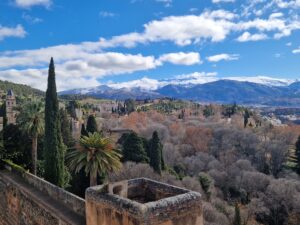
Granada is an ideal city for anyone interested in history, architecture, and culture. It represents a true melting pot of Arabic, North African, Spanish, and Gitano culture. Even though the city is not very large, it offers countless restaurants, clubs, and, of course, tapas bars, where drinks are still traditionally served with a free tapa. There are many remarkable places to visit, such as the Alhambra, but also the numerous cármenes and viewpoints in the Albaicín.
©International Office
Depending on the season, hiking, climbing (including via ferratas), and skiing are possible in the Sierra Nevada mountains, which can easily be reached by bus. I personally enjoy dancing salsa and was very happy to discover that Granada offers several dance schools and a number of social dance events each week. This is also a great way to connect with locals; for example, my class would often go out for drinks together after the lessons. Running and cycling can be somewhat challenging due to the city’s many hills and the lack of proper cycling lanes. Andalucía also offers many stunning cities that are well worth visiting, such as Málaga, Córdoba, Sevilla, and Cádiz. In summer, there are also several beach towns nearby that are ideal for short trips.
5. Conclusion
I would definitely recommend completing part of your practical year abroad, and especially in Granada. For me, it was the perfect city: small enough to quickly feel like home yet offering a great variety of activities and an incredible richness of culture and history. I had already completed an Erasmus semester in Málaga two years earlier and had fallen in love with Spanish culture, particularly Andalucía. But even if you are simply looking to escape the grey German winter, Granada is an ideal place to enjoy the afternoon sun on a rooftop terrace.
From a career perspective, however, the experience can be somewhat frustrating. Therefore, I would not recommend choosing a specialty you are seriously interested in or staying for longer than two months, unless you know in advance that the department allows students to actively participate. Since I did not have particularly high expectations and needed to work extensively on my doctoral thesis anyway, this did not bother me too much. Moreover, I am extremely grateful for this special time and for the friendships I made in Granada, and I would choose to do it the exact same way again.
Researching Abroad: My 9-Month Experience in Canada
- Molecular and Applied Biotechnology M.Sc.
- Canada, Edmonton
- University of Alberta
- 04/2025 – 01/2026
How It All Started – Motivation and First Steps
Having already spent time in Canada during my Bachelor’s studies in Vancouver, I initially planned to pursue my Master’s research in a different country in order to gain new perspectives and challenges. However, the long-standing partnership between RWTH Aachen and the University of Alberta (UofA) changed my plans, and the opportunity to return to Canada ultimately felt both natural and exciting. Supported by the RWTH Aachen Junior Research Fellowship and subsequently the UARE Scholarship from the UofA, I was able to complete my Master’s thesis in Edmonton. This gave me the chance to experience a completely different side of Canada compared to my earlier stay on the west coast.
Finding My Place in Edmonton – Campus
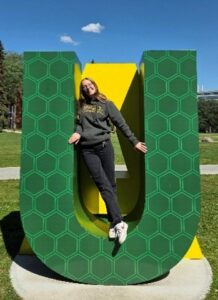
After arriving in Edmonton, I focused on settling into my accommodation, opening a bank account, and becoming familiar with the university campus. While many students go for shared flats or studio apartments, I chose to live with a host family, a rather uncommon option, but for me the best decision. Living with a local family offered valuable insights into everyday Canadian life and culture. Thanks to the UofA guidance handbook and the advisors for international students, the administrative process was surprisingly smooth. Whenever questions arose, reliable support was available. The International Office played an important role during this initial phase and throughout my stay. The staff were helpful, even beyond regular office hours, ensuring that potential issues were resolved quickly and efficiently.
©International Office
Compared to RWTH Aachen University, the campus in Edmonton felt like a small town, with its own libraries, cafés, sports facilities, and green spaces. Finding my way around this environment was an adventure itself. Over time, however, it became familiar, and certain places, such as my lab, the Student Union Building (SUB), the gym, and the swimming pool, became anchors in my daily life.
Integrating into my research group was another key step. Although English was the working language, the team was highly international, bringing together students and researchers from diverse academic and cultural backgrounds. This created an open and dynamic atmosphere, while also requiring initiative and independence. Learning when to seek guidance, when to work autonomously, and how to communicate effectively in this environment became an essential part of my integration.
Learning, Struggling, Growing – My Research Experience
Working in a research laboratory at the UofA was both exciting and demanding from the very beginning. The first weeks were dedicated to orientation and training, including mandatory safety courses, laboratory inductions, and equipment certifications required before conducting independent experiments. During this period, I also familiarized myself with ongoing projects in the group, observed other students’ work and assisted in experiments. This helped me understand the broader scientific framework of our research and how individual experiments contributed to the overall goals.
After the training phase, I was given a high degree of freedom to develop my own project within the group’s overarching research goals. While this autonomy was highly motivating, it also became one of the greatest challenges of my stay. Aligning academic expectations from both Germany and Canada, establishing a realistic timeline, and coordinating communication across time zones required careful planning. Additionally, assessing available equipment and resources to design feasible experiments demanded a high degree of organization. Compared to my previous academic experiences, the level of autonomy was significantly higher. Although supervision was readily available when needed, my day-to-day progress depended largely on my own initiative, organizational skills, and problem-solving abilities.
As time passed, I learned how to manage the responsibility of working independently while seeking feedback when necessary. This balance between autonomy and guidance became one of the most valuable elements of my stay and marked a significant step in my development as an independent researcher.
Beyond the Lab – Life in Canada Outside of Work
While my research represented a significant part of my daily routine, life outside the lab was equally important to make my stay truly memorable. Spending time in nature, exploring new places, and sharing moments with friends provided a valuable balance to the intensity of academic work.
The university’s International Office organized a wide range of social and cultural events that made it easy to connect with other students and build a supportive network. One particularly enriching opportunity was joining the Language Club, which brought together students interested in practicing different languages. These informal meetings were a relaxed way to engage in cultural exchange and helped me maintain and expand my language skills while making new friends from diverse backgrounds.
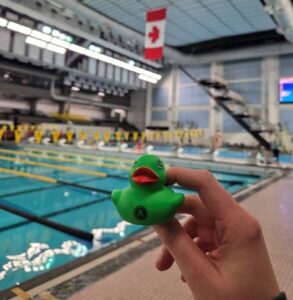
Over the course of the year, I noticed seasonal differences in campus life. While the summer term was relatively quiet, the fall term brought numerous new events, student initiatives, and opportunities to join sports clubs and societies. I personally joined the university swim club, which allowed me to register as a Canadian swimmer and participate in local competitions, a fantastic experience! Beyond sports, I also found moments of balance through music. Several pianos were freely accessible across the campus, and I often used them in the early morning hours, when the university was still calm and nearly empty. Additionally, attending Edmonton Oilers ice hockey games and spending time in nature, particularly in the Canadian Rockies, were memorable experiences that balanced the intensity of my research work. The hiking trips to the Banff and Jasper National Parks with their breathtaking landscapes, were among the most impressive experiences of my stay.

©International Office
©International Office
Looking Back – What I Take With Me
Reflecting on my nine months in Canada, it’s clear how this experience shaped my academic and personal development. While my studies at RWTH Aachen provided a strong scientific foundation, my time at the University of Alberta required me to apply this knowledge in a much more independent and self-directed way. Taking responsibility for my own project, making decisions with limited guidance, and adapting to a different academic culture had a lasting impact on my approach to research. The international environment in Edmonton further broadened my perspective on collaboration and academic careers. Working alongside students and researchers from many different cultural and educational backgrounds reinforced the importance of openness, mutual respect, and diverse viewpoints in advancing research. These experiences strengthened my understanding of what it means to be part of a global research community.
For future students considering a similar path, I highly recommend pursuing international exchange opportunities. Starting the application process early, actively reaching out to supervisors, and being open to stepping outside your comfort zone are key to success. Approaching the experience with curiosity and openness will help you benefit fully from both the academic and personal dimensions of studying abroad.
For me, my time in Canada was far more than just a temporary change of location. It was a formative period that helped shape my academic interests, career aspirations, and personal outlook. The skills, experiences, and friendships I gained continue to influence my path today. I am deeply thankful for this experience.
