
Kategorie: ‘Taipei’
My Stay at the NTU in Taipei
- Electrical Engineering and Information Technology M.Sc.
- Taiwan, Taipei
- National Taiwan University
- 08/2025 – 12/2025
Hello everyone! After my previous exchange semester at Washington University in St. Louis during my bachelor’s studies in Electrical Engineering, I had the amazing opportunity to spend the fall semester of 2025 as a now second-semester master’s student at National Taiwan University (NTU) in Taipei. Through this report, I do not only want to share my incredible experiences in Taiwan but also provide some practical tips and insights for anyone who is interested in planning their own study abroad!
1. Preparation and organization of the stay
Compared to my previous exchange semester in the US, applying for a stay at NTU luckily involved a lot less organizational effort. However, for RWTH students, you will still need to plan at least a year in advance. For NTU and other non-Erasmus exchanges, the RWTHWorldwide portal usually closes in November of the previous academic year, regardless of whether your exchange semester begins in fall or spring.
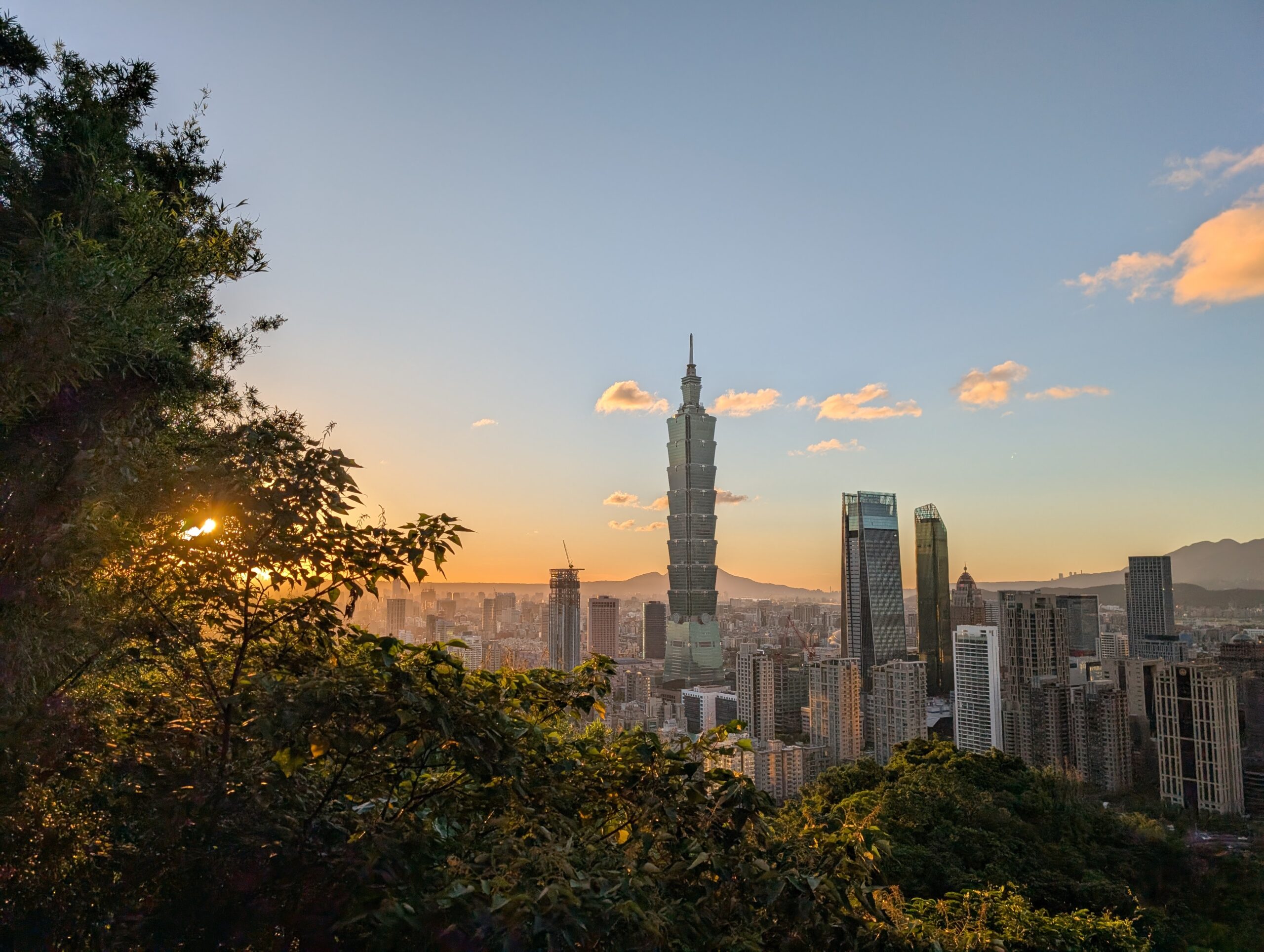
Figure 1: Taipei’s skyline from Elephant Mountain at sunset. Taipei 101 was the world’s highest building for a long time with its 101 floors!
©International Office
RWTHWorldwide Application: As mentioned, the first step towards studying abroad at NTU is applying through the RWTHWorldwide portal. The application takes place online only and involves submitting your CV, transcript (German GPA <2.0), a temporary course selection, and some prompted essays about your personal and academic motivations. For me, preparing all the relevant information and essays took around one day.
From my experience, applying to universities in Taiwan is a lot less competitive compared to other Asian and North American countries; nevertheless, the strict GPA requirement might already filter out many potential candidates.
Here are some of my impressions of my stay at NTU to help you find out if NTU is the right study abroad destination for you (and if yes, write the motivational application essays). Go to NTU if you want…
- … a highly ranked university on your CV: NTU is Taiwan’s best and most famous university, while also being recognized internationally on global- and Electrical Engineering rankings;
- … to learn Chinese,
- … a “beginner-friendly” Asia experience: Taiwanese people speak English comparatively well and use “western” apps (e.g. Google, Instagram, FB);
- … to live in a big city: Taipei obviously is a huge, modern metropolis, but offers a good mix of culture, nature and amazing food scene;
- … to save money: Taiwan is rather cheap compared to other East Asian destinations;
- … to travel: Traveling within Taiwan is inexpensive and easy to navigate, and Taiwan itself is a good base for traveling to other Asian countries.
However, NTU might not be the best place for you if you want…
- … excellent education: From what I have heard from my Electrical Engineering classmates, the best Taiwanese students all move to the US for their master’s programs, where they will receive a much higher salary after graduation;
- … to make lots of local friends: In my experience, most NTU students are very studious and do not have a lot of leisure time to spend with you. Also, there are a ton of other exchange students, with which it feels more natural to hang out with;
- … to transfer good grades back to RWTH: For some reason, RWTH is really strict with credit transfer from Taiwan for graduate students, where a B- at NTU is counted as a 4,0 at RWTH (see RWTH’s Grading Table).
RWTHWorldwide’s application results are usually announced in December, before opening of the Erasmus+ portal. After RWTH’s nomination, applications for the DAAD PROMOS scholarship are due on March 15th and September 15th each.
Application to NTU: RWTH’s International Office will organize a video call in March with all participating students from RWTH and then forward their data to NTU. From then on, you will have time until end of April to complete NTU’s application process, which involves uploading a copy of your passport, a passport photo for the student ID, your transcript of records, a motivational letter, and applying for accommodation. Interestingly, NTU does not have any language requirements for their exchange students. For the transcript of records NTU does not accept outdated transcripts. Meaning: If you are concerned about falling below the NTU’s GPA requirements, you cannot just upload an old transcript of records. Also, in my case, NTU was very strict with my motivational letter and even inquired me to update it to include the specific courses I would like to take at NTU. However, the application to NTU is mostly formal, and I do not know anyone who got rejected by NTU after already receiving a nomination by their home university.
For the accommodation, you can choose between single room with kitchen, single room without kitchen, and double room in NTU’s Prince House dormitory in Gongguan, and a quadruple room in the Yuantong Dormitory in New Taipei City. Contrary to what other experience reports state, three out of five RWTH students got placed into their first choice of single rooms in NTU’s Prince House when I went. From what I have heard, most students in Prince House had very good experiences with their accommodation, while students in Yuantong Dormitory were not as content.
NTU issues your letter of acceptance in June, from when on you will have time to conduct a mandatory health check, buy insurance, and apply for a visa. Personally, I went to LifeLink Radiologie im Kapuzinerkarree for the chest X-ray and to the RWTH’s Hochschularzt for the general health check. For insurances, although NTU expects you to buy health and accident insurance, most German travel health insurances actually fulfill both requirements. I bought and can recommend Envivas by TK, which covered both health and accident insurance and automatically issued me an English proof of insurance within one minute. Regarding visa, NTU actually assured me that it was acceptable from their side to be enrolled with a 90-day tourist visa, as long as your visa status remains valid for the entirety of the semester.
Other steps: Here are some final actions to consider before taking off:
- NTU Email: At some point, NTU switches to communicating via NTU email as opposed to your personal or RWTH email, which is why I suggest setting up the NTU email account as soon as possible.
- Course Selection: There are two course selection periods at NTU in August, where you can register for classes through their portal on a ranking-random basis (not first-come first-served). In case you only make it onto the waiting list, you can still add the respective class by asking the professor during the first weeks of the semester, the so-called add drop period. During my time at NTU, there were only a handful of cases where a student did NOT get into their desired class after kindly asking the professor.
- NTU’s Kick-Off Video Session: NTU does organize a rather messy kick-off session, but you will probably be fine without attending it and only reading their emails.
- Credit Card: Taiwan is still mostly cash-based, which is why you will definitely need a physical card to withdraw money from an ATM. Personally, I can recommend Barclays or Revolut.
- Travel Arrangements: There are direct flights from Germany to Taipei TPE, but I took one by Air China with transfer in Beijing. If you decide to do a visa-run, remember to book a return flight within 90 days of your arrival in Taipei.
To summarize, the application to NTU is a little bit of a tedious process, but not much organizational work in total. I am certain that the incredible experience you will have in Taiwan later on will make every minute of preparation worth it!
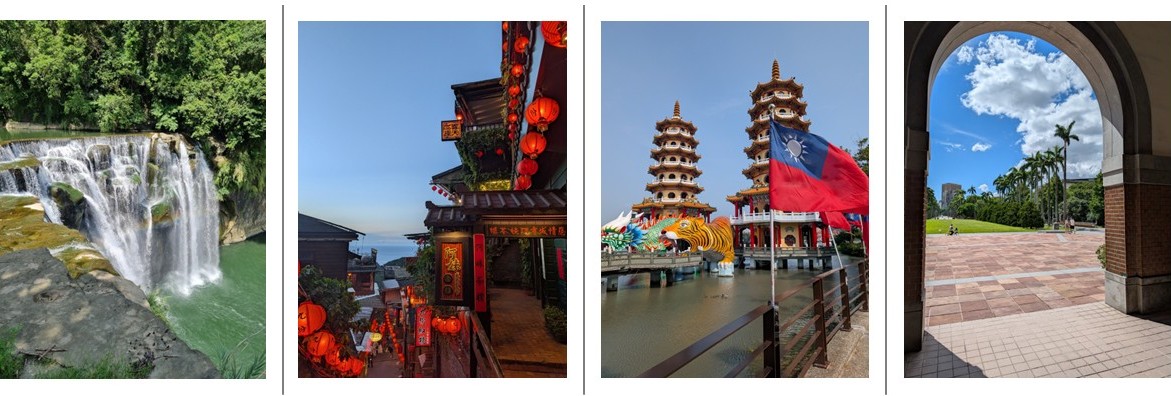
Figure 2: Taiwan impressions. From left to right: Shifen waterfall, Jiufen, Dragon and Tiger Pagodas, and NTU Main Library.
©International Office
2. First steps after arrival in host country
These are the actions I would recommend taking after arriving in Taiwan:
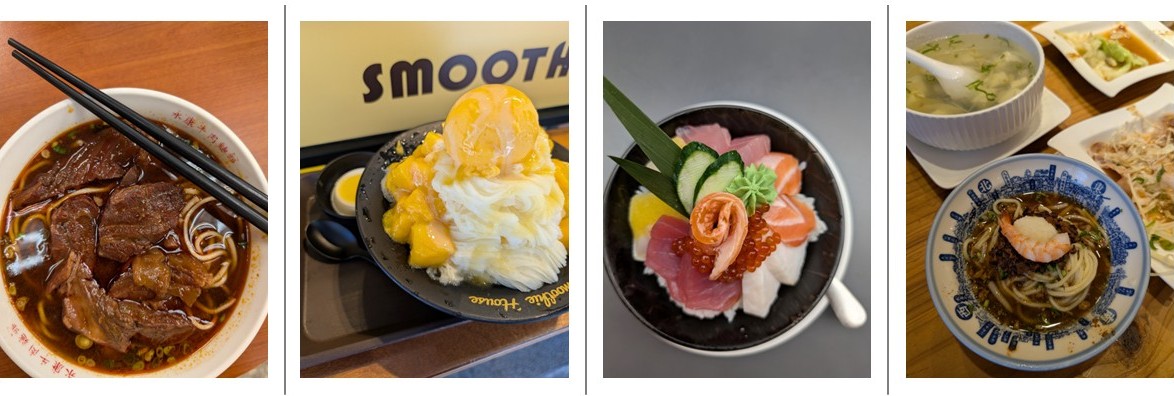
Figure 3: A huge part of Taiwanese culture is eating! From left to right: Beef noodle soup, mango shaved ice, sashimi, and Danzai noodles.
©International Office
SIM card: I can highly recommend getting a SIM card directly at the TPE airport. There is no advantage in getting a SIM card in advance, TPE has good wifi, and most carriers offer student discounts if you go in person. The largest carrier in Taiwan is Chunghwa Telecom, but they are very strict with issuing phone plans according to your visa (e.g., they only offer you a 90 day plan if you have a 90-day visa) and deactivate your phone number as soon as you leave the country. I personally chose the second-largest carrier, Taiwan Mobile 台湾大哥大, which has a little less coverage but does not have the problems stated above.
Transportation: Taipei has a good bus network, but the main public transportation is the Mass Rapid Transport (MRT), Taipei’s underground metro. The MRT is extremely reliable and relatively inexpensive, where you pay with your pre-loaded metro card, the so-called EasyCard. NTU’s student ID card has an integrated EasyCard which gives you a slight student discount for busses as well. Nevertheless, it makes sense to buy an EasyCard at the airport for 100 NTD (≈ 3€) for the first days in Taiwan before getting the student ID.
Besides MRT, the public bike rental service YouBike is also super convenient and commonly used on NTU’s campus. YouBike stations in Taipei are everywhere, the first 30 minutes are free, and you are charged a reasonable amount afterwards. You will need to register with your Taiwanese phone number and either bind your EasyCard or credit card to your account.
Quality of Accomodation: As I mentioned before, I did not stay in either of NTU’s dormitories; not because I did not want to, but rather because I did not receive a placement in any dorm, not even Yuantong dormitories. Before getting the dorm application results, I did not even know that this was possible. I ended up finding private accommodation via the housing agency Borderless House, which offers dormitory-style apartments in central locations for both Taiwanese locals and internationals between the ages of 18 and 30. Albeit more expensive than on the free housing market in Taipei, the application process was easy to sort out from abroad and my suitemates were all extremely nice and easy to get along with. I could not be more grateful for all the memories I made with them by spending each other’s birthdays, Christmas, and a lot of evenings together!
For Prince House, my impression is that all exchange students who stayed there had a good experience. The dorms are quite inexpensive and are located very conveniently at Gongguan MRT station next to NTU campus, the Gongguan night market and probably the largest and best 7-Eleven convenience store. For Yuantong dormitories, I heard that most students got increasingly annoyed at the inconvenient location in New Taipei City around 45 minutes from NTU campus by MRT, and at their three roommates. However, Yuantong might be a good option for the first month to do apartment hunting within Taipei.
Student Volunteer: NTU will assign you a student volunteer who is supposed to help you with the logistics of moving to Taiwan, similar to RWTH’s buddies. However, from my experience, most student volunteers are rather unmotivated. My student volunteer even straight-up told me she did not have any time for me this semester, which makes me wonder why she signed up for the program in the first place.
Orientation (Erstiwoche): Unlike Germany, where orientation is packed full of activities and social events, NTU’s orientation mainly involved some unnecessary information sessions and the formal registration process where you had to submit e.g. your health exam results.
3. Academic & Professional Experience
Although when comparing NTU to my experience studying in Germany and in the US, NTU sometimes felt rather unorganized, I am still more than grateful for everything NTU offered! NTU’s campus is well-maintained for its huge size, has more than plenty affordable dining halls and convenience stores, and two large libraries and even a 24-hour study room. Personally, I recommend checking out NTU’s drunken moon lake 醉月湖, the Social Science Library, and NTU Farm, which produces its own milk, tea, and other fresh produce!
Course Selection: NTU operates on a two-stage course selection period, where the first one starts mid-August. During each of the two periods (not first-come-first-served), you select and rank your desired classes in an online portal. More often than not, you will be waitlisted for your classes, but you will most likely receive a spot in the class as long as you go to the first lecture of the class and ask the professor for a separate registration code. The first two weeks of the semester are therefore referred to as the add-drop-period, where you can also deregister from classes without any consequences. I would therefore recommend you enroll in double the number of classes you plan to take during the course selection period, and drop the classes you are not interested in afterwards. After the add-drop-period, you can still drop courses by letting your professor sign a withdrawal request, but the class will still appear and marked as “W” on your transcript.
For the Chinese classes, you will have to attend a separate registration event, for which NTU’s International Office will send a lot of reminders. In my case, it fell on Saturday morning during orientation week. If you have no previous knowledge in Chinese, you can simply fill out the enrollment sheet; if you do have knowledge, you will have to take a placement test including questions on Chinese grammar, writing a report, and doing an oral interview with the Chinese teacher. You will then get placed into one of the 36 levels of Chinese classes; however, NTU is quite strict and even most of my friends, who have taken Chinese classes at their home university before, ended up in the first level. As a side note, writing in Simplified Chinese or Pinyin is actually allowed during the placement test, as well as in most Chinese classes.
Classes: Although I personally did not take as many engineering classes as one could have, I am very sure that, as an RWTH student, you will be adequately prepared for NTU’s classes as well. From NTU side, you are required to take at least two classes per semester regardless of number of credits, but I would recommend taking around four classes (1 Taiwanese credit = 2 ECTS) for a good balance between campus life and leisure time. Most exchange students at NTU take Chinese classes, ICL, and classes from the “Exploring Taiwan” series, so you might want to consider them if you want to get to know other international students.
- General Chinese (3 Credits): This class takes place either MON-WED-FRI morning, MON WED evening or TUES-THURS evening and has mandatory attendance. However, my teacher was quite relaxed, my fellow international classmates were fun and social, and the class was extremely funny for some reason. Interestingly, I think Chinese class was a bigger help in getting to know new people than orientation week.
- Enhancing Chinese (1 Credit): This class takes place TUES-THURS morning. Unless you are very motivated to improve your Chinese, I would not recommend this class solely because of the timetable, where you have to get up really early to learn similar contents to General Chinese.
- Phys1039 International Companions for Learning (2 Credits): ICL is a cultural exchange volunteering program between international university students and Taiwanese children. Besides the weekly video calls, the most interesting part was going to different schools all across Taiwan for free and participating in all the events the schools organize!
- Geo1008 Introduction to Field Geology (2 Credits): In this class, you spend three weekends going on an excursion to Kenting in the South of Taiwan, including preparation and final exam. The Professor is a multi-awarded teacher who really conveys his enthusiasm for geology! Obviously, this class is extremely fun and an easy way to obtain credits, but the grading is surprisingly strict.
Other than these classes, some classes my exchange student friends took were classes from the “Exploring Taiwan” series, “Edible Insects”, “Basic Taiwanese”, and various sports classes. The first two are catered specifically towards international students, taught in English, and have a very light workload. For the last two, the classes are taught predominantly in Chinese. You should look into all of these if you are interested in other fun classes!
For each “serious” class, you can expect mandatory attendance, homework problems, quizzes, a midterm exam, a final exam, and a final project or report. Graduate classes are usually seminar-style with around ten students per class, while undergraduate classes can have well over 60 students.
- Introduction to Power Electronics (3 Credits): The Professor is truly the absolute nicest and most caring professor from all classes I have ever attended! If you have not yet attended the equivalent Bachelor course at RWTH (“Power Electronics: Fundamentals, Topologies and Analysis”), I can highly recommend you taking her class. Her famous YouTube series on Power Electronics provides good insight into her fantastic teaching style.
- EE5078 Digital IC Engineering (3 Credits): This class covers highly industry-relevant topics with the Professor being a TSMC alumna. Although the class content was very interesting, it was difficult keeping up with the fast-paced lecture as there were no homework problems, or any other exercises whatsoever before the exams.
- IE5009 Game Theory with Applications (3 Credits): This class was an almost exact replica of Yale’s ECON159 Game Theory lecture series. The homework problems felt manageable, but the midterm and final exams were much harder and graded quite strictly.
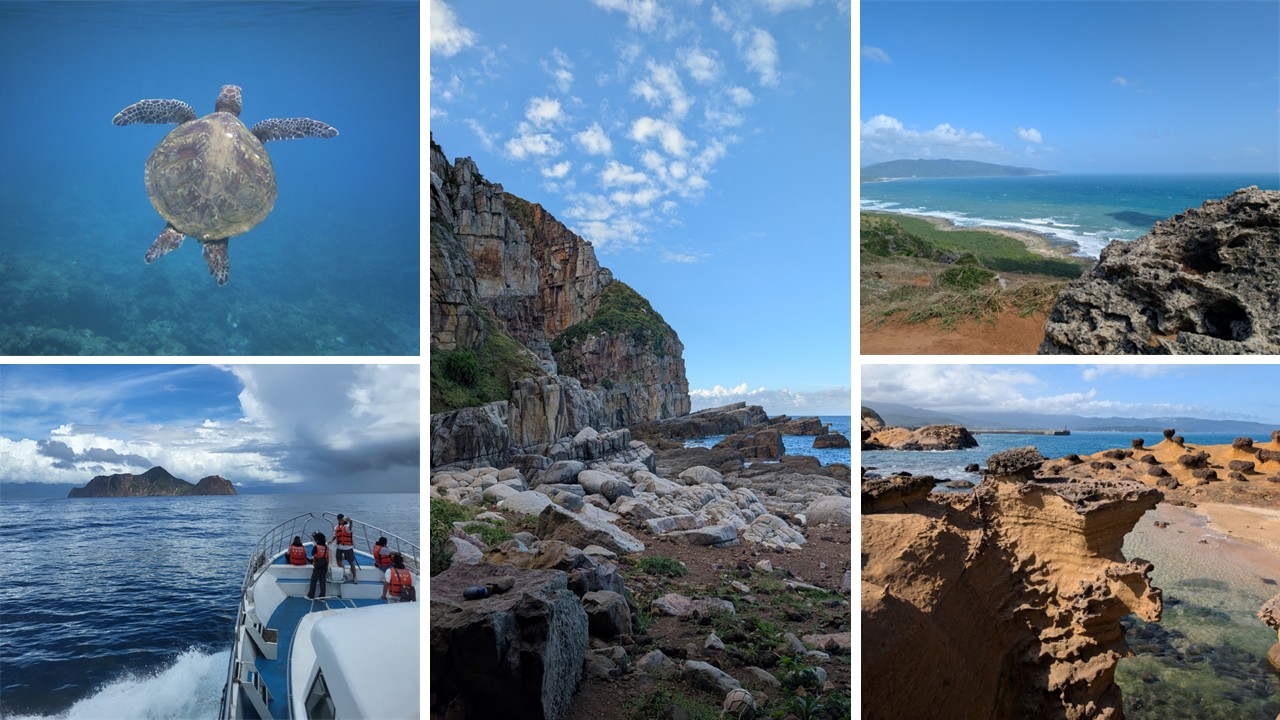
Figure 4: Taiwan’s geology is actually a very interesting field of knowledge to learn about! There is a lot of diversity in fauna and rock formations along Taiwan’s coastline!
©International Office
Generally, for RWTH’s master’s in Electrical Engineering, you can accredit all classes with some engineering applications as part of your Elective or General catalogue, while all other classes including the Chinese language courses can count towards Additional. However, I recommend double-checking with your academic advisor at RWTH beforehand.
Student Life & Extracurricular Activities: If you are able to speak Chinese, I am certain that you will be able to get the most out of campus life. Most local NTU students join at least one of their numerous student clubs, which are also presented at the NTU Club Fair at the beginning of the semester. For instance, I auditioned for and joined NTU’s K-Pop Dance Performance Club, which also hosted a ton of social icebreakers. It is, however, important to note that attending a student club is usually a weekly commitment, and I would consider wisely whether you want to sacrifice potential travel time for that.
If you do not speak Chinese, I got the impression that most student clubs are more hesitant to select you during auditions. Some Taiwanese people are unconfident about their English skills and seem to rather not want to go out of their way to talk to you in English. Also, some student clubs, e.g. NTU Hiking, do not accept exchange students per principle.
4. Financing
In general, RWTH’s PROMOS is a partial scholarship with 450€ per month (as of 2025/26) and no travel funding. This will unfortunately not be enough to cover your living expenses in Taiwan, even if you live frugally. I have heard of some other exchange students getting the MOFA Taiwan-Europe Connectivity Scholarship, although upon my request, RWTH’s International Office did not want to nominate me.
| Monthly budget breakdown (for 4 months) | |
| Flight, round trip | 200€ |
| Insurance | 50€ |
| Tuition* | 4€ |
| Accommodation | 350€ |
| Food** | 250€ |
| Transportation | 35€ |
| Entertainment / Leisure / Travel*** | 250€ |
| Total | 1,139€ |
Table 1: Monthly budget breakdown for one semester (= 4 months) at NTU. One-time costs are divided by 4.
* Tuition: As RWTH student, your tuition fees are waived, but you will have to pay a one-time campus internet access fee of 600 NTD (≈ 16€) before registration.
** Food: In my opinion, costs for food can vary very drastically. As mentioned before, NTU offers excellent dining options for lunch and dinner which can go as low as 50 NTD (≈ 1.30€) per filling meal. Convenience stores like 7-Eleven, FamilyMart, or HiLife are also around every corner both on campus and in Taipei, where you can get a full meal for under 100 NTD (≈ 3€). However, if you want to try all the amazing food Taiwan has to offer, it does make sense to spend a little more to around 120 NTD (≈ 3.30€) at a “normal”-priced Taiwanese restaurant. This is actually what a lot of Taiwanese students go for on a regular basis, which is also why you will find a ton of similarly priced restaurants near campus. Another great way to experience Taiwanese food culture are night markets, which offer street food but rarely go below 200 NTD (≈ 5.50€) per full meal. Lastly, like in every big city, you can get over-the-top food for ridiculous prices as well, especially sushi and sashimi. The above calculation is made with around 8.25€ per day, considering you do not cook at home, which most Taiwanese people actually don’t.
*** Entertainment / Leisure / Travel: As opposed to food, going out for drinks is about the same price in Taipei as in Aachen. For every larger weekend trip within Taiwan, I spend around 100€ in total including accommodation and transportation, but this can vary a lot depending on which level of comfort you want and which activities you plan. Personally, I went on some kind of trip within Taiwan almost every weekend, but most of them were hiking trips that are rather uncostly. However, if you plan to travel to other Asian countries, you of course have to budget in higher costs.
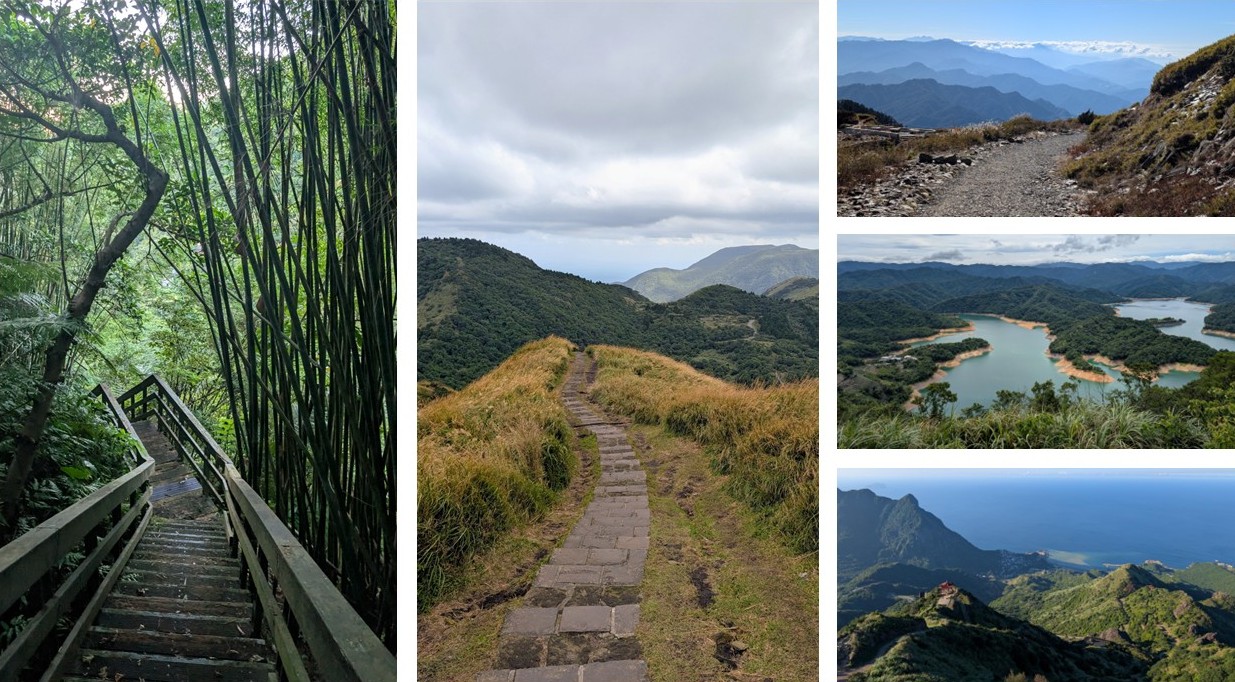
Figure 5: Taiwan is a nature-lover’s and hiker’s paradise! From left to right: Bamboo forests at Maokong, Silvergrass at Yangmingshan National Park, Hehuanshan, Thousand Island Lake, and Teapot Mountain Trail.
©International Office
5. Leisure & Cultural Experience
In case it didn’t become clear yet: I had a phenomenal time in Taiwan! I absolutely fell in love with the lively city of Taipei, NTU’s student community, and the diverse nature Taiwan has to offer. Most importantly, studying at NTU enabled me to meet so many different people from very different backgrounds, surprisingly including a lot of exchange students who also had more time on their hands to explore Taiwan. Each semester, there are more than 1000 exchange students at NTU, and although I surely have not talked to all of them, I can assure that not a single one had a bad time at NTU!
Exploring Taipei: Although most buildings in Taipei do not look the most polished, Taipei is extremely technologically advanced and modern. Everything is so well connected through MRT and YouBike, so that Taipei does not even feel like the huge city it is. Taipei’s most iconic landmarks are the skyscraper Taipei 101, Chiang Kai-Shek Memorial Hall, and Longshan Temple, but I can also recommend visiting the National Palace Museum, Taipei Fine Arts Museum, and Sun-Yat-Sen Memorial Hall. NTU occupies almost the entirety of Gongguan Area within the central Da’an District, which is one of the “old money”-wealthier areas in Taipei. Here, you can find a lot of cheap restaurants, study cafés, and bars, as well as the biggest park in Taipei, Da’an Park.
Generally, café culture is huge in Taiwan. Students regularly go to cafés to study, work, or hang out in the evening, which is why there are more late-night cafés than bars in Taipei. Besides Gongguan, Yongkang and Zhongshan District host many cozy cafés with fast Wi-Fi, power outlets, and no time limit. From what I have seen, Yongkang District is more artsy and traditional with many galleries, teahouses, souvenir stores and Taiwanese restaurants, while Zhongshan District primarily has trendy and modern shopping malls. Ximending is also a lively and modern shopping area, but also quite touristy.
Taiwanese people rarely seem to party, which is why you will find mostly foreigners in the party districts of Maji-Square in Yuanshan, and Xinyi District near Taipei 101. In both cases, the
cheapest way to go out is to pre-drink at one of the many convenience stores. Even in comparison to South Korea, Japan, and Thailand, I personally prefer Taiwanese convenience stores for their product variety, surprisingly clean restrooms, and large seating areas. In case you are staying in the Prince House dormitories, the 7-Eleven at Gongguan even offers beer on tap!
Another important part of Taiwanese culture is definitely their amazing food, which has a lot of Mainland Chinese influences. In my opinion, the best way to enjoy them is through sampling
at night markets! My favorite night markets include Raohe Night Market for their pepper buns 胡椒饼, Ningxia Night Market for their oyster omelet 蚵仔煎, and Linjiang Night Market for their tangyuan 冰火汤圆. However, my most visited night markets would have to be Gongguan and Shida Night Market solely because of their proximity to NTU, where I can highly recommend Hsiung Chi’s scallion pancakes 葱抓饼, millet donuts 小米甜甜圈, and Hohomei’s pineapple buns 冰火菠萝包. However, since it is just so much fun to explore and find new interesting foods, I will leave things for you to discover!
Traveling in Taiwan: I can confidently say that one semester at NTU was enough time for me to see most of Taiwan’s major attractions, and I believe the same is true for most other exchange students too! Firstly, most attractions in New Taipei City are easily reached by public busses, including the cities of Keelung, Shifen, and Jiufen. Cities on the west coast like Taichung, Tainan, and Kaohsiung can also be reached comfortably by the reasonably-priced High Speed Rail train in under three hours from Taipei. If you participate in the ICL program, you will also have plenty of options to visit these cities for free, and if you attend the field geology class, you will also go to Kenting, the Southern peninsula of Taiwan.
Apart from exploring Taipei, I would say that traveling in Taiwan mostly involves enjoying natural landscapes, hiking, and eating good food for cheap prices. If you are into surfing, diving, or snorkeling, you may also consider traveling to Green Island, Orchid Island, or the Penghu islands. Culturally, Tainan might also be interesting due to its many temples.
Traveling in Asia: Taiwan is an excellent base for exploring other Asian countries due to the plethora of cheap flights! I personally made it to South Korea and Thailand during the semester and Japan, Singapore, and Malaysia afterwards, but I heard other exchange students also explored Mainland China, Hong Kong, and the Philippines. For traveling during the semester, I can recommend checking with your teachers beforehand regarding attendance, who are very understanding and relaxed from my experience, especially if you tell them that you have to leave Taiwan for visa reasons. If you plan to travel to Mainland China, you might want to inform yourself about the visa regulations since I heard some NTU exchange students had difficulties re-entering Taiwan afterwards.
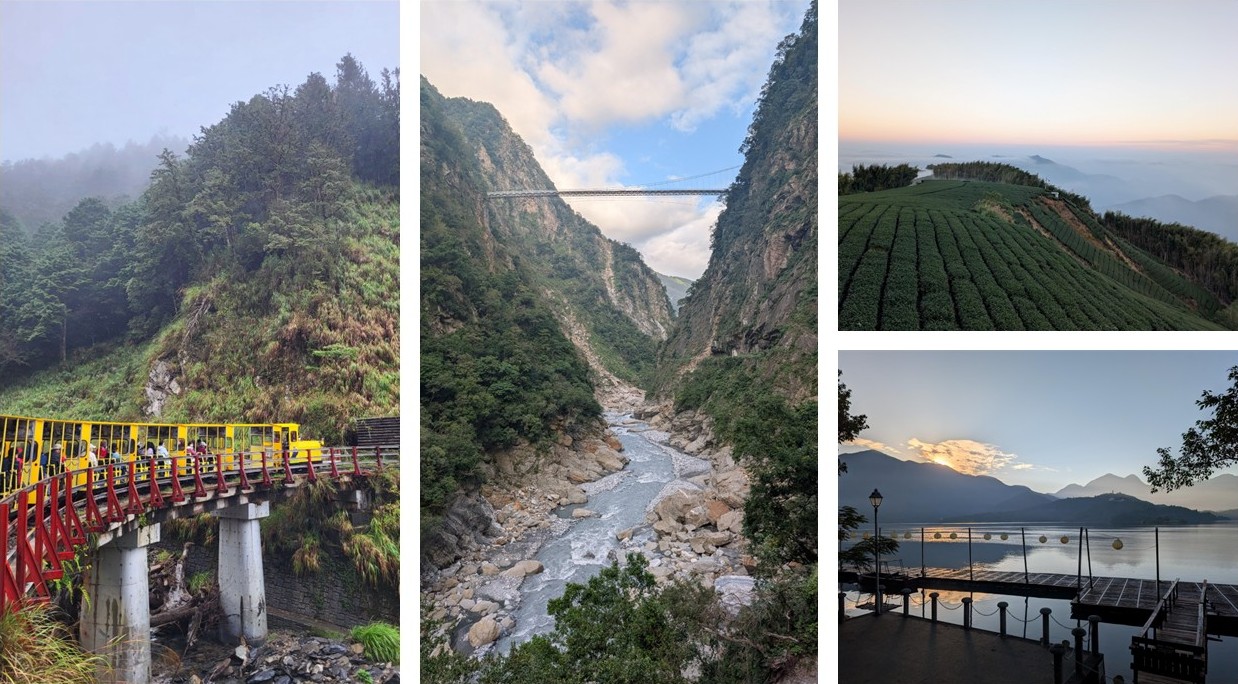
Figure 6: Taiwan’s major natural attractions: Taipingshan Natural Forest Recreation Area, Taroko Gorge, Sunrise at Alishan, and Sun Moon Lake.
©International Office
Safety: During my time in Taiwan, I experienced multiple earthquakes and typhoons but was never really affected in Taipei (although I had to change my travel plans a couple of times). The people in Hualien County however are almost always affected by any natural catastrophe, which is a) devastating to see, and b) should remind you to not underestimate the risks of traveling along Taiwan’s East coast, where e.g. over 1100 people were injured during the 2024 earthquake.
Also, during my time in Taipei, there was one mass stabbing attack on the MRT, which came really surprising even to the Taiwanese locals I talked to. Generally, Taiwan is considered extremely safe regarding crime rates, to the point where I as a women felt safer at night in Taipei than in Aachen. There were also no indications of the China-Taiwan-conflict in Taiwan itself during my time at NTU.
Insider Tips: While I have a ton of insider tips, I believe half the fun lies in discovering them yourself! Still, I have some recommendations: Mark your calendars for fireworks during the Taipei Summer Festival in August, Keelung Ghost Festival in September, and National Day in October. Also, if you want to climb Taiwan’s highest mountain peak, Yushan, you should keep in mind to apply for a permit one month in advance. Other than that, just relax and enjoy what Taiwan and NTU have to offer! You will have a great time, no matter what you choose to do or not to do during your semester abroad 🙂
6. What added value did the stay have for my studies / career prospects? How can / could the society benefit from my personal experience?
If my enthusiasm so far has not already sparked your interest in studying abroad, let me again point out the obvious advantages: An exchange semester makes a great addition to your CV by showcasing international experience, especially from such a prestigious university like NTU. For Electrical Engineering students interested in the semiconductor industry in particular, I believe that Taiwan is an excellent, career-relevant destination; but in general, Chinese skills are a valuable asset to have.
Personally, I feel like a semester abroad makes a good break in your usual study plan at RWTH and gives you a lot of opportunities to find new hobbies, see the world, and connect with very different people, all in a new cultural environment. For me, both of my semesters abroad were very critical for my personal development, and I would genuinely not be the same person I am now without them. So, in short, if you have the means, I can only highly encourage pursuing an exchange semester too!
7. To what extent does my stay abroad have a sustainable character?
As you can probably tell, I am an extremely strong advocate for exchange semesters, and I will be more than happy to share my amazing experiences through volunteering at RWTH’s Welcome Week and GoAbroad Fair. As VDE’s scholarship holder, I will also be holding a speech about my semester abroad at the upcoming member’s assembly, in case for some reason you are very interested?
Finally, I believe in giving back the invaluable support I received in the whole process of planning and embarking on my study abroad. So, whether you are planning, currently on, or reflecting upon your own exchange semester, I am more than happy to connect and help! Feel free to reach out, I always like to get to know new people anyways!
