
Kategorie: ‘Other’
My Internship at an Architectural Office in Vienna
- Architecture M. Sc.
- Austria, Vienna
- Jadric Architektur ZT GmbH
- 09/2024 – 11/2024
My Erasmus+ internship in Vienna was an unforgettable experience that gave me both professional growth and cultural enrichment. From the very beginning, it was a journey filled with excitement, opportunities and memorable moments.
Finding the internship was relatively straightforward. I applied online to a small architecture firm with five employees and was lucky to receive a direct offer after an online interview. The team was incredibly welcoming and the atmosphere at work was open and familiar. We always took breaks together, which helped me integrate into the group quickly and feel like a valued member of the team. Since the team was international, we spoke exclusively English at work. This not only created a collaborative and inclusive environment but also allowed me to enhance my professional English skills, especially in areas like technical terminology and day-to-day communication.
To find an accommodation in Vienna, however, was more challenging. I searched for a room to sublet via WG-Gesucht.de and found the housing market to be quite competitive, but with persistence and a bit of luck, I managed to find a room in a shared apartment. It was a beautiful old-style building in a central location, which made exploring the city easy and enjoyable. Living with three roommates added to the experience, as we often shared meals and made trips through the city. While rents in Vienna are relatively affordable, everyday living costs were slightly higher than in Germany, though prices in bars for example were similar or even slightly lower.
My everyday life revolved around the internship and exploring the city. At work, I had the opportunity to engage with a variety of tasks and learn from experienced professionals. The close-knit team created a supportive environment that allowed me to grow both creatively and technically. Outside of work, Vienna offered a wealth of cultural activities and countless opportunities for exploration. From visiting museums and historical landmarks to discovering cozy bars and cafes, there was always something to do. One common stereotype about Viennese people is that they can be at times rather unfriendly, but my experience was the opposite. I found people to be open and approachable, especially once you started a conversation. This friendliness made navigating a new city much easier and helped me feel at home.
For anyone considering an internship in Vienna, I recommend making the most of the city’s rich cultural scene. Don’t miss out on the chance to visit exhibitions and historical buildings, enjoy traditional Viennese coffee houses and relax in the many green spaces the city has to offer. Vienna is also well-connected, making it easy to take weekend trips to other parts of Austria or nearby countries.
In conclusion, my internship in Vienna was an enriching experience that I would recommend to anyone considering doing an internship abroad. The combination of professional development, cultural exposure, and personal growth made it a truly unique opportunity. If you embrace the challenges and immerse yourself in everything the city has to offer, Vienna will leave a lasting impression on you.
My Research Stay at the University of South Carolina Upstate
- PhD Candidate in Business Economics
- USA, South Carolina
- University of South Carolina Upstate
- 09/2024 – 11/2024
Preparation
I had been a PhD student at RWTH Aachen for a few years and working abroad had always been something I’d like to do. As part of my research, last year I had the opportunity to start collaborating with a professor from the University of South Carolina Upstate. When I asked for the possibility to visit the US and work together from there, she was on board immediately. So, the planning began…
Planning a trip to the United States is definitely an administrative task, and I quickly realized that I had to take it step by step. After settling on a rough timeframe with my PhD supervisor and my hosting professor, I contacted the travel department of the university and booked my flights to and from the US. Talking to colleagues who had already been abroad and looking up to-do lists online was very helpful to figure out what steps to take, e.g. requesting a letter of confirmation from the host university or getting an international license. I started the organization process half a year before my stay, which was a convenient timeframe to organize everything.
Accommodation & Living Expenses
Living expenses in the US are higher than in Germany, especially food prices. Eating out will cost around $ 20-30 for one meal. Grocery prices can be two to three times as expensive as in Germany, even for things like bread, a package of cheese, or some chocolate. This is just something to know and budget for. For my stay, I applied for and got granted the RWTH Aachen Research Ambassador Scholarship, which helped in covering some of those expenses.
As for my accommodation, I ended up booking an apartment in a complex which was specialized in short-term leases for extended business stays. I would recommend to book directly over the apartment’s website, since I experienced a cancellation several days after booking over a third-party platform. Other good options for a stay in the US are Apps such as Airbnb. In my case, there was no student housing available, but that would be another option in general.
Everyday Life and Research Stay
I had my own office at the guest university and was able to experience everyday working life in the United States. Overall, working as Academic staff in the US is quite similar to Germany in many ways, with some cultural differences.
Also, I stayed in one of the Southern States of the US, and Southern hospitality is something I definitely experienced! Everyone was very friendly, open and attentive, which I enjoyed a lot. The professor I worked with was a great host, and I quickly met some amazing colleagues. The area offered a lot of places to explore, and I enjoyed walks in the park, going out for meals, shopping, the cinema, going to the gym, and running. One of my favorite experiences is that I was able to give my own lecture at the university and get into contact with many very curious students.
Another highlight was the last week of my stay, when we attended a conference in Virginia and I presented our research there. Overall, meeting an international community and collaborating was a very rewarding experience.
Conclusion
I can highly recommend to work or study abroad for a while. If that has been on your bucket list for some time, like in my case, be proactive and just do it!
My Internship at the EHU Bilbao
- Biology M. Sc.
- Spain, Bilbao
- Universidad del País Vasco (UPV)/ Euskal Herriko Unibertsitatea (EHU)
- 07/2024 – 09/2024
When I reached out to the Cell Communication and Transcription Lab at EHU Bilbao for a placement, I was quickly connected with my future supervisor. We arranged an online Zoom meeting, and from the start, I felt genuinely welcomed. She was incredibly helpful in organizing my stay, handling all the necessary university paperwork, and went out of her way to ensure everything was in place. It was at that moment I knew I would be well-supervised, and that this internship would be a great success.
Although the university is located far outside the city, I was advised to find accommodation in the city center for better social connections and public transportation. I found my room on Idealista, a popular platform for finding apartments in Spain. For me, finding a reasonably priced room in a shared apartment near the river was relatively easy, but knowing at least some Spanish greatly helps in communicating with landlords, who often speak only Spanish. I ended up living with a girl from Catalunya, a girl from Peru, and one from France. Two of them were students, and the other was working. We got along really well, and they made every effort to make me feel welcome and comfortable in the flat. While we didn’t spend much time together in the end, it was still nice getting to know them!
My first impression of the city was different from what I expected of a typical Spanish city. This is because Bilbao is not quite Spain—it’s the Basque Country, something I later learned is very important to acknowledge. The architecture reminded me more of Central Europe, with modern and stylish buildings. The Nervión River flowing through the city provides a contrast to the otherwise dense urban landscape, creating a special atmosphere, especially at night when the lanterns reflect off the water. I really enjoyed taking walks by the river towards the old town, chatting with friends or responding to voice messages, as there are parks and green spaces along the way. The old town (Casco Viejo) is beautiful to explore and becomes even more vibrant at night. Every day of the week, you can find people enjoying drinks and Pintxos, the Basque version of tapas. My favorite Pintxos were the mini burgers and slices of baguette topped with various salads.
Nature in Bilbao is lush and green, thanks to the high humidity and frequent rain. The surrounding hills and mountains offer excellent hiking routes with stunning scenery, such as the trails around Trapagaran. About 40 minutes from the city center by public transport, you’ll find large, beautiful beaches with breathtaking cliffs and sunsets. My favorite was Sopelana Beach, which I highly recommend for a spectacular sunset.
Because my stay coincided with exam season and the university’s semester break, there weren’t many students on campus, and the Erasmus students left a week after I arrived. However, I was part of the Happy Erasmus WhatsApp group for Bilbao, which allowed me to join their last gathering. Not knowing anyone in the city, I simply asked in the group chat if anyone was going out that night and if I could join them. A really nice Czech girl replied, and we met up with her group for a pre-party. We clicked instantly and had a fantastic night, which ended with a spontaneous swim in the sea. We went to a techno club called Sonora, which was a nice change from the usual bachata and salsa music. In general, Bilbao doesn’t have many clubs; it’s more common to go to small bars, particularly in Casco Viejo, where you can dance to loud music. If you’re looking for an experience full of partying and socializing with Erasmus students, I recommend coming during the semester when there are more activities and it’s easier to meet people. I also attended some language exchange meetings that I found on the Meetup app (which I highly recommend for meeting new people in a new city!) and created a Bumble BFF account specifically to find friends.
During my stay in Bilbao, I was eager to follow the Euro 2024 football tournament in Germany, especially in the company of others. I heard about a German bar that always showed football matches, so I went there for the Germany games. I struck up a conversation with a group of young Germans, and we immediately hit it off. They were taking a language course in Bilbao, and from then on, we watched all the games together. The bar is also worth visiting—the owner is very friendly, and you can speak German with him! While I didn’t try the food, I heard great things about it. We watched the final at a public viewing event in Parque de Doña Casilda, which culminated in Spain’s victory. I also attended the popular BBK Bilbao festival, held on a hill just outside the city. It was easy to get there by bus, and we walked back afterward. I asked in the Erasmus WhatsApp chat who was going and if I could join, as I didn’t want to go alone. Fortunately, a German guy replied, inviting me to join him and his friends. We had an amazing evening, with the highlight being dancing to Jungle’s live performance. Bilbao and the surrounding towns have a lot to offer young music lovers, with numerous street fiestas and concerts during this time of year.
I highly recommend exploring the various towns around Bilbao, such as Portugalete, Santurtzi, Getxo, and Muskiz, which offer beautiful nature and charming towns. A day trip to the stunning city of San Sebastián is also well worth it, and the bus tickets are quite affordable! You can also easily travel to Madrid, Santander, Zaragoza, Vitoria-Gasteiz, Burgos, and other cities by bus or train, and if you prefer to fly, there are plenty of low-cost options to explore all of Spain.
My academic experience was also incredibly valuable. I learned a lot of methods and concepts related to working with mammalian cells and maintaining them in culture. The atmosphere in the lab was everything I could have hoped for, helping me realize what aspects are important to me in a working environment. I made many friends and colleagues who enriched my network, and I plan to stay in touch with them. This experience made me more open to meeting new people, finding ways to connect, and getting along with them right away. I’m certain it shaped my character in ways that only an experience abroad can.
My Internship in Paris
- Applied Geophysics M. Sc.
- France, Paris/ Clamart
- SLB Ribout Product Center
- 03/2024 – 08/2024
Application & Finding an internship
The Joint MSc Applied Geophysics is a two-year, joint degree masters offered by TU Delft in the Netherlands, ETH Zurich in Switerland and RWTH Aachen in Germany. Being a student in this unique programme, I had the incredible opportunity to spend a semester in each of the three countries to experience their diverse, yet suprisingly resembling cultures. As part of the graduation requirements, we are required to conduct full-time research in the final semester, with a list of topics provided by the three universities to choose from.
Interestingly enough, there are also external opportunities outside of the three aforementioned universities. In collaboration with one of the programme‘s universities, previous students have worked at research institutes in Norway, companies in Canada, and more. For our cohort this year (2024), there is an internship position from SLB (formerly Schlumberger) in Paris, France. However, we have to compete with students from other universities outside of the programme for this position.
To apply for the internship, I was required to submitted my CV, MSc transcript, and a motivation letter by November 2023. Fortunately, after just one round of interview, I was selected among more than four applicants to work at this prestigious oil and gas company starting from March 2024 for half a year! I must admit, I do feel slightly privileged to have received this internship opportunity, partly thanks to my MSc programme. Therefore I highly recommend that you start your search for an internship early—9 to 12 months before the start date should give you enough time for any administrative and visa applications that might follow. All the best!
Accomodation & Living expenses
Just like finding an internship, it’s best to start early when searching for a room or studio in Île-de-France once your internship is confirmed. Besides the influx of tourists, this bustling metropolis is home to numerous universities, making student housing short in supply.
When choosing a place to live, it’s wise to pick a location with night transport (Noctilien), ideally within Zone 3 of the IDFM transport network. Trust me, you don’t want to end up like me—trying to save money by living in a remote area for 575€/mo (17m2) with no late-night buses, only to find yourself increasingly relying on Uber to get home as your local social life takes off and the parties become more frequent…
To start with, Cite Universitaire (not a university, but a student housing cluster) is a great option for finding a room. Located at the edge of the city of Paris, it offers excellent all-day transport links and, best of all, an exciting student life if you’ve chosen to be an extrovert:: https://www.ciup.fr/en/
Another option is Twenty Campus, a private housing company geared towards university students, with SOME and only SOME of their residences conveniently located for all-day access to Paris: https://www.twenty-campus.com/en/map/
Remember to check reviews on Google or other platforms before selecting a residence!
Besides, the French government offers housing assistance to students living in France through the CAF scheme, which you can apply for after your first month of residence. You can learn more about it here: https://www.feelfrancais.com/apply-for-the-caf/
As for transport, you’re in luck! The IDFM network offers a student annual pass called the “ImagineR,” which costs €375 a year and is valid throughout Île-de-France, covering Zones 1 to 5 all year round. You’ll need your RWTH enrollment certificate and your internship certificate to apply. Learn more about the scheme and save a LOT of money here: https://www.iledefrance-mobilites.fr/imagine-r
(Best of all, since you are working as an intern in France, your company is required to reimburse a portion of your transport ticket cost. This means you might end up paying less than half the price of the pass!)
Other expenses in France are quite comparable to that of Germany. Eating out might cost a bit more (at around €20), but trust me, the quality of French cuisine and their hospitality is absolutely worth the extra penny. And if you’re a young museum enthusiast, there’s even better news—most French museums are free for students from EU universities. If you have some free time off work, don’t miss the chance to enrich your cultural knowledge and catch up with the Frenchies!
Digital payment is very common in France, so you can definitely get by without cash for long – unlike in Germany. Here’s a breakdown of my average monthly expenses in Euros:
- Accommodation 575 €
- Food (and groceries) 250 €
- Insurance 70 €
- Travelling/ Misc. 230 €
…bringing my total to around 1150 € per month for everything. Pas mal !
Everyday life/ the internship
While I can’t share the technical details of my internship, a typical workday generally goes like this if I’m not teleworking: It takes me 45 minutes to get from my residence to the office (thanks to my less-than-ideal location), arriving around 10:30 am. I code for a bit, then enjoy lunchtime with my fellow interns from 12:30 pm to 2:00 pm. After that, there’s more coding and occasionally some meetings in the afternoon. I usually leave the office by 5:30 pm at the latest. Although I work 35 hours a week, I’m allowed to telework about two days a week on average. So, the work is pretty flexible, as my supervisor put it: “Just finish the work on time, and you’ll be fine. Don’t let me know where you work.”
Are the French chill at work? I guess it depends on the workplace. Since SLB is a global company, some colleagues do end up having to be available at 3:00 am for meetings with American and East Asian headquarters. While my colleagues aren’t too surprised to receive Teams messages outside of official work hours, I have to admit, this did shatter my fantasy of the laid-back French workplace… Hierarchies were flat, though, so there is nothing to worry in this regard.
Don’t take my everyday life in Île-de-France as a reference, though, since the city was in full swing preparing for the 2024 Olympic Games (Jeux Olympiques) while I was enjoying the higher-than-normal living standards in the metropolitan area. Transport was smooth, stations didn’t smell like human excrement, and everyone was surprisingly willing to (try to) speak English rather than French. There was abundant security and police patrolling the streets… All my friends who have lived in Paris for a long time say this was just a dream, and I’ll definitely experience the renowned Paris syndrome the next time I visit.
Anyway, whenever the weather is nice, I like to head into the city, stroll around, visit some museums, take pictures for memories, and indulge in some of the best pastries in the world. I also meet up (or party) with my friends every week or two, eventually causing myself to order an Uber more and more, though it’s definitely worth it.
And if you want to add a touch of romance to your time in Paris, play some songs by Laufey, or any bossa nova in your earphones – it’s an absolute sensation.
Free time/ tips
“If you are lucky enough to have lived in Paris as a young man, then wherever you go for the rest of your life, it stays with you, for Paris is a moveable feast.” ― Ernest Hemingway, A Moveable Feast
C’est vrai.
But what did Hemingway mean by ‚movable feast‘, though? I suppose it differs from one to another person. It can be your romantic life, a galore of museums, endless pub crawls, or just simply the scrumptious food that Paris has to offer. I can’t personalize any solid advice to you reading this now, but do make the most of your time in Paris. Don‘t just stay at home working – that you have done plenty already in Aachen.
I hope the tips and links I’ve written above are practical and helpful. If not, here are some additional general tips that I‘ve brainstormed:
- Moving from A to B within Paris (zone 1 – 2) usually takes 30 minutes, while travelling to/from outside Paris can take about an hour. (Again, try to find a place to live within zone 3!)
- Purchasing pastries from supermarkets, especially baguettes, is a crime.
- There’s no such thing as bad weather, just bad clothing.
- Tap water is LEGALLY free in Parisian restaurants.
- Always be a bit more cautious of your valuables.
- Generally, districts south of the Seine and to the (south-)west of the city are safer.
- Learn some French from Duolingo or any similar apps before you arrive. Definitely useful when you take an Uber or venturing outside of Paris…
- Use both IDFM app AND Citymapper to traverse around the metropolitan.
And as a final tip: travel more! You can earn your expenses back when you start working, but you might well only be in Paris/ France once in your lifetime. France has so much to offer – from the snowy Alpine resorts to the relaxing French riverera, from the historic Normadie to the unique Basque country, you’ll need to visit France 1000 times to truly grasp what the hexagon is all about. The same goes for Paris, that she is both modern and historical, elegant and filthy, refreshing and gothic.
Conclusion
Do I have Paris syndrome?
Perhaps I caught the opposite syndrome – I didn’t think I’d enjoy Paris, only to find her seductive allure lingering in my mind now that I’m writing this.
Paris is a horrible place. It’s dangerous, it‘s dirty, everyone is rude as hell and don’t speak English, everything is expensive, and it’s not romantic at all.
With that, you are all set to explore the city. Enjoy 🙂
Doing a Research Internship at the UiT in Norway
- Psychology M.Sc.
- Norway, Tromsø
- University of Tromsø – The Arctic University of Norway
- 04/2024 – 08/2024
Going abroad the second time in my life posed a challenge, yes, but a less intense one than being a volunteer in South Africa after finishing school. Hence, the whole stay (planning included) was easy going and associated with anticipation and the joy of revisiting the most beautiful country in the world.
Starting my master program at RWTH in winter 23/24, I already had everything laid out. As I wanted to go abroad during my second master semester, I started thinking about research internship possibilities when I finished my bachelor’s degree in March 2023. As my bachelor thesis supervisor was on a one-month exchange in Tromsø and spoke very highly of one professor at the UiT (The Arctic University of Norway), I asked her for connecting me to her. She did, and fortunately the professor at the UiT invited me to come to Norway and work as a research intern for her. This turned out to be the start of a fruitful, respectful and somehow deep supervisor-intern relationship. She is a very capable, very humorous and very kind person. Next to living in the far north (with its midnight sun, polar lights and spectacular hikes), she was my highlight during my whole stay.
Norway is an expensive country. Nevertheless, the German inflation made the transition rather easy. Groceries can be affordable if you know which grocery store to visit and which products to buy. My rent was a different story: For a single room in a shared flat (of eight people) in a student housing I paid 410€. This is the same amount I pay in Germany for my student apartment. On the good side, Norwegian flat mates are the most quiet and respectful people I have ever met, hence, living with eight people was pleasant.
I have adapted my lifestyle drastically. While in Germany I used to meet friends at a café or a restaurant, in Norway I never ate out. I did not party at all, as alcohol is luxurious here, and cut back on my shopping expenses. Although it seems bad, it was a refreshing and grounding experience and let me think about what I take for granted in everyday life.
During the internship I was extremely high in autonomy. My supervisor and I met every Monday noon to talk about new tasks and projects. Next to this, I was flexible regarding my working hours, working place (I switched between the institute, the UiT library and the public library in the city center) and working pace. After work, I either hit the gym or went home to play the piano. My piano teacher and I kept doing lessons via FaceTime. Taking my hobbies from Germany with me helped a lot, especially during the first few weeks, to find my rhythm.
The biggest and most meaningful project during the internship was being a co-author in a review paper we submitted to the Journal of Business & Psychology. It took us from May to August to get the data, analyze them and write the manuscript. Hopefully, the manuscript will undergo a brief review process and will be published at some point. Next to the review paper, I got a lot of insights in the publishing process and data analysis. Furthermore, I could get creative while designing a scientific poster and developing new lecture materials.
The best thing to do while in Norway is hiking. It is for free. And please, just look at the photos:
If it is raining, I enjoyed reading a lot. And that have been my last five months: Hiking, exercising, reading, baking. My family visited for two weeks, in which we went on a road trip to the Lofoten and Vesteralen islands. This vacation I will remember dearly. Of course, friends of mine visited now and then – this was a welcome disruption from everyday life. But I must admit that nowadays it is easy to stay in touch. Being 3000km away from Aachen, I learnt that deepening friendships and fostering my relationship can sometimes be easier even when apart.
I am writing this report one day prior to leaving Norway. It has been a wonderful time, helping me finding an answer to the one question that made me consider a research internship in the first place: “Do I want to do a PhD?” My answer: “Yes, but not abroad!” Additionally, I would like to say a big thank you to the Erasmus office that made my whole stay possible. Thanks for your support, organizing everything neatlessly and being reliable throughout the whole stay.
Internship at Mercedes Formula One Team in the UK
- Business Administration and Engineering: Mechanical Engineering B.Sc.
- United Kingdom, Brackley
- Mercedes-AMG Petronas Formula One Team
- 07/2023 – 07/2024
Application/Finding an internship
The application process for the internship was quite lengthy and kicked off around September 2022 for a start in July 2023. In England, it is very common for students to include a year in industry in their studies, so you will find many available internships across various fields. The duration is usually one year because this is the standard period for university students unless it is a pure summer internship. Ultimately, the internship duration will depend on which internship you apply for and what is offered by the companies you are applying to. If it is a bigger, international company, it is very likely that they will help you a lot with the application process for a visa and put you on a company insurance scheme. This can differ significantly between companies. Following people from that company on LinkedIn can help you if internship positions become available as they are often shared there too.
Accomodation & Living expenses
While grocery prices are in a similar range as German grocery prices, the costs for housing and running costs such as electricity, gas, and water will be significantly higher in the UK. For me, they came out at around £80/month per person in a shared house with two other people, which is very high. Rent was over £500/month per person too, which is around what you can expect in this area and is comparable to what other interns living in or near Brackley had to pay as well. Still, this comes as quite a shock when moving to the English countryside from a German university city. Breakfast, lunch, and dinner were served in the company restaurant, and I usually ate lunch and dinner there for £2.80 per meal. The food was delicious, and the menu changes every week to offer great variety.
As Brackley is a small town, you will have to work through the local letting agencies’ websites, but there is a good network of incoming and leaving interns that provides opportunities to easily take over apartments, which I highly recommend. This also alleviates the pressure to buy furniture as the places either come furnished or you will be able to buy furniture off your predecessors at a low price. To be able to rent an apartment, you will need a valid visa. Many letting agencies will be understanding of these circumstances and offer to wait for your visa approval. After the visa gets confirmed, you can then take the next steps to set up a UK bank account, for which I recommend Revolut. Also, with a registered address, you will be able to apply for an NI (National Insurance) number, which is crucial for the company to pay you a salary.
Everyday life/ the internship
Apart from the amazing work atmosphere and interesting projects that the team entrusted me with, you will work alongside a young team and will join the company with a group of around 40 interns/industrial placements (short IPs). Working on projects together, enjoying lunches and dinners in the Hub (the company restaurant), quickly formed a big group of close friends. You’ll find yourself very quickly going to the local pubs or to parties in Banbury or Oxford together. Out of the 40 IPs, there is always a good mix of internationals with Brits. My year had people from Australia, the US, Canada, Luxembourg, Austria, Germany, the Netherlands, Croatia, Ireland, and England, which made for a very interesting mix of people.
Many other sports clubs give you the opportunity to mingle with locals, as Mercedes has its own cycling club, a football team, and many sports courses. Outside of the company, you will find a tennis club, a rugby club, and a leisure centre with a pool, so there are plenty of activities for you to do in your free time. I would also highly recommend volunteering at the local football club. Every Wednesday around lunchtime, they organize a lunch for the elderly and disabled at the clubhouse, and they are always looking for a helping hand. They have lovely stories to tell, and you will find that many of them can give you great recommendations as they know the area inside out.
Free time/tips
Weekend trips with my newly found friends took me to Liverpool, Bath, Bristol, Cornwall, and on a ski trip to the French Alps, and many smaller adventures. A fantastic weekend activity is trying to complete all the local parkruns, which is a local run event held every Saturday at 9 am over a distance of 5 km. You can put all your running experience to the test by competing in the annual Silverstone Race in May, where you lap the race circuit two times for a race distance of 10 km. Great views along the way and thousands of participating runners make it a great event.
Being located close to Banbury, which has a train station with a direct connection to Birmingham and London, one can hop on a bus to the neighbouring towns and villages to explore those or use them as a transit possibility to explore the country. A day trip or weekend trip to London is always great fun, and I’ve been many times now, as I’ve come to love London for the many different boroughs like Shoreditch, Camden, Kensington, Chelsea, and more. Each of them has a unique vibe, cool cafes, shops, restaurants, and pubs which are worth exploring.
Around Brackley, there are two airfields, both within walking distance. They make for a nice jog around them while small sports planes take off over your head or land on the small runways. For the daring, they even offer tandem parachuting. You can also visit the many golf clubs around and test your swing on the driving range. You only have to pay for balls as they will give you clubs to practice with if you don’t have any.
There are nice cafes all around Brackley as well, my personal favourites being The Old Fire Station in Brackley or the Post Office Café in Evenley. I can also recommend taking the bus to Oxford and visiting museums there, going punting on the canals, or visiting the local colleges.
There is also Stowe School in Buckingham only a few minutes away if you have a bicycle. The Stowe estate has a scenic park with many beautiful temples and arches. It makes for a nice afternoon stroll, especially on nice summer evenings.
Conclusion
All in all, I can only recommend committing to an international internship and immersing oneself in a foreign environment. Even though a full year exceeds the mandatory internship requirements of the RWTH, I can assure everyone it is an amazing experience, and I would do it again without a shadow of a doubt. I’ve greatly benefited from this year in the UK, not only professionally by working my dream job in F1 but also personally by meeting a lot of amazing people.
My experiences at Tsinghua University
- Business Administration and Engineering: Mechanical Engineering M.Sc
- China (VR), Beijing (Peking)
- Tsinghua University
- 09/2023 – 07/2024
Before the stay
Course Planning: It is recommended to get an overview of the selectable courses at Tsinghua University, depending on the respective department, such as Mechanical Engineering, Industrial Engineering, Energy & Power Engineering, and Automotive Engineering. Additionally, it is strongly advised to clarify which classes are eligible for acknowledgment – both Aachen courses at Tsinghua University and Tsinghua courses at RWTH Aachen. One must be cautious about course acknowledgements between Tsinghua University and RWTH Aachen. Based on past experiences, it is generally more challenging to get Aachen courses acknowledged at Tsinghua University than the reverse. This discrepancy necessitates early communication with both institutions. Students should verify which Tsinghua courses will be recognized for credit upon return.
Visa: After receiving the Tsinghua University acceptance letter confirming your stay abroad, a visa appointment should be made as soon as possible. It is likely that the Tsinghua University acceptance letter may arrive quite late. In the past, it was possible to make appointments at both the Düsseldorf Visa Centre and the Frankfurt/Main Visa Centre. Currently, according to my information, the Düsseldorf Visa Centre is closed. If time before departure to China is short, it is recommended to visit the Frankfurt/Main Visa Centre and pick up the visa personally. This way, it is possible to receive the visa within approximately 3-5 days, based on 2023 information. The visa application process involves filling out a detailed online form prior to the appointment. It is recommended to gather all necessary documents, including the acceptance letter, passport (which is valid for the whole stay plus six months, that is, at least 18 months), possibly recent photographs, before beginning the application. Completing this step efficiently can prevent unnecessary delays.
Health and Vaccinations: According to my GP in Germany, no extra vaccinations were needed. However, depending on your travel destinations in East Asia during the winter break in January and February, it might be recommended to receive vaccinations against typhus, hepatitis B, rabies (3-4 doses), and yellow fever. Students should consult their GP or healthcare provider in advance to ensure they are adequately prepared for any planned travel in the region. Besides, it is recommended to sign up for an international health insurance for the complete year.
Travels: It might be helpful to book a flight to Beijing about three months in advance. Possibly due to low demand for flights between Germany and China, the prices for one-way flights were generally rather low (between 350-500 Euros, depending on the booking time). For those planning a round-trip, one challenge is that flights generally can only be booked up to 365 days in advance. Given that the return flight will likely be in July, longer than a year from the outbound flight, this limitation can be an issue. One solution is to book a relatively inexpensive round-trip ticket and postpone the return flight once the return date is finalized. Some airlines offer flexible options for changing the return flight at a low cost, making this a potentially more economical option than booking two separate one-way flights.
Experience in the host country
Accommodation: Tsinghua University offers various dormitory options on campus for international students. There are three different room types available for internationals: First, single rooms with a private bathroom and a small sink (“Single Rooms”). Second, double rooms with shared bathrooms and separate bedrooms (“AB-rooms”). Third, double rooms that consist of a shared bedroom only (“Double Rooms”). The latter do not include any private bathroom or kitchen, as these are shared by the entire floor. The university is gradually renovating all Single Rooms, converting them into Double Rooms. Consequently, the likelihood of securing a Single Room or AB-room will steadily decrease over time. The 2023/24 Aachen cohort was the first to receive Double Rooms instead of Single Rooms.
Most of the 2023/24 Aachen cohort lived in Zijing Building 23, with a few students placed in Building 19 or Building 6. Buildings 6, 22, and 23 are recommended, if possible, as these are relatively newly renovated buildings.
In general, life in the dormitories is communal, with shared spaces like bathrooms and kitchens (depending on the room type). This setup encourages interaction among students, fostering a sense of community. However, it also requires some adjustment, particularly for those used to more privacy.
Dining and Food: Tsinghua University has a lot of dining halls on campus, offering a great variety of food options with a very high quality. The meals are very affordable (normally between 0,80 Euros – 3,00 Euros) and cater to diverse tastes, with a mix of Chinese cuisine and many international options. For those who prefer cooking, some dormitories have shared kitchens where students can prepare their own meals. The quality of the canteens, however, are outstanding for college food.
Off-campus, the Haidian district offers numerous restaurants and food stalls, where students can explore local Beijing cuisine. Street food is also popular and provides a quick and inexpensive way to enjoy traditional Chinese snacks.
Extracurricular Activities: Tsinghua University is known for its vibrant campus life. There are numerous clubs and societies catering to various interests, including sports, arts, music, and technology. For international students, joining these clubs is a great way to meet new people, practice language skills, and immerse in Chinese culture.
Sports facilities at Tsinghua are top-notch, with options for basketball, soccer, swimming, tennis, and more – all of them quite close to most of the international dorms (Zijing 18-23). The university encourages students to stay active, and many participate in regular sports activities. The high-end on-campus gym and fitness centers are also popular among students.
Cultural activities are abundant, with events such as traditional Chinese festivals and holidays, art exhibitions, and extraordinary performances regularly held on campus. Tsinghua’s proximity to cultural landmarks in Beijing also makes it easy for students to explore the city’s rich history during weekends or holidays.
Transportation: Getting around Tsinghua University is convenient, as the campus is well-connected by public transport. Bicycles (especially Blue Bikes from HelloBike) are a popular mode of transportation among students, as the campus is large, and cycling is often the quickest way to get to classes or dining halls. For longer trips, the Beijing subway system is easily accessible from the university, providing a reliable and efficient way to explore the city.
Challenges and Adaptation: For international students, adapting to life at Tsinghua can be both exciting and challenging. The language barrier and cultural differences may initially pose difficulties, but the university offers support services, including language classes and international student offices, to help ease the transition. The campus community is generally welcoming, and many Chinese students are happy and eager to practice their English and learn about other cultures, which can make integration easier.
Daily life at Tsinghua University is dynamic and diverse, offering a mix of academic rigor, cultural experiences, and social engagement. While the challenges of studying at one of China’s top universities can be demanding, the opportunities for personal growth and cultural exchange make it a rewarding experience for both local and international students. Whether through academics, campus life, or exploring Beijing, students at Tsinghua have the chance to engage deeply with both their studies and the rich cultural environment surrounding them.
Experience at the host institution
Academic Life: In our case, classes typically started at 9:00 AM in the first semester. The university offers a wide range of courses across its 21 schools and 59 departments. For international students, classes might vary depending on the department and program, but the workload is generally not too demanding, but quite extensive. Students often attend lectures, participate in group discussions, and engage in research projects. The grading in general is quite fair and benevolent.
Coursework at Tsinghua is challenging, with high expectations from professors. However, the university provides ample resources to support students, including libraries, research facilities, and academic advisors. International students may find the Chinese language barrier challenging at times, though many courses are offered in English, particularly in graduate programs.
Culture at Tsinghua: Tsinghua University provides a rich array of cultural opportunities that allow students to immerse themselves in Chinese history, arts, and traditions. The university regularly hosts cultural events such as Chinese music performances, traditional dance showcases, and art exhibitions that celebrate the country’s heritage. Students can explore Tsinghua’s and Beijing’s renowned museums (Tsinghua has got two of them), participate in traditional arts and crafts workshops, and attend festivals like Chinese New Year, the Mid-Autumn Festival, the Moon Festival, or the Dragonboat Festival which are celebrated with great enthusiasm on campus. Tsinghua’s proximity to cultural landmarks, such as the Forbidden City, the Temple of Heaven, and the Summer Palace, also offers students a chance to delve deeper into China’s historical treasures. Furthermore, engaging with Chinese students through clubs, sports, music, social events, and collaborative projects provides invaluable insights into contemporary Chinese culture and customs. These interactions foster cross-cultural friendships, where international students can learn directly from their peers about local traditions, cuisine, language, and daily life, enriching their overall experience at Tsinghua.
10 tips for new students at Tsinghua University on how to make the most of a one-year stay:
1. Explore Beijing’s Cultural Heritage: Take advantage of Tsinghua’s location in Beijing by visiting iconic landmarks like the Forbidden City, the Great Wall, the Summer Palace, and the Temple of Heaven. These historical sites offer a deep dive into Chinese culture and history.
2. Participate in Campus Festivals and Events: Engage in traditional Chinese festivals like Mid-Autumn Festival celebration on campus. These events provide a unique cultural experience and an opportunity to bond with fellow students.
3. Attend Cultural Performances: Tsinghua hosts various cultural events, including Chinese opera, (traditional Chinese) music concerts, and dance performances. These are great opportunities to experience traditional and modern Chinese arts firsthand.
4. Visit Local Markets and Try Chinese Cuisine: Explore Beijing’s and other cities’ local markets. In Beijing, the Silk Market and the Pearl Market are highly recommended, if you are interested in bargaining. Also, be adventurous with Chinese cuisine by trying local dishes such as Peking duck, hotpot, and dumplings.
5. Explore China Beyond Beijing: Plan trips to other parts of China during breaks. Visit cities like Shanghai, Xi’an, Qingdao, or Chengdu to experience the diversity of China’s landscapes, history, and culture.
6. Engage with Chinese Students: Building friendships with local students is invaluable. Join language exchange programs, participate in group projects, or simply hang out at campus cafes to foster these connections and gain deeper insights into Chinese culture.
7. Join a Student Club or Organization: Tsinghua has a wide range of student clubs, from sports across arts to technology. Joining a club is a great way to meet new people, develop new skills, and immerse yourself in campus life.
8. Learn Mandarin: While many courses are offered in English, learning some Mandarin will enhance your experience and make daily life easier. The university offers language courses, and practicing with local students will definitely accelerate your learning.
9. Take Advantage of Tsinghua’s Academic Resources: Make use of the university’s libraries, research facilities, and academic lectures. Attend guest lectures by prominent scholars and leaders from various fields to broaden your knowledge.
10. Stay Active and Use Campus Facilities: Tsinghua has excellent sports facilities, including gyms, swimming pools (inside and outside), and sports fields. Regular physical activity can help you stay healthy and relieve stress during your stay.
What added value did the stay have for my studies/career prospects?
A stay at Tsinghua University significantly enhanced my studies and career prospects in several ways.
Academic Excellence: Tsinghua University is renowned for its high academic standards and rigorous programs, especially in fields like engineering, technology, and business. The exposure to cutting-edge research, advanced coursework, a high focus on teamwork, and a global academic environment deepened my knowledge and skills in my field of study. This academic rigor might be highly regarded by employers and can set one apart in competitive job markets.
Language and Cultural Skills: Learning Mandarin and immersing myself in Chinese culture has been a big benefit, especially if one intends to work in industries or companies that have strong ties to China. Proficiency in Mandarin and an understanding of Chinese business practices can make someone a valuable asset to multinational companies or organizations operating in China.
Global Perspective: Studying at one of China’s top universities provides a unique international experience. It allowed me to gain insights into China’s rapidly growing economy, technological advancements, and global influence. This international exposure can make one more adaptable and culturally aware, qualities that might be increasingly valued in today’s globalized world.
Problem-Solving and Adaptability: Living and studying in a new country requires adaptability and resilience. The challenges I overcame during my time at Tsinghua, whether related to academics, language, or cultural issues, helped me to develop problem-solving skills and the ability to thrive in diverse environments. These are qualities that might be valued by employers in any industry.
Career Opportunities in China: China’s economy continues to grow, and having experience at a Chinese university like Tsinghua can open up career opportunities within China or with Chinese companies abroad. Being part of the Tsinghua alumni network can also provide valuable career opportunities.
Networking Opportunities: Tsinghua University attracts some of the brightest minds from China and around the world, offering an excellent opportunity to build a global professional network. The connections you make with fellow students, faculty, and industry professionals can open doors to future collaborations, job opportunities, and mentorship.
In summary, your stay at Tsinghua University not only enriches your academic background but also equips you with valuable skills, global perspectives, and professional networks that can significantly boost your future life both in China and internationally.
To what extent does my stay abroad have a sustainable character? To what extent could the general public also benefit from my personal experience?
My stay abroad at Tsinghua University has a sustainable character in both environmental and social aspects, with potential benefits that extend beyond my personal experience. By immersing myself in China’s approach to sustainability and environmental practices, particularly in areas like energy, engineering, and electromobility, I have gained valuable insights into how we can implement more sustainable solutions in our own communities. For example, learning about cutting-edge renewable energy technologies and urban sustainability initiatives at Tsinghua and in Beijing, especially regarding electromobility and public transport, allows me to bring back knowledge that can be applied to projects aimed at reducing environmental impact and promoting greener practices in my home country. This might contribute to a more sustainable future by helping to develop solutions that minimize resource consumption, lower emissions, and promote long-term environmental health.
On a social and cultural level, the public might benefit from my experiences through the sharing of cultural knowledge and perspectives. By engaging with local communities and sharing my experiences, I can help foster greater cross-cultural understanding and empathy, which is crucial in an increasingly globalized and polarized world. This cultural exchange can also lead to stronger social bonds and collaboration between different communities, promoting peace and mutual respect.
Emotionally, the empathy and cultural sensitivity I have developed through this experience allow me to better relate to people from diverse backgrounds, which can positively influence my interactions with others. This emotional experience can help in creating more inclusive and supportive environments, whether in the workplace or in the community.
Financially, the skills and knowledge I have gained might lead to more effective and innovative approaches in my field, which could translate into economic benefits. For example, by applying sustainable engineering practices learned, I can contribute to cost-saving measures and resource efficiency in projects, which benefits not only companies but also society as a whole by reducing environmental costs and promoting sustainable growth.
In summary, my stay at Tsinghua University allows me to bring back knowledge and practices that contribute to environmental sustainability, while also fostering social and cultural benefits for the public. By sharing my experiences and applying what I have learned, I can help create a more sustainable, inclusive, and interconnected society.
My Erasmus Traineeship in Valladolid
- Medicine
- Spain, Valladolid
- Universidad de Valladolid
- 01/2024 – 06/2024
My name is Felix and I’m a medicine student from Aachen, Germany. This year I spent 6 month of my practical year taking part in a hospital Internship at the University of Valladolid in Spain.
Preparation
As for the preparation I first reached out about a year before my stay to the Erasmus coordinator and the dean of the Faculty of Medicine at the university. Although sometimes hard to reach, he will eventually answer you and help you with whatever request you might have. He recommended me to contact two other doctors to organise the different parts of my internship. Eventually I organized my stays with the respective heads of the different departments and presented my final rotation in internal medicine and surgery to these two doctors to get their confirmation.
Arrival and Organisation
I arrived 1 week prior to the start of my internship, which gave me time to visit the international office and organize the formalities. Although I could not be matriculated without taking any assignments, they were very helpful and worked out a way to provide me with the student badge. That way I could take part in the university sport and other programs, such as the GUM, which is a group of students and other people that go on hikes every 2nd Sunday throughout the entire year. In order to get set up for the hospital, I had to go to the Dean’s office, where the friendly employees helped me go through the process of registering for my internship, which included receiving my nametag and clothes for the hospital. For this process a “Certificado de los delitos sexuales” is necessary. This was very easy to get at the local state’s office. I got a date within 3 days and it only took them 1-2 days to get the necessary information from Germany and to send me the certificate via email. All in all the people were always very friendly and helpful which made the process easy, even though some things couldn’t be resolved right away.
Accommodation
Accommodations in Valladolid are surprisingly cheap and easy to find. Rooms in a shared flat generally range between 180 and 350€. Studios aren’t much more expensive either. The main website used is Idealista, but you can also find rooms through facebook (watch out for scammers). I wanted to get to know people which is why I was looking for a flatshare. After only about 3 days of search I found a very nice room in a central apartment right next to the main shopping street. Although not very good equipped and a bit lived through, the apartment was very nice and that way I got to know other international people. It is worth to mention that in Valladolid (and other Spanish cities from what I’ve heard) it’s common for landlords to take away money from your bond, or even the whole bond without indicating a reason. It seems to be a way of making extra money off international students, who usually can’t do much about it. After this happened to some of my roommates as well, I decided to not pay my last months rent and leave the bond to the landlord, which is a common strategy.
The City
Valladolid wouldn’t have been the city of my choice if it weren’t for my girlfriend, who is from there. My expectations weren’t very high, and got easily excelled by this mid-sized city in central Spain. It has a beautiful historic centre and even an artificial beach at the riverside. Located about 1 hour from Madrid by train and 2.5 hours from the north coast by car, the city is particularly well located in Spain. It gives you the possibility to regularly visit the capital or to rent a car for a cheap price and spend the weekend at the sea, surfing or enjoying the incredible nature of the north. What is more, it is surrounded by the beautiful and historic cities of Castilla y León, such as Salamanca, Segovia, Burgos and León, which are all worth a visit. Being the capital of its region is what makes Valladolid a very attractive city. While the weekdays are rather calm, on the weekends it attracts plenty of people from all around. This leads to the city offering a large variety of activities, sports, restaurants, bars and results in a high quality of living. The city hosts many events throughout the year, including regular and free public concerts on the Plaza Mayor, theatre and music festivals and the famous San Juan in June, where everyone goes to the beach to enjoy the longest night of the year at a bonfire. Valladolid also offers beautiful parks and an immense amount of terraces, where you can find some of the best and cheapest tapas in all of Spain. Drinks and food are extraordinarily cheap, which allows you to spend a big amount of your time outside, enjoying the Spanish way of living. Personally, I loved that it’s very easy to leave the city by bike or bus and be in the nature in the blink of an eye. It is also worth to mention, that the Spanish in Castilla y León is considered the clearest and easiest to understand in all of Spain.
The Hospital
I spent 2 months of my Internal Medicine internship at the Hospital Río Hortega and my 4 months of surgical internship at the Hospital Clínico. I can recommend both hospitals. While Río Hortega is a very modern and well equipped hospital located outside the city centre (12-15 minutes by bike), Clínico is located right in the heart of Valladolid, next to the Faculty of Medicine and has a nice and familiar touch to it. Generally it is important to say, that Spanish medicine students don’t get to participate in the daily hospital work near as much as German students. The working hours are from 8am to 3pm, but the doctors might leave earlier when the daily ward round and the examination of the patients are done. In Internal Medicine, the tasks are limited to following your assigned doctor and examining the patients. The doctors are generally very open and willing to explain you everything. There is no time pressure which leaves plenty of time to explain diseases and procedures. But the low patient flow also leads to a lower input compared to other countries. The emergency department was the only department where I got to assess my own patients and right down the anamnesis and reports before discussing the procedures with the doctors. In the surgery departments the Spanish students rarely take part in the surgeries. I was lucky to get to know a couple of doctors who would regularly let me take part in surgeries and perform assisting tasks like holding hooks, unscrewing screws or sew a few stitches. Although I definitely learned new things it was probably less compared to spending the same amount of time in a German hospital.
Conclusion
I had a great time throughout my stay in Valladolid and am very happy to have gotten to know the country, the city and the people. Valladolid is a beautiful city and has much more to offer than one would expect at first glance. It may not be able to compete with Spains major cities when it comes to the cultural offer and nightlife but impresses with a high quality of life, easy access to the nature and a cheap cost of living.
Writing my Master Thesis in Trondheim
- Energy Engineering M. Sc.
- Norway, Trondheim
- Norges Teknisk-Naturvitenskapelige Universitet
- 01/2024-06/2024
Application / Finding an internship
To make new experiences and broaden my horizon I wanted to finish my academic studies with a stay abroad. So, I decided to do my master thesis in another country. I already had a research topic in mind and knew I wanted to go to another European country, thus I came across the NTNU in Trondheim, Norway – a place which seemed to be popular among engineering students from RWTH Aachen University. I did not apply for an advertised thesis, instead I had to demarcate the topic together with both my Norwegian supervisor and my German supervisor. Yet, the application process was surprisingly straightforward. I wrote an e-mail to the corresponding professor at NTNU, and he replied with a few hours and accepted my proposal. Additionally, I had to register myself as an exchange student at NTNU. The university’s international office was very supportive in that process. A benefit as an exchange student is that you are exempt from paying the semester fee.
Accommodation & living expenses
Since my stay in Trondheim was aligned with the Norwegian spring semester (January – June) I was given the chance to live in the Moholt student village (dorm). I can highly recommend Moholt to any exchange student because it makes your stay in Trondheim so much more enjoyable. First of all, the dorm rooms are very modern and well equipped. I lived in a 4-bedroom-apartment with three other students with shared kitchen and bathroom. The apartment had two big fridges, an oven with induction cooktop and a microwave – so well suited for cooking with friends. One big disadvantage is that the personal (bed)rooms are not equipped with a mattress. You either have to buy a new one (there is a furniture store right across the street) or get one from students who are leaving (there are Facebook and WhatsApp groups to organize buying and selling used stuff). Furthermore, there is a thing called Re:Store at Moholt where you can get used furniture and other household items for free which where donated by other students. In return, you can donate your used stuff when you leave. In case you need outdoor/hiking/sports equipment, you can go to the Bumerang store (also located at Moholt) where you can lend almost everything needed for outdoor activities (backpacks, skis, tents, …) without cost.
However, the best part of Moholt in my opinion is the Loftet. The Loftet is a common room located in the center of the village opened every day. It is equipped with tables where you can work as well as a lot of sofas where you can just relax. You can get a free cup of coffee or tea, pick one of a great variety of board games or play table tennis or video games on a PS5. The Loftet is run by very friendly volunteering students who work for Sit (the welfare organization for students) and can help you with almost anything. There are several recurring events, such as movie nights, quizzes, jam sessions, guided hiking tours etc. So, when you don’t know what to do – just go to the Loftet. The chances you’ll meet new interesting people and be involved in funny activities are quite high. It’s worth mentioning that the community at Moholt is very international.
Regarding the cost of living, the amount of money provided by the ERASMUS+ scholarship (750 €) was sufficient. The rent was approximately 400 euros (costs for internet and electricity are included). A six-months-ticket for the public transport costs about 250 euros. The food prices are extremely high compared to most other European countries. Especially basic groceries (water, milk, butter, cheese, vegetables) cost twice as much as in Germany. What’s also expensive is any close contact service, e.g. eating at a restaurant or going to the barber. Yet, if you are person who basically spends his or her money only (or mainly) on necessary things (groceries, toiletries, stationery, …) you will get along well with 750 € a month. If, on the other hand, you like to get take-away food often, go to clubs, bars, cinemas weekly, enjoy frequent shopping trips or have an expensive hobby, you might exceed the monthly stipend.
Everyday life / the internship
Paying bills in Norway works (almost) completely cashless. I have never held a Norwegian bank note in my hand, credit cards (or NFC-enabled smartphones) are accepted basically everywhere. Therefore, you should get a credit card that doesn’t charge fees for paying in foreign currency. Alternatively, you can link your PayPal account with Google Wallet. By doing that you also avoid those extra fees. Most Norwegians are fluent in English which makes communicating in everyday life very easy.
Since Trondheim is located quite northern on the globe the transition period from winter to summer is quite short. When I arrived in January the temperature was -13°C in the evening. There was a lot of snow until the beginning of April and the sun set very early (before 4:30 pm). Though from mid-April on there was a rapid change and in May temperatures sometimes went beyond 25°C and the sun did not set before 11 pm. So even when you finished working late, you could enjoy some hours of free time outside.
Working on my thesis was difficult in the first few weeks (and months to be honest). Since I had not applied for an advertised thesis a major, time-consuming part of my stay at NTNU was to formulate a research question which was relevant to both ‘sides’ (German and Norwegian). My Norwegian supervisor was actually the professor himself, who obviously has a tighter schedule than research assistants, which is why I did not meet him every week. The NTNU provides open offices at the campus particularly reserved for students. Unfortunately, the university cafeterias are extremely expensive (a meal costs 3-4 times as much as in Germany) which is why I worked from ‘home’ most of the time so that I was able to cook my own lunch.
Free time / tips
When you stay in Norway for a longer period, it is definitely worth experiencing the beautiful nature of the country. A great way to do that is going on a hike and staying overnight in one of the many cabins which NTNU owns. The cabins are neither equipped with electricity nor running water, to keep it warm you chop some wood and put it into the oven that is present in every cabin. Anything else – food, drinks, sleeping bags etc. – you must bring yourself. Although this may sound a little scary at the beginning, it really offers a cool and unique experience. Some cabins are located on a lake, some come with a sauna and above all you get a great view of the landscape.
From my experience, one might feel a little overwhelmed at first by all the opportunities to spend your free time. A good strategy is to start by joining the trips guided by the Sit students (starting at Loftet) to find out what kind of trip or activity suits you.
With the regard to writing a master thesis abroad, I’d recommend the following:
1) Align your stay in Norway with the semester cycle. That allows you to get a place in one of the student villages with all the benefits mentioned above.
2) If possible, find an advertised thesis with a (more or less) predefined research question. That will reduce the amount of required communication and coordination between your internal (your home university) and external (Norwegian) supervisor.
3) Draft a schedule for the different tasks of your thesis together with your supervisors. Think about what input you need from which supervisor (internal or external).
4) If you’re stuck at some point, don’t be afraid to ask your supervisor for help.
Conclusion
Trondheim is a great place to study. The people I have met there were extremely friendly without exception. The student welfare organization Sit provides a very comfortable living environment. It is important to take care of administrative stuff early enough (finding a topic and a supervisor, register as an exchange student, find housing, apply for ERASMUS funding, get adequate insurance). Yet, if you are facing problems during your stay there are many people and institutions who can help you. Personally, I would do some things differently in retrospect, nevertheless, I am very grateful for having made the experience.
Willkommen bei Intern Abroad!
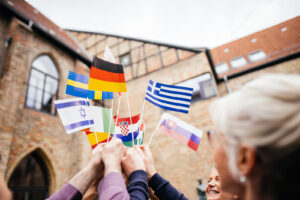
© Oliver Reetz/DAAD
Praktika und Forschungsaufenthalte bei Unternehmen im Ausland stellen eine sinnvolle Kombination von Auslandsaufenthalt und Praxiserfahrung in der Industrie dar, in deren Rahmen Qualifikationen für den späteren Beruf gesammelt werden können.
Studierende, die für diese Zwecke bereits im Ausland waren, stellen hier ihre Erfahrungen vor. Schau dich ruhig um und stöbere durch Berichte aus ganz Europa!
