
Schlagwort: ‘internship’
My Research Internship at the University of Cambridge
- Chemistry M.Sc.
- United Kingdom, Cambridge
- University of Cambridge
- 10/2025 – 03/2026
Before the stay
Before organizing the internship, I asked myself: What do I want to get out of such an experience. From a career/academic point of view, I wanted to improve my English language skills in both everyday life and academic environments, my chemistry skills and learn from other talented people. Nevertheless, I also aimed to experience the student life in another country. With that I was able to narrow it down to the UK, and I applied to several professors at Cambridge whose research matched my field of interest. Fortunately, after a short Zoom meeting about potential research projects, I received an offer for an internship. From that point onward, two main bureaucratic matters had to be handled. The receiving institution required a number of documents and even after submitting those, the review process took quite a long time (2 Months) , and I received my invitation letter only four weeks before the start of the stay. The second aspect was the Erasmus+ process, which, in comparison, required much less time.
Accommodation/Expenses
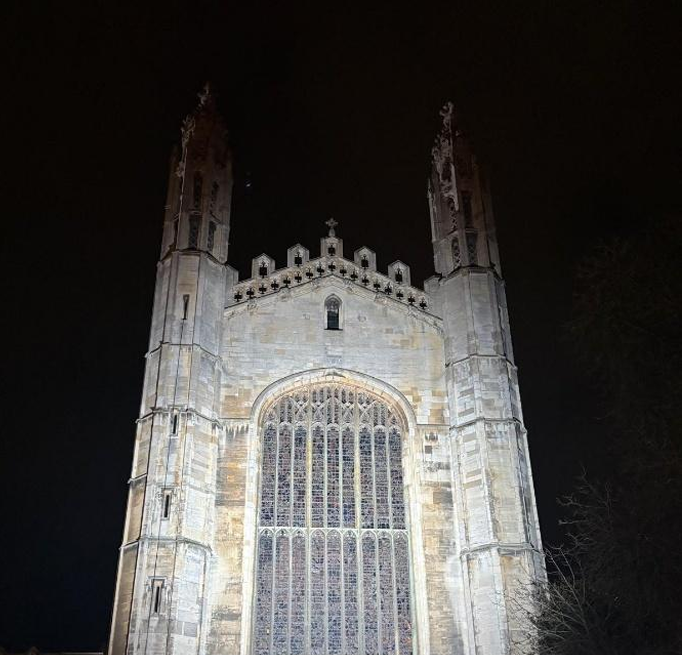
Kings College Chapel at night.
©International Office
Since short-term visiting students in Cambridge are generally not eligible for accommodation in a college dormitory, finding housing required some additional effort. Nevertheless, colleges may offer available rooms to visiting students if vacancies exist. For this reason, I contacted several accommodation officers of colleges located near my department and eventually received an offer. However, the room was relatively far from my department and also much more expensive than other options. In addition, access would have been limited to the accommodation itself, without the wider benefits of college facilities.
I therefore decided to continue searching through the University accommodation website. There, I found a room close to my department that was being sublet by an older couple for around €750 per month. This turned out to be a very fortunate arrangement. The couple was extremely kind and always made sure that I was doing well. They also helped me connect with other communities, which made settling into life in Cambridge much easier.
In Cambridge, the easiest and most convenient means of transportation is usually a second-hand bicycle. For groceries, the cheapest options are generally ALDI and LIDL.
Everyday life
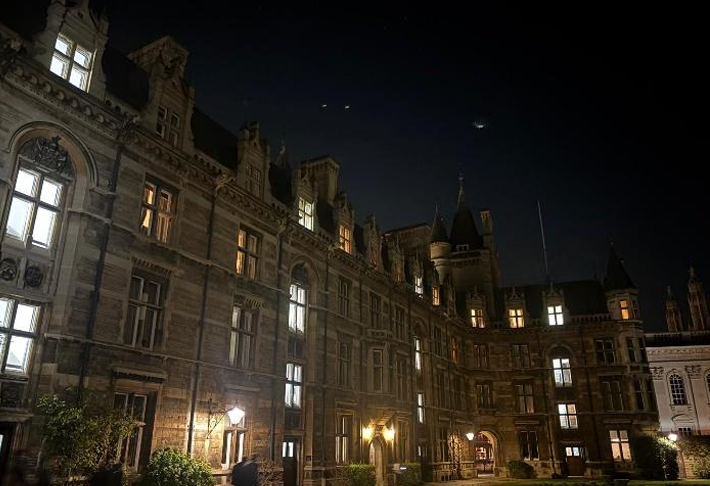
Gonville & Caius College at night.
©International Office
The research group, which mostly consisted of British students, welcomed me warmly and introduced me to everyone from the very beginning. On weekdays, I usually worked in the laboratory from 9:00 a.m. to 5:00 p.m. However, there was a certain degree of flexibility, so I was also allowed to leave earlier or work longer when necessary. My daily laboratory work generally involved the planning, execution, and evaluation of experiments. Whenever support was needed, other group members were always very helpful and provided training or advice. In addition, my supervisor checked in regularly and offered useful suggestions and ideas. Nevertheless, I worked mostly independently, which I appreciated very much. It allowed me to pursue my own ideas and approaches while still having support available whenever needed. In the group meetings, I presented my research results, and challenges or problems were discussed on a regular basis. This not only gave me valuable feedback on my own work but also allowed me to gain insight into other projects within the group. As a result, I was able to further improve both my problem-solving abilities and my communication skills. On special occasions, we went for lunch together, and after work we occasionally met at pubs.
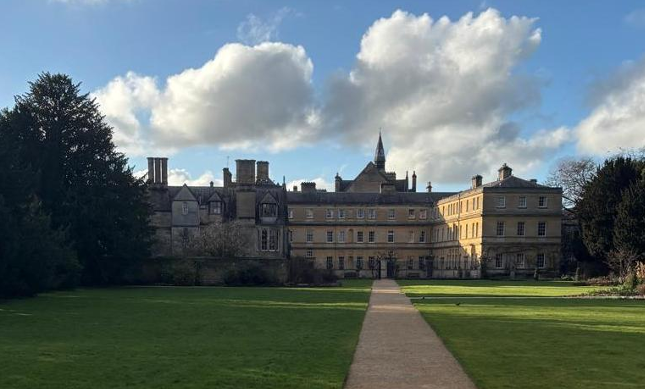
Oxford University.
©International Office
On weekends, I had the opportunity to explore Cambridge and its surroundings. I would strongly recommend visiting the colleges, as they are one of the most distinctive and impressive aspects of the city. Fortunately, my landlord, who was a former student, gave me several tours and was able to share interesting background knowledge. I would also highly recommend attending a “formal”, which is a traditional formal dinner held in a college. To take part in one, it is usually necessary to know someone who can invite you, and formal clothing is required for the occasion.
Besides that, I visited other tourist attractions in Cambridge, such as museums and shops. I also took trips to London and Oxford together with other international students from my department. London is definitely worth visiting because of its many famous and historic landmarks. Oxford, although quite similar to Cambridge in some ways, is also well worth a trip!
Conclusion
Academically, my internship was a very valuable experience. I learned a number of important laboratory techniques and practical skills, but also gained insight into how to manage my own project and develop original ideas independently. In this respect, the stay helped me grow as a laboratory researcher. In addition, I clearly improved my English skills. By working and communicating in English every day, I became much more fluent both in an academic context and in everyday life.
On a personal level, I also benefited greatly from the experience. I made a few friends, primarily within the research group, with whom I hope to stay in contact in the future. Overall, the internship was both academically and personally enriching, and I am very grateful for the opportunity to have spent this time in Cambridge.
My Internship in Amsterdam
- Architecture M. Sc.
- Netherlands, Amsterdam
- Buro Kettinghuls
- 09/2025 – 02/2026
During my Erasmus internship, I had the opportunity to live in Amsterdam and work at the architecture office buro Kettinghuls for six months.
Application/Finding an internship
About five months before starting my internship, I applied to many different architecture offices in the Netherlands, as I was particularly interested in improving my Dutch language skills and experiencing an international working environment. After several applications, I was fortunate to receive an offer from buro Kettinghuls in Amsterdam. With my internship, I then applied for an Erasmus grant.
Accomodation & Living expenses
©International Office
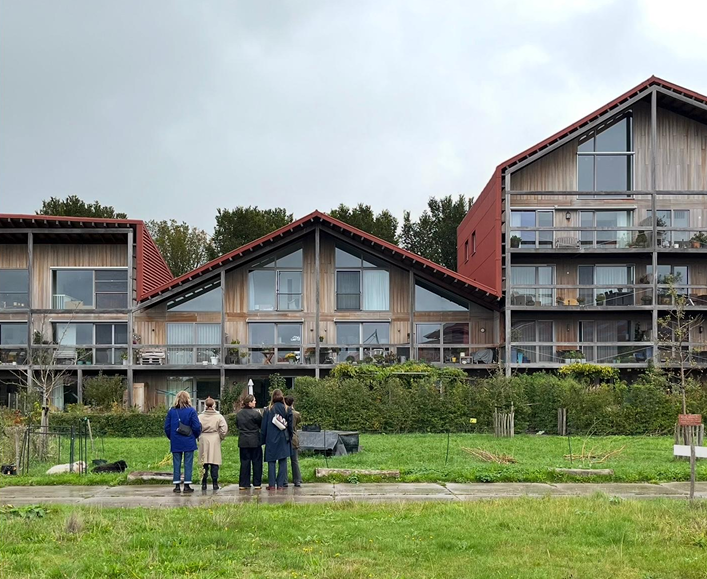
One of the biggest challenges was finding accommodation. The housing market in the Netherlands is extremely competitive, especially in Amsterdam. When searching for housing, it is important to respond to as many listings as possible and as quickly as possible. Temporary accommodation is generally easier to find than long-term rentals. I stayed in one shared apartment room for the first two months and then moved to another shared flat for the remaining four months. Although I had to move, it allowed me to get to know two different neighbourhoods and experience different parts of the city more closely. In general, living expenses are higher than in Aachen, particularly when eating out, which is why I mostly cooked at home. Supermarket prices also vary considerably, with stores like Dirk and Aldi typically being more affordable than Albert Heijn.
Everyday life/ the internship
©International Office
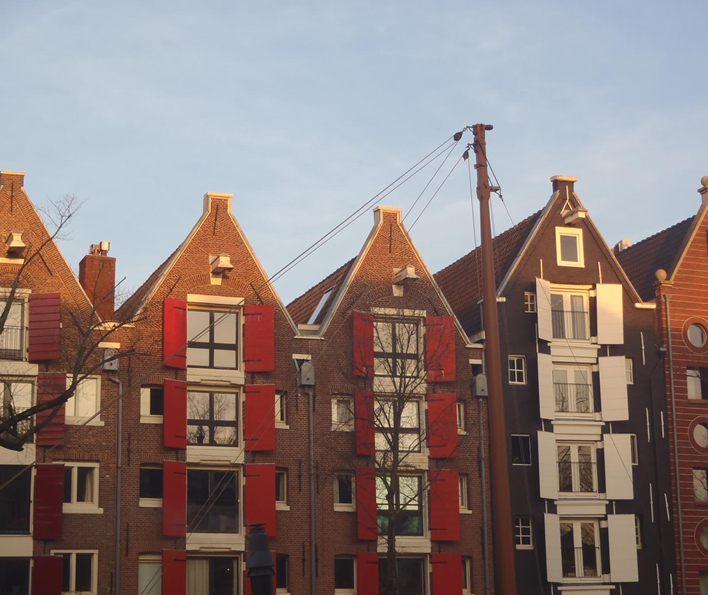
My working hours were from 9 a.m. to 6 p.m. Every day, we had lunch together in the office, usually consisting of homemade salad, bread, and cheese. This was a nice moment to connect with colleagues and as we were an international team it was fun to talk about different cultural experiences. During the internship, I worked on different projects and was given a variety of tasks. I drew plans, prepared visualisations, built models and supported the team in ongoing design processes. My colleagues provided guidance and were always willing to explain things, which helped me learn a lot in a short time. We also went on an office excursion to visit projects and construction sites in Almere, which was particularly exciting because I could see how plans are realized in practice. I really appreciated that there were two other interns at the office, as we would sometimes meet for a coffee before work or make plans together for the weekends, which truly enhanced my overall experience.
Free time/tips
©International Office
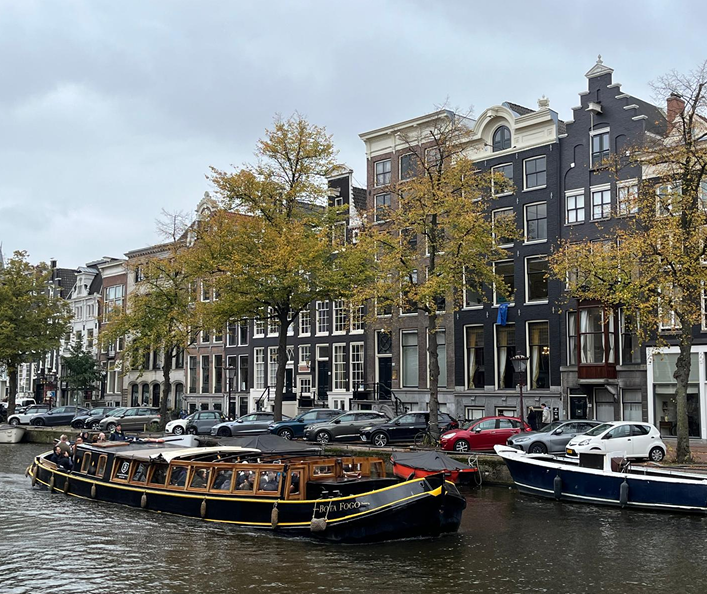
Besides work, I spent most of my free time exploring the city. Cycling is definitely the best way to get around Amsterdam, as it is fast and ideal for discovering different neighbourhoods. Especially during my first weeks in Amsterdam, I always took different streets with my bike. Over time, I visited many new places while also quickly finding my favourite bars and cafés. In September, ESN organized a picnic where I met other international students. From then on, we started organizing a monthly board and card game evening in a bar, which became a regular highlight. I also took advantage of the cultural opportunities the Netherlands has to offer. I highly recommend getting a Museumskaart, which allows you to access most museums in the country for a year. For everyone who is interested in photography, I can especially recommend Huis Marseille and Foam. Many Dutch cities are easy to reach by train, making day trips very convenient. I visited Utrecht and Haarlem with friends and also went on a bike trip to the sea, which was a wonderful experience.
Conclusion
I can highly recommend doing an Erasmus internship in Amsterdam. The city offers the cultural and social opportunities of a large metropolis, yet everything is easily accessible, almost like in a smaller city. Even though moving alone to a new city where you do not know anyone can feel intimidating at first, it is absolutely worth stepping out of your comfort zone. The experience helped me grow, both professionally and personally, and created memories that will stay with me for a lifetime.
My Internship at an Architecture Office in Brussels
- Architecture M.Sc.
- Belgium, Brussels
- Mamout Architects
- 06/2025 – 01/2026
Application/Finding an internship
I chose the city before looking for architecture offices because the place itself was very important to me. After finishing my Bachelor’s, Brussels felt like the perfect next step – it’s close to my hometown, yet offers a completely different language, culture, and atmosphere. I was especially drawn to its multilingual and diverse character, with French and Flemish spoken and many international residents because of the EU institutions. This creates a very inspiring environment with active, creative communities and people working in fields that interest me most. The city is dynamic and always full of life, offering new experiences every day. I discovered most of the architecture offices I applied to through conversations with students who had already gone through the process, which was extremely helpful when I felt unsure and a bit overwhelmed at first. Since Brussels was the only city I seriously considered, I applied to several studios I liked and after a few weeks received an acceptance, which confirmed that choosing Brussels was the right decision for me.
Accomodation & Living expenses
Before I moved to Brussels for my internship, I had a bit of free time and decided to volunteer at a music and cultural festival to help with the setup. Working together on the festival was a great way to meet people quickly and start creating my first memories in the city. It really helped me to make initial contacts, and in the end I even found my first shared apartment in Brussels through these connections. In terms of housing, I would describe Brussels as fairly average for a European capital when it comes to rent prices. Groceries, however, are relatively expensive, which I didn’t fully realize before moving here. Over time, you get to know the city better and discover alternatives, like the local markets, which have a great atmosphere and where you can buy fruit and vegetables for much less than in the supermarket.
Everyday life/ the internship
My everyday life during the week was mainly shaped by my full-time internship. From Monday to Friday, I worked in the office from 9 a.m. to 6 p.m., building models, drawing plans, creating 3D models, visiting construction sites, preparing presentations for clients, and enjoying lunch breaks with my colleagues. The office was quite small, with only four employees and one other intern, which was ideal for my first long internship because I quickly understood how everything worked and gained insight into all parts of the projects. The main working language was French, which was challenging for me at first. I often felt unsure in conversations and meetings, but week by week I noticed clear progress. Using a new language every day took a lot of courage, but it also strengthened my self-confidence and made me more open and independent.
Free time/tips
After work and on the weekends, I spent my time exploring the city and meeting new people. From the beginning, living in a shared flat was important to me because it’s the easiest way to make contacts. At the same time, I also enjoyed discovering Brussels on my own, walking through different neighborhoods and getting to know the city at my own pace. Brussels never disappointed me – there is always something going on. It offers a lot of culture, impressive architecture, many young people, and in my opinion a very diverse nightlife scene, which made my time there both exciting and inspiring.
Conclusion
Going to Brussels for my internship was a great decision, and I can honestly say that I learned a lot and also grew personally during my time there. It was very enriching to step out of my comfort zone and experience completely new things. Already during the internship, I realized that eight months in the city would not be enough, because Brussels has so much to offer. I also made some wonderful new friendships that I want to continue developing, and I feel so comfortable here that I would like to do another internship and even my Master’s in the city. After eight months, the city finally feels familiar – I have a routine, a great social environment, and yet I have still barely scratched the surface of everything Brussels has to offer.
©International Office
My research internship at the University of Cambridge
- Chemistry M.Sc.
- United Kingdom, Cambridge
- University of Cambridge
- 10/2025 – 01/2026
Application/Finding an internship

©International Office
At the beginnings of my master’s studies at RWTH, I heard about invaluable experiences and strong recommendations from several students who had gone abroad for university-related stays. Intrigued by these stories, I wanted to combine academically high-impact research with improving my English language skills. Despite the common stereotype about rainy weather, I selected the UK as my host country. As I always have been impressed by the great history of the Universities of Oxford and Cambridge, I applied to three research groups at these universities by emailing the respective professors. Thereby, it gave me planning reliability to commence with the application process one year in advance to the intended time of the stay abroad. Gratifyingly, after one Zoom meeting with the professor, I was offered a research internship position at the University of Cambridge and was allowed to communicate my preferred research topics. Following the offer, I was confronted with a huge bureaucratic burden. However, helpful assistance and some flexibility regarding English language certificates from the host university simplified the process to some extent.
Accomodation & Living expenses
As far as I understood, living in colleges is rather not amenable to short-term visiting students. Hence, I had to search for private accomodation, some of which was advertised on a website of the university. This lowered the risk of scams, but rents of far more than 1000€ for the advertised accomodations were not affordable. Ultimately, I found a suitable accomodation, including a room, private bathroom, and a convenient distance to the uni, via the website “SpareRoom”. I lived together with my British landlord, which turned out to be a great opportunity for learning more about the (pub) culture and the language.
At the very beginning of my stay I realized that the primary means of transportation in Cambridge is the bicycle. Fortunately, the wide availability of second-hand bikes saved me from spending a fortune on a new one. In my experience, discount stores such as Aldi or Lidl are the most convenient options for grocery shopping at prices comparable to those in Germany.
Everyday life / the internship
During the week, I worked at the chemistry department, usually from 9:30 until 18:00. Without strictly fixed working hours, I could call it a day at my own discretion. After long days at work, I normally limited my activities to cooking or going to a gym near my accomodation.
I greatly enjoyed my work in the chemistry department due to the diverse combination of laboratory and office tasks, as well as frequent meetings. Contrarily to my experience with previous research projects conducted in germany, I worked quite independently on the project assigned to me. Initially, this felt unaccustomed, but over time I became increasingly comfortable planning and conducting experiments based on my own ideas. Furthermore, I could always consult my supervisor, and the group members were very supportive, especially in the beginning. Another surprising difference compared to germany, was my strong integration into academic discussions during group meetings. Throughout my stay, I presented my ideas and results every two weeks in a subgroup meeting and twice in the weekly group meeting. This helped me improving my english abilities and my academic communication skills in general.

©International Office
The research group consisted of many interesting personalities from different countries, rendering the group highly international. Since several new members joined the group around the same time as I did, we often shared similar questions and challenges. With the great assistance from experienced members, a group dynamic developed, leading to several evenings spent in pubs, visits to the Christmas market, as well as a trip to London. As a result, the atmosphere in both the laboratory and the office was very pleasant, friendly, and, especially, funny.
Free time / tips
Free time was mostly constrained to the weekends, during which I explored the centre of Cambridge and its impressive college buildings together with friends from the working group or visiting friends and family from Germany. In this regard, I strongly recommend booking a punting tour, during which a guide propels a small wooden boat along the River Cam by pushing a long pole against the riverbed while explaining aspects of the colleges’ history. Further adventures I undertook were trips to Oxford and London. The skyscraper scenery combined with historic landmarks such as the Palace of Westminster, the prominent Elizabeth Tower, and the Buckingham Palace, made the trip to London more than worthwhile. As a tip, the view from Sky Garden – London’s highest public garden at a height of 160 meters – is breathtaking, and, even better, access to the skyscraper is free of charge! Also, visiting the Tower Bridge by entering the towers and the former engine room was a highlight.

©International Office
Conclusion
All in all, it was an invaluable experience and great opportunity to foster both my academic and personal development. From an academic view, I worked independently on a research project, presented my ideas and experimental results in several meetings, and improved my english language abilities as aimed for. Personally, I made new friends from all over the world, experienced the beauty of Cambridge and London, and broadened my horizons by getting in touch with diverse cultures. I am very grateful for the support provided by Erasmus, enabling an adventure I will never forget.
My Internship at Bosch Cooperation in Tranås
- Chemical Engineering M.Sc.
- Sweden, Tranås
- Bosch Cooperation
- 03/2024 – 08/2024
Application & Finding an Internship
A fellow student told me about her internship at a company in Tranås, Sweden. There, the company develops and researches all kinds of heat pumps, utilizing power from the mountain, the water, or the air. On the company website, I found several open positions in different departments starting in spring 2024. I applied for a few positions and quickly received their answers. After 2 interviews, I got the internship position in the engineering department, which is working on the reliability of the components in the refrigerant circuit of the heat pump.
Accomodation & Living Expenses
The company is located in Tranås, a small city in the prince Småland in Sweden. I was accommodated with other international interns and thesis students in a hotel directly next to the lake Sommen. Every intern had their own private room and bathroom.The living room, kitchen, Office and laundry room was shared with the other interns. There was also a gym and sauna in the hotel, which we were allowed to use. It took about 10 minutes to drive from the hotel to the city center of Tranås and about 15 minutes to the company. We were provided with 2 cars and 1 van for us interns to drive to work, grocery shopping and other activities. It was also possible to rent company bikes, which was especially nice in the summer.
The provision of accommodation and cars simplified the preparation for the internship a lot, because I didn’t had to look for apartments abroad. Living with 13 other international interns and students, it was easy to settle in and find friends. I really enjoyed living with so many people from different countries and cultures. We often cooked dinner together and spent the evenings on the terrace enjoying the sunset over the lake together.
Everyday Life & The Internship
For my internship contract I had to work 40 hours per week, usually from 7:30 am in the morning until 4:30 pm in the afternoon with a 1-hour lunchbreak. The interns were allowed to work flexible hours and arrange their working hours themselves. During my time at the company, I worked with my supervisor on 3 big, different topics. I was able to get deep into the different topics, apply my knowledge from university and get some work experience.
The working culture in Sweden is non-hierarchical. Everyone is approached just with their first name, regardless of their title, age or status in the company. This is also reflected in the casual dress code at the office. Managers and workers are both working in comfortable and convenient clothing like jeans and sweatshirts. It is also worth mentioning that the Swedes have a very high sense of duty and connection towards their work, their team and the company. Therefore, they are often proudly wearing clothing with the company logo. Important decisions are not only made by senior managers or executives, but everyone on their team is also included in the decision and asked on their opinion on the subject matter. As an intern I felt as part of the team since my first day at work and my opinion was valued and not less worth than from other colleagues. The Swedish way of working is characterized by trust, independence and flexibility of the employes. You are able to organize your workday as you prefer, whether you want to work from your desk, a meeting room or from home.
A very important part of the Swedish work culture is the Swedish coffee break called “Fika”. At least once per day you get yourself a coffee, tea or hot chocolate and sit down with your colleagues on the couch and talk about non work-related topics. Usually someone brings some baked goods with them to share and enjoy during Fika. There is a huge variety of different swedish pastries, like the famous Kanelbullar, Wienerbröd, Chokladbollar and Blabärspaj. I was not surprised, when learned that Sweden is one of the countries that consumes the most amount of coffee per person.
People in Sweden value their work life balance a lot. During lunch time I could go to free Yoga classes, go for a quick session at the companys gym or join one of the running groups.
My colleagues at work were from a lot of different countries, so I talked Englisch most of the time during my internship. Since I shared my accommodation with other interns from all over Europe, I was able to learn some phrases in French, Italian, Swedish and Portuguese.
Free time & Tips
Summer is the best season to for a visit in Sweden, since the amazing Swedish nature with all the beautiful lakes and woods is coming alive. In Sweden, there is the so called “Allemansrätt”, which guarantees you free access to all parts of nature. You are allowed to visit ever dock on the lake, collect as much berries or mushrooms as you want and put up your tent on every island or wood as long as you don’t bother the owner. Everywhere in Sweden you can find amazing hiking trails through fairytale woods with shelters and fireplaces for camping. Even though the summers in Sweden are not as warm, you can easily go swimming in one of the many beautiful and peaceful swimming lakes.
On the weekends I often visited one of the citys around Tranås. I really enjoyed my trip to the small town Gränna, where the sugar cane was invented and stroll past all the candy shops with all the colorful candys displayed. I spend a few sunny afternoons sitting in small cafes in Eksjö surrounded by old pastel colored timber houses. But also, bigger citys like Linköping with the medieval cathedral and Jönköping at the lake Vättern are definitely worth a visit.
From Tranås, you can travel to Stockoholm in 3-4 hours by using the train. I had a lot of fun walking around the old part of the town “Gamla Stan”, visiting the famous Vasa Museum and going for a night out in big city like Stockholm.
Gothenburg is known for its archipelago, several scattered islands on the west coast of Sweden. I had a marvelous time while driving with ferries from island to island. On one of the islands, we rented a kajak and paddled along the coastline for a few hours, of course with a few stops for Fika and a swim in the sea. In the evenings, we visited different bars and listened to swedish metal and rock music.
One of my highlight during my time in Sweden was my canoe trip on the lake Ansen. We rented a canoe for a few days at one of the several canoe rentals. We drove through the national park, enjoyed the beautiful nature and stopped on one of the many islands to build up the tent and sleep for the night. I can highly recommend renting a canoe or kajak and going onto the lake, even just for a few hours.
Another one of my highlights was our trip to the island Öland during Midsommar, the national holiday at the summer solstice. At Midsommar everyone is celebrating all day wearing flower crowns in their hair and dancing around a tree, decorated with flowers and leaves. Since it’s the longest day in the whole and it’s not getting dark, you stay up late and party all night.
Conclusion
I spent a fantastic and wonderful summer during my internship in Sweden, experiencing the incredible nature and landscapes. All the Swedes I met were open-minded, super friendly and made me feel very welcome. The work ethic and culture is much more relaxed than in Germany and you meet your colleagues at eye level, regardless of their hierarchical level and enjoy a coffee and cake during Fika. I am thankful for all the beautiful experiences, memories and new friends I made during my time in Sweden.
My Internship at the University College Dublin
- Molecular and Applied Biotechnology M.Sc.
- Irland, Dublin
- University College Dublin
- 04/2024 – 06/2024
Finding and Applying to an Internship
Before my stay abroad, I wasn’t sure where I wanted to go or what I wanted to do. However, when my girlfriend told me she was offered an internship position at a school in Dublin, my decision became clear. We decided that experiencing our internships abroad in the same city would make things easier, so I started searching for research groups in Dublin that interested me. I explored the websites of known universities, searching for researchers focused on bioprocessing, bioeconomy, and microbiology. I was particularly drawn to one research group, which aimed to utilize microalgae for the valorization of food waste. I directly applied for a three-month research internship, and after a few weeks and two Zoom calls, I was told that I could do the internship.
Accomodation and Living Expenses
Securing an affordable place to stay in Dublin was challenging. The city has a housing crisis, making flats very expensive. Student accommodations on the UCD campus were not a cheaper option, with the lowest price being 800 Euros per month for a shared room, and their application timeframes didn’t fit my schedule. Fortunately, I found a room in a shared apartment for 850 Euros per month on the website “Homestay”. At the start I was feeling very unaccustomed to living with a stranger but that feeling faded away with time when I got to know my flatmate better. The commute to the university was about 30 minutes, and a trip to the city centre took an hour. Despite living outside the city, I enjoyed the greenery, particularly Fernhill Park, which became one of my favorite spots in Dublin.
I usually did my grocery shopping after work once a week, as the smaller stores near my apartment were quite expensive. For example, cheese could cost up to 5 Euros per pack. Bulk shopping at a discount market was essential for affordable food, except for bread, which was inexpensive everywhere but of course not comparable to German bread 😉. I definitely recommend to only shop in large discounter markets in Ireland.
Everyday Live
I felt a bit nervous on my first day, but that quickly faded as I got to know the welcoming members of my research group. The lab environment and research methods were similar to those I was familiar with in Germany, which helped me settle in. Although the general approach was familiar, I still learned new laboratory techniques and tricks from my supervisor, especially regarding sterile work.
My tasks were divided between data analysis of existing literature and practical laboratory work with microalgae, known as wet-, reproducible outcomes. While there are standard practices, each lab has its own tricks lab or bench work. Working with microorganisms requires strict sterile conditions to prevent contamination and ensure predictable to maintain sterility, and I was grateful to learn new methods that were unfamiliar to me from my previous experience in German labs.
One aspect I appreciated about my work was the independence I had in deciding when and how to approach my tasks. Academics often start work later than usual, and this seemed even more common in Ireland. I typically worked from 9:30 am to 5 pm, but some colleagues started later and stayed longer.
In the evenings, I didn’t do much besides going for walks and cooking dinner, with leftovers serving as lunch the next day. Without a bike and with limited bus service in my area, my options for activities were slim. However, I eagerly looked forward to the weekends when I could explore more of Dublin and Ireland.
Free Time and Tips
Although my work group was friendly, social interactions outside work were limited to a monthly movie night. Luckily, I was part of a group of interns from the school where my girlfriend worked. Together, we made the most of our weekends by exploring Dublin’s pubs, restaurants, hiking trails, sightseeing spots, and local markets and art scenes.
Ireland’s pub culture is something special. On weekends, it’s common to go out, have a few pints, and dine at restaurants. Everyone is relaxed and enjoying the weekend atmosphere. Most pubs have live music, and the crowd cheers and sings along, creating a sense of unity and merriment that I have yet to experience in Germany. I personally loved the more traditional “Porterhouse” in the temple bar quarter but also the modern “bonobos” where tabletop games were played and who had a wide variety of all sorts of drinks. Dublin’s culinary scene is also diverse. I enjoyed Indian, Thai, Vietnamese, Spanish, and occasionally Irish food.
Apart from the bustling city, I loved Ireland’s nature the most. Green hills and meadows are everywhere, often contrasted by steep cliffs overlooking the sea. I often visited the peninsula of Howth, close to Dublin, taking all my visitors there because it is a must see for everyone visiting Dublin. It is a 50-minute bus ride from Dublin city center, but only 30 minutes from my girlfriend’s place, where I stayed most weekends. Two highlights at the end of my stay were trips to Galway and Belfast, where I experienced other cities in (Northern) Ireland and took a bus tour along the coast, where I could again awe the nature and the rougher northern coast line. When traveling Ireland, I would recommend taking the train if possible. Train tickets between the big cities cost only 8 Euros and the trains are very clean and spacious making the ride very pleasant. The best thing is: while driving you can view the beautiful landscape.
Conclusion
All in all I can say my internship in Dublin was a remarkable experience, both professionally and personally. I gained research skills, made new friends and could experience the culture of Ireland first hand for 3 month. Especially living and working in a foreign country is an experience that is hard to come by easer than with an Erasmus internship. I am happy I could have that experience and I am sure I will never forget it.
My Internship at the Manuscriptorium in Czechia
- Philosophy, Literary and Linguistic Studies B.A.
- Czechia, Prague
- Manuscriptorium Digital Library of Written Cultural Heritage
- 06/2025-07/2025
Application
I heard about the internship opportunity at the Manuscriptorium (part of the National Library in Prague) from an online article I read. I applied online and after a short period of time they agreed to let me do the internship in Prague. I applied for the Erasmus internship support with the help of RWTH. After filling out the forms I received the confirmation shortly after. The whole process was easy and straightforward.
Accommodation
Finding accommodation in Prague is very difficult and the prices have risen over the years. The locals in Prague told me that finding a flat is even difficult for them. I got a small furnished room in a shared flat with five other people who were also mostly international students. My room was close to the city centre, and I paid 15900 Kč (~640€). For other students I recommend getting a room further away from the centre and looking through Facebook. The public transport in Prague is cheap and amazing, especially the trams and the metro. I paid around 20€ a month and could use every tram, metro, bus and train inside the centre and the surrounding area.
Everyday life in Prague and tips for other students
I really enjoyed living in Prague as it is a very beautiful and big city so there is always something to do. I tried learning some Czech, but it is very difficult and since I only spend two months in Prague and the language at my internship was English, I only learned a few words and sentences.
During the first weeks I often visited the famous tourists’ spots like the Prague castle or the Charles bridge. There are also a lot of beautiful churches that I visited, however in Prague you often must pay to go inside them. Since the city is so beautiful and has a lot of amazing architecture, I also often just walked through the city looking at the buildings. I also met some Czech students that I went climbing with or went to the cinema or the bar. I also visited a lot of exhibitions. In my time in Prague, I went to the Mucha and the Kafka Museum and saw a David Lynch exhibition as well as one focusing on women artists throughout the ages. Surrounding Prague is also a lot of nice nature. I went to Divoká Šárka, which is a nature reserve with a big lake that was perfect for swimming. There is a website called goout.net that I would recommend to all students going to Czechia, it shows concerts, museums, parties and many other events happening in Czechia, but it is also available for Slovakia and Poland.
I also went to some tea rooms that are very cozy and nice if you enjoy freshly brewed tea. In Prague there were also many bistros. Many of these are affordable (the price is calculated based on the weight of your meal) and offer vegan/vegetarian food. Because I am vegetarian I ate at these places a lot. Since Czech food is often made with meat, I could not try a lot of it but there is a meal called Smažený sýr which is fried cheese and fries and tastes nice. Many places also sell homemade lemonades that I can highly recommend, the one I liked the most is Malinovka, which is raspberry flavoured.
Work
I really enjoyed working at the National Library which is inside a beautiful building near the Charles bridge. It was my job to help catalogue medieval manuscripts with XML according to the TEI guidelines and prepare the files for publishing. For this I was first given a good introduction into XML and the cataloguing of medieval manuscripts. I would then start by doing a rough draft for each manuscript and then refining the files multiple times, adding more information about the manuscript and fixing mistakes. The people working at the library were very nice and helpful.
As well as the cataloguing I helped by popularizing the manuscripts by writing articles about them. I really liked the internship since I got to learn XML as well as the TEI-Guidelines which are often used in digital humanities projects. I also enjoyed that I got to learn about medieval manuscripts in the process, since I am very interested in history.
Conclusion
I really enjoyed my time in Prague and met a lot of amazing people. I was a bit nervous at first about going away, however it was a good time, and I would like to experience something like this again. The city is beautiful, and I appreciate that I got to do the internship and learn new skills.
My Internship in Cork, Ireland
- Electrical Engineering and Information Technology M.Sc.
- Ireland, Cork
- QT Technologies Ireland Limited
- 03/2025-07/2025
As a master’s student in Electrical Engineering at RWTH Aachen University, I had the opportunity to complete a six-month internship at Qualcomm in Cork, Ireland, supported by the Erasmus+ Internship Programme. My goal was to gain practical experience in my field while improving my language skills and experiencing life abroad.
1. Application/Finding an internship
I did not specifically look for an internship in Ireland at the beginning. My main aim was to complete an internship during my master’s studies in a country where English or Spanish is spoken, so I could improve one of these languages. Going abroad was a priority for me. I had heard great things about Ireland from two friends who had previously lived and worked there for half a year, so Ireland quickly became a strong option.
I applied directly via the Qualcomm careers website for an internship position in their Cork office. After completing several interviews, I was fortunate to be offered a place.
2. Accommodation & Living expenses
Shortly after receiving my internship offer, I began searching for accommodation. I was surprised to find that rental prices in Cork were quite high, especially considering the condition and furnishing standards of many of the available options. Fortunately, I was later informed that the company provides shared housing specifically for interns. I was able to rent a furnished 12 sqm room with a private bathroom in a four-person shared house located very close to the city centre. The house included a shared living room, guest toilet, and communal kitchen. The rent was €1000 per month – a flat rate that, as I understood, applied to all interns living in company-provided housing.
Grocery prices were similar to those in Germany. However, prices for personal care products were significantly higher, and alcoholic beverages in supermarkets were extremely expensive. Prices in pubs for a pint of beer ranged between €4.40 and €6.70 – quite steep, though not unheard of compared to places like Cologne. Eating out at restaurants was only slightly more expensive than in Germany.
For baked goods, Lidl offered a self-service bakery section very similar to the ones in Germany, with comparable prices. If you’re looking for high-quality bread, the English Market in Cork is a good place to go – though the prices there are significantly higher.
3. Everyday life/The internship
During my internship, I worked 37.5 hours per week as a Timing Engineer at the company. The office had a very international environment, with interns and colleagues from all over the world. This made for a dynamic and collaborative workplace, where English was the primary working language.
Although I’m unable to go into detail about my specific responsibilities due to confidentiality agreements, I can say that the experience significantly strengthened my technical and analytical skills. I also had the opportunity to work with state-of-the-art tools and contribute to real-world projects within a professional R&D environment.
Regular meetings with my supervisor ensured that I received consistent guidance and feedback, and I always felt well supported by my team. In addition, Qualcomm offered internal learning opportunities such as tech talks and knowledge-sharing sessions, which broadened my perspective on current trends and technologies in the industry.
The office was located within walking distance of the city centre, which made commuting very convenient. I had heard from many others that buses could be unreliable, but since I didn’t rely on them, I can’t confirm this personally.
4. Free time/Tips
Cork is a relatively small city, so you can explore most of the main sights in just a few days. Highlights within the city include Elizabeth Fort, Saint Fin Barre’s Cathedral, the University College Cork (UCC) campus, and the historic Cork City Gaol. A highly recommended walk leads from the city centre to Blackrock Castle, along a newly developed riverside promenade. On the way there or back, it’s definitely worth stopping by the Marina Market, a large indoor street food hall offering international cuisine and a lively atmosphere.
Cork also boasts a vibrant and active pub scene, with events such as pub quizzes, live music – from traditional Irish tunes to international classics – beer pong tournaments, and more. Especially on weekends, there’s always something happening.
When the weather is good, relaxing outdoors is easy. In addition to Fitzgerald Park, Cork Lough and St. Patrick’s Hill are great spots to lie on the grass and enjoy the sunshine.
For short trips just outside of Cork, the harbour towns of Kinsale (about 1 hour by bus) and Cobh (25 minutes by train) are highly recommended. Both offer beautiful coastal views and a pleasant atmosphere for day trips.
There’s also a WhatsApp group and Instagram page (corkinternationalstudents) specifically for international students. These platforms help organize a variety of events in the city, such as parties, pub crawls, karaoke nights, and more. They also arrange affordable tours to Irish landmarks like the Cliffs of Moher, cities such as Dublin or Galway, and scenic hikes to places like the Ring of Kerry or Coumshingaun Lough. The people involved are very welcoming, and it’s a great way to make new friends – including students from UCC.
Another cultural highlight is attending a match at the GAA stadium to cheer for Cork in traditional Irish sports like Hurling and Gaelic Football. When Cork reached the provincial finals and even the All-Ireland semi-final and final in Hurling, the whole city came alive with celebration and watch parties.
If you’re a fan of other sports, you can also catch international football matches at pubs like The Woolshed, which even streams the German Bundesliga – perfect if you want to see Borussia Dortmund win a match!
5. Conclusion
I truly enjoyed my time in Ireland. I had the chance to meet many friendly and inspiring people and gained valuable professional experience. Following my internship, I’ll be moving back to Cork to work full-time for the same company. This internship was an incredibly rewarding experience both personally and professionally.
My Internship at Axelera AI in Leuven
- Electrical Engineering, Information Technology and Computer Engineering M.Sc.
- Belgium, Leuven
- Axelera AI N.V.
- 11/2024 – 04/2025
1 Application
I discovered the internship posting on LinkedIn and applied via the official Axelera careers page in late July 2024. A few days later, I had a first screening call with the hiring manager who would be supervising my internship. Next there were two longer technical interviews to assess my abilities in software and hardware development. Finally, an executive interview with the team manager and an HR interview about cultural fit and compensation, respectively, concluded the process by late August. As soon as I had received the signed work contract, I applied for Erasmus internship support from RWTH, which required some more forms and signatures.
2 Accommodation
Leuven is a student town, owing to the presence of KU Leuven. This is Belgium’s largest university by number of enrolled students. For this reason, both studios and shared flats are widespread throughout the city, but nevertheless highly sought after.
A surprising number of accommodations is advertised and rented through Facebook, which was also how I eventually found the place I stayed at. It was a room in a shared house, within walking distance of the train station and my workplace. Like most rental contracts, mine had a fixed duration of one year, with a fee for early termination that I had to pay since I left earlier. The room also came furnished, so I could move to Leuven comfortably by train from Aachen, bringing just clothing, my bike and other personal items.
3 Costs
The rent was €520 with all amenities included, which was a fairly average market rate based on my impression. Overall, housing seemed to be slightly more expensive than in Aachen, especially for studio apartments where rent could reach €1000+.
In general, most items and services seemed to cost approximately 20% more than one might be used to from Germany. This becomes apparent at restaurants, but also for groceries and other everyday purchases.
One notable exception to the higher prices is train travel. A youth ticket for any route inside Belgium with any SNCB train costs about €8 regardless of time or distance, and can become even cheaper if bought in bulk or when traveling during the weekend. Furthermore, Belgian trains are very rarely delayed.
4 Work
The project I would complete during my internship was already outlined in the job description. Its main goal was to develop a compressor block in hardware that would reduce the amount of intermediate data to be transferred inside the Axelera AI processing unit during inference. Ultimately, this would enable higher energy efficiency and performance at the cost of slightly increased chip area and complexity.
My project was structured in the phases of algorithm research in the scientific literature, prototyping of promising algorithms in Python, and finally implementation of one or more algorithms in Verilog for integration within the DMA unit.
Even though Axelera generally allows remote work, the internship contract required 100% time in the office. This facilitated deeper connection and better knowledge exchange with my colleagues, and was easily doable for me with a 10-minute walking commute.
While several employees in the System Architecture team were located in Leuven, my direct manager was based in Zurich. To enable better collaboration, we strived to meet physically once per month. Sometimes, she came to Leuven, but I also traveled to Zurich on several occasions for one week at a time. All travel expenses were covered by Axelera.
5 Everyday Life
Leuven is located in Flanders, the Dutch-speaking part of Belgium. To blend in better with everyday life, I decided to learn Dutch and reached B1 level. Reading and writing is relatively easy as German native speaker, while speaking and listening may be slightly more difficult. I attended courses at CLT, a language school affiliated with KU Leuven. These courses took place twice a week in the evening, and the classroom was easily reachable on foot. On other days, I went to a nearby gym and joined the local running club.
Supermarkets close earlier in Leuven compared to Germany, which meant that I mostly had to do groceries on Saturdays. This also applied to other time-intensive activities, such as travel.
Taking advantage of the aforementioned very affordable train tickets, I visited most larger Belgian cities during weekends. Brussels is just 20 minutes away, but also Li`ege, Mechelen, Antwerp, Ghent or Bruges can be reached with direct connections. Even going to the seaside in Ostend takes less than 2 hours.
Some other attractions I visited include TrainWorld in Schaerbeek and the Atomium in Brussels. Many museums offer discounted entry for students.
6 Conclusion
Overall, I am very grateful for the opportunity of conducting my internship at Axelera AI in Leuven. The experience has been invaluable, allowing me to develop both technical skills in algorithm and hardware design, as well as soft skills through international collaboration. Living in Belgium broadened my cultural horizons, while learning Dutch facilitated daily interactions.
The Erasmus funding was welcome in making this experience possible, covering relocation costs and a portion of the living expenses. This support allowed me to focus fully on my professional development and cultural immersion.
My Internship in Athens
- Engineering Geohazards M.Sc.
- Greece, Athens
- Agricultural University of Athens
- 03/2025 – 06/2025
When I first decided, that I wanted to spend some months during my studies in Greece, I was very overwhelmed with the organisation. Luckily, throughout my academic career I was able to already make some contacts to academic staff at Agricultural University in Athens. These people were very willing to host me as an intern in their department for a few months. Hence, I was lucky in finding an internship place relatively fast.
The next challenge then was to find accommodation. I did not know what I was looking for really. I only knew that I definitely did not want to live on my own but in a shared flat, to be able to make new contacts and friends quickly. Most online resources and friends of mine who had already lived in Greece longerterm, suggested to check Facebook groups to find listings of rooms in shared apartments. Whilst this was a good suggestion and I also contacted some of the listings, I kept being fearful of scams. I had heard a lot about scamming in Greece (which to this day, I have never experienced myself. Probably, this is only a bad stereotype of the Greek). This is why I then opted for renting a room through the platform ‘Housinganywhere’. I was very lucky in finding a room in a shared apartment in a very central location (Exarchia). When I moved in, I was very excited to meet my flatmates because I had no idea who I would be living with for the next three months. However, I was very lucky to be sharing the apartment with a 25 year old German and a 23 year old Romanian. We quickly became friends and explored our new home together.
I had previously been to Greece either for vacation or for work trips several times and always perceived the living expenses to be incredibly low. However, I must withdraw this statement. Now, that I have spent so much time in Athens, I must say that living expenses are nearly equal to those in Germany (Aachen). Whilst some produce like fresh fruit and vegetables or public transport were shockingly cheap, other expenses like rent, groceries, toiletries etc. were just as expensive as they are in Germany. Obviously, Athens as a large town and the capital of Greece, is rather expensive in comparison to other Greek cities. However, this left me wondering, how the typical Greek person can manage to live in Athens with the normal Greek salary.
My everyday-life in Athens was mostly dominated by the 40 hours per week that I spent inside the university working. Whilst I got to know many other Erasmus students and other Internationals, I was mostly surrounded by Greek people at work. I felt this to be a very enriching experience since I was able to learn a lot about the Greek mentality, lifestyle and mindset only through my working hours. Outside my work, I spent most of my time with other international student and/or my flatmates. Together, we tried to navigate life in Athens without getting lost in this busy city. In our free time, we naturally spent most of our time outside, in parks or on the beach. Living so close to the sea and being able to spontaneously decide to go swim in the ocean felt like a huge privilege to me.
Additionally, I tried to explore as much of Greece outside of Athens as I could. Through a thousand different options of transportation – busses, trains, trams, metros, rental cars, … – I was able to explore many remote areas as well as urban areas within Greece. These included Kalamata, Gerolimenas, Methoni, Glyfada, Korinth, Koroni and many more. In addition to that, I also really fell in love with the ancient history of Greece and spent time visiting archaeological sites like the Akrokorinth or the Delphi oracle and also the monasteries of Meteora.
If I could, I would advise everyone who thinks about spending time abroad, to consider choosing Greece. Whilst the language might seem difficult and the life in Greece seems to be busy and chaotic, it is also an incredibly beautiful country full of lovely people, delicious food, rich history, beautiful landscapes – and of course many cute cats. I have felt very welcome wherever I went in Greece, with numerous Greeks being able to even speak some German to me. The Greek people were always happy to include me in their culture and life, introduce me to their local food and traditions and make me feel at home.
