
Kategorie: ‘Berkeley’
My Research Stay at UC Berkeley
- PhD Candidate for Electrical Engineering
- USA, Berkeley
- University of California, Berkeley
- 05/2025-08/2025
- Preparation and organization of the stay:
I am currently in my final year of my PhD at the Center for Ageing, Reliability and Lifetime Prediction for Power Electronics and Electrochemical Systems (CARL), RWTH Aachen, where I work on analyzing the aging mechanisms of batteries using experimental and simulation-based data. Battery research is highly interdisciplinary, combining knowledge of electrochemical processes, experimental setups, engineering, and data analysis. Spending part of my research abroad had always been very important to me, as it offered the chance to gain new perspectives and access complementing expertise for my research. The energy, controls, and applications lab (eCAL) at UC Berkeley, with its expertise in algorithms, lifetime analysis, and data-driven methods, complemented my background and offered the expertise I needed for my analyses. To prepare for my time there, I organized the battery aging measurements I had started at RWTH Aachen so that they could be analyzed once I arrived at the lab. A professor at my institute from RWTH Aachen put me in contact with my host supervisor.
Organizing the logistics of a research stay in the US can be challenging. Finding accommodation in Berkeley on short notice was not easy, so I opted for an Airbnb, while shared apartments or nearby cities like Oakland offered more affordable alternatives.
- First steps after arrival in host country:
By chance, my first day at UC Berkeley coincided with the annual eCAL retreat, where we went lawn bowling and had dinner afterward. It turned out to be the perfect way to meet the whole group in a relaxed setting and to get to know the PhD students right away. Everyone was very welcoming, and a few of them gave me a tour of the lab. I also met my host professor in person that day, which made it easy to settle in and feel like I could start my research stay right away.
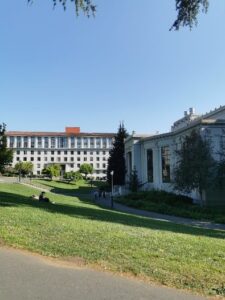
Campus of UC Berkeley
©Katharina Quade
- Academic experience:
eCAL had the feel of a close-knit group: about ten PhD students worked under the supervision of my host professor, supported by a handful of bachelor’s and master’s students. The culture and PhD process at UC Berkeley was noticeably different from what I was used to in Germany. At RWTH Aachen, PhD students often supervise theses and work closely with student assistants, whereas in Berkeley the emphasis was much more on individual projects and dissertation work without relying on large infrastructure and equipment. This meant fewer administrative and organizational duties for the PhD students at UC Berkeley, allowing researchers to focus deeply on their own topics. Each environment had its own strengths and weaknesses, and this exchange gave me the opportunity to integrate the strengths of the US PhD system into my work at RWTH Aachen.
The lab’s relatively small size made it easy to settle in and even though the students were spread across different campus buildings, communication was open and effortless. eCAL was also highly international, with students from a wide variety of cultural backgrounds. This diversity enriched our exchanges, blending technical discussions with cultural perspectives and insights into PhD programs.
- Financing:
The cost of living in the US, especially in the Bay Area, is quite high, covering groceries, leisure activities, and daily expenses. Fortunately, I lived close to a Trader Joe’s, which offered relatively affordable groceries. Getting to San Francisco on the weekends was very convenient thanks to the BART train, while within the city, buses and the metro were the main public transport options. For trips outside the Bay Area, having a car is essential. Renting a car in the US is comparatively affordable, but it requires a credit card.
-

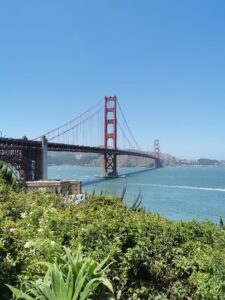
The Golden Gate Bridge on a sunny day. San Francisco is just about 30 minutes away from Berkeley by train.
©Katharina QuadeLeisure:
Berkeley itself is a relatively small city in the East Bay, and since my stay took place during the summer semester, both the campus and the city were fairly quiet. Overall, I really enjoyed Berkeley and San Francisco as the area has a lot to offer, both culturally and culinarily. I visited Alcatraz, explored several exhibitions, and had excellent food in Chinatown and Little Italy. One thing to keep in mind, though, is the microclimates in the bay area: it can quickly turn cold, windy, or foggy.
California’s landscapes are incredibly diverse, and it is the US state with the most national parks. Many of them are accessible from the bay area, though usually a car is necessary. During my stay, I was able to visit Yosemite, Sequoia, Redwood, and Death Valley National Parks, each was impressive in its own way. I was particularly fascinated by how different the scenery can be within a single state: from the forests of Redwoods and Sequoias to the dry, hot desert landscapes of Death Valley.
- What added value did the stay have for my career prospects?
My research stay abroad was an important step for my professional development. It allowed me to work in an international research environment and gain insights into different academic cultures and PhD systems. I strengthened my expertise in advanced battery data analysis and honed my ability to work in interdisciplinary, multicultural teams. Global issues like climate change can only be addressed collectively, and this experience highlighted how much progress depends on collaboration across borders and disciplines.
- To what extent does my stay abroad have a sustainable character?
My stay abroad had a lasting impact in several ways. Beyond my own research, I built professional connections with professors, startups, and companies at UC Berkeley, creating opportunities for future collaboration. Networking is crucial in academia, and I am confident these contacts will remain valuable. I am still in touch with several PhD students and look forward to meeting them again in the future.
- Conclusion:
My time in California was definitely both professionally and personally rewarding. Engaging with students from diverse countries brought new perspectives to my work and daily life. Most importantly, the stay allowed me to focus and collaborate intensively on my research, which was crucial for successfully completing my PhD and ultimately deepened my passion for science and research.
