
Archive for February, 2026
My semester abroad in Chile, Valparaíso
- Business Administration and Engineering: Civil Engineering B.Sc.
- Chile, Valparaíso
- Pontificia Universidad Católica de Valparaíso
- 07/2025 – 12/2025
Before the stay
The application process went smoothly, but the final confirmation from the host university arrived relatively late, just two and a half months before the start of the semester abroad. Due to the late confirmation, I did not apply for a visa but entered the country on a 90-day tourist visa and then left the country after three months for some days (a 10-hour bus ride to Argentina), which was very straightforward and is what most exchange students did.
The language requirement was B2 in Spanish, which I was able to prove through the RWTH Language Centre.
Arrival in the host country
©International Office
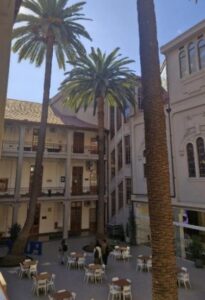
I lived with a Chilean host family for the first month, which I can highly recommend if you want to arrive in a relaxed manner, but it is of course more expensive than a shared flat. After that I moved to a shared flat with Chilean students I got to know in the first month. A week before lectures began, the PUCV organised an orientation week for us, which was very well structured and provided interesting insights into the culture and helpful information about safety, the university and the peculiarities of Chilean Spanish.
It also provided an opportunity to meet other exchange students and make friends. During the first few weeks, I did a lot with the other exchange students, as we all wanted to get to know the area and didn’t have much to do for university yet.
Academic Experience
During orientation week, everyone had a personal meeting with the coordinator to finalise their course selection based on the timetable.
©International Office
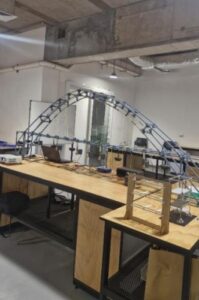
I successfully completed four of my five courses (14 CP) and was able to get Massivbau 1 and Operations Research credited at RWTH. I dropped the fifth course because it built on a course I hadn’t taken in Germany. Overall, it was quite a challenge due to a lack of prior knowledge in some areas because Chilean Spanish (even that spoken by the professors) is not so easy to understand. However, my Chilean fellow students were very open and helpful, so I was able to keep up well everywhere and, over time, it became easier for me to understand everything. Compared to Germany, the system is definitely much more school-like, with obligatory attendance, group work, tests and mid-term exams. If you do well there, you often don’t even have to take the final exam. If you choose a lot of courses, you should definitely be prepared for the university to take up a lot of your time during the semester, but the exam period is significantly shorter than at RWTH.
Overall, I was very satisfied with my university, as the support for exchange students was very good and the professors were very accommodating when problems arose. I also found the atmosphere in class very pleasant, as the courses are much smaller (max. 30 people) and the relationship with the professors is very relaxed. There were very few other exchange students in the engineering faculty, as most of them go to Santa Maria University, but this made it easier for me to socialise with my Chilean fellow students, who were very interested in getting to know an exchange student. The group work definitely helps with this too.
Tips for interested students
©International Office
If you want to live in a shared flat, it is a good idea to stay in a hostel at first and then view shared flats on site to get a better impression of the condition of the flat and the location. There are lots of offers on the compartodepto website, most of which are available immediately.
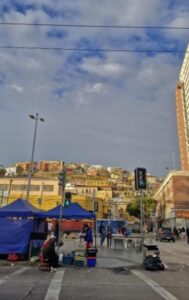
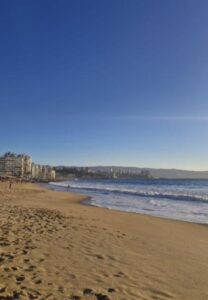
Although my university was in Valparaíso, I lived in Viña del Mar, as it is much easier to get to the beach there and it is also much safer than Valparaíso, especially at night. However, if you want the full South American experience, I would recommend living in Valparaíso, as it is much livelier and more colourful. Nevertheless, if you want to move to one of the hills, you should find out about safety beforehand.
In general, criminality is kind of a problem in Valparaiso, but if you listen to the tips of the locals and e. g. do not walk alone in the streets at night and take care of your valuables, you don’t have to worry.
©International Office
Valparaíso and Viña del Mar have a lot to offer in terms of leisure activities. I especially enjoyed being so close to the beach. On Fridays and Saturdays in particular, exchange students often had the opportunity to go to clubs for free. I really liked the Dichere event (formerly MundoLingo), which took place every Wednesday evening in a bar in Viña, where you had the opportunity to meet other exchange students and Chileans.
The university also offered fun activities, I participated for example in a traditional dance class.
In Concon, you can go surfing for little money, and the conditions are usually good for beginners. Other cool places to visit nearby are the botanical garden, the Cerro Alegre district and the dunes of Concon. Special highlights for me were the national holiday on 18 September, which is celebrated extensively in Chile (all through September) and the New Year’s Eve fireworks over the sea. I would also highly recommend travelling to both the north (Atacama desert) and south (Patagonia) of Chile, but you need to plan enough time for this due to the distances involved.
Finances
For the first month, I lived with a host family on full board for $550, then much cheaper in a shared flat. I received the PROMOS scholarship, which mainly helped me cover the flight costs and health insurance costs. Food in Chile is not much cheaper than in Germany, but leisure activities and single tickets for public transport (less than 1 euro) are. Overall, if you exclude travel, thanks to the scholarship, I managed well with the money I would normally spend in Germany.
Academic value of my stay
From a civil engineering perspective, I found the topic of earthquake-proof construction very interesting, which is why I took a course on it. It was very exciting to experience a few little earthquakes myself and see how well the buildings dampen the movement in reality so that you hardly notice anything. It was also very interesting to see how different the building standards are between Chile and Germany and what impact this has on the calculations.
My Spanish improved enormously during the semester and I also learned many technical terms that are needed in a professional context.
Sustainable character of my stay
In terms of CO2 emissions, the long-haul flight to Chile and back is obviously very harmful, but during my travels through Chile I tried to avoid flying as much as possible and travelled by bus instead, which is really comfortable in Chile!
Personally, the semester had a lasting positive impact on me and helped me mature, as I learned to live outside my comfort zone, adapt to unfamiliar circumstances and solve problems independently.
The Chileans were very open-minded towards me and welcomed me into their groups of friends, which allowed me to make some very good friends and gain a deep insight into the culture. With this new cultural understanding, I can well imagine working in an international context one day, and it gives me a better understanding of how foreigners living in Germany feel.
I have also learned to appreciate the privileges I have in Germany – for example, the freedom to walk around alone at night, the good infrastructure and financial security.
Conclusion
I am very grateful that I had the opportunity to take part in this exchange and get to know a new culture and make new friends. Of course, it was also exhausting to be outside my comfort zone, speaking Spanish all the time and having to adapt to a foreign culture, but it was definitely worth the effort. If I had been able to get more credits for my courses, I could well have imagined staying for a whole year.
My Internship at an Architecture Office in Brussels
- Architecture M.Sc.
- Belgium, Brussels
- Mamout Architects
- 06/2025 – 01/2026
Application/Finding an internship
I chose the city before looking for architecture offices because the place itself was very important to me. After finishing my Bachelor’s, Brussels felt like the perfect next step – it’s close to my hometown, yet offers a completely different language, culture, and atmosphere. I was especially drawn to its multilingual and diverse character, with French and Flemish spoken and many international residents because of the EU institutions. This creates a very inspiring environment with active, creative communities and people working in fields that interest me most. The city is dynamic and always full of life, offering new experiences every day. I discovered most of the architecture offices I applied to through conversations with students who had already gone through the process, which was extremely helpful when I felt unsure and a bit overwhelmed at first. Since Brussels was the only city I seriously considered, I applied to several studios I liked and after a few weeks received an acceptance, which confirmed that choosing Brussels was the right decision for me.
Accomodation & Living expenses
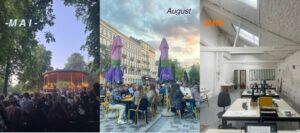
Before I moved to Brussels for my internship, I had a bit of free time and decided to volunteer at a music and cultural festival to help with the setup. Working together on the festival was a great way to meet people quickly and start creating my first memories in the city. It really helped me to make initial contacts, and in the end I even found my first shared apartment in Brussels through these connections. In terms of housing, I would describe Brussels as fairly average for a European capital when it comes to rent prices. Groceries, however, are relatively expensive, which I didn’t fully realize before moving here. Over time, you get to know the city better and discover alternatives, like the local markets, which have a great atmosphere and where you can buy fruit and vegetables for much less than in the supermarket.
Everyday life/ the internship
My everyday life during the week was mainly shaped by my full-time internship. From Monday to Friday, I worked in the office from 9 a.m. to 6 p.m., building models, drawing plans, creating 3D models, visiting construction sites, preparing presentations for clients, and enjoying lunch breaks with my colleagues. The office was quite small, with only four employees and one other intern, which was ideal for my first long internship because I quickly understood how everything worked and gained insight into all parts of the projects. The main working language was French, which was challenging for me at first. I often felt unsure in conversations and meetings, but week by week I noticed clear progress. Using a new language every day took a lot of courage, but it also strengthened my self-confidence and made me more open and independent.
Free time/tips
After work and on the weekends, I spent my time exploring the city and meeting new people. From the beginning, living in a shared flat was important to me because it’s the easiest way to make contacts. At the same time, I also enjoyed discovering Brussels on my own, walking through different neighborhoods and getting to know the city at my own pace. Brussels never disappointed me – there is always something going on. It offers a lot of culture, impressive architecture, many young people, and in my opinion a very diverse nightlife scene, which made my time there both exciting and inspiring.
Conclusion
Going to Brussels for my internship was a great decision, and I can honestly say that I learned a lot and also grew personally during my time there. It was very enriching to step out of my comfort zone and experience completely new things. Already during the internship, I realized that eight months in the city would not be enough, because Brussels has so much to offer. I also made some wonderful new friendships that I want to continue developing, and I feel so comfortable here that I would like to do another internship and even my Master’s in the city. After eight months, the city finally feels familiar – I have a routine, a great social environment, and yet I have still barely scratched the surface of everything Brussels has to offer.
©International Office
My research internship at the University of Cambridge
- Chemistry M.Sc.
- United Kingdom, Cambridge
- University of Cambridge
- 10/2025 – 01/2026
Application/Finding an internship

©International Office
At the beginnings of my master’s studies at RWTH, I heard about invaluable experiences and strong recommendations from several students who had gone abroad for university-related stays. Intrigued by these stories, I wanted to combine academically high-impact research with improving my English language skills. Despite the common stereotype about rainy weather, I selected the UK as my host country. As I always have been impressed by the great history of the Universities of Oxford and Cambridge, I applied to three research groups at these universities by emailing the respective professors. Thereby, it gave me planning reliability to commence with the application process one year in advance to the intended time of the stay abroad. Gratifyingly, after one Zoom meeting with the professor, I was offered a research internship position at the University of Cambridge and was allowed to communicate my preferred research topics. Following the offer, I was confronted with a huge bureaucratic burden. However, helpful assistance and some flexibility regarding English language certificates from the host university simplified the process to some extent.
Accomodation & Living expenses
As far as I understood, living in colleges is rather not amenable to short-term visiting students. Hence, I had to search for private accomodation, some of which was advertised on a website of the university. This lowered the risk of scams, but rents of far more than 1000€ for the advertised accomodations were not affordable. Ultimately, I found a suitable accomodation, including a room, private bathroom, and a convenient distance to the uni, via the website “SpareRoom”. I lived together with my British landlord, which turned out to be a great opportunity for learning more about the (pub) culture and the language.
At the very beginning of my stay I realized that the primary means of transportation in Cambridge is the bicycle. Fortunately, the wide availability of second-hand bikes saved me from spending a fortune on a new one. In my experience, discount stores such as Aldi or Lidl are the most convenient options for grocery shopping at prices comparable to those in Germany.
Everyday life / the internship
During the week, I worked at the chemistry department, usually from 9:30 until 18:00. Without strictly fixed working hours, I could call it a day at my own discretion. After long days at work, I normally limited my activities to cooking or going to a gym near my accomodation.
I greatly enjoyed my work in the chemistry department due to the diverse combination of laboratory and office tasks, as well as frequent meetings. Contrarily to my experience with previous research projects conducted in germany, I worked quite independently on the project assigned to me. Initially, this felt unaccustomed, but over time I became increasingly comfortable planning and conducting experiments based on my own ideas. Furthermore, I could always consult my supervisor, and the group members were very supportive, especially in the beginning. Another surprising difference compared to germany, was my strong integration into academic discussions during group meetings. Throughout my stay, I presented my ideas and results every two weeks in a subgroup meeting and twice in the weekly group meeting. This helped me improving my english abilities and my academic communication skills in general.

©International Office
The research group consisted of many interesting personalities from different countries, rendering the group highly international. Since several new members joined the group around the same time as I did, we often shared similar questions and challenges. With the great assistance from experienced members, a group dynamic developed, leading to several evenings spent in pubs, visits to the Christmas market, as well as a trip to London. As a result, the atmosphere in both the laboratory and the office was very pleasant, friendly, and, especially, funny.
Free time / tips
Free time was mostly constrained to the weekends, during which I explored the centre of Cambridge and its impressive college buildings together with friends from the working group or visiting friends and family from Germany. In this regard, I strongly recommend booking a punting tour, during which a guide propels a small wooden boat along the River Cam by pushing a long pole against the riverbed while explaining aspects of the colleges’ history. Further adventures I undertook were trips to Oxford and London. The skyscraper scenery combined with historic landmarks such as the Palace of Westminster, the prominent Elizabeth Tower, and the Buckingham Palace, made the trip to London more than worthwhile. As a tip, the view from Sky Garden – London’s highest public garden at a height of 160 meters – is breathtaking, and, even better, access to the skyscraper is free of charge! Also, visiting the Tower Bridge by entering the towers and the former engine room was a highlight.

©International Office
Conclusion
All in all, it was an invaluable experience and great opportunity to foster both my academic and personal development. From an academic view, I worked independently on a research project, presented my ideas and experimental results in several meetings, and improved my english language abilities as aimed for. Personally, I made new friends from all over the world, experienced the beauty of Cambridge and London, and broadened my horizons by getting in touch with diverse cultures. I am very grateful for the support provided by Erasmus, enabling an adventure I will never forget.
My research stay at the University of Wisconsin-Milwaukee
- Anna Nießen (anna.niessen@hrm.rwth-aachen.de)
- PhD Candidate for Economics
- USA, Milwaukee
- University of Wisconsin-Milwaukee
- 08/2025 – 01/2026
Preparation and organization of the stay
The preparation of the research stay was smooth and well organized. Together with my doctoral supervisor at RWTH Aachen University, I contacted a distinguished professor at the University of Wisconsin-Milwaukee via email. I was familiar with his work from numerous academic publications, including several joint papers with German scholars. He responded very positively and was highly supportive, which made arranging the research visit straightforward.
Following his invitation, I applied for and obtained a J-1 visa. The language requirement for the visa process was limited to providing proof of at least a B2 level in English. Health insurance was a required component of the stay; I chose ISO Health Insurance to meet this requirement. Throughout the preparation process, the Center for International Education at the host university, as well as the secretariat of the Economics Department, provided valuable guidance and administrative support.
Accommodation was arranged through the host university’s housing services, and I was able to stay as an external guest in a one-bedroom apartment in one of the university residence halls. I booked the flights several months in advance, from Frankfurt to Milwaukee.
Shortly before departure, I finalized additional arrangements, such as organizing a mobile phone plan, obtaining a suitable power adapter, obtaining US Dollars and ensuring access to a credit card. Overall, the administrative and logistical preparation for the research stay was efficient and well supported.
First steps after arrival in host country
I arrived in the host country at the end of July, taking advantage of the possibility to enter up to 30 days before the official start of the research stay. This allowed me to adjust to the time difference and become familiar with the city.

Statue on Milwaukee River Walk
©International Office
During the first days, I stayed in an Airbnb apartment before moving into Kenilworth Square, one of the university residence halls. The accommodation there was of very high quality. I lived on the seventh (top) floor and had a view of Lake Michigan. The apartment was quiet, well equipped and provided all essential household items, including kitchen utensils. In addition, a 24/7 service desk was available.
Shortly after arrival, I explored the university campus and discovered that a free shuttle bus operates between Kenilworth Square and the main campus. I was able to use this service after obtaining a student card at the Student Union. I also completed the required registration at the Center for International Education.
Before officially starting my research stay on August 1, I had the opportunity to meet my supervising professor for a meal, which provided a welcoming and informal introduction to the host institution and helped establish a productive working relationship from the outset.
Academic/professional experience
I was not formally enrolled as an employee or PhD student at the host university and therefore did not have to pay any tuition or enrollment fees. The Economics Department consisted of approximately 15 professors and 15 PhD students. Interestingly, there were also three other permanent German PhD students present through an exchange program with the University of Giessen.
I was provided with my own office. I was allowed to attend the economics courses, including both classes taught by fellow PhD students and PhD-level courses led by faculty professors. In particular, I found the quality of the PhD courses to be very high. The courses emphasized interactive teaching methods, including quizzes, incentives for active class participation (e.g., bonus assignments) and innovative exam formats.
During my stay, I worked closely with my supervising professor on two research papers in the area of performance pay. We met regularly to discuss progress, which made the collaboration highly productive. I also had frequent and productive exchanges with other PhD students about our research. Overall, the department fostered a very supportive and collegial research environment and I experienced a strong sense of cooperation and mutual assistance among faculty and doctoral researchers.
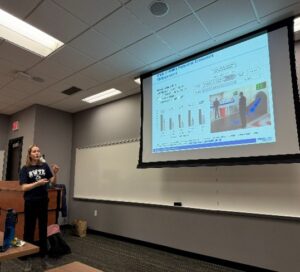
Me during my EconClub Presentation
©International Office
The department also offered a vibrant academic seminar culture. Weekly Wednesday “labor lunch talks” allowed PhD students to present their research; I presented one of my RWTH research projects in this forum. In addition, a Friday seminar series regularly invited external researchers to present their work. Beyond academic seminars, the university hosted numerous professional and career-oriented events. For example, a representative from the Milwaukee Bucks’ data analytics department gave an insightful talk about applied data work in professional sports.
During my stay, an Economics Club was founded, and I participated in its biweekly meetings. Toward the end of my visit, I gave a presentation about RWTH Aachen University and my research group in this Economics Club, comparing academic structures and research environments between RWTH and UWM.
On a personal level, I found the academic community to be exceptionally welcoming. I developed close friendships with fellow PhD students and we frequently engaged in both academic and social activities together. The widely held view that people in the US Midwest are particularly friendly was strongly reflected in my experience.
Financing
The overall costs associated with the research stay were manageable but higher than typical living expenses in Germany. Expenses related to the visa application, health insurance and administrative requirements amounted to approximately USD 500. Round-trip flight tickets cost around USD 800.
Transportation costs were relatively low due to the availability of a free university shuttle and complimentary UWM taxi services after 6 p.m. As a result, I only occasionally purchased public bus tickets to travel to downtown Milwaukee, which cost USD 2.75 per trip.
Housing represented the largest expense. I paid USD 2,100 per month (including utilities) for my apartment at Kenilworth Square. This rate was relatively high because I stayed as an external guest; official PhD students typically pay around USD 700 per month for comparable university housing. In addition, longer-term rental options in the private market, especially unfurnished one-bedroom apartments, are available at significantly lower prices (approximately starting from USD 1,000 per month including utilities).
In general, the cost of living in the US is higher than in Germany, although Milwaukee is considered a comparatively affordable city within the US. Food expenses were noticeably higher than at home. I frequently shopped at Whole Foods, with Pick ‘n Save serving as a somewhat more affordable alternative nearby. Grocery shopping often amounted to around USD 50 for a small number of items. However, the university provided a food pantry, where students could obtain free groceries up to three times per month. Eating out can be relatively inexpensive when using fast-food options. I spent several hundred dollars per month on leisure activities, although many free or low-cost recreational opportunities were available in the city and on campus.
To support my stay, I received € 3,000 through the RWTH Research Ambassador Program.
Leisure
Milwaukee offers a wide range of leisure and cultural opportunities. Before my stay, I had not fully realized how much the city has to offer, but I found it to be a vibrant and, in my view, underrated destination. The city features several sandy beaches along Lake Michigan, beautiful parks and notable cultural attractions such as the Harley-Davidson Museum and the Milwaukee Art Museum. I particularly enjoyed exploring local cafés, cinemas, the Milwaukee Public Market and various farmers’ markets and festivals such as the German Fest or the Summer Music Fest.
Sports and live entertainment are also a major part of the city’s culture. The Milwaukee Bucks play at the Fiserv Forum, which regularly hosts both NBA games and concerts. The city is also home to the Milwaukee Brewers, who reached the semifinals of the MLB during my stay. One of my more unique experiences was visiting a shooting range with a fellow PhD student and watching an IndyCar race. Joe Cat’s is a popular bar on Brady Street, one of Milwaukee’s main nightlife areas. Water Street also offers many lively venues for going out. The university provided many free recreational opportunities, including billiards, bowling, gaming facilities and a fully equipped fitness center with a gym, basketball court, swimming pool, racquetball courts and group exercise rooms. Wisconsin itself has strong German cultural influences and is well known for its breweries, beer culture, cheese curds and frozen custard.

Me in Lambeau Field, Green Bay
©International Office
Milwaukee’s location makes it convenient for regional travel. Chicago in Illinois is less than two hours away by train, and I visited several times to experience its architecture and the river walk. I also traveled with a fellow PhD student to Madison, the capital of Wisconsin, where we explored the University of Wisconsin-Madison campus, its impressive sports facilities and the State Capitol building. Additionally, I took a train trip to Minneapolis, Minnesota to explore the city. Toward the end of my stay, I traveled with another PhD student to Green Bay to visit the Packers stadium, and then to Door County, known for its scenic parks and charming small towns.
The climate in Milwaukee is quite extreme. Winters are very cold and snowy, with temperatures dropping to around -25°C on several days, making it very suitable for winter sports. In contrast, summers are warmer than in Germany, and the city feels especially vibrant after the long winter months.
I also traveled with my boyfriend to the Rocky Mountains and the East Coast during a two-week summer vacation, and spent Christmas and New Year’s Eve with my great-aunt’s family in Seattle. Flights within the US are usually inexpensive and there is so much to see, so I highly recommend traveling.
What added value did the stay have for my studies/career prospects?
The research stay significantly strengthened my academic profile by expanding my international research experience, deepening my expertise in labor economics and leading to productive research collaborations, including joint papers. It also broadened my professional network and improved my ability to work in an international research environment, which will be highly beneficial for my future career.
Beyond my personal career development, the stay contributes to society by fostering international knowledge exchange and strengthening research ties between German and US institutions. By sharing my experiences and research results with colleagues and students at RWTH and UWM, I help transfer knowledge and encourage future international academic cooperation.
To what extent does my stay abroad have a sustainable character?
The stay has a strong sustainable impact, as it led to long-term academic collaborations and personal connections that will continue beyond the visit. I plan to maintain close research ties with my supervising professor and to pursue further joint projects with PhD students at the host institution. In addition, the friendships I built and the continued exchange with colleagues foster lasting international networks. These ongoing collaborations support sustained knowledge transfer and contribute to long-term cooperation between RWTH and UWM.
Conclusion
Overall, my research stay was an extremely rewarding experience. I learned a great deal, both academically and personally, and had the opportunity to meet many inspiring and talented people. Living in Milwaukee was very enjoyable. I am confident that I will return in the future and continue meeting with the people I connected with during my stay. I would like to sincerely thank my supervisor and his wife for their support and hospitality throughout my stay.
