
Kategorie: ‘Research’
My research internship at the University of Cambridge
- Chemistry M.Sc.
- United Kingdom, Cambridge
- University of Cambridge
- 10/2025 – 01/2026
Application/Finding an internship

©International Office
At the beginnings of my master’s studies at RWTH, I heard about invaluable experiences and strong recommendations from several students who had gone abroad for university-related stays. Intrigued by these stories, I wanted to combine academically high-impact research with improving my English language skills. Despite the common stereotype about rainy weather, I selected the UK as my host country. As I always have been impressed by the great history of the Universities of Oxford and Cambridge, I applied to three research groups at these universities by emailing the respective professors. Thereby, it gave me planning reliability to commence with the application process one year in advance to the intended time of the stay abroad. Gratifyingly, after one Zoom meeting with the professor, I was offered a research internship position at the University of Cambridge and was allowed to communicate my preferred research topics. Following the offer, I was confronted with a huge bureaucratic burden. However, helpful assistance and some flexibility regarding English language certificates from the host university simplified the process to some extent.
Accomodation & Living expenses
As far as I understood, living in colleges is rather not amenable to short-term visiting students. Hence, I had to search for private accomodation, some of which was advertised on a website of the university. This lowered the risk of scams, but rents of far more than 1000€ for the advertised accomodations were not affordable. Ultimately, I found a suitable accomodation, including a room, private bathroom, and a convenient distance to the uni, via the website “SpareRoom”. I lived together with my British landlord, which turned out to be a great opportunity for learning more about the (pub) culture and the language.
At the very beginning of my stay I realized that the primary means of transportation in Cambridge is the bicycle. Fortunately, the wide availability of second-hand bikes saved me from spending a fortune on a new one. In my experience, discount stores such as Aldi or Lidl are the most convenient options for grocery shopping at prices comparable to those in Germany.
Everyday life / the internship
During the week, I worked at the chemistry department, usually from 9:30 until 18:00. Without strictly fixed working hours, I could call it a day at my own discretion. After long days at work, I normally limited my activities to cooking or going to a gym near my accomodation.
I greatly enjoyed my work in the chemistry department due to the diverse combination of laboratory and office tasks, as well as frequent meetings. Contrarily to my experience with previous research projects conducted in germany, I worked quite independently on the project assigned to me. Initially, this felt unaccustomed, but over time I became increasingly comfortable planning and conducting experiments based on my own ideas. Furthermore, I could always consult my supervisor, and the group members were very supportive, especially in the beginning. Another surprising difference compared to germany, was my strong integration into academic discussions during group meetings. Throughout my stay, I presented my ideas and results every two weeks in a subgroup meeting and twice in the weekly group meeting. This helped me improving my english abilities and my academic communication skills in general.

©International Office
The research group consisted of many interesting personalities from different countries, rendering the group highly international. Since several new members joined the group around the same time as I did, we often shared similar questions and challenges. With the great assistance from experienced members, a group dynamic developed, leading to several evenings spent in pubs, visits to the Christmas market, as well as a trip to London. As a result, the atmosphere in both the laboratory and the office was very pleasant, friendly, and, especially, funny.
Free time / tips
Free time was mostly constrained to the weekends, during which I explored the centre of Cambridge and its impressive college buildings together with friends from the working group or visiting friends and family from Germany. In this regard, I strongly recommend booking a punting tour, during which a guide propels a small wooden boat along the River Cam by pushing a long pole against the riverbed while explaining aspects of the colleges’ history. Further adventures I undertook were trips to Oxford and London. The skyscraper scenery combined with historic landmarks such as the Palace of Westminster, the prominent Elizabeth Tower, and the Buckingham Palace, made the trip to London more than worthwhile. As a tip, the view from Sky Garden – London’s highest public garden at a height of 160 meters – is breathtaking, and, even better, access to the skyscraper is free of charge! Also, visiting the Tower Bridge by entering the towers and the former engine room was a highlight.

©International Office
Conclusion
All in all, it was an invaluable experience and great opportunity to foster both my academic and personal development. From an academic view, I worked independently on a research project, presented my ideas and experimental results in several meetings, and improved my english language abilities as aimed for. Personally, I made new friends from all over the world, experienced the beauty of Cambridge and London, and broadened my horizons by getting in touch with diverse cultures. I am very grateful for the support provided by Erasmus, enabling an adventure I will never forget.
My research stay at the University of Wisconsin-Milwaukee
- Anna Nießen (anna.niessen@hrm.rwth-aachen.de)
- PhD Candidate for Economics
- USA, Milwaukee
- University of Wisconsin-Milwaukee
- 08/2025 – 01/2026
Preparation and organization of the stay
The preparation of the research stay was smooth and well organized. Together with my doctoral supervisor at RWTH Aachen University, I contacted a distinguished professor at the University of Wisconsin-Milwaukee via email. I was familiar with his work from numerous academic publications, including several joint papers with German scholars. He responded very positively and was highly supportive, which made arranging the research visit straightforward.
Following his invitation, I applied for and obtained a J-1 visa. The language requirement for the visa process was limited to providing proof of at least a B2 level in English. Health insurance was a required component of the stay; I chose ISO Health Insurance to meet this requirement. Throughout the preparation process, the Center for International Education at the host university, as well as the secretariat of the Economics Department, provided valuable guidance and administrative support.
Accommodation was arranged through the host university’s housing services, and I was able to stay as an external guest in a one-bedroom apartment in one of the university residence halls. I booked the flights several months in advance, from Frankfurt to Milwaukee.
Shortly before departure, I finalized additional arrangements, such as organizing a mobile phone plan, obtaining a suitable power adapter, obtaining US Dollars and ensuring access to a credit card. Overall, the administrative and logistical preparation for the research stay was efficient and well supported.
First steps after arrival in host country
I arrived in the host country at the end of July, taking advantage of the possibility to enter up to 30 days before the official start of the research stay. This allowed me to adjust to the time difference and become familiar with the city.

Statue on Milwaukee River Walk
©International Office
During the first days, I stayed in an Airbnb apartment before moving into Kenilworth Square, one of the university residence halls. The accommodation there was of very high quality. I lived on the seventh (top) floor and had a view of Lake Michigan. The apartment was quiet, well equipped and provided all essential household items, including kitchen utensils. In addition, a 24/7 service desk was available.
Shortly after arrival, I explored the university campus and discovered that a free shuttle bus operates between Kenilworth Square and the main campus. I was able to use this service after obtaining a student card at the Student Union. I also completed the required registration at the Center for International Education.
Before officially starting my research stay on August 1, I had the opportunity to meet my supervising professor for a meal, which provided a welcoming and informal introduction to the host institution and helped establish a productive working relationship from the outset.
Academic/professional experience
I was not formally enrolled as an employee or PhD student at the host university and therefore did not have to pay any tuition or enrollment fees. The Economics Department consisted of approximately 15 professors and 15 PhD students. Interestingly, there were also three other permanent German PhD students present through an exchange program with the University of Giessen.
I was provided with my own office. I was allowed to attend the economics courses, including both classes taught by fellow PhD students and PhD-level courses led by faculty professors. In particular, I found the quality of the PhD courses to be very high. The courses emphasized interactive teaching methods, including quizzes, incentives for active class participation (e.g., bonus assignments) and innovative exam formats.
During my stay, I worked closely with my supervising professor on two research papers in the area of performance pay. We met regularly to discuss progress, which made the collaboration highly productive. I also had frequent and productive exchanges with other PhD students about our research. Overall, the department fostered a very supportive and collegial research environment and I experienced a strong sense of cooperation and mutual assistance among faculty and doctoral researchers.
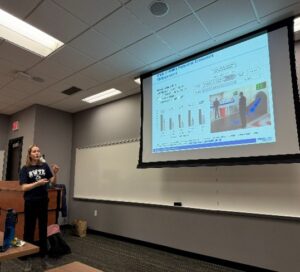
Me during my EconClub Presentation
©International Office
The department also offered a vibrant academic seminar culture. Weekly Wednesday “labor lunch talks” allowed PhD students to present their research; I presented one of my RWTH research projects in this forum. In addition, a Friday seminar series regularly invited external researchers to present their work. Beyond academic seminars, the university hosted numerous professional and career-oriented events. For example, a representative from the Milwaukee Bucks’ data analytics department gave an insightful talk about applied data work in professional sports.
During my stay, an Economics Club was founded, and I participated in its biweekly meetings. Toward the end of my visit, I gave a presentation about RWTH Aachen University and my research group in this Economics Club, comparing academic structures and research environments between RWTH and UWM.
On a personal level, I found the academic community to be exceptionally welcoming. I developed close friendships with fellow PhD students and we frequently engaged in both academic and social activities together. The widely held view that people in the US Midwest are particularly friendly was strongly reflected in my experience.
Financing
The overall costs associated with the research stay were manageable but higher than typical living expenses in Germany. Expenses related to the visa application, health insurance and administrative requirements amounted to approximately USD 500. Round-trip flight tickets cost around USD 800.
Transportation costs were relatively low due to the availability of a free university shuttle and complimentary UWM taxi services after 6 p.m. As a result, I only occasionally purchased public bus tickets to travel to downtown Milwaukee, which cost USD 2.75 per trip.
Housing represented the largest expense. I paid USD 2,100 per month (including utilities) for my apartment at Kenilworth Square. This rate was relatively high because I stayed as an external guest; official PhD students typically pay around USD 700 per month for comparable university housing. In addition, longer-term rental options in the private market, especially unfurnished one-bedroom apartments, are available at significantly lower prices (approximately starting from USD 1,000 per month including utilities).
In general, the cost of living in the US is higher than in Germany, although Milwaukee is considered a comparatively affordable city within the US. Food expenses were noticeably higher than at home. I frequently shopped at Whole Foods, with Pick ‘n Save serving as a somewhat more affordable alternative nearby. Grocery shopping often amounted to around USD 50 for a small number of items. However, the university provided a food pantry, where students could obtain free groceries up to three times per month. Eating out can be relatively inexpensive when using fast-food options. I spent several hundred dollars per month on leisure activities, although many free or low-cost recreational opportunities were available in the city and on campus.
To support my stay, I received € 3,000 through the RWTH Research Ambassador Program.
Leisure
Milwaukee offers a wide range of leisure and cultural opportunities. Before my stay, I had not fully realized how much the city has to offer, but I found it to be a vibrant and, in my view, underrated destination. The city features several sandy beaches along Lake Michigan, beautiful parks and notable cultural attractions such as the Harley-Davidson Museum and the Milwaukee Art Museum. I particularly enjoyed exploring local cafés, cinemas, the Milwaukee Public Market and various farmers’ markets and festivals such as the German Fest or the Summer Music Fest.
Sports and live entertainment are also a major part of the city’s culture. The Milwaukee Bucks play at the Fiserv Forum, which regularly hosts both NBA games and concerts. The city is also home to the Milwaukee Brewers, who reached the semifinals of the MLB during my stay. One of my more unique experiences was visiting a shooting range with a fellow PhD student and watching an IndyCar race. Joe Cat’s is a popular bar on Brady Street, one of Milwaukee’s main nightlife areas. Water Street also offers many lively venues for going out. The university provided many free recreational opportunities, including billiards, bowling, gaming facilities and a fully equipped fitness center with a gym, basketball court, swimming pool, racquetball courts and group exercise rooms. Wisconsin itself has strong German cultural influences and is well known for its breweries, beer culture, cheese curds and frozen custard.

Me in Lambeau Field, Green Bay
©International Office
Milwaukee’s location makes it convenient for regional travel. Chicago in Illinois is less than two hours away by train, and I visited several times to experience its architecture and the river walk. I also traveled with a fellow PhD student to Madison, the capital of Wisconsin, where we explored the University of Wisconsin-Madison campus, its impressive sports facilities and the State Capitol building. Additionally, I took a train trip to Minneapolis, Minnesota to explore the city. Toward the end of my stay, I traveled with another PhD student to Green Bay to visit the Packers stadium, and then to Door County, known for its scenic parks and charming small towns.
The climate in Milwaukee is quite extreme. Winters are very cold and snowy, with temperatures dropping to around -25°C on several days, making it very suitable for winter sports. In contrast, summers are warmer than in Germany, and the city feels especially vibrant after the long winter months.
I also traveled with my boyfriend to the Rocky Mountains and the East Coast during a two-week summer vacation, and spent Christmas and New Year’s Eve with my great-aunt’s family in Seattle. Flights within the US are usually inexpensive and there is so much to see, so I highly recommend traveling.
What added value did the stay have for my studies/career prospects?
The research stay significantly strengthened my academic profile by expanding my international research experience, deepening my expertise in labor economics and leading to productive research collaborations, including joint papers. It also broadened my professional network and improved my ability to work in an international research environment, which will be highly beneficial for my future career.
Beyond my personal career development, the stay contributes to society by fostering international knowledge exchange and strengthening research ties between German and US institutions. By sharing my experiences and research results with colleagues and students at RWTH and UWM, I help transfer knowledge and encourage future international academic cooperation.
To what extent does my stay abroad have a sustainable character?
The stay has a strong sustainable impact, as it led to long-term academic collaborations and personal connections that will continue beyond the visit. I plan to maintain close research ties with my supervising professor and to pursue further joint projects with PhD students at the host institution. In addition, the friendships I built and the continued exchange with colleagues foster lasting international networks. These ongoing collaborations support sustained knowledge transfer and contribute to long-term cooperation between RWTH and UWM.
Conclusion
Overall, my research stay was an extremely rewarding experience. I learned a great deal, both academically and personally, and had the opportunity to meet many inspiring and talented people. Living in Milwaukee was very enjoyable. I am confident that I will return in the future and continue meeting with the people I connected with during my stay. I would like to sincerely thank my supervisor and his wife for their support and hospitality throughout my stay.
My Research Stay at Stanford University
- PhD Candidate for Product Engineering of E-Mobility Components
- USA, Stanford
- Stanford University
- 06/2025 – 11/2025
Preparation and organization of the stay
I am currently a fourth-year PhD candidate at the PEM at RWTH Aachen University. From early on in my academic career, it was a clear personal and professional goal to spend part of my doctoral studies abroad. During my Master’s degree, this plan could not be realized due to the COVID-19 pandemic, which made international research stays largely impossible at the time.

©International Office
As a result, I continuously sought opportunities later on and remained in close exchange with professors and group leaders from relevant research groups in the United States. These discussions helped me sharpen my research interests and identify potential host institutions. Ultimately, a combination of persistence and good fortune led to an exciting opportunity at Stanford University, where I was offered a visiting research stay within the STEER research group.
Following the initial contact, the process moved forward very quickly, and I received an official invitation from Stanford. A particularly positive aspect was the excellent administrative support on the host side: a dedicated contact person at the department guided me through all formalities, including visa-related questions and institutional requirements. This support significantly reduced the bureaucratic burden and made the overall process smooth and manageable.
In parallel, I applied early for on-campus housing through Stanford’s internal housing lottery system. Although I was not allocated permanent housing through this route, I was able to secure two consecutive sublets directly on campus. This required some flexibility and a bit of luck, but it was strongly facilitated by an active and supportive German community at Stanford. In this context, I can highly recommend joining relevant community groups or chat channels, as they are extremely helpful for housing, administrative questions, and general orientation.
Regarding financing, a small portion of the travel and stay expenses could be covered through my research project, with explicit support from the project sponsor. Institutionally, the entire stay was handled as an extended business trip, which simplified internal approval processes and reimbursement procedures.
Overall, the preparation phase required initiative and coordination but was greatly eased by strong institutional support on both sides, proactive networking, and early planning – especially with respect to housing and administrative requirements.
First steps after arrival in host country
My stay effectively started immediately after arrival. I was able to move directly into my sublet room, which was located on campus at Stanford University. This proved to be extremely convenient, as it allowed for very short walking distances to all relevant facilities, including offices, laboratories, and shared infrastructure.
Since I was not enrolled as a regular student, I did not have to select or attend any courses. Instead, I was able to start my research activities in the host research group right away, without any delay. Administrative formalities, such as obtaining a student or visiting researcher ID card and access credentials, were handled very efficiently and could be completed within a single day.
One practical recommendation that cannot be overstated is to obtain a bicycle as early as possible. University campuses in the United States are typically very large and spatially cohesive. Compared to Aachen, distances are significantly longer, and daily mobility without a bike is impractical. A bicycle quickly became an essential part of everyday life and greatly improved flexibility and efficiency on campus.
Academic experience
I was officially registered as a Visiting Student Researcher at Stanford University. In this status, I was neither required nor formally allowed to enroll in regular courses for credit. However, in coordination with the respective principal investigators, it was possible to sit in on lectures and attend courses informally. I would strongly recommend making use of this opportunity, even if it is not mandatory.
The teaching quality at a university like Stanford is exceptionally high. Courses are very well structured, clearly motivated, and highly engaging. Beyond their academic value, some lectures are also extremely beneficial from a personal and professional development perspective. A particularly striking example was the course “Personal Finance for Engineers”. The way financial literacy, personal finance, and investment strategies are taught to engineering students is exemplary and forward-looking. This is an area that, in my view, should receive significantly more emphasis in engineering education in Germany as well.
In terms of social and academic integration, the German community at Stanford plays an important role. It is the second-largest international community on campus, which made integration very easy. I was warmly welcomed and quickly connected with like-minded people, both academically and socially. This network not only facilitated everyday life but also enabled valuable exchanges on research, career paths, and life in the US more broadly.
Overall, despite not being formally enrolled in courses, the academic exposure, high-quality teaching environment, and strong community integration resulted in a highly enriching professional and personal experience.
Financing
The research stay was financed primarily through private means, supplemented by funding from my ongoing research project and the support of the RWTH Ambassador Scholarship. This combination made it possible to cover the essential costs associated with the stay, including travel, insurance, and part of the living expenses.
It comes as no surprise that private universities in the United States – and especially in the Bay Area – are associated with very high costs. As a visiting researcher, I was required to pay a monthly university fee. In addition, general living expenses, particularly for food and daily necessities, are significantly higher than in Germany. Housing costs also represent a substantial share of the overall budget, even when living in shared or sublet accommodations.
Nevertheless, the stay is absolutely manageable from a financial perspective with appropriate planning and funding support. More importantly, it should be viewed as a strategic investment in one’s own education and professional development. The return on this investment – through academic exposure, international experience, networking, and personal growth – is exceptionally high and, in my assessment, clearly justifies the associated costs.
Leisure
©International Office
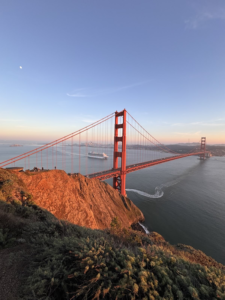
California is, quite simply, breathtaking. This is often said – but experiencing it firsthand truly confirms it. The diversity of landscapes along the US West Coast is remarkable, ranging from dramatic coastlines and deserts to mountains and forests. Combined with the consistently pleasant climate throughout most of the year, California offers exceptional conditions for outdoor and leisure activities.
One absolute highlight – and a clear recommendation for anyone spending time in the region – is visiting the national parks. They are unique on a global scale and offer experiences that are difficult to compare with anything in Europe. In particular, trips to Yosemite National Park, Sequoia National Park, Kings Canyon National Park, Death Valley National Park, Joshua Tree National Park, and the Grand Canyon are strongly recommended. Each of these parks is distinctive in its own way – whether through scale, geology, climate, or biodiversity – and all are truly unforgettable.
What added value did the stay have for my career prospects?
For me personally, the stay was particularly valuable due to the different working culture and the strong attention to detail within the host research group at Stanford University. The way research questions were approached – often with a high level of precision, openness, and constructive discussion – was both refreshing and intellectually stimulating.
The people I worked with were, without exception, highly interesting personalities with very diverse and inspiring backgrounds. This diversity of perspectives significantly enriched daily research interactions and broadened my own way of thinking. Beyond the immediate academic collaboration, one of the most lasting outcomes of the stay is the international network that emerged and continues to exist beyond the exchange itself.
At the same time, the exchange was not a one-way transfer. Through my own research background and prior project experience, I was able to contribute concrete technical expertise and practical insights to the group on site. This mutual exchange of knowledge and perspectives was a key strength of the stay.
On a broader level, California and Germany share more similarities than is often assumed, particularly with regard to innovation-driven industries and technology ecosystems. This is especially true in my field of work, the battery industry, where comparable ambitions exist in terms of sustainability, industrial scaling, and technological leadership. Many of the approaches, mindsets, and organizational structures observed in California offer valuable learnings that should be examined more closely and, where appropriate, adapted for application in Germany.
Especially in the current politically turbulent times, it is becoming increasingly important to identify partners with shared values and to strengthen cooperation with regions such as California. Building closer ties in strategically relevant technology fields can help enhance resilience, innovation capacity, and long-term competitiveness – benefiting both individual researchers and society as a whole.
To what extent does my stay abroad have a sustainable character?
The stay abroad has a clearly sustainable character, as the exchange of experience and knowledge extends well beyond the physical duration of the visit. The professional and personal connections established during the stay continue to enable ongoing scientific dialogue, informal consultation, and mutual learning over time.
Conclusion
I can wholeheartedly recommend such an exchange stay to anyone considering it. Despite the organizational and financial challenges involved, the personal and professional benefits clearly outweigh the costs. One should not be discouraged by the financial effort required – when viewed in the context of long-term career development, the investment is more than justified.
My Research Stay at UC Berkeley
- PhD Candidate for Electrical Engineering
- USA, Berkeley
- University of California, Berkeley
- 05/2025-08/2025
- Preparation and organization of the stay:
I am currently in my final year of my PhD at the Center for Ageing, Reliability and Lifetime Prediction for Power Electronics and Electrochemical Systems (CARL), RWTH Aachen, where I work on analyzing the aging mechanisms of batteries using experimental and simulation-based data. Battery research is highly interdisciplinary, combining knowledge of electrochemical processes, experimental setups, engineering, and data analysis. Spending part of my research abroad had always been very important to me, as it offered the chance to gain new perspectives and access complementing expertise for my research. The energy, controls, and applications lab (eCAL) at UC Berkeley, with its expertise in algorithms, lifetime analysis, and data-driven methods, complemented my background and offered the expertise I needed for my analyses. To prepare for my time there, I organized the battery aging measurements I had started at RWTH Aachen so that they could be analyzed once I arrived at the lab. A professor at my institute from RWTH Aachen put me in contact with my host supervisor.
Organizing the logistics of a research stay in the US can be challenging. Finding accommodation in Berkeley on short notice was not easy, so I opted for an Airbnb, while shared apartments or nearby cities like Oakland offered more affordable alternatives.
- First steps after arrival in host country:
By chance, my first day at UC Berkeley coincided with the annual eCAL retreat, where we went lawn bowling and had dinner afterward. It turned out to be the perfect way to meet the whole group in a relaxed setting and to get to know the PhD students right away. Everyone was very welcoming, and a few of them gave me a tour of the lab. I also met my host professor in person that day, which made it easy to settle in and feel like I could start my research stay right away.
- Academic experience:
eCAL had the feel of a close-knit group: about ten PhD students worked under the supervision of my host professor, supported by a handful of bachelor’s and master’s students. The culture and PhD process at UC Berkeley was noticeably different from what I was used to in Germany. At RWTH Aachen, PhD students often supervise theses and work closely with student assistants, whereas in Berkeley the emphasis was much more on individual projects and dissertation work without relying on large infrastructure and equipment. This meant fewer administrative and organizational duties for the PhD students at UC Berkeley, allowing researchers to focus deeply on their own topics. Each environment had its own strengths and weaknesses, and this exchange gave me the opportunity to integrate the strengths of the US PhD system into my work at RWTH Aachen.
The lab’s relatively small size made it easy to settle in and even though the students were spread across different campus buildings, communication was open and effortless. eCAL was also highly international, with students from a wide variety of cultural backgrounds. This diversity enriched our exchanges, blending technical discussions with cultural perspectives and insights into PhD programs.
- Financing:
The cost of living in the US, especially in the Bay Area, is quite high, covering groceries, leisure activities, and daily expenses. Fortunately, I lived close to a Trader Joe’s, which offered relatively affordable groceries. Getting to San Francisco on the weekends was very convenient thanks to the BART train, while within the city, buses and the metro were the main public transport options. For trips outside the Bay Area, having a car is essential. Renting a car in the US is comparatively affordable, but it requires a credit card.
- Leisure:
Berkeley itself is a relatively small city in the East Bay, and since my stay took place during the summer semester, both the campus and the city were fairly quiet. Overall, I really enjoyed Berkeley and San Francisco as the area has a lot to offer, both culturally and culinarily. I visited Alcatraz, explored several exhibitions, and had excellent food in Chinatown and Little Italy. One thing to keep in mind, though, is the microclimates in the bay area: it can quickly turn cold, windy, or foggy.
California’s landscapes are incredibly diverse, and it is the US state with the most national parks. Many of them are accessible from the bay area, though usually a car is necessary. During my stay, I was able to visit Yosemite, Sequoia, Redwood, and Death Valley National Parks, each was impressive in its own way. I was particularly fascinated by how different the scenery can be within a single state: from the forests of Redwoods and Sequoias to the dry, hot desert landscapes of Death Valley.
- What added value did the stay have for my career prospects?
My research stay abroad was an important step for my professional development. It allowed me to work in an international research environment and gain insights into different academic cultures and PhD systems. I strengthened my expertise in advanced battery data analysis and honed my ability to work in interdisciplinary, multicultural teams. Global issues like climate change can only be addressed collectively, and this experience highlighted how much progress depends on collaboration across borders and disciplines.
- To what extent does my stay abroad have a sustainable character?
My stay abroad had a lasting impact in several ways. Beyond my own research, I built professional connections with professors, startups, and companies at UC Berkeley, creating opportunities for future collaboration. Networking is crucial in academia, and I am confident these contacts will remain valuable. I am still in touch with several PhD students and look forward to meeting them again in the future.
- Conclusion:
My time in California was definitely both professionally and personally rewarding. Engaging with students from diverse countries brought new perspectives to my work and daily life. Most importantly, the stay allowed me to focus and collaborate intensively on my research, which was crucial for successfully completing my PhD and ultimately deepened my passion for science and research.
My experiences at Volvo Technology
- Energy Engineering M.Sc.
- Sweden, Göteborg
- Volvo Technology
- 10/2024 – 05/2025
Hello, my name is Marc. I am a German studying Master Energy Engineering at RWTH Aachen University, Germany, and participated in a research stay funded by the Erasmus+ Internship program during my master’s thesis at Volvo Technology – one of the most Swedish companies imaginable – in the second largest city Göteborg, Sweden. Getting this opportunity, to work on practical research in a company, was very difficult and almost did not work out. I started applying more than a year ahead, but this was way too early for most cases. In Sweden, there are no mandatory internships of up to 6 months; Swedish students gain practical experience during their summer break. Yes, you heard right: all students have a 2-3 month study-free period during the summer, without the need to prepare for exams, since they finish them before Midsommar (the summer solstice). Their internship culture comes from the fact that students do not receive their student funding during vacation, so many rely on summer jobs to survive financially until the next study period. Because internships are limited to these three months, companies don’t know about longer internships, especially not outside this period, as is common in Germany. Another aspect is that thesis work usually starts in January, as Swedish studies are separated into four periods, and are mainly carried out in groups of two—eliminating most chances if you want to start according to the German semester dates and alone. However, you would not be reading this if I hadn’t made it despite the low chances. I applied a lot, sent unsolicited applications to companies, connected with people on LinkedIn, and sent dozens of requests for an internship with the opportunity to follow up with a master’s thesis, which is usually the catch in Germany. The position was acquired via an unsolicited application to an industrial PhD student in cooperation between Chalmers University of Technology and Volvo Group, which led to the position at Volvo Technology. Other research internships would have been possible at Chalmers, but the research topic and work environment at Volvo were the best option.
Finding a suitable accommodation without being registered as a Swedish student brings further problems, since you are not eligible for student accommodations. Some shared living opportunities always exist but are highly requested and not available in sufficient quantity. Some international students even live in hotels or cabins for the first year. In Swedish metropolitan areas, housing agencies require you to be in the queue for several years. Even colleagues at my workplace, who were in the queue for up to three years, were not able to find suitable accommodation (for their living standard) and ended up buying instead. I found mine with a lot of luck on Facebook (which is widely used in Scandinavia and also serves as an online marketplace and for international exchange). The accommodation had two rooms, one bedroom, and one living room/kitchen. The monthly costs were approximately €450 per person, with all additional costs included. I lived there with my girlfriend, who also studied at Göteborg University. For grocery shopping, I highly recommend using “Too Good To Go,” which offers a full bag of vegetables close to expiration for under €5—this saves money since vegetables and fruits are noticeably more expensive compared to Germany. Monthly expenses for groceries were roughly €200 per person, including all food and household costs and eating out every two weeks. Since the canteen at Chalmers was €6 (student) or €8 (visitor), and at Volvo Group €10, I decided to always prepare my own food, which is popular in Sweden. There are always spaces with microwaves and cutlery. For transportation, you can use rental bikes for €30 per year (Nextbike/Sty&Ställ). Since I needed to get to the other side of the harbor to Göteborg Lundby, I bought a tram ticket, which was €60 (student) or €75 (non-student) per month. Even though I was a student, I couldn’t use the student discount for many occasions, since in Sweden your student status is verified by a “Mecenat” app account issued by a Swedish university, which I did not have.
Everyday life during the research stay was a 40-hour workweek, starting at 9:00 and ending at 17:00. It is common to have a one-hour lunch break at 11:00, which I always spent with coworkers. Since I started in October, I was the only student at the company until January, when two other thesis workers joined, as is usual during this time. From Volvo, I received a laptop for my research work, which was mainly self-guided and supervised by weekly meetings with my supervisor. I highly enjoyed short coffee breaks with colleagues around 14:00-15:00, called “fika,” to discuss technical topics or daily life. There was one 30-minute fixed slot per week where the whole department met, and one colleague always brought sweet pastries or cake. The department worked great as a team, and I think this weekly contact, as well as spontaneous meetings on other days, helps with teambuilding. I also enjoyed that Volvo Group is an international environment, and you can get into contact with everyone on a casual basis since in Sweden you always call people by their first name; titles and positions do not mainly define your personality.
During the winter, I came home from work when it was already dark, but there are many options available. Monthly sports membership at “Fysiken” cost €33 per month (3-month period) for students, including gym, courses, team play, and climbing/bouldering. I used to go every second day and made friends during climbing and basketball. It seems much easier to make international friends, as Swedish students usually already have their friend groups. Getting into those groups takes time and is comparable to making friends in Germany. With friends found that way, at the company or through international university programs such as ESN, you will definitely find people to spend time with—though more likely internationals who will leave after six months. However, Göteborg is a city where you can spend your time at many places, such as bars with after-work discounts and pub quizzes, museums, or at the ice hockey arena watching “Frölunda HC.” Around February, you will get home when it is still bright outside and can spend the sunset at famous places such as “Skansen Kronan.” On weekends, I recommend visiting the local historical
amusement park “Liseberg,” the islands in the archipelago near Gothenburg, one of the beaches, or hiking around lakes such as “Delsjön.” Trips around Sweden to Stockholm, Malmö, Helsingborg, or even Oslo in Norway are easy to do on a small budget. ESN also offered a one-week trip to Swedish Lapland, which everyone recommended to me, but I was quite
occupied by research work and also took vacation to visit my family over Christmas.
In conclusion, I liked Swedish culture before, and this trip increased its attraction. Sometimes it was tough to receive the same rights as locals, since you always need digital proof such as Swedish student status (“Mecenat”). For foreigners, it is also impossible to buy at a local food market or farm since “Swish,” the Swedish version of PayPal for payment, requires a Coordination Number for a Swedish ID, a Swedish bank account, and BankID. There are also several special days with traditions such as St. Lucia around Christmas, Valborg/Walpurgis Night and Swedish National Day in spring, and Midsommar in summer. However, my girlfriend and I decided to continue our time in Sweden and enjoy one or more summers at the coast and in nature, where Sweden has much to offer.
My Research Stay at the University of South Carolina Upstate
- PhD Candidate in Business Economics
- USA, South Carolina
- University of South Carolina Upstate
- 09/2024 – 11/2024
Preparation
I had been a PhD student at RWTH Aachen for a few years and working abroad had always been something I’d like to do. As part of my research, last year I had the opportunity to start collaborating with a professor from the University of South Carolina Upstate. When I asked for the possibility to visit the US and work together from there, she was on board immediately. So, the planning began…
Planning a trip to the United States is definitely an administrative task, and I quickly realized that I had to take it step by step. After settling on a rough timeframe with my PhD supervisor and my hosting professor, I contacted the travel department of the university and booked my flights to and from the US. Talking to colleagues who had already been abroad and looking up to-do lists online was very helpful to figure out what steps to take, e.g. requesting a letter of confirmation from the host university or getting an international license. I started the organization process half a year before my stay, which was a convenient timeframe to organize everything.
Accommodation & Living Expenses
Living expenses in the US are higher than in Germany, especially food prices. Eating out will cost around $ 20-30 for one meal. Grocery prices can be two to three times as expensive as in Germany, even for things like bread, a package of cheese, or some chocolate. This is just something to know and budget for. For my stay, I applied for and got granted the RWTH Aachen Research Ambassador Scholarship, which helped in covering some of those expenses.
As for my accommodation, I ended up booking an apartment in a complex which was specialized in short-term leases for extended business stays. I would recommend to book directly over the apartment’s website, since I experienced a cancellation several days after booking over a third-party platform. Other good options for a stay in the US are Apps such as Airbnb. In my case, there was no student housing available, but that would be another option in general.
Everyday Life and Research Stay
I had my own office at the guest university and was able to experience everyday working life in the United States. Overall, working as Academic staff in the US is quite similar to Germany in many ways, with some cultural differences.
Also, I stayed in one of the Southern States of the US, and Southern hospitality is something I definitely experienced! Everyone was very friendly, open and attentive, which I enjoyed a lot. The professor I worked with was a great host, and I quickly met some amazing colleagues. The area offered a lot of places to explore, and I enjoyed walks in the park, going out for meals, shopping, the cinema, going to the gym, and running. One of my favorite experiences is that I was able to give my own lecture at the university and get into contact with many very curious students.
Another highlight was the last week of my stay, when we attended a conference in Virginia and I presented our research there. Overall, meeting an international community and collaborating was a very rewarding experience.
Conclusion
I can highly recommend to work or study abroad for a while. If that has been on your bucket list for some time, like in my case, be proactive and just do it!
Doing a Research Internship at the UiT in Norway
- Psychology M.Sc.
- Norway, Tromsø
- University of Tromsø – The Arctic University of Norway
- 04/2024 – 08/2024
Going abroad the second time in my life posed a challenge, yes, but a less intense one than being a volunteer in South Africa after finishing school. Hence, the whole stay (planning included) was easy going and associated with anticipation and the joy of revisiting the most beautiful country in the world.
Starting my master program at RWTH in winter 23/24, I already had everything laid out. As I wanted to go abroad during my second master semester, I started thinking about research internship possibilities when I finished my bachelor’s degree in March 2023. As my bachelor thesis supervisor was on a one-month exchange in Tromsø and spoke very highly of one professor at the UiT (The Arctic University of Norway), I asked her for connecting me to her. She did, and fortunately the professor at the UiT invited me to come to Norway and work as a research intern for her. This turned out to be the start of a fruitful, respectful and somehow deep supervisor-intern relationship. She is a very capable, very humorous and very kind person. Next to living in the far north (with its midnight sun, polar lights and spectacular hikes), she was my highlight during my whole stay.
Norway is an expensive country. Nevertheless, the German inflation made the transition rather easy. Groceries can be affordable if you know which grocery store to visit and which products to buy. My rent was a different story: For a single room in a shared flat (of eight people) in a student housing I paid 410€. This is the same amount I pay in Germany for my student apartment. On the good side, Norwegian flat mates are the most quiet and respectful people I have ever met, hence, living with eight people was pleasant.
I have adapted my lifestyle drastically. While in Germany I used to meet friends at a café or a restaurant, in Norway I never ate out. I did not party at all, as alcohol is luxurious here, and cut back on my shopping expenses. Although it seems bad, it was a refreshing and grounding experience and let me think about what I take for granted in everyday life.
During the internship I was extremely high in autonomy. My supervisor and I met every Monday noon to talk about new tasks and projects. Next to this, I was flexible regarding my working hours, working place (I switched between the institute, the UiT library and the public library in the city center) and working pace. After work, I either hit the gym or went home to play the piano. My piano teacher and I kept doing lessons via FaceTime. Taking my hobbies from Germany with me helped a lot, especially during the first few weeks, to find my rhythm.
The biggest and most meaningful project during the internship was being a co-author in a review paper we submitted to the Journal of Business & Psychology. It took us from May to August to get the data, analyze them and write the manuscript. Hopefully, the manuscript will undergo a brief review process and will be published at some point. Next to the review paper, I got a lot of insights in the publishing process and data analysis. Furthermore, I could get creative while designing a scientific poster and developing new lecture materials.
The best thing to do while in Norway is hiking. It is for free. And please, just look at the photos:
If it is raining, I enjoyed reading a lot. And that have been my last five months: Hiking, exercising, reading, baking. My family visited for two weeks, in which we went on a road trip to the Lofoten and Vesteralen islands. This vacation I will remember dearly. Of course, friends of mine visited now and then – this was a welcome disruption from everyday life. But I must admit that nowadays it is easy to stay in touch. Being 3000km away from Aachen, I learnt that deepening friendships and fostering my relationship can sometimes be easier even when apart.
I am writing this report one day prior to leaving Norway. It has been a wonderful time, helping me finding an answer to the one question that made me consider a research internship in the first place: “Do I want to do a PhD?” My answer: “Yes, but not abroad!” Additionally, I would like to say a big thank you to the Erasmus office that made my whole stay possible. Thanks for your support, organizing everything neatlessly and being reliable throughout the whole stay.
