IFToMM D-A-CH in Rostock
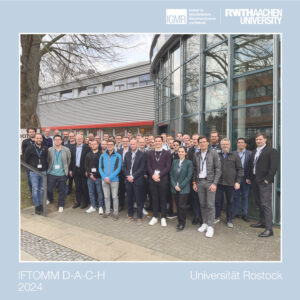
Das IGMR war mit einem breitgefächerten Themenspektrum auf der diesjährigen IFToMM DACH in Rostock vertreten!
Wir haben spannende Einblicke in folgende Themen präsentiert:
– Erweiterung des PlanSys2 Frameworks
– Digitale Zwillinge in der intelligenten Fertigung
– Funktionsgetriebene multidirektionale additive Fertigung
– Energieeffiziente ungleichförmig übersetzende Getriebe
– Digitale Lehrangebote in der Maschinendynamik
Neugierig? Der Tagungsband inklusive unserer Beiträge ist hier verfügbar!
Ansprechpartner:
Simon Schläger
Sophie Charlotte Keunecke
Mark Witte
Thomas Knobloch
Nils Brückmann
Ein herzliches Dankeschön an die OrganisatorInnen und alle TeilnehmerInnen für eine großartige Konferenz mit inspirierendem Austausch!
Das Service-Center for Advanced Robotics am IGMR ist dein Wegbereiter für innovative Automatisierungsprojekte!
Unsere Expertise erstreckt sich über die nahtlose Integration von Robotern in Prüfstände, die Optimierung von Showcases mit vorhandenen Robotern und die Anpassung von Messungen und Sensorik für eine automatisierte Lösung durch Roboter.
In einem breiten Spektrum von Forschungsprojekten spielen Roboter eine zunehmend wichtige Rolle. Doch oft fehlt es an Fachwissen und Zeit, um sie effektiv und benutzerfreundlich einzusetzen – und genau hier setzen wir an!
Unsere Dienstleistungen umfassen:
– Die Integration von Robotern in Ihre Prüfstände
– Die Weiterverwendung vorhandener Roboter für Showcases
– Die Anpassung von Messungen und Sensorik durch Robotertechnologie
– Fehlerbehebung bei Robotern
– Planung und Umsetzung von Forschungsprojekten mit Robotereinsatz
– Ideen und Unterstützung für die Automatisierung in verschiedenen Fachgebieten
Als Ansprechpartner für die Durchführung und Planung von Automatisierungsaufträgen und für fachliche Beratung steht Ihnen Herr Dr.-Ing. Markus Schmitz zur Verfügung. Angebotsanfragen richten Sie bitte an scoar@igmr.rwth-aachen.de.
Erforschung der automatisierten Fähigkeitsabschätzung für Mensch-Roboter-Teaming

Der an dieser Stelle eingebundene Inhalt führt Sie auf Seiten, die von der von Google betriebenen Seite YouTube - YouTube, LLC, 901 Cherry Ave., San Bruno, CA 94066, USA - zur Verfügung gestellt werden. Mit dem Aufruf des Inhalts kann YouTube Ihre IP-Adresse und die Sprache des Systems, sowie verschiedene browserspezifische Angaben ermitteln. Wenn Sie in Ihrem YouTube-Account eingeloggt sind, ermöglichen Sie YouTube, Ihr Surfverhalten direkt Ihrem persönlichen Profil zuzuordnen. Dies können Sie verhindern, indem Sie sich aus Ihrem YouTube-Account ausloggen. YouTube verwendet Cookies und Tracking-Tools. Die Datenverarbeitungsvorgänge sowie die Zwecke der Verarbeitung können direkt bei YouTube erfragt und eingesehen werden.
In unserer Mensch-Roboter-Teaming (MRTeam) Gruppe haben wir die Vision, dass eines Tages Mensch und Roboter nahtlos und intuitiv in einer Art Mensch-Maschine-Symbiose miteinander arbeiten können. Zuletzt haben wir ein Explorationsanwendung implementiert, um das Potenzial der Mensch-Roboter-Teams zu demonstrieren. Die Exploration beinhaltet ein System zur Abschätzung der menschlichen Fähigkeiten, um das menschliche Potenzial zu bewerten und entsprechende Roboteraktionen abzuleiten.
In Zukunft können Roboter die ermittelten Fähigkeitsdeltas nutzen, um Lücken zwischen der menschlichen Leistungsfähigkeit und den Anforderungen des Arbeitsprozesses zu finden. Auf der Grundlage dieser Deltas werden Aktionen abgeleitet, die dem Menschen eben nicht die Arbeit wegnehmen, sondern die menschlichen Fähigkeiten erhöhen, bis die Anforderungen erfüllt sind. Solche Systeme ermöglichen es dem Mensch-Roboter-Team, einen Zustand zu erreichen, der dem sogenannten Flow ähnelt.
Ansprechpartner:
Carlo Weidemann
Robot Cooking – Überführung von Beobachtungen in eine Planungssprache
Überführung von Beobachtungen in eine Planungssprache: Ein automatisierter Ansatz im Bereich des Kochen
Im Robot Cooking Projekt wird eine automatisierte Methode entwickelt, um Bewegungsdaten zu analysieren, identifizieren und in eine maschinenlesbare Planungssprache zu überführen. Dies geschieht am Beispiel eines Kochszenarios, indem die Bewegungsdaten durch die Aufzeichnung der Handpose des Kochs erfasst werden.
Die Aufzeichnung erfolgt mit einem Motion-Capture-System, bestehend aus sieben Kameras und einem Handschuh mit drei Markern auf dem Handrücken des Kochs. Die Position der Marker wird durch Triangulation bestimmt. Dies liefert genügend Informationen, um die Handpose abzuleiten. Die Aufnahme erfolgt mit 120 Bildern pro Sekunde. Vor dem Kochvorgang werden alle Objekte im Arbeitsraum identifiziert und ihre Ausgangspositionen bestimmt. Die Bewegungsdaten werden kontinuierlich aufgezeichnet und in Posen mit Zeitstempeln umgewandelt. Zusätzliche Informationen wie Geschwindigkeit, Beschleunigung und Winkel in Bezug auf die Tischplatte werden aus den Rohdaten abgeleitet.
Eine erste Strukturierung des Datensatzes erfolgt durch die Identifizierung der Nebenhandlungen mittels Klassifikation. Hierbei werden Greifen, Bewegen und Ablegen als wiederkehrende Handlungen erkannt. Ein eigener Trainingsdatensatz wird verwendet, um einen Klassifikator zu trainieren, der diese Handlungen erkennt. Dies ermöglicht eine einfachere Analyse der verbleibenden Aktionen.
Das Clustering wird angewendet, um unbekannte Aktionen zu identifizieren. Ein dynamischer Ansatz ermöglicht die Analyse trotz hoher Variabilität in der Ausführung. Ein eindeutiger Fingerabdruck für jede Handlung wird gefunden, basierend auf der Ausrichtung des Handrückens und seiner Geschwindigkeit auf der Tischebene, um jedes Einzelbild einem Cluster und schließlich einer Aktionen zuzuordnen.
Die gewonnenen Erkenntnisse aus Klassifikation und Clustering werden in eine maschinenlesbare Planning Domain Definition Language (PDDL) übersetzt. Ein Zeitplan wird erstellt, wobei bekannte Aktionen direkt zugeordnet werden. Start- und Endpositionen werden festgelegt, und virtuelle Objektverfolgung wird verwendet, um den Verlauf von Objekten während des Kochens darzustellen. Für unbekannte Aktionen werden Vorbedingungen und Auswirkungen dynamisch gehandhabt. Die Ergebnisse werden in eine maschinenlesbare PDDL übersetzt. Diese formale Darstellung ermöglicht die effiziente automatische Planung und Ausführung der zuvor demonstrierten Kochaufgabe.
Zusätzliche Informationen sind im oben verlinkten Video, dem Poster und dem Paper verfügbar.
Ansprechpartner:
Markus Schmitz
Summer Schools an der FANUC Education Cell
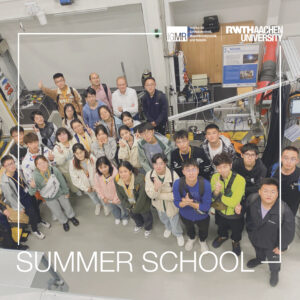
In den vergangenen Wochen haben bei uns am Institut die Summerschools an der FANUC Education Cell stattgefunden.
In diesem Kurs drehte sich alles um ein spannendes Logistikszenario: Kisten wurden befüllt, auf Förderbänder platziert und wieder abgeladen – eine Aufgabe, die einfache Grundlagen wie lineare vs. Gelenkbewegungen, Koordinatensysteme, Programmstruktur und mehr vermittelte.
Die Studierenden wurden in Gruppen von 2-3 Personen eingeteilt und lösten die Aufgaben gemeinsam. Dank der Roboguide-Simulationssoftware von FANUC konnten sie den Roboter in einer simulierten Umgebung programmieren und testen. Selbst das Bestücken der 3D-Modelle der Szenarien war Teil der Herausforderung. Und bei Fragen standen immer zwei erfahrene HiWis zur Hilfe bereit.
Das Spannende: Die echte Roboterzelle war ebenfalls vor Ort. Die Möglichkeit, den Roboter in Aktion zu sehen und selbst programmierte Abläufe auszuführen, war ein echter Höhepunkt. Denn was im Code steht, wurde plötzlich reale Bewegung!
Die Woche endete mit Präsentationen, in denen jede Gruppe ihre Simulation und ihren Code vorstellte. Aus diesen Feedbackgesprächen wurden die Endnoten abgeleitet – eine rundum gelungene Woche am IGMR!
Ansprechpartner: Sophie Charlotte Keunecke
Situativ-adaptive Bewegungsprädiktion für Feuerwehrtrupps im Innenangriff
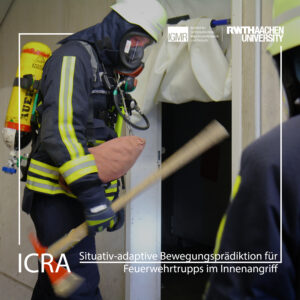
Wir haben unseren Beitrag „Situational Adaptive Motion Prediction for Firefighting Squads in Indoor Search and Rescue“ auf der ICRA im Workshop Long-Term Human Motion Prediction vorgestellt.
Die Brandbekämpfung ist eine komplexe, aber wenig automatisierte Aufgabe. Um die ergonomischen und sicherheitsrelevanten Risiken für die Feuerwehrleute zu minimieren, könnten Roboter in einem kollaborativen Ansatz eingesetzt werden. Um Mensch-Roboter-Teams bei der Brandbekämpfung zu ermöglichen, fehlen noch wichtige Grundlagen. Unter anderem muss der Roboter die menschliche Bewegung vorhersagen, da Verdeckungen allgegenwärtig sind. In dieser Arbeit schlagen wir eine neuartige Methode zur Bewegungsvorhersage für Feuerwehrtrupps im Innenangriff vor. Die Pfade der Trupps werden mit einem optimalen graphenbasierten Planungsansatz generiert, der die Taktik der Feuerwehrleute darstellt. Die Pfade werden pro Raum generiert, was eine dynamische lokale Anpassung der Pfade ohne globale Neuplanung ermöglicht. Die Bewegung einzelner Agenten wird mit einer Modifikation des Headed Social Force Models simuliert. Wir bewerten die Machbarkeit der Pipeline mit einem neuartigen Datensatz, der aus echtem Filmmaterial generiert wurde, und zeigen die rechnerische Effizienz.
Ansprechpartner: Elodie Hüsing
Neues Forschungsthema am IGMR: Pick & Toss
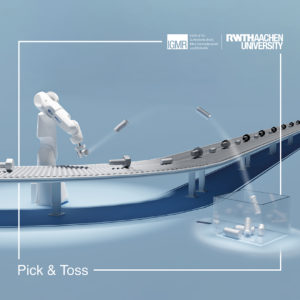
In heutigen Produktionsanlagen sind robotische Pick & Place Prozesse nicht mehr wegzudenken. Hierbei werden Handhabungsobjekte vom Roboter gegriffen und an der Zielposition mit der angestrebten Zielorientierung abgelegt. Eine innovative Möglichkeit den Arbeitsraum eines Roboters signifikant zu vergrößern sowie Prozesszeiten zu verringern ist die Erweiterung dieses Prozesses um das gezielte Werfen von Handhabungsobjekten. Mögliche Einsatzgebiete sind die Sortierung von Produkten, die beim Wurf nicht beschädigt werden (z.B. Schrauben oder Muttern) oder deren Beschädigung untergeordnet relevant ist (z.B. Aussortieren fehlerhafter Produkte, Trennen von Werkstoffen in Recyclingstätten).
Unser Ziel ist es den robotischen Pick & Toss Prozess durch die Kombination von klassisch analytischen und machine learning Modellen zu beschreiben, sodass der innovative Prozess industriell nutzbar wird.
Ansprechpartner:
Nils Brückmann
Johannes Bolk
Entwicklungen mit der Trapo GmbH
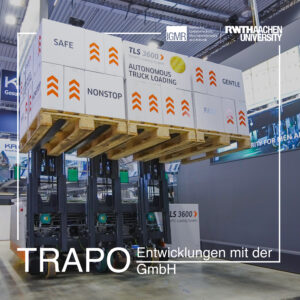
Das IGMR – RWTH Aachen unterstützt die Trapo GmbH bei der Weiterentwicklung und Integration von Trajektorieplanung- und Trajektorieausführungsalgorithmen für den neuen Trapo Loading System Roboter. Im Vergleich zum alten TLS, wird die Navigation vom neunen TLS mit dem MoveBase Framework des Robot Operating Systems (ROS) realisiert. Zu diesem Zweck haben wir zusammen mit der Trapo GmbH eine Sonderkonfiguration für eine autoähnliche Kinematik (car-like structure) für den lokalen Planner von MoveBase erstellt. Der neue TLS wurde zuletzt auf der LogiMat Messe vorgestellt.
Ansprechpartner:
Daniel Gossen
Projektstart IIDEA – Inklusion und Integration durch Cobots auf dem Arbeitsmarkt
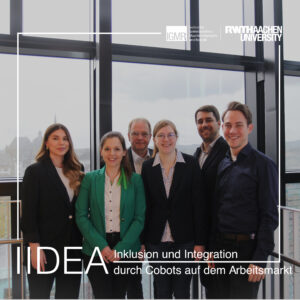
Im April wurde das innovative Projekt „IIDEA – Inklusion und Integration durch Cobots auf dem ersten Arbeitsmarkt“ gestartet, das sich zum Ziel gesetzt hat, die Inklusion und Integration von schwerbehinderten Menschen auf dem ersten Arbeitsmarkt durch kollaborative Robotik zu befähigen. Die Verwendung von Cobots ermöglicht es, neue Arbeitsplätze und -formen zu schaffen, die auf die individuellen Bedürfnisse schwerbehinderter Menschen zugeschnitten sind. Diese neuen Arbeitsformen werden nicht am Rande, sondern im Zentrum der Digitalisierung und der Industrie 4.0 etabliert.
In einer sich schnell verändernden Welt ist es wichtig, dass wir uns auf die Bedürfnisse aller Menschen konzentrieren und sicherstellen, dass alle in der Lage sind, ihr volles Potenzial auszuschöpfen. Das Projekt „IIDEA“ ist ein wichtiger Schritt in Richtung einer inklusiven und integrativen Gesellschaft und Wirtschaft.
Weitere Informationen zum Projekt finden Sie auf unserer Website. Wenn Sie weitere Fragen haben, können Sie sich gerne an die folgende E-Mail-Adresse wenden: iidea@igmr.rwth-aachen.de.
Ansprechpartner:
Prof. Mathias Hüsing
Carlo Weidemann
Sophie-Charlotte Keunecke
Elodie Hüsing
Christina Jansen
Begrüßung der neuen Master-Erstsemester
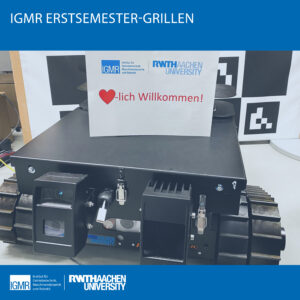
| Das Institut für Getriebetechnik, Maschinendynamik und Robotik heißt alle neuen Mastererstsemester herzlich willkommen!
Am 03.04.2023 hat das Sommersemester begonnen und mit diesem das Masterstudium für viele Erstsemester. Bei einem durch die Fachschaft Maschinenwesen organisierten Grillen zur Begrüßung konnten wir bereits unser Institut vorstellen und mit Studierenden ins Gespräch kommen. Begrüßt wurden die neuen Masterand*innen der Fakultät Maschinenwesen vom IGMR durch Sophie Charlotte Keunecke, Nils Brückmann, Vincent Brünjes und Thomas Knobloch. Die Studierenden konnten auf diese Weise erste Kontakte zu den Instituten knüpfen und auch verschiedene Projekte kennenlernen. Ein besonderes Highlight war die Vorstellung des Robot Companion durch Maximilian Hilger! Wir danken der Fachschaft Maschinenwesen für dieses großartige Angebot und euer immenses Engagement. Allen neuen Erstsemestern wünsche wir alles Gute für Ihr Studium und eine unvergessliche Zeit an der RWTH und der Fakultät Maschinenwesen. Ansprechpartner:
|


